-
Whatsapp: +86 15516933785
-
Email: hanlin@hanlinplayground.com
-
Address: Shangjie District, Zhengzhou City, Henan Province, China
-
Whatsapp: +86 15516933785
-
Email: hanlin@hanlinplayground.com
-
Address: Shangjie District, Zhengzhou City, Henan Province, China

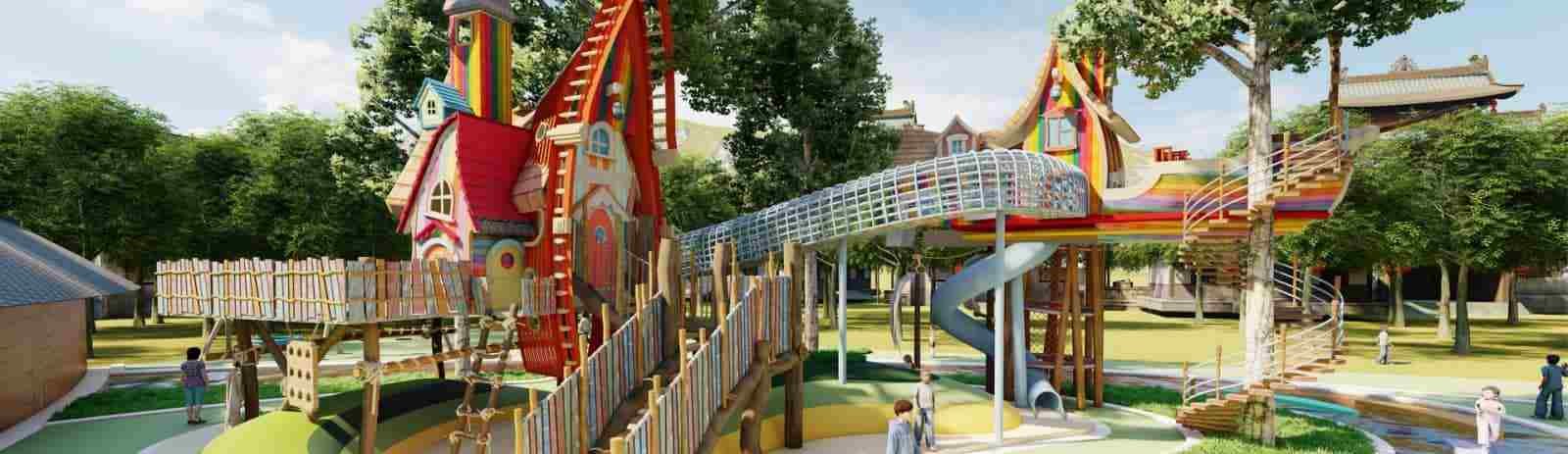
25 Innovative Indoor Playground Ideas for Business & Home
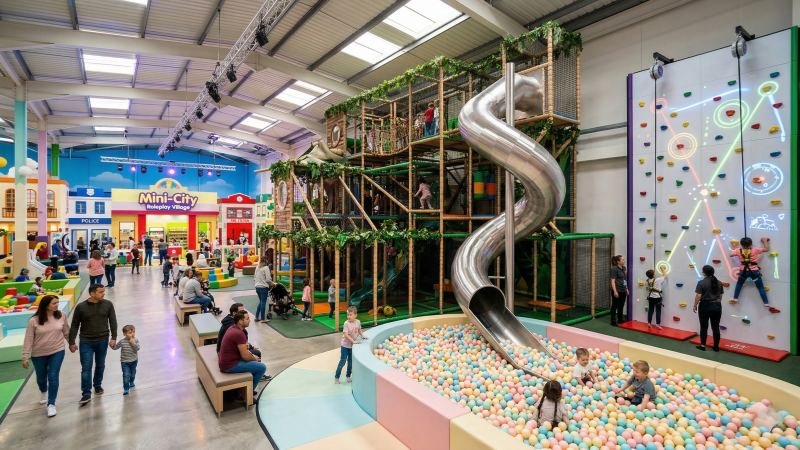
What are the most effective indoor playground ideas to maximize engagement and profitability in any given space?
The most effective indoor playground ideas combine immersive commercial themes, tech-enhanced interactive equipment, and inclusive sensory zones to maximize user engagement and space utilization. By strategically integrating multi-level physical play structures with modern digital overlays and budget-friendly modular designs, operators and homeowners alike can create safe, highly adaptable environments that drive continuous activity, long-term value, and a favorable indoor playground cost breakdown.
Immersive Commercial Theme Concepts
Immersive commercial theme concepts are fully integrated, narrative-driven play structures designed to increase customer dwell time and repeat visits. When exploring various commercial indoor playground design layouts, these environments utilize custom structural frameworks, high-density padding, and molded fiberglass to create cohesive settings like jungles or miniature cities. The bottom line? Operators can differentiate their facilities, justify premium admission rates, and accelerate their overall return on investment.
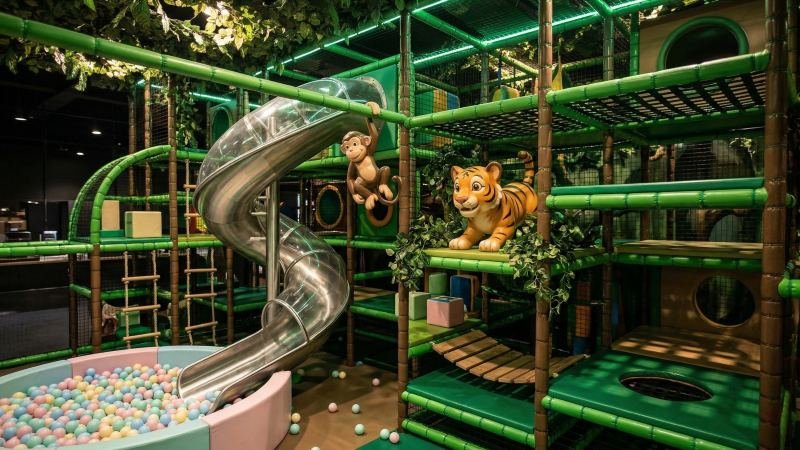
Multi-Level Jungle Expeditions
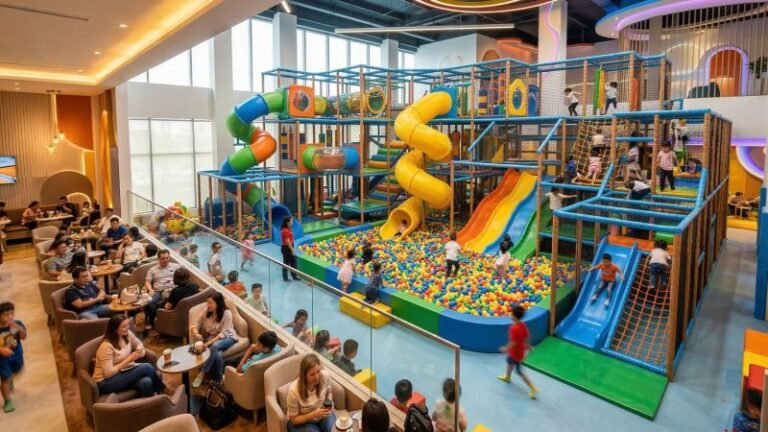
This design maximizes floor space by building upward. This means operators can fit more activities into a smaller physical footprint. Similar to how a towering outdoor ropes course layers activities at different heights, a multi-level indoor playground uses a grid framework to maximize vertical play volume.
Structural Components
These structures rely on robust, commercial-grade materials. The core framework typically consists of 48mm diameter galvanized steel pipes. To back that up, thick PVC foam fully covers these pipes to ensure safety. Always verify exact weight load capacities and pipe thickness specifications with your equipment supplier, as these parameters vary based on local safety regulations.
| Component | Primary Material | Structural Function |
|---|---|---|
| Frame Tubes | Galvanized Steel | Provides core structural stability and load bearing. |
| Safety Padding | High-Density EPE Foam | Absorbs impact and prevents user injuries. |
| Thematic Decor | Molded Fiberglass | Creates the immersive 3D jungle aesthetic. |
Deep Space Exploration Zones
This theme focuses heavily on atmospheric structural design. Instead of relying on bright primary colors, space zones utilize dark backgrounds. In practice, designers incorporate black vinyl, silver padding, and UV-reactive materials to simulate outer space.
Thematic Architecture
To create a space station feel, builders integrate specific aesthetic elements directly into the physical structure.
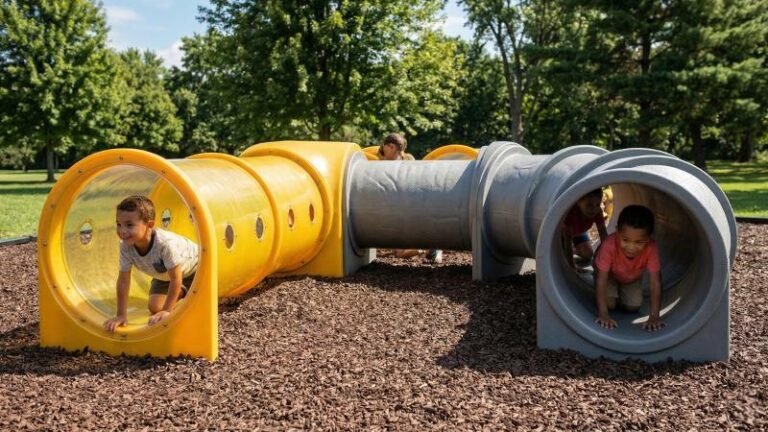
- Translucent Tunnels: Clear acrylic tube crawlers simulate floating airlocks.
- Metallic Finishes: Silver and grey PVC covers mimic spaceship hull plating.
- Geometric Platforms: Hexagonal deck designs replace standard square platforms.
As a result, children feel enclosed in a futuristic environment. This drives imaginative, thematic play using purely structural elements.
Interactive Underwater Worlds
An underwater theme utilizes fluid spatial routing and suspended decor. Because of this, the physical layout guides users naturally through the space. Think of it like designing a seamless water park lazy river. The structural layout must maintain a smooth, continuous flow of movement to prevent traffic bottlenecks.
Visual Spatial Layout
Designers achieve this underwater illusion using specific color gradients across the equipment. For example, lower levels use dark navy padding, while upper levels transition to light aqua. Additionally, large fiberglass elements act as central focal points. Molded submarines or artificial coral reefs physically divide the play space into distinct zones.
Mini-City Roleplay Villages
Roleplay villages offer scaled-down urban environments. These setups directly target younger demographics focused on social interaction rather than intense physical exertion.
Modular Partitioning
These villages use modular partition walls to create distinct storefronts, such as miniature grocery stores or fire stations. The construction process is highly similar to the modular fencing systems used to divide toddler soft play zones. Operators use lightweight timber or molded plastic panels to divide an open floor space into small, distinct rooms.
Typically, a single roleplay house requires about 9 to 15 square meters of floor space. However, always confirm fire-retardant ratings with your manufacturer, because building materials must strictly meet commercial indoor fire codes.
Ninja Warrior Obstacle Courses
Why settle for standard soft play when older kids are craving a real physical challenge? Ninja courses cater directly to older children and teenagers. Make no mistake, these are all about agility, grip strength, and competitive routing.
Heavy-Duty Truss Systems
Unlike standard multi-level play frames, ninja courses require heavy-duty aluminum or steel truss systems. These trusses must safely support dynamic, swinging loads rather than just static weight.
- Rigid Framework: Built using bolted square or triangular metal truss segments.
- Suspended Obstacles: Includes swinging rings, heavy cargo nets, and floating steps.
- Impact Flooring: Requires thicker, specialized crash mats beneath all active elements.
Let’s be clear: because these courses handle much higher impact forces, the hardware and joint connections are industrial grade. That means regular hardware inspections and strict adherence to structural load guidelines are absolutely mandatory for safe operation.
Interactive and Tech-Enhanced Play Equipment
Are you still relying solely on static plastic slides to drive weekend traffic? Modern technology transforms a basic indoor playground into a highly profitable, next-generation attraction.
Interactive and tech-enhanced play equipment integrates digital software with physical hardware to create dynamic, gamified experiences. The result? These systems increase user retention, encourage repeat visits, and allow operators to update game content without replacing physical structures. By utilizing motion sensors, augmented reality projectors, and electronic scoring panels, businesses can seamlessly upgrade standard play areas into highly competitive entertainment zones.
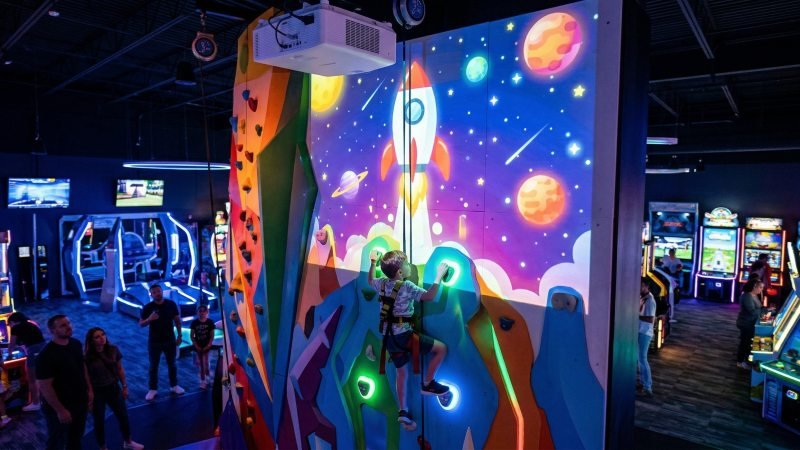
Motion-Sensing Floor Projections
Motion-sensing floors convert empty floor space into active digital playgrounds. This makes them perfect for facilities with limited vertical height. The system typically mounts a commercial projector and an infrared camera on the ceiling.
Technical Setup and Operation
Similar to how an interactive ticket redemption arcade machine tracks token drops, this overhead camera tracks physical movement. In action, it reads exactly when a child steps on a projected image. Then, the software instantly reacts by changing the visual display. For example, kids can stomp on virtual balloons or splash digital water.
“Interactive projections allow operators to change seasonal themes instantly via software updates, rather than purchasing new physical decorations.”
When planning an installation, the projector’s brightness is critical. Typically, these systems require projectors outputting between 3,000 and 5,000 lumens. Always verify exact lumen requirements with your equipment supplier, as specifications vary heavily based on your facility’s ambient lighting.
Gamified Climbing Walls
Gamified climbing walls combine physical exertion with video game mechanics. Instead of just climbing to the top, children play interactive games directly on the wall surface.
Tracking Technology
These walls use projection mapping combined with computer vision. First, the system projects graphics onto a blank fiberglass climbing wall. Next, a depth camera tracks the climber’s body movements. The concept functions much like a digital laser tag targeting system. It accurately registers when a climber touches a specific illuminated climbing hold.
| Feature | Traditional Climbing Wall | Gamified Climbing Wall |
|---|---|---|
| Engagement Driver | Physical challenge | Digital gaming and competition |
| Visual Appeal | Static colored holds | Dynamic, moving projections |
| Replay Value | Moderate | Very High (Multiple game modes) |
What happens next? Operators see much higher replay value. Children will attempt the same wall multiple times to beat previous high scores.
Augmented Reality Sandboxes
Augmented reality (AR) sandboxes merge tactile sensory play with digital education. This equipment creates a real-time, interactive topographical map over physical sand.
How the AR Sandbox Works
A depth sensor sits above a shallow physical sandbox. As children dig valleys or build mountains, the sensor measures the changing distance. Then, the software projects corresponding colors onto the sand. Valleys turn blue like water, while high peaks turn white like snow.
This hardware setup is functionally similar to the motion-tracking sensors used in interactive bowling alley lanes. It constantly recalculates physical movement and depth to adjust the digital visual output instantly.
Electronic Target Strike Arenas
Electronic strike arenas are enclosed zones where children throw soft balls at illuminated targets. These arenas modernize traditional foam ball shooter areas by adding competitive, digital scoring.
Component Integration
The system uses impact-sensitive panels mounted on the structural walls. When a ball hits a panel, a built-in piezoelectric sensor detects the vibration. Subsequently, a centralized digital scoreboard updates the team’s points.
Beyond that, this setup strongly encourages group play and team building. High-capacity arenas can host dozens of players simultaneously. It’s a proven way to offer excellent throughput and crowd management for busy weekend operations.
STEM-Focused Magnetic Building Walls
STEM magnetic walls focus heavily on science, technology, engineering, and math. They provide a quiet, focused activity zone away from high-energy jumping areas.
Physical Mechanics and Flow
These stations consist of large, wall-mounted sheet metal panels. Children use magnetic PVC pipes, funnels, and plastic gears to build continuous tracks. Afterward, they drop a lightweight ball at the top to test their track design.
This process is functionally similar to the kinetic ball drop machines often featured in children’s science museums. Children must calculate angles, momentum, and gravity to ensure the ball reaches the bottom safely. Because the pieces are magnetic, kids can endlessly rearrange the components. At the end of the day, this creates a low-maintenance, high-value educational attraction.
Budget-Friendly Home Playroom Setups
Budget-friendly home playroom setups utilize modular, multi-purpose, and easily stored components to maximize limited residential square footage. With the right approach, parents can create dynamic obstacle courses and imaginative play zones using high-density foam cushions, temporary adhesive materials, and structural cardboard. This approach minimizes upfront equipment costs while allowing the layout to adapt as children grow, effectively mirroring the modular flexibility seen in commercial indoor playground flooring systems.
Modular Foam Couch Forts
These versatile setups consist of geometric foam shapes covered in durable fabric. Functionally, they operate much like the freestanding soft play blocks used in commercial toddler zones. This allows children to stack, bridge, and balance on them to create custom forts or low-level climbing structures.
Material Specifications
The core performance relies entirely on polyurethane foam density and quality. Typically, manufacturers use foam with a density ranging from 1.5 to 1.8 pounds per cubic foot. When purchasing, check the foam density and fire-retardant certifications to ensure long-lasting, safe indoor play.
- Durability: High-density foam resists immediate crushing under body weight.
- Maintenance: Washable microsuede or vinyl covers allow for easy cleaning.
- Safety: The complete absence of hard wooden frames prevents blunt-force injuries.
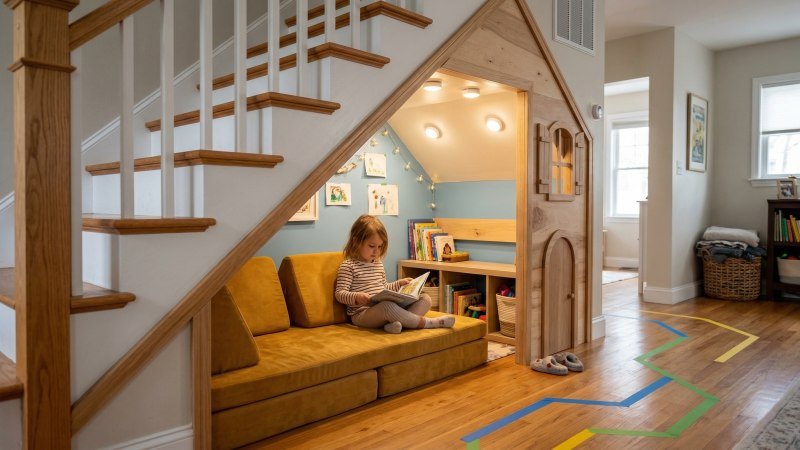
Under-Stair Hideouts and Playhouses
Homeowners often underutilize the enclosed triangular space beneath a staircase. Why leave it empty? Converting this space into a miniature playhouse is highly space-efficient. This architectural strategy closely mirrors how commercial playground designers install recessed ball pits or crawl tunnels beneath main access staircases to maximize active play volume.
Construction and Layout
Building an under-stair hideout requires basic wall framing and drywall finishing. Furthermore, proper air ventilation and safe lighting are absolutely critical. Instead of hardwiring expensive electrical fixtures, parents frequently use battery-powered LED tap lights.
| Feature | Freestanding Plastic Playhouse | Built-in Under-Stair Hideout |
|---|---|---|
| Floor Space Required | High (Takes up room center) | Zero (Uses existing footprint) |
| Structural Stability | Moderate (Can tip over easily) | Extremely High (Built into the house) |
| Relocation Ability | Easy to move to another room | Permanent residential installation |
Hallway Tape Balance Beams
Long, straight hallways provide excellent runways for focused physical activity. In fact, parents can use brightly colored painter’s tape or gym floor tape to create complex balance beams directly on the floor.
“Using colored floor tape directly mimics the vinyl floor decals used in commercial trampoline parks to guide foot traffic and designate safe jumping zones.”
This simple activity actively develops gross motor skills and spatial awareness. Additionally, high-quality tape applies safely to hardwood or tile surfaces without leaving sticky chemical residue. The best part? It offers a zero-footprint, zero-damage play solution that parents can easily change or remove weekly.
Doorway Swings and Trapeze Bars
Doorway swings and trapeze bars bring suspended movement into the home, but they require strict adherence to mechanical safety standards. To comply with strict guidelines like the ASTM F1148 standards, because dynamic swinging generates complex centrifugal forces, these setups must never rely solely on outward lateral pressure or telescopic tension.
Weight Distribution Mechanics
To ensure absolute safety, the installation must utilize heavy-duty metal brackets bolted directly into the structural wooden studs of the door frame or structural ceiling joists. This mechanical anchoring works similarly to the bolted load-bearing riggings used in commercial suspended climbing nets. Relying merely on friction-based tension bars for dynamic play violates foundational safety protocols. Always verify the weight limits of the bolted hardware and ensure your home’s framing is structurally sound before installation.
Foldable Cardboard Castles
Heavy-duty cardboard provides a highly affordable, fully recyclable alternative to bulky plastic playhouses. To pull this off, these play products use double-wall corrugated cardboard to achieve necessary structural rigidity.
Functionally, the engineering utilizes honeycomb corrugation, similar to the reinforced cardboard structural blocks used in progressive early childhood classrooms. The material is remarkably lightweight but incredibly strong when folded into interlocking geometric shapes. Even better, the blank cardboard surface naturally encourages creative customization. Children can paint, draw, or apply stickers directly to the exterior structure. When playtime ends, parents can quickly collapse the entire castle flat and slide it under a bed for easy storage.
Sensory and Inclusive Play Zones
Have you ever considered how ambient noise levels actively drive away customers with sensory sensitivities?
Sensory and inclusive play zones are specialized environments engineered to safely accommodate children of all abilities. These areas utilize wheelchair-accessible flooring, calming visual lighting, and tactile engagement tools to prevent sensory overload. Incorporating these specific designs ensures equal access, enhances safety compliance, and significantly expands a commercial facility’s community reach.
Tactile Acoustic Wall Panels
High noise levels frequently cause distress for children with sensory processing differences. This is where tactile acoustic wall panels step in to serve a vital dual purpose. On one hand, they provide engaging, textured surfaces for children to touch and explore. On the other, they actively absorb echoing background noise.
Dual-Function Design
This sound absorption works exactly like the suspended acoustic baffles used in the ceilings of large commercial trampoline parks. By utilizing thick, sound-dampening foam, these panels reduce the overall ambient decibel level in the room. Look for panels with a high Noise Reduction Coefficient (NRC) rating to ensure effective sound dampening in busy areas.
Fiber Optic Light Tunnels
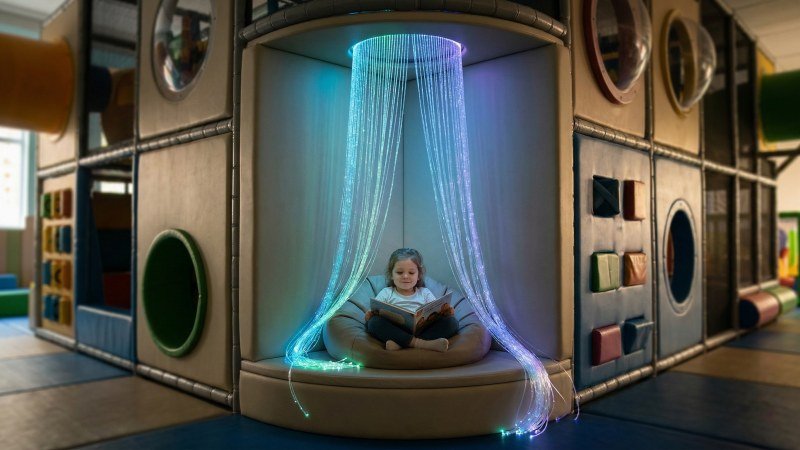
Many children seek calming visual stimulation. Fiber optic light tunnels provide this exact sensory input without using harsh, glaring overhead lights. These tunnels feature hundreds of glowing, color-changing acrylic strands cascading from the ceiling.
Safe Visual Stimulation
Functionally, this lighting technology mirrors the low-heat LED track lighting used in commercial dark ride attractions. The fiber optic strands emit zero heat and contain no electrical current. Because of this, children can safely touch and hold the glowing strands for visual tracking and tactile perception. However, to eliminate any strangulation or entanglement risks, commercial installations must strictly adhere to rigorous European EN 1176 safety standards or equivalent local codes. This requires specific anti-entanglement designs, such as limiting the free-hanging length of individual strands or securely anchoring both ends of the fiber cables. This controlled interaction provides a soothing environment without compromising physical safety.
Wheelchair-Accessible Merry-Go-Rounds
True physical inclusion means every child can experience the thrill of motion. Wheelchair-accessible merry-go-rounds achieve this through flush-mounted, zero-entry designs.
Seamless Surface Integration
Instead of sitting above the ground, the equipment is installed into a recessed floor pit. As a result, the spinning platform sits perfectly level with the surrounding safety surfacing. This engineering concept is identical to the seamless floor transitions required between carpeted seating areas and hard wooden roller skating rink floors. It allows a wheelchair to roll directly onto the ride without navigating any bumps or ramps.
| Feature | Standard Merry-Go-Round | Wheelchair-Accessible Model |
|---|---|---|
| Floor Integration | Surface-mounted (Raised) | Flush-mounted (Recessed) |
| Restraints | Simple handrails | Integrated wheelchair lock systems |
| Capacity | Multiple standing riders | Mixed (Standing riders plus wheelchairs) |
Always confirm the exact sub-floor depth requirements with your equipment supplier, because concrete foundation needs vary significantly depending on the specific model.
Quiet Corner Reading Pods
Busy indoor playgrounds are incredibly stimulating. Sometimes, children simply need a quiet place to decompress. Quiet corner reading pods offer enclosed, heavily padded alcoves specifically for resting.
Acoustic Isolation
These pods use high-density foam walls to block out external activity. The concept mimics the soft-foam boundary walls used to isolate safe toddler zones from high-speed indoor go-kart tracks. By creating a physical and acoustic barrier, the reading pod provides a safe, low-stress retreat. For optimal results, operators usually install these pods in the furthest corners of the building. This strategic placement naturally minimizes foot traffic and maintains a peaceful atmosphere.
Therapeutic Soft Ball Pits
While standard ball pits encourage energetic jumping, therapeutic ball pits focus entirely on deep pressure stimulation. These specialized pits are generally smaller, deeper, and use specific colors to promote relaxation.
Deep Pressure Mechanics
When a child sinks into a deep ball pit, the surrounding plastic balls provide uniform pressure across their entire body. This physical response is functionally similar to how thick foam crash mats safely decelerate a falling climber under a high-ropes course. The gentle, consistent resistance helps calm the central nervous system.
To enhance the effect, these pits often use clear or lightly frosted balls combined with gentle under-lighting. When planning your installation, verify the ball crush resistance ratings with your supplier, as commercial ball pit plastics vary greatly in durability.
High-Energy Physical Play Features
High-energy physical play features are robust, large-scale structures designed to maximize cardiovascular exertion and full-body kinetic movement. These installations utilize heavy-duty galvanized steel frameworks, commercial-grade tension springs, and high-friction synthetic surfaces to safely accommodate continuous, heavy impact. When you integrate these dynamic elements correctly, facility operators can significantly increase user throughput, cater to older age demographics, and extend the average duration of a customer’s visit.
Interlocking Trampoline Zones
Interlocking trampoline zones replace individual jumping mats with a massive, unified bouncy surface. This setup allows children to run and bounce seamlessly across the entire room.
This design functions similarly to the padded floor surfaces detailed in a comprehensive indoor playground mats guide or professional gymnastics facilities. Multiple individual panels lock securely into one continuous steel sub-frame. From an engineering standpoint, the shared framework distributes kinetic impact across a much wider structural footprint.
These zones require highly durable jumping mats woven from polypropylene. On top of that, they use hundreds of heavy-duty steel springs to maintain optimal bounce. Spring tension metrics differ greatly between manufacturers. Never guess on this—always verify the exact performance specifications with your supplier to ensure strict safety compliance.
| Feature | Standalone Commercial Trampoline | Interlocking Trampoline Zone |
|---|---|---|
| User Capacity | One user at a time | High simultaneous user throughput |
| Structural Frame | Isolated steel tubing | Continuous grid-locked steel sub-frame |
| Spatial Efficiency | Low (Requires safety gaps) | High (Wall-to-wall coverage) |
Suspended Rope Net Mazes
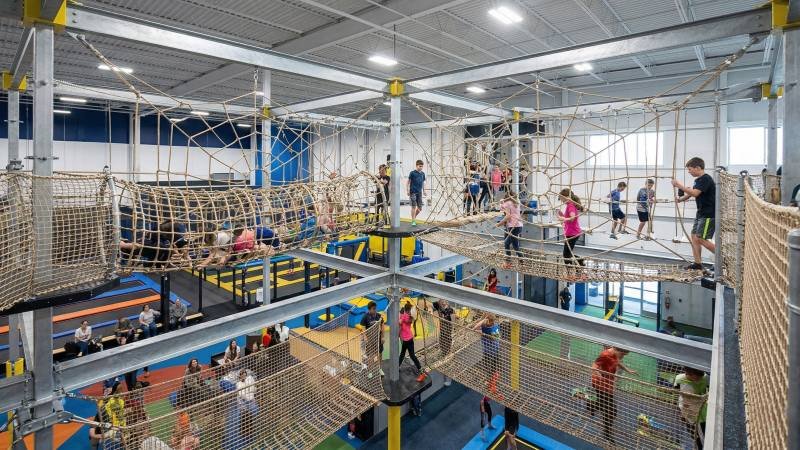
Suspended rope net mazes elevate physical play high above the primary floor. Children must navigate through multi-layered webs of tightly woven ropes.
This installation utilizes structural tensioning similar to massive outdoor aerial adventure parks. The main load-bearing cables anchor directly into the building’s primary steel columns. From there, smaller geometric netting weaves between these main cables to create a walkable surface.
Are machine-knotted nets better than hand-woven ones? Typically, commercial parks prefer hand-woven polyester ropes. This specific material resists abrasion effectively. It provides a softer grip for bare hands and eliminates hard plastic connectors that often cause friction burns.
High-Speed Donut Slides
High-speed donut slides provide an intense, gravity-driven experience without requiring water. Riders sit inside heavy-duty inflatable tubes and slide down a steep, specialized ramp.
The sliding surface consists of interlocking High-Density Polyethylene (HDPE) plastic bristles. This surface mechanics mimics the dry-slope synthetic bristles used in year-round outdoor ski and snowboarding training facilities. The plastic bristles significantly reduce surface friction. This ensures the inflatable tube glides smoothly and rapidly to the bottom.
To maintain safety, the bottom of the slide features a flat deceleration lane. The required friction coefficient and optimal slope angle vary based on the specific plastic polymers used. Don’t cut corners here; you must always verify the exact installation angles and run-out distances with your slide supplier.
Giant Soft Play Pyramids
Giant soft play pyramids offer a massive, tiered climbing obstacle. They challenge gross motor skills as children scale the progressively steeper padded steps.
Structurally, these pyramids function like the tiered spectator bleachers found in indoor sports arenas, where a wide base securely supports progressively narrower upper levels. This engineered geometry naturally transfers all dynamic weight directly down to a highly stable footprint.
Manufacturers construct these pyramids using dense polyurethane foam blocks. Heavy-duty, fire-retardant PVC vinyl completely encases each block. The payoff? The exterior is incredibly durable and exceptionally easy to sanitize daily.
Indoor Zip Lines with Foam Pits
Indoor zip lines with foam pits introduce controlled aerial travel to the playground environment. Children grab a suspended handle and glide rapidly across the room.
The engineering behind this feature relies on a sturdy overhead trolley system, similar to the enclosed track mechanisms used in automated dark ride suspended coasters. A heavy-duty steel trolley rolls smoothly along a fixed, linear overhead track. Once the rider reaches the end, an automatic braking mechanism safely halts their forward momentum.
At the end of the line, the rider drops safely into a deep pit filled with shock-absorbing foam cubes. Cable tension requirements and automatic braking distances vary significantly depending on the exact trolley model. It goes without saying: you must verify the precise calibration details with your equipment supplier prior to commercial operation.
Conclusion
Creating a successful indoor playground requires a careful balance of physical challenges, immersive themes, and inclusive design. Whether you are outfitting a massive commercial facility with high-energy zip lines and AR sandboxes or designing a budget-friendly modular foam fort for a residential playroom, the right equipment choices directly impact engagement and safety. By implementing these 25 innovative indoor playground ideas, you can build a dynamic environment that caters to diverse age groups and abilities. If you are ready to start planning your next project or need professional guidance on selecting the perfect equipment, please contact us today.