-
Whatsapp: +86 15516933785
-
Email: hanlin@hanlinplayground.com
-
Address: Shangjie District, Zhengzhou City, Henan Province, China
-
Whatsapp: +86 15516933785
-
Email: hanlin@hanlinplayground.com
-
Address: Shangjie District, Zhengzhou City, Henan Province, China
How to Start an Indoor Playground Business With No Money
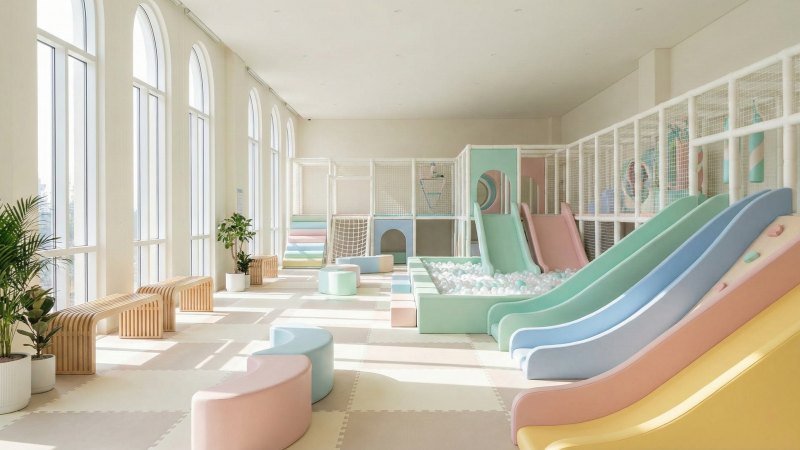
Is it truly feasible to launch an indoor playground venture without significant upfront personal capital?
Yes, starting an indoor playground business with no money is achievable by leveraging low-cost models like mobile rentals, securing external funding through SBA loans or angel investors, and generating pre-opening cash flow via crowdfunding and presales. Success relies on minimizing overhead through phased build-outs and strategic partnerships rather than personal savings.
Viable Low-Cost Business Models to Start Small
Can you really launch an indoor playground business without a massive upfront investment?
Yes, you can launch an indoor playground business with minimal funds by utilizing low-overhead models such as mobile soft play rentals, pop-up events in community centers, revenue-sharing partnerships with existing venues, or sub-leasing space within gyms. These strategies allow entrepreneurs to generate immediate cash flow and validate the market before committing to a permanent facility.
Launching a Mobile Soft Play Rental Service
The most effective way to enter the playground industry with almost zero real estate cost is the mobile soft play model. Instead of waiting for customers to come to a building you rent, you bring the equipment to them. This eliminates the biggest financial hurdle: the commercial lease.
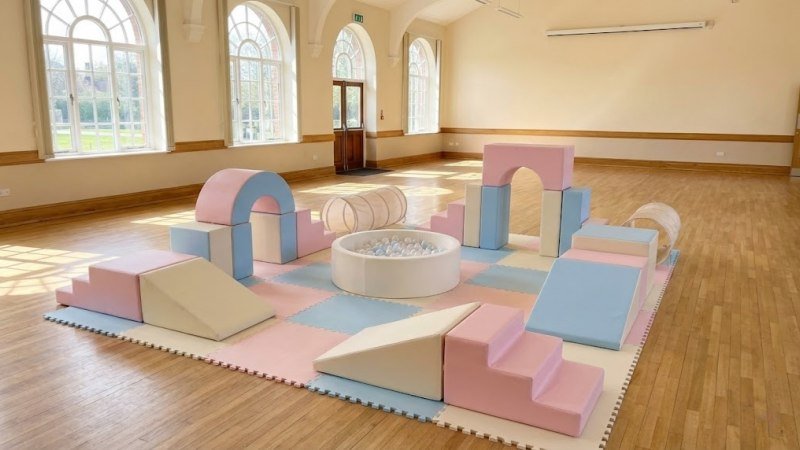
In this model, you purchase a small, modular set of soft play equipment. This typically includes foam ball pits, soft climbers, tunnel sets, and safety mats. You rent these setups out for birthday parties, weddings, or corporate events.
Why this works for low budgets:
- No Rent: You store equipment in a garage or storage unit.
- Scalability: You can start with one “package” and buy more as you earn money.
- High Margins: Since you do not pay for utilities or building staff, a large portion of the rental fee is profit.
Operational Focus:
Your primary “expense” is physical labor and transportation. You drop off the equipment, set it up, and return later to break it down. For example, a standard 4-hour rental might charge between $250 and $600, depending on the size of the setup and your location. If you execute four events a weekend, you generate immediate cash flow to reinvest.
Note: Rental rates and equipment costs vary significantly based on suppliers and regional market rates. Always verify current pricing with local competitors.
Organizing Pop-Up Playground Events in Community Centers
If you want to simulate the experience of a fixed location without signing a multi-year lease, pop-up events are the solution. This involves renting a local community center hall, church basement, or school gym for a single day or weekend.
You set up your portable equipment and charge an admission fee per child (Pay-to-Play). This model is excellent for testing specifically designed themes or equipment layouts. It helps you see what children actually enjoy before you buy permanent structures.
Key Advantages:
- Controlled Risk: If no one shows up, you only lose the rental fee for one day, not a whole month.
- Market Data: You collect emails and phone numbers from parents, building a customer base before you ever open a real store.
Comparison of Venue Models
| Feature | Permanent Facility | Pop-Up Event |
|---|---|---|
| Commitment | 3-5 Year Lease | Daily or Hourly Rate |
| Staffing | Full-time employees | You + Volunteers/Part-time |
| Maintenance | Daily deep cleaning | Clean only after event |
| Cash Flow | Consistent overhead | Variable cost/profit |
Think of this like a “traveling carnival” strategy within the indoor play industry. You create the excitement of a new attraction, capture the revenue, and then move on until you have saved enough capital for a permanent home.
Partnering with Malls or Restaurants for Revenue Sharing
A revenue-share partnership allows you to open a semi-permanent location using someone else’s real estate. Many businesses, such as shopping malls, large restaurants, or trampoline parks, have underutilized square footage.
How the deal works:
You provide the play equipment and manage the safety. The venue provides the space, electricity, and existing foot traffic. Instead of paying a fixed rent, you agree to split the ticket sales or entry fees. A common split might be 70% to you and 30% to the venue.
Industry Example:
Consider a family restaurant that has a large, empty overflow room. You install a jungle gym structure there. The restaurant benefits because families stay longer and buy more food. You benefit because you have a physical location with zero rent liability.
This creates a symbiotic relationship similar to a concession stand in a movie theater. The theater (venue) brings the people, but the concession stand (you) provides the product that maximizes the customer’s spend per visit.
Creating a Franchise-Like Model with Existing Gyms
Fitness centers and CrossFit gyms often struggle to attract parents because parents cannot find childcare. You can solve this problem and start your business by subleasing a corner of a gym to operate a “Kids’ Active Zone.”
This is different from a standard nursery. You focus on active play—mini obstacle courses, foam blocks, and physical activities that mirror what the parents are doing, but safely.
The Strategy:
- Pitch the Gym Owner: Explain that a play zone increases their member retention.
- Low Investment: You do not need a full playground. You only need enough equipment to fill a 200-400 square foot area.
- Income Stream: You can charge parents a “drop-in” fee, or the gym can pay you a flat monthly rate to manage the service for their members.
This acts as a micro-version of a full Family Entertainment Center (FEC). You operate strictly within the hours the gym is busy. This minimizes your labor costs and ensures you always have a steady stream of potential customers walking through the door.
Strategies to Raise Capital Without Personal Savings
How can you secure the necessary funding to open an indoor playground if you do not have significant personal savings?
Entrepreneurs can raise capital by securing Small Business Administration (SBA) loans, pitching equity deals to angel investors who fund startups in exchange for ownership, utilizing equipment financing to lease play structures, or applying for non-repayable government grants. These strategies leverage external financial resources to cover substantial startup costs like equipment manufacturing and facility renovation.
Pitching to Angel Investors and Venture Capitalists
When you have no money, you must trade equity for capital. This means you give a portion of your future company to someone else in exchange for their cash today.
Angel Investors are often local business owners, doctors, or successful professionals in your community. They invest their own money. For an indoor playground, these investors are looking for a solid Return on Investment (ROI). You must prove that your Family Entertainment Center (FEC) will generate high profit margins, specifically through birthday party packages, which often have margins exceeding 50% to 70%.
Venture Capitalists (VCs) are firms that invest pooled money. They rarely invest in a single location playground. However, if your business plan outlines a franchise model where you plan to open 20 locations in five years, a VC firm might be interested.
What Investors Need to See:
- Proof of Concept: Show that parents in your specific zip code are desperate for this service.
- The Team: Since you have no capital, they are betting on you. Highlight your management experience or industry knowledge.
- Exit Strategy: How will they get their money back? Will you buy them out later, or will you sell the business?
Applying for Small Business Administration Loans and Microloans
The Small Business Administration (SBA) does not lend money directly. Instead, they work with banks to guarantee a portion of your loan. This reduces the risk for the bank, making them more willing to lend to a new playground business owner.
The SBA 7(a) Loan is the most common option for buying play equipment and covering leasehold improvements. If you need a smaller amount to start a mobile soft play business, an SBA Microloan might be better. Microloans typically cap at $50,000, which is often enough to buy a high-quality portable playground setup and a delivery van.
Note: Interest rates, down payment requirements, and credit score minimums (often 680+) vary significantly by lender and current economic conditions. Always verify current terms with your local bank.
Comparison of Loan Types for Playgrounds
| Feature | SBA 7(a) Loan | SBA Microloan |
|---|---|---|
| Best For | Full facility build-out & renovation | Mobile setups or pop-up equipment |
| Loan Amount | Up to $5 million | Up to $50,000 |
| Use of Funds | Real estate, equipment, working capital | Equipment, inventory, supplies |
| Repayment Term | Up to 10 years (equipment) | Up to 6 years |
Leveraging Equipment Financing and Leasing Programs
Playground equipment is expensive, often costing between $50,000 and $200,000 for a decent facility. However, you do not always need to pay cash. Equipment financing allows you to pay for the structure over time, similar to a car loan.
How it works in this industry:
The loan is “asset-backed.” This means the playground structure itself acts as the collateral. If you stop paying, the lender takes the slides and ball pits back. Because the loan is secured by the asset, approval is often easier than a general cash loan.
The Arcade Machine Analogy:
Think of a crane machine in an arcade. The operator does not pay for the machine instantly. They finance it. The quarters players put into the machine every day pay the monthly loan bill. Eventually, the machine is paid off, and the quarters become pure profit. You apply this same logic to your jungle gym. The entry fees paid by children cover the monthly equipment lease payment.
Many playground manufacturers have partnerships with finance companies. They can sometimes offer terms requiring only a 10% to 20% down payment to start manufacturing your design.
Seeking Government Grants and Community Development Funds
Grants are the most desirable form of funding because they do not need to be repaid. However, they are also the most competitive.
It is rare to find a grant specifically for “starting a business.” Instead, you must position your indoor playground to fit specific social missions. Government bodies and non-profits offer grants for Community Development, Childhood Health, or Urban Revitalization.
Positioning Your Playground for Grants:
- Combatting Childhood Obesity: Market your business as a “Children’s Fitness Center” rather than just a playground. Focus on the physical activity aspect of your obstacle courses.
- Safe Community Spaces: If you plan to open in an underserved area or a “food desert,” you may qualify for Community Development Block Grants (CDBG).
- Minority or Women-Owned Business: Many local governments have specific funds allocated to help minority or female entrepreneurs launch businesses.
You should contact your local Small Business Development Center (SBDC). They can help you navigate the database of grants available in your specific state or county.
Generating Cash Flow Before the Grand Opening
Is it possible to generate revenue for your indoor playground business before the facility is actually open to the public?
Yes, you can generate significant cash flow before opening day by launching rewards-based crowdfunding campaigns, pre-selling exclusive “Founder” memberships, hosting paid pilot events to test equipment, and securing corporate sponsorships for specific play zones. These strategies allow you to accumulate working capital to fund construction and deposits without relying solely on loans.
Running a Kickstarter or Indiegogo Crowdfunding Campaign
Crowdfunding is not asking for charity; it is a transaction. You are pre-selling admission tickets and party packages to the community to raise the money needed to build the facility. Platforms like Kickstarter or Indiegogo allow you to collect this money upfront.
How to structure the campaign:
You must offer “rewards” that are better than standard pricing. For example, if a standard birthday party will cost $300, offer it on Kickstarter for $200. This gives parents a strong incentive to pay you months in advance.
The “Off-Plan” Analogy:
Think of this like a developer selling apartments “off-plan” before the building is constructed. Buyers pay a deposit before the building is finished because they lock in a lower price than the people who wait until construction is complete. You are applying this real estate concept to your entry tickets.
Effective Reward Tiers:
- $25 Pledge: Receive two “Open Play” passes (Value: $40).
- $150 Pledge: Receive a “10-Visit Punch Card” (Value: $200).
- $500 Pledge: Pre-book a “Private Weekend Birthday Party” (Value: $700).
Note: Platform fees typically range from 5% to 10% of the total funds raised. Always calculate these fees into your funding goal.
Pre-Selling Lifetime or Founder Memberships
A “Founder Membership” is a high-ticket item designed to inject a large lump sum of cash into your business quickly. Unlike standard monthly subscriptions, these are often sold as one-time payments or annual passes with heavy perks.
Creating Scarcity:
You should limit these memberships to the first 50 or 100 families. This creates urgency. If you sell 50 memberships at $300 each, you instantly generate $15,000. This cash can pay for your initial soft play equipment deposit.
Differentiation of Benefits
| Feature | Standard Membership | Founder Membership |
|---|---|---|
| Cost | $40 / Month | $350 / One-Time (Yearly) |
| Access | Regular Hours | Early Access (VIP Hours) |
| Perks | None | 1 Free Birthday Party |
| Guest Passes | Paid Entry | 5 Free Guest Passes |
| Status | Customer | “Founding Member” on Wall |
This strategy works because parents want to be “local heroes” who helped build the playground. You are selling them status and value, not just entry.
Hosting Paid Focus Groups to Validate Market Demand
Usually, companies pay people to join focus groups. However, for a playground, you can flip this model. You can host a “VIP Preview Event” or a “Pop-Up Testing Lab” where parents pay a small fee to let their children test potential equipment.
The “Soft Opening” Concept:
Restaurants and theme parks often run “Soft Openings” to test their operations before the grand reveal. You can do the same. Rent a small community hall for one weekend. Set up a few distinct play stations (like a sensory wall or a specific block building zone).
Why parents pay:
- Exclusivity: Their children are the first to play.
- Input: They get to vote on which equipment ends up in the final facility.
Charge a nominal fee, such as $10 per child. If 100 children attend, you earn $1,000. More importantly, you prove to investors that people are willing to pay for your product. This turns market research into a revenue stream rather than an expense.
Securing Corporate Sponsorships for Play Zones
You can reduce your build-out costs by selling “naming rights” for specific areas of your playground to local businesses. This is similar to how sports stadiums are named after banks or airlines, but on a micro-scale.
Targeting the Right Sponsors:
Look for businesses that want to reach young families but do not have a physical space to entertain them.
- Pediatric Dentists: Sponsor the “Toddler Soft Play Zone.”
- Tutoring Centers: Sponsor the “Educational LEGO Wall.”
- Real Estate Agents: Sponsor the “Parents’ Coffee Lounge.”
The Value Proposition:
You are not just asking for money; you are selling advertising. A pediatric dentist might pay $2,000 to $5,000 per year to have their logo on the wall of the toddler zone. In exchange, you can offer to put their brochures in your welcome packets.
Execution:
Instead of paying $5,000 for a custom ball pit yourself, you ask the sponsor to cover that cost in exchange for a 3-year branding deal. This lowers your startup capital requirements significantly.
Developing a Business Plan That Secures Funding
What specific elements must be included in your business plan to convince lenders to fund an indoor playground when you have no personal capital?
To secure funding without personal capital, your business plan must present irrefutable market data showing local demand, detailed financial projections demonstrating a clear return on investment (ROI), and a unique competitive advantage that distinguishes your facility from existing competitors. Lenders require this evidence to validate that the business will generate enough cash flow to repay loans despite the lack of initial equity.
Conducting Deep Market Research to Prove Unmet Demand
Banks do not lend money based on passion; they lend based on data. Since you are not risking your own money, you must prove that the market is desperate for your service. You need to show that there are enough children in your area to support a business.
The Catchment Area Analysis:
You must analyze the population within a 15 to 20-minute drive time of your proposed location. In the indoor playground industry, parents rarely drive longer than 20 minutes for a casual play session.
Key Data Points to Collect:
- Total Population of Children: Look for the number of children aged 0 to 10.
- Average Household Income: Can families afford a $15 entry ticket?
- Competitor Saturation: Are there already five playgrounds nearby?
The “Traffic Light” Analogy:
Think of your market research like a traffic light system for a city planner.
- Red Light: Too many competitors, low population. (Do not build).
- Green Light: High population of kids, zero competitors. (Build immediately).
Your business plan must show a “Green Light.” You can use free data from the U.S. Census Bureau to find these numbers. Lenders want to see that for every 1 square foot of play space, there are enough potential customers to fill it.
Creating Realistic Financial Projections and ROI Estimates
Investors need to know exactly when they will get their money back. Financial projections are your mathematical prediction of the future. You cannot just guess; you must build these numbers based on industry averages.
Revenue Streams Breakdown:
An indoor playground makes money in two main ways: General Admission (Open Play) and Birthday Parties. Parties are usually the most profitable because they are paid in advance.
Sample Revenue Projection Model (Monthly)
| Revenue Source | Est. Quantity | Avg. Price | Total Revenue |
|---|---|---|---|
| Weekend Open Play | 800 Kids | $15.00 | $12,000 |
| Weekday Open Play | 300 Kids | $12.00 | $3,600 |
| Birthday Parties | 40 Parties | $350.00 | $14,000 |
| Café / Snacks | 1,100 Trans. | $4.00 | $4,400 |
| Total Monthly Sales | – | – | $34,000 |
Note: These figures are estimates. Actual revenue depends heavily on facility size, local rent costs, and seasonal weather patterns. Always consult with a local accountant to verify tax rates and labor costs.
Return on Investment (ROI):
You must calculate your Break-Even Point. This is the exact day when your total profits equal the money you borrowed. If you borrow $150,000 and your net profit is $5,000 per month, your break-even point is 30 months. Lenders typically want to see a break-even point under 3 years.
Defining a Competitive Advantage Over Existing Centers
If there is already a playground in your town, why should a bank give you money to open another one? You must define your “Unique Selling Proposition” (USP). This is the one thing you do better than anyone else.
The “Old vs. New” Comparison:
Think of the difference between a dingy, 1990s-era arcade and a modern, bright trampoline park. Both offer “fun,” but parents pay a premium for the clean, safe, and comfortable environment of the modern park.
Common Competitive Advantages in this Industry:
- Cleanliness Standards: Many older centers are dirty. Your plan can emphasize a “hospital-grade” cleaning protocol.
- Parent Comfort: Most playgrounds ignore parents. You can offer a sound-proofed work lounge with high-speed WiFi and ergonomic seating.
- Age Segmentation: If competitors focus on big kids, your advantage could be a strict focus on “Toddlers Only” (ages 0-4) to ensure safety.
By highlighting these differences, you prove that you are not just copying a competitor. You are filling a gap in the market that the current businesses are ignoring. This reduces the risk for the lender.

Tactics to Minimize Initial Overhead and Expenses
How can you drastically reduce the construction and equipment costs required to open your facility?
Business owners can minimize initial overhead by negotiating Tenant Improvement Allowances where landlords cover renovation costs, purchasing certified pre-owned play structures from liquidations, designing a phased build-out to spread expenses over time, and utilizing sweat equity to handle non-technical labor like assembly and painting personally.
Negotiating Tenant Improvement Allowances with Landlords
Commercial real estate is different from renting an apartment. In this industry, you can often convince the landlord to pay for the renovations needed to make the building suitable for a playground. This is called a Tenant Improvement Allowance (TIA).
How TIA works:
Landlords want long-term tenants. If you agree to sign a 5-year or 10-year lease, the landlord may agree to pay for “permanent” upgrades. These upgrades include installing new bathrooms, upgrading the HVAC system, or putting in new lighting.
The “Shell” Analogy:
Imagine renting a warehouse that is just a concrete shell. It has no walls or lights. If the landlord pays to install the lights and bathrooms, they are increasing the value of their own building. You get to use these improvements without paying the upfront construction bill.
Potential Savings:
TIAs are typically calculated per square foot. For example, a landlord might offer $10 to $20 per square foot in allowance. For a 3,000-square-foot facility, this equals $30,000 to $60,000 of construction work that you do not have to pay for out of pocket.
Note: TIA amounts vary heavily based on local real estate market conditions and the length of the lease term. Always consult a real estate attorney before signing.
Sourcing High-Quality Second-Hand Play Structures
A brand new jungle gym is essentially a collection of steel pipes, foam, and vinyl. These materials are durable. Therefore, you can buy used equipment for a fraction of the cost of new equipment.
Where to find equipment:
Family Entertainment Centers (FECs) close down frequently. When they do, they auction off their equipment. You can often purchase a structure that originally cost $100,000 for $20,000 to $30,000.
Safety Verification is Critical:
You must ensure the used equipment meets current ASTM (American Society for Testing and Materials) safety standards.
- Check the Frames: Look for rust on the steel pipes.
- Inspect the Netting: Ensure there are no tears where a child’s finger could get stuck.
- Re-certification: You may need to hire a professional inspector to certify the equipment after you re-install it.
By choosing used gear, you lower your “Break-Even Point” significantly. It is easier to pay back a $20,000 loan than a $100,000 loan.
Designing a Phased Build-Out to Reduce Upfront Costs
You do not need to fill every corner of your building on opening day. A “Phased Build-Out” strategy allows you to open with a smaller footprint and expand later using the profits you earn.
Phase 1 (The Launch):
Focus on the essentials. Install a toddler zone (ages 0-4), a small café area for parents, and one medium-sized play structure. This requires less capital and gets your doors open faster.
Phase 2 (Expansion):
After 12 months of operation, use your profit to buy the “Mega Slide” or the “Ball Blaster Arena.”
The “Theme Park” Analogy:
Think of this like a theme park adding a new “land” or attraction every few years. You open with the main castle (the playground), and next year you add the water ride (the ball blaster arena). This keeps the business fresh. Customers will return to see the “new” attraction you just added.
Cost Impact:
If a full build-out costs $150,000, a Phase 1 build might only cost $70,000. This makes it much easier to secure a microloan or funding from friends and family.
Utilizing Sweat Equity for Installation and Renovations
“Sweat Equity” means trading your physical labor for money you would have spent hiring contractors. While you cannot do electrical or plumbing work (which requires a license), there are many tasks you can do yourself.
Tasks suitable for Sweat Equity:
- Painting: Painting a large warehouse can cost $5,000+ in labor. You can do it for the cost of the paint.
- Flooring Installation: Interlocking foam mats are standard in this industry. They function like giant puzzle pieces. You do not need a professional to snap them together.
- Equipment Assembly: Some soft play manufacturers send equipment with detailed instructions, similar to modular pipe systems. If you are handy, you can assemble the smaller items yourself.
Labor Cost Reduction:
General contractors often charge $50 to $100 per hour. Every hour you spend working on the facility is money you save from your loan. However, be realistic about your skills. Improper installation can lead to safety hazards or insurance issues later.
Conclusion
Starting an indoor playground business with no money is not about magic; it is about leverage. By using strategies like mobile rentals, crowdfunding, and creative financing, you can bypass the traditional barriers to entry. The key is to shift your mindset from “I need to buy this” to “How can I finance this?” Whether you start with a pop-up event in a church hall or use a detailed business plan to secure an SBA loan, the opportunity exists for those willing to put in the work. Start small, validate your market, and grow your empire one slide at a time.