-
Whatsapp: +86 15516933785
-
Email: hanlin@hanlinplayground.com
-
Address: Shangjie District, Zhengzhou City, Henan Province, China
-
Whatsapp: +86 15516933785
-
Email: hanlin@hanlinplayground.com
-
Address: Shangjie District, Zhengzhou City, Henan Province, China

Creating a Safe Play Area: The Essential Indoor Soft Playground Equipment Checklist
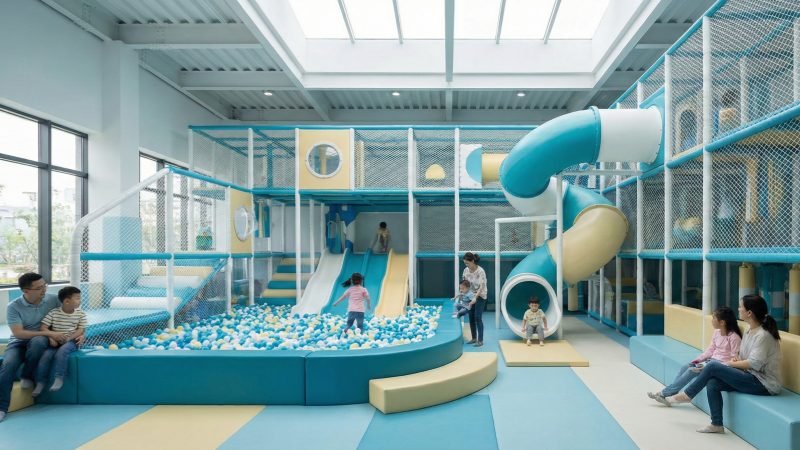
What are the essential requirements for creating a safe and compliant indoor soft playground?
A safe indoor playground requires a foundation of hot-dip galvanized steel frames, ASTM/EN-compliant safety netting, and high-density EPE foam padding. Essential equipment includes zoned active and toddler areas featuring hygiene-focused ball pits, fire-retardant vinyl coverings, and non-toxic commercial flooring, all arranged within a strategic layout that prioritizes visibility and emergency accessibility.
Core Structural Components for Foundation Safety
What are the fundamental elements required to build a structurally sound and safe indoor playground framework?
The foundation of a safe indoor playground relies on a grid of galvanized steel pipes, high-density foam insulation, and commercial-grade netting. These components function as the skeleton and skin of the structure, providing essential load-bearing support and impact absorption. Correct specification and assembly of these materials prevent structural collapse and protect users from hard surfaces during active play.
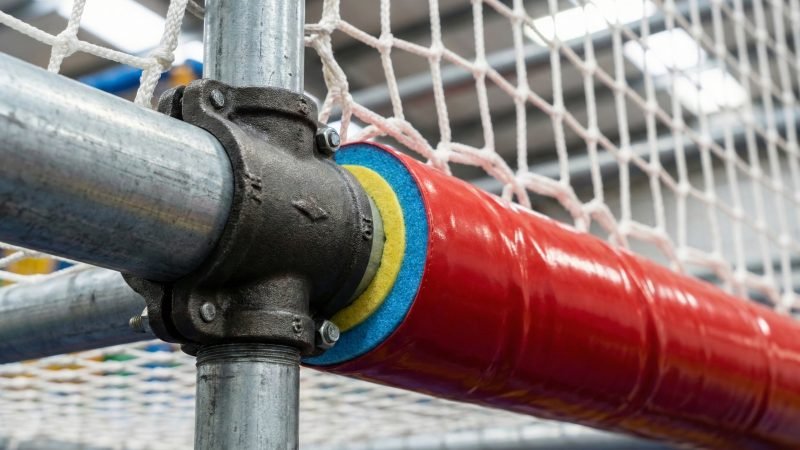
Heavy-Duty Structural Pipe Frames and Netting
The metal framework acts exactly like the scaffolding on a construction site. It supports the entire weight of the equipment and the children playing on it. Therefore, ordinary metal tubes are insufficient. You must use hot-dip galvanized steel pipes.
Galvanization is a process where steel is coated in zinc to prevent rust and corrosion. If a pipe rusts from the inside, the structure becomes weak and dangerous. Most commercial playgrounds use pipes with a standard diameter of 48mm. The wall thickness of these pipes usually ranges from 1.5mm to 3.25mm.
Note: Pipe thickness specifications can vary based on the height of your structure. Always verify the exact load-bearing requirements with your manufacturer, especially for multi-level designs.
Connections are equally important. The pipes are held together by cast iron fasteners or clamps. These clamps must be screwed tightly to ensure the frame does not wobble.
Safety Netting creates the walls of your structure. It prevents children from falling off high platforms. This netting is typically made from high-strength polyester or nylon machine-woven thread.
- Mesh Size: The holes in the net (mesh) must be small enough that a child cannot climb them like a ladder or get their head stuck. A standard mesh size is often around 40mm x 40mm.
- Attachment: The net must be laced securely to the steel frame using strong nylon ropes, not just plastic zip ties, which can snap under pressure.
High-Density Foam Padding and Vinyl Coverings
The steel frame provides strength, but it is hard and unforgiving. Therefore, every accessible metal pipe must be covered with soft padding. This padding acts like impact shielding, similar to a car bumper, absorbing the energy of a collision.
Industry professionals prefer EPE (Expanded Polyethylene) foam over standard sponge foam. EPE foam is firm and maintains its shape even after being hit many times. Standard sponge foam is too soft and flattens out quickly, losing its safety value.
The foam is then wrapped in a PVC Vinyl cover. This is the colorful “skin” you see on the playground.
- Thickness: The PVC leather is typically 0.45mm to 0.55mm thick. Thicker vinyl resists tearing when children scratch it or step on it.
- Fire Retardancy: The vinyl must inhibit the spread of fire. If a flame touches it, the material should self-extinguish rather than burn.
Comparison of Padding Materials:
| Feature | EPE Foam (Recommended) | Standard Sponge (Avoid) |
|---|---|---|
| Structure | Closed-cell, firm | Open-cell, soft |
| Durability | Retains shape for years | Flattens within months |
| Moisture | Water-resistant | Absorbs sweat/water |
| Impact | Disperses energy | Compresses to the metal |
Commercial Grade Safety Flooring Mats
The floor is the final defense against injury. You cannot place soft play equipment directly on concrete or hard tile. You require EVA (Ethylene Vinyl Acetate) mats. These are the puzzle-piece mats that lock together.
However, not all mats are the same. Commercial playgrounds use high-density mats that are specifically designed to cushion falls.
- Thickness: Common commercial standards utilize mats that are 20mm to 25mm thick. Thinner mats, often found in home playrooms, do not provide enough shock absorption for a commercial environment where kids might jump from heights.
- Texture: The surface must have a textured pattern (like a cross-hatch or leaf pattern). This provides grip (traction) so children running in socks do not slip and fall.
The interlocking design is critical for operational safety. If mats simply sit next to each other, they will slide apart, creating dangerous gaps. The puzzle-lock creates a seamless surface that acts as a single, continuous floor.
Furthermore, these mats must be non-toxic. Since toddlers often crawl face-down on these surfaces, the material must be free from harmful chemicals like Formamide.
Must-Have Soft Play Equipment for Active Zones
Which equipment components are essential for creating an engaging and safe active play environment for older children?
An effective active zone relies on high-energy features including deep ball pits with automated sanitation, enclosed spiral slides, and challenging obstacle courses. These elements are engineered to promote gross motor skills like climbing, sliding, and balancing, while utilizing soft, impact-absorbing materials and pneumatic systems to ensure physical safety during vigorous play.
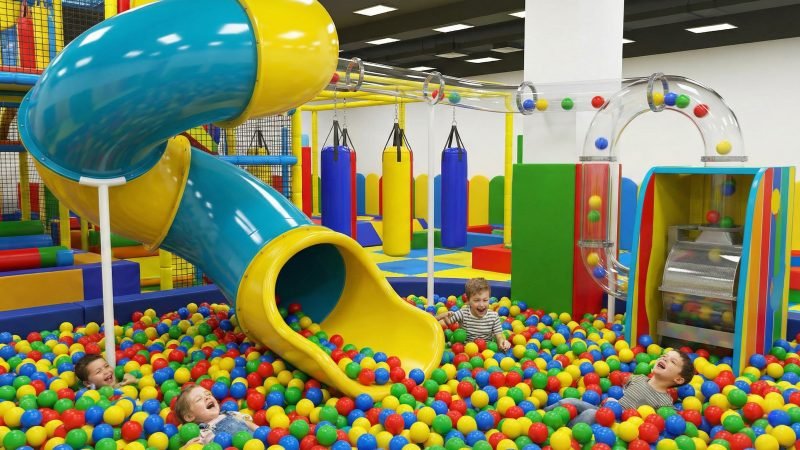
Ball Pits with Integrated Cleaning Systems
The ball pit is often the centerpiece of an indoor playground. However, for a commercial facility, simply filling a box with plastic spheres is not enough. You must consider both volume and hygiene.
Commercial ball pits generally require a depth of 40cm to 60cm to provide adequate cushioning for jumping children. A depth of 40cm is typically sufficient for junior areas, while active zones with higher platforms may require up to 60cm to prevent children from hitting the hard floor beneath when jumping.
The balls themselves are typically made from LDPE (Low-Density Polyethylene). Standard commercial balls have a diameter of 76mm or 80mm. This size is large enough to prevent choking hazards but small enough for a child to grasp.
The Hygiene Challenge:
In high-traffic zones, thousands of balls accumulate dust and bacteria. Manual cleaning is impossible. Therefore, a ball cleaning machine is essential equipment. This machine functions like a mechanical vacuum and dishwasher combined. It sucks the balls out of the pit, scrubs them with disinfectant brushes, dries them, and shoots them back into the pit.
Fiberglass and Plastic Spiral Slides
Slides serve as the primary exit routes from the upper levels of your play structure. In the industry, you will encounter two main materials: Rotomolded Plastic (LLDPE) and Fiberglass.
Rotomolded Plastic Slides:
These are the most common. They are made using a process called rotational molding, where heated plastic is spun in a mold. They are durable and fade-resistant. However, they are generally segmented, meaning you bolt them together in sections.
Fiberglass Slides:
These are often found in larger, high-end venues or “Donut Slides.” Fiberglass is smoother and faster than plastic. Because it is stiffer, it can support longer, continuous shapes without as many joints.
Comparison of Slide Materials:
| Feature | Rotomolded Plastic (LLDPE) | Fiberglass |
|---|---|---|
| Surface Friction | Medium (Slower speed) | Low (Higher speed) |
| Construction | Segmented/Jointed | Continuous/Seamless |
| Durability | High impact resistance | Rigid but can crack if impacted |
| Cost | Cost-effective | Premium investment |
Regardless of the material, the run-out section (the bottom of the slide) is critical. It must be long enough to slow the child down completely before they stand up. If the run-out is too short, children may collide with the wall or other equipment.
Soft Obstacle Courses and Ninja Warrior Elements
Active zones need to challenge a child’s agility. Soft obstacle courses transform a simple walkway into a physical puzzle. Unlike the static structural frames discussed previously, these elements are dynamic.
Common Obstacle Types:
- Hanging Spikes/Punches: These are foam-filled cylinders hanging from the top frame. Children must push through them.
- Web Crawls: Elastic bands woven horizontally or vertically.
- Log Bridges: Suspended foam beams that swing slightly when walked on.
For older demographics (ages 6-12), Ninja Warrior courses are increasingly popular. These use a stronger aluminum truss system separate from the standard pipe frame. They feature elements like warped walls and monkey bars. Here, the safety focus shifts to the landing zone. Underneath these challenging elements, you typically install a foam block pit rather than just floor mats. These foam blocks act like a giant sponge, safely absorbing the fall if a user loses their grip.
Interactive Ball Blasters and Fountains
Ball blasters add an interactive “cause and effect” dimension to the playground. These are pneumatic (air-powered) guns that shoot soft foam balls.
How They Work:
The system uses an air compressor hidden in a utility room or under the structure. Air travels through hoses to the blasters. When a child presses the trigger, a burst of air propels the ball.
- The Projectile: You must use specific foam balls, not the hard plastic ones from the ball pit. Foam balls are soft and porous. If a hard plastic ball is used, it could cause injury or damage the blaster mechanism.
- The Fountain: Often paired with blasters, a ball fountain uses a continuous air stream to levitate balls into the air or dump them from a basket overhead.
Maintenance Note:
The most common issue with this equipment is jamming. If debris (like hair or lint) gets into the air intake, the pressure drops. Consequently, the balls will get stuck in the barrel. Regular maintenance of the air compressor filters is mandatory to keep this equipment running.
Equipment specifically for Toddlers and Sensory Development
What specific equipment is required to safely accommodate toddlers and children with sensory needs in an indoor playground?
Dedicated toddler and sensory zones require equipment designed for low-impact interaction and cognitive stimulation. Essential components include high-density soft foam shapes for gross motor practice, wall-mounted tactile panels for fine motor development, and low-profile climbing structures that prevent falls from dangerous heights. These elements prioritize soft textures and ground-level accessibility to ensure safety for developing motor skills.
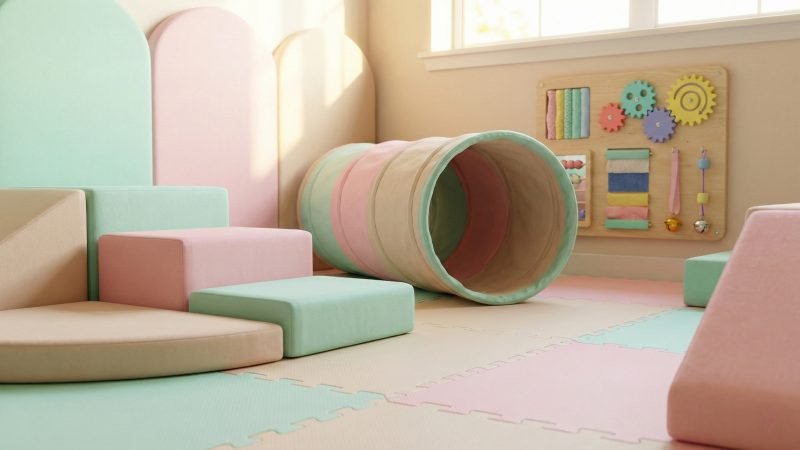
Soft Foam Building Blocks and Shapes
For children under the age of three, play is largely about learning how to manipulate objects. Therefore, loose soft play equipment acts as the fundamental “tools” for their development. Unlike the fixed steel structures discussed earlier, these components are mobile.
Material Composition:
These blocks use the same high-density foam core as structural padding, but the covering is different. Manufacturers typically use a softer, medical-grade PU (Polyurethane) leather. This material is smoother to the touch than the heavy-duty PVC vinyl used on main frames.
- Stitching Technique: A critical safety feature here is the hidden zipper or reverse stitching. Professional manufacturers never leave a metal zipper tab exposed. An exposed zipper could scratch a child or catch on clothing.
- Weight Balance: The foam must be dense enough to hold its shape when sat on, but light enough for a 2-year-old to lift. If a block is too heavy, it becomes a crushing hazard.
Common Shapes:
- Wedges and Ramps: Used for practicing balance on uneven surfaces.
- Cylinders and Cubes: Used for stacking and building spatial awareness.
- Rockers: Semi-circular shapes that allow safe swaying motion.
Wall-Mounted Sensory Boards and Tactile Panels
Sensory development focuses on fine motor skills and neurological stimulation. To achieve this without cluttering the floor plan, industry experts utilize wall-mounted panels. These panels function like an interactive control panel, offering various controls for the child to manipulate.
Types of Sensory Interactions:
- Tactile: Surfaces with different textures (rough grass, smooth mirrors, bumpy rivets).
- Auditory: Built-in xylophones, bells, or shakers that react to touch.
- Visual: Gear systems where turning one wheel rotates the others, teaching cause-and-effect.
Installation Safety:
Since these boards are heavy, mounting is critical. They must be bolted directly into the facility’s wall studs or a reinforced playground frame. They cannot simply hang like a picture frame. If a child hangs their full weight on a gear handle, the board must not detach. Furthermore, all components on the board must be non-removable. Every screw and knob is permanently sealed to prevent choking hazards.
Low-Profile Crawl Tunnels and Mini Climbers
Toddlers want to climb, but they lack the coordination to handle the large multi-level structures found in active zones. Therefore, you need soft structural play.
Unlike the “Heavy-Duty Structural Pipe Frames” mentioned in the first section, these mini climbers usually do not have a metal skeleton inside. Instead, they are solid blocks of sculpted foam glued together and covered in vinyl.
Height Restrictions:
The industry standard for toddler equipment usually caps height at 600mm to 900mm. Keeping the equipment low removes the need for heavy safety netting. If a child rolls off, they are only rolling a short distance onto a padded floor mat.
The Crawl Tunnel:
Crawl tunnels in this zone are typically made of soft foam arches rather than hard plastic tubes.
- Visibility: These tunnels are shorter and often have “peek-a-boo” windows. This ensures parents can always see the child inside.
- Impact: If a toddler stands up too quickly inside a hard plastic tunnel, they bump their head. In a soft foam tunnel, the material absorbs the impact instantly.
Comparison: Toddler Soft Structure vs. Main Frame Structure
| Feature | Toddler Soft Structure | Main Frame Structure |
|---|---|---|
| Core Material | Solid High-Density Foam | Galvanized Steel Pipe |
| Height | Low (<1 meter) | High (3+ meters) |
| Connection | Velcro/Vinyl Flaps | Iron Clamps |
| Target Age | 6 months – 3 years | 4 years – 12 years |
| Fall Risk | Minimal (Roll-off) | High (Requires Netting) |
Critical Safety Certifications and Material Standards
What are the mandatory safety certifications and material standards for commercial indoor playground equipment?
Commercial indoor playground equipment must comply with major international safety standards, specifically ASTM F1918 (USA) and EN 1176 (Europe). These regulations mandate strict protocols for fire retardancy, non-toxic material composition, and structural load-bearing limits to ensure the facility is legally compliant and safe for public use.
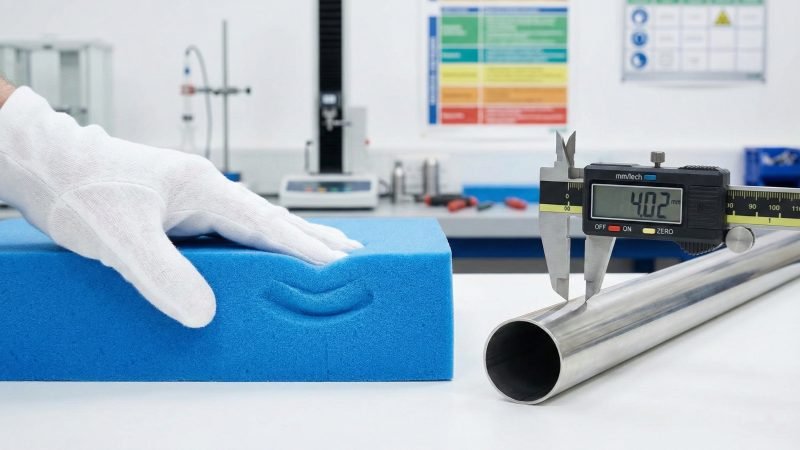
Understanding ASTM and EN1176 Compliance
When you purchase playground equipment, you are not just buying parts; you are buying a system that must pass strict legal inspections. Depending on your location, you will follow one of two main rulebooks.
ASTM F1918 (North America):
This is the specific standard for “Soft Contained Play Equipment.” It focuses heavily on entrapment hazards. It ensures that a child’s head, fingers, or clothing cannot get stuck in the netting or gaps. For example, if a gap is large enough for a child’s body to pass through, the head must also be able to pass through to prevent strangulation.
EN 1176 (Europe/Global):
This standard is widely accepted outside of North America. It places significant emphasis on fall heights. It dictates how thick the floor padding must be based on how high the equipment is.
Third-Party Verification:
You cannot simply trust a factory that claims they are “compliant.” You must ask for a certificate from a reputable third-party testing laboratory. In this industry, the most trusted names are TUV Rheinland or SGS. These labs act like independent auditors. They physically test the equipment to ensure it meets the rules.
Standard Comparison Table:
| Feature | ASTM F1918 (USA/Canada) | EN 1176 (Europe/International) |
|---|---|---|
| Primary Focus | Entrapment & Containment | Fall Zones & Structural Strength |
| Testing Body | Certified Labs (e.g., SGS) | TUV Rheinland, SGS |
| Head Entrapment | Strict probe testing | Strict probe testing |
| Documentation | Certificate of Compliance | TUV Certificate / GS Mark |
Fire Resistance and Non-Toxic Material Checks
Indoor playgrounds are enclosed spaces filled with foam and plastic. Therefore, fire safety is a non-negotiable priority.
Fire Retardancy:
The vinyl and foam used must be treated to resist ignition. The industry standard often refers to NFPA 701 (US) or BS 5852 (UK).
- The Test: During testing, a flame is applied to the material. When the flame is removed, the material must self-extinguish immediately. It should not continue to burn or drip melting plastic, which can spread fire to the floor.
Chemical Safety (Non-Toxic):
Children interact closely with the equipment. They touch it, crawl on it, and sometimes bite it. The materials must be free from heavy metals and harmful chemicals.
- Phthalates: These are chemicals used to make plastic soft. However, some types are harmful to children’s health. Your vinyl must be “Phthalate-free” or meet the strict limits set by regulations like CPSIA (USA) or REACH (Europe).
- Lead Content: Historically, lead was used in pigments for bright colors. Modern safety standards strictly ban lead in playground surface coatings. Always request a Material Safety Data Sheet (MSDS) from your supplier to verify the chemical composition.
Load-Bearing Capacity Verification
How much weight can the structure actually hold? This is determined by the Load-Bearing Capacity.
Think of the playground structure like a commercial elevator. It has a maximum weight limit that ensures it operates safely. The steel frame must support two types of weight:
- Dead Load: The weight of the equipment itself (slides, panels, netting).
- Live Load: The weight of the children playing, plus the weight of an adult rescuer who might need to enter.
The Industry Benchmark:
A quality commercial structure is typically engineered to support a specific weight per grid or per square meter. For instance, a standard 48mm pipe frame is often rated to support roughly 150kg to 200kg per square meter.
Please note that this figure can vary significantly based on the frame design and steel thickness provided by your specific supplier. Always confirm the exact engineering calculations for your custom design.
Testing Integrity:
Manufacturers verify this by placing heavy sandbags on the platforms during the test phase. This simulates the stress of a crowded play area. If the pipe bends or the fasteners slip under this weight, the structure fails the certification. This verification ensures that even if a platform is crowded with children, the floor will not collapse.
Strategic Layout Planning for Operational Safety
How does the layout design of an indoor playground directly impact operational safety and accident prevention?
Strategic layout planning mitigates risks by physically separating age groups to prevent high-energy collisions, maintaining open lines of sight for staff supervision, and establishing clear evacuation routes. An effective floor plan acts as a passive safety system, guiding traffic flow and ensuring that rapid emergency access is maintained at all times regardless of facility capacity.
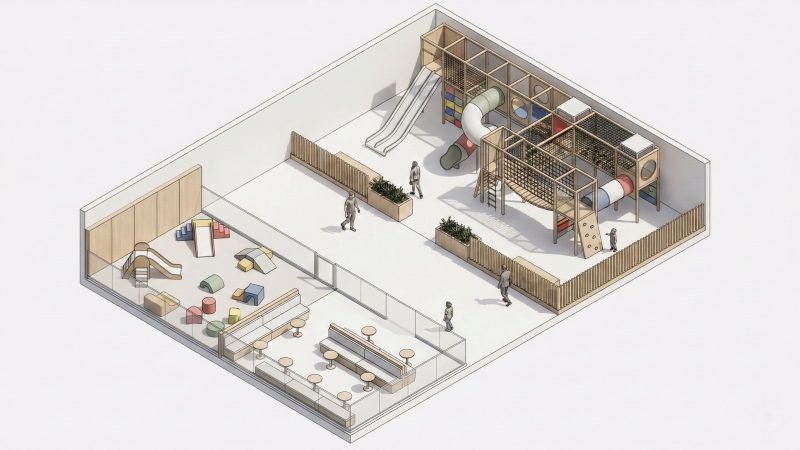
Zoning by Age Group to Prevent Collisions
The most common cause of injury in indoor playgrounds is not equipment failure, but user collision. This happens when high-energy older children collide with slower, smaller toddlers. To solve this, you must design your floor plan with distinct zones based on physical capability.
The “Zone Separation” Principle:
Think of this like a swimming pool that separates the shallow end from the deep end. You cannot allow a 12-year-old sprinting through an obstacle course to cross paths with a 2-year-old crawling on a mat.
- Active Zone (Ages 5-12): Place this area at the back or side of the facility. It houses the large multi-level structures and spiral slides.
- Toddler Zone (Ages 0-4): Position this area near the main entrance or the parents’ seating area. This allows for closer supervision and prevents toddlers from wandering into the high-traffic active zone.
Buffer Zones:
Effective layouts use physical barriers to enforce this separation. Instead of just a line on the floor, professional designers use “Buffer Zones.” A buffer zone might be a low seating bar, a shoe rack area, or a pathway. This physical obstacle stops a running child from accidentally crossing into the wrong area.
Zoning Characteristics Table:
| Feature | Toddler Zone | Active/Junior Zone |
|---|---|---|
| Pacing | Slow, low-impact | Fast, high-energy |
| Placement | Front / Near Seating | Rear / Perimeter |
| Barriers | Low fences (60cm) for visibility | High netting to contain balls |
| Flooring | Continuous flat soft mats | Varied levels and obstacles |
Ensuring Clear Visibility Lines for Supervision
Safety relies heavily on the ability of parents and staff to see the children. If a child is distressed or acting unsafely, an adult must be able to spot them immediately. This concept is called “Line of Sight.”
Avoiding the “Fortress Effect”:
A common mistake in bad design is placing tall, opaque equipment in the center of the room. This creates blind spots.
- Center Placement: Use low-profile equipment (like merry-go-rounds or ground-level soft play) in the center of the floor plan.
- Perimeter Placement: Push the tall, multi-level frames against the walls. This creates a “theater” effect where adults can sit in the middle or front and see everything without obstruction.
Transparent Barriers:
When designing the structure itself, specify the use of anti-climb netting or transparent polycarbonate windows for high-traffic areas inside the maze. Avoid using solid vinyl panels on the front-facing side of the structure. This ensures that even when a child is inside the tube or on the second level, they remain visible from the ground.
Designing Accessible Emergency Exits and Pathways
In the event of a power outage or fire, you must get everyone out quickly. The layout must facilitate a smooth evacuation flow without bottlenecks.
Pathway Widths:
The main walkways between equipment zones should be wide enough to accommodate two adults walking side-by-side or a wheelchair user. A standard industry recommendation is a minimum width of 1.2 meters (4 feet) for main aisles.
Please consult your local fire marshal and ADA (Americans with Disabilities Act) guidelines, as these width requirements vary strictly by region and building capacity.
The “Dead-End” Rule:
Avoid creating dead-ends in your layout. Ideally, the flow around the play equipment should be a loop. If a panic occurs, people should not be trapped in a corner behind a ball pit.
Gate placement is also critical.
Do not rely solely on the main entrance. Commercial layouts typically include a secondary emergency exit gate at the rear of the play area. Ensure that no equipment blocks the path to this door. Furthermore, the flooring mats near exits should be flush with the ground or ramped to prevent tripping hazards during an evacuation.
Conclusion
Building a successful indoor soft playground requires a balance between exciting play features and rigorous safety standards. From the hidden structural pipes to the visible vinyl padding, every component plays a role in protecting your young visitors.
By adhering to this essential equipment checklist—selecting commercial-grade materials, obtaining necessary ASTM/EN certifications, and implementing strategic age-based zoning—you create an environment that is not only fun but also operationally secure. Investing in quality equipment and intelligent design upfront reduces maintenance costs and mitigates liability, ensuring your facility remains a trusted destination for families for years to come.