-
Whatsapp: +86 15516933785
-
Email: hanlin@hanlinplayground.com
-
Address: Shangjie District, Zhengzhou City, Henan Province, China
-
Whatsapp: +86 15516933785
-
Email: hanlin@hanlinplayground.com
-
Address: Shangjie District, Zhengzhou City, Henan Province, China

How to Vet Outdoor Playground Equipment Manufacturers: A 2026 Buyer’s Guide
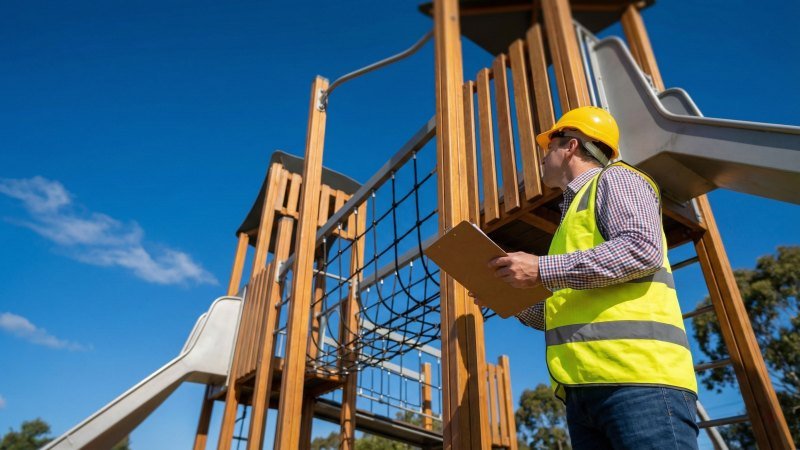
What are the critical steps and criteria for successfully vetting outdoor playground equipment manufacturers to ensure safety, durability, and financial value?
To effectively vet manufacturers, buyers must verify compliance with safety standards like ASTM F1487 or EN 1176, inspect manufacturing quality through live video audits, and scrutinize material specifications such as galvanized steel wall thickness and UV-8 plastic ratings. But compliance is just the baseline. A comprehensive evaluation requires analyzing the total cost of ownership—including logistics and maintenance—while ensuring the supplier offers transparent, comprehensive warranty coverage.
Verifying Essential Safety Certifications and Industry Standards
What are the critical safety certifications a buyer must confirm before purchasing commercial playground equipment?
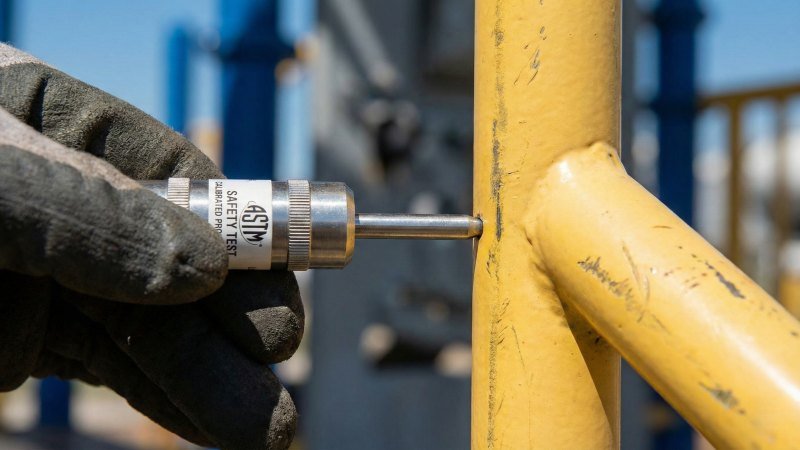
To ensure safety and legal compliance, buyers must verify that a manufacturer adheres to ASTM F1487 standards for the United States or EN 1176 for international markets. But don’t just take their word for it; third-party validation through IPEMA certification is essential to prove the equipment meets these standards, while ISO 9001 certification confirms the factory maintains consistent quality management systems.
Understanding ASTM F1487 and CPSC Guidelines for US Markets
If your project is located in the United States, adhering to the American Society for Testing and Materials (ASTM) standards is non-negotiable. Specifically, ASTM F1487 outlines the performance requirements for public use playground equipment. This standard focuses on reducing life-threatening injuries, addressing distinct hazards like head entrapment, sharp points, and structural integrity.
The Consumer Product Safety Commission (CPSC) also publishes the Public Playground Safety Handbook. While ASTM sets the voluntary manufacturing rules, many states and local municipalities adopt CPSC guidelines as legal requirements. A reputable manufacturer designs equipment that satisfies both.
Here is where it gets tricky: the “Use Zone.” This is the surface area under and around equipment where a child might land. For example, a stationary climber usually requires a use zone extending 6 feet (1.8 meters) in all directions. However, specifications regarding use zones and critical fall heights can vary depending on the specific product design and supplier engineering. Always confirm specific use zone dimensions directly with your manufacturer to ensure your site plan is compliant.
Key Hazards Addressed by ASTM F1487:
- Entrapment: Preventing gaps where a child’s head or neck could get stuck.
- Protrusions: Ensuring bolts or hardware do not stick out and catch clothing.
- Crush Points: Eliminating moving parts that could pinch fingers.
Checking for EN 1176 Compliance for International Projects
For projects outside the United States, particularly in Europe, Asia, and the Middle East, the EN 1176 standard is the primary benchmark. While similar to ASTM, EN 1176 has different technical requirements regarding test probes and fall heights. A manufacturer claiming global reach must understand these differences.
Using ASTM-certified equipment in a region requiring EN 1176 can lead to failed inspections. For instance, the testing probes used to measure gaps in guardrails differ slightly in size between the two standards. A gap that passes ASTM inspection might fail an EN 1176 inspection because the European standard uses different anthropometric data (body measurements) for children.
Comparison of Key Standards
| Feature | ASTM F1487 (USA) | EN 1176 (International) |
|---|---|---|
| Focus | Public Use Playground Equipment | Playground Equipment and Surfacing |
| Fall Height | Generally allows higher fall heights | Stricter limits on free fall height |
| Entrapment Probes | Uses specific torso and head probes | Uses different probe sizes for testing |
| Rope Equipment | Specific standards for flexibility | Detailed dynamic load testing for nets |
The Importance of Third Party IPEMA Certification
A manufacturer can claim their products meet safety standards, but validation is key. This is where the International Play Equipment Manufacturers Association (IPEMA) comes in. IPEMA provides third-party validation.
Think of IPEMA as an independent building inspector. The manufacturer builds the structure, but the inspector confirms it follows the code. IPEMA hires independent laboratories to test equipment against ASTM and CSA (Canadian) standards. If the equipment passes, the manufacturer earns a certification seal.
Why is this critical?
- Liability Reduction: Using certified equipment reduces legal risk for the park owner.
- Validation: It proves the product was tested by a neutral party, not just the factory’s internal team.
- Up-to-Date Compliance: IPEMA requires regular re-testing to ensure ongoing compliance.
Buyers should always visit the official IPEMA website to verify a manufacturer’s status rather than relying solely on a logo printed on a catalog page.
ISO Certification and Quality Management Systems
While ASTM and EN standards focus on the product design, ISO certifications focus on the factory process. A reliable manufacturer should hold ISO 9001 certification. This standard governs Quality Management Systems (QMS).
ISO 9001 ensures consistency. It means the factory has a documented process for every step of production. It guarantees that the slide produced on Monday is exactly the same quality as the slide produced on Friday. Without this, a factory might produce one perfect sample for testing but fail to maintain that quality during mass production.
In the playground industry, this is similar to the strict torque protocols used when assembling structural steel beams. If the protocol requires a specific tension, ISO 9001 ensures that every worker applies that setting every single time, rather than guessing.
Look for these ISO Standards:
- ISO 9001: Ensures consistent manufacturing quality and customer service processes.
- ISO 14001: Demonstrates the manufacturer follows environmental management standards, reducing waste and pollution during production.
Assessing Material Durability for Commercial Environments
Which material specifications maximize the lifespan of outdoor playground equipment in harsh climates?
To maximize longevity, buyers should prioritize hot-dipped galvanized steel or marine-grade aluminum frameworks for structural integrity, ensuring all plastic components utilize UV-8 stabilizers or higher to resist degradation. Real-world commercial durability also requires powder coating thickness exceeding 3 mils and the use of steel-reinforced ropes with a minimum tensile strength of 3,500 lbs to withstand intensive public use.
Galvanized Steel versus Aluminum Alloy Frameworks
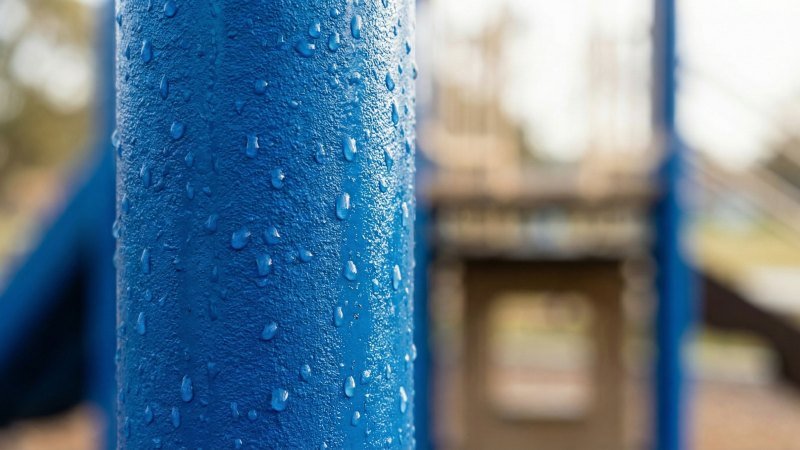
When vetting a manufacturer, the first decision often involves the skeleton of the structure: the posts. Most commercial playgrounds use either galvanized steel or aluminum alloy. The choice depends largely on your local environment.
Galvanized Steel is the industry workhorse. It involves dipping steel pipes into molten zinc to create a protective shield against rust. Manufacturers typically use 114mm (4.5-inch) or 127mm (5-inch) diameter pipes. The wall thickness is the critical differentiator: “Schedule 40” (approx. 6mm) is the heavy-duty standard, while 2.2mm to 3.0mm is the standard for general commercial use. Anything thinner compromises structural integrity.
Aluminum Alloy, specifically grades like 6005-T5, offers different benefits. It is naturally resistant to rust, even without coating. This makes it ideal for coastal areas with salty air. However, aluminum is softer than steel. To compensate, manufacturers must often use thicker walls or internal reinforcement ribs to achieve the same strength as steel.
Material Comparison for Buyers
| Feature | Galvanized Steel | Aluminum Alloy (6005-T5) |
|---|---|---|
| Primary Strength | Extremely rigid; high load-bearing capacity. | Lightweight; naturally corrosion-resistant. |
| Best Environment | Urban parks, schools, inland areas. | Coastal regions, water parks, humid climates. |
| Cost Profile | Generally more affordable. | Typically higher material cost. |
| Maintenance | Needs immediate touch-ups if coating chips. | Surface scratches do not lead to structural rust. |
Note: Wall thickness specifications can vary by manufacturer. Always verify the exact gauge or Schedule rating with your supplier before purchase.
UV Stability Ratings for Rotational Molded Plastics
Plastic slides and panels are usually made from Linear Low-Density Polyethylene (LLDPE) using a process called rotational molding. The biggest enemy of these parts is the sun. Without protection, they will fade (chalking) and become brittle within a few years.
You must ask manufacturers about their UV Stabilization rating. The industry standard is UV-8.
What does UV-8 mean? It means the plastic has been tested to survive 8,000 hours of intense UV exposure while retaining at least 50% of its original strength.
There is a critical difference in how manufacturers add this protection:
- Dry Blending: The manufacturer simply mixes powder stabilizer with plastic pellets in the mold. This is cheaper but less effective as the protection can be uneven.
- Melt Compounding: The stabilizer is melted into the plastic resin before it ever reaches the mold. This ensures the protection is bonded at a molecular level throughout the entire part.
Buyer Tip: Ask the manufacturer if they use “compounded resin” or “dry blended resin.” Compounded resin offers superior long-term color retention.
Rust Prevention Techniques and Powder Coating Thickness
Paint on a playground is not just for looks; it is the final barrier against corrosion. High-quality manufacturers use an electrostatic powder coating process. However, the quality lies in the preparation, not just the spraying.
Before coating, the metal must undergo shot blasting or sandblasting. This removes oil and creates a rough surface profile (anchor pattern). This is similar to roughing up a smooth pipe before applying industrial adhesive; if the surface is too smooth, the bond fails.
After blasting, the powder is baked on. You need to verify the thickness of this coating. A standardized thickness is usually between 3 to 5 mils (thousandths of an inch). If it is too thin, it wears off; if it is too thick, it becomes brittle and cracks.
Key Metric: Salt Spray Testing
Ask for the manufacturer’s ASTM B117 Salt Spray Test results. This test sprays salt fog on the metal for thousands of hours to see when rust appears.
- Standard: 1,500 hours without creeping rust.
- Superior: 3,000 to 5,000 hours without creeping rust.
Note: Salt spray hours are laboratory results. Real-world performance may vary based on local humidity and salinity.
Tensile Strength Requirements for Ropes and Netting
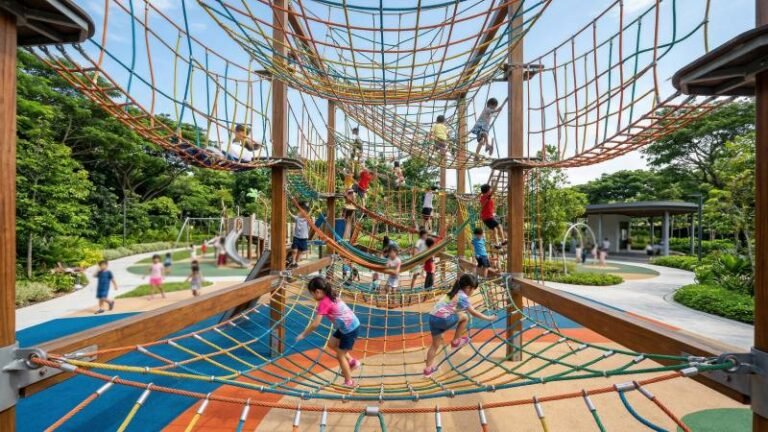
Modern playgrounds often feature large climbing nets. These are not standard ropes. For commercial use, manufacturers must use steel-core combination ropes.
These ropes typically feature a six-strand galvanized steel wire core. This steel core provides the tensile strength, often rated to withstand over 3,500 to 7,000 lbs of force depending on the diameter (usually 16mm or larger). This ensures the net cannot be cut easily by vandals and will not snap under the weight of many children.
The steel is then wrapped in a soft synthetic layer, usually Polyester or Nylon.
- Nylon: Very soft to the touch and durable but can absorb water and stretch.
- Polyester: High UV resistance and better abrasion resistance than nylon. It feels slightly rougher but holds its color better.
You should also inspect the connectors—the pieces that hold the ropes together. Plastic connectors are prone to cracking in freeze-thaw cycles. Ideally, look for compressed aluminum ferrules or heavy-duty stainless steel clamps. These function like the heavy crimps used on industrial wire slings, ensuring the rope cross-points never slip or separate.
Evaluating Design Engineering and Customization Capabilities
How can buyers distinguish between a manufacturer that merely resells standard kits and one that offers true custom engineering solutions?
To validate design capabilities, buyers must verify that the manufacturer provides site-specific engineering to adapt structures to uneven topography rather than requiring perfect grading. A top-tier supplier will also offer professional CAD layout services, bespoke theming options beyond standard colors, and the seamless integration of ADA-compliant features into the primary design flow.
Engineering Support for Site Specific Topography
Most playground catalogs show equipment sitting on a perfectly flat surface. However, real parks and schoolyards rarely look like that. The ground often slopes, dips, or has existing trees that cannot be moved.
A “box-pusher” supplier will require you to flatten your land, which involves expensive earthmoving machinery. In contrast, a true manufacturer offers site-specific engineering. This means they adjust the equipment to fit your land.
This process involves designing vertical support posts with varying lengths to accommodate slope changes, utilizing stepped platforms or transition bridges to manage elevation. This approach saves money on excavation. If a supplier cannot adjust their design to match your grade lines, they lack necessary engineering depth.
Ability to Produce Custom Themes and Color Schemes
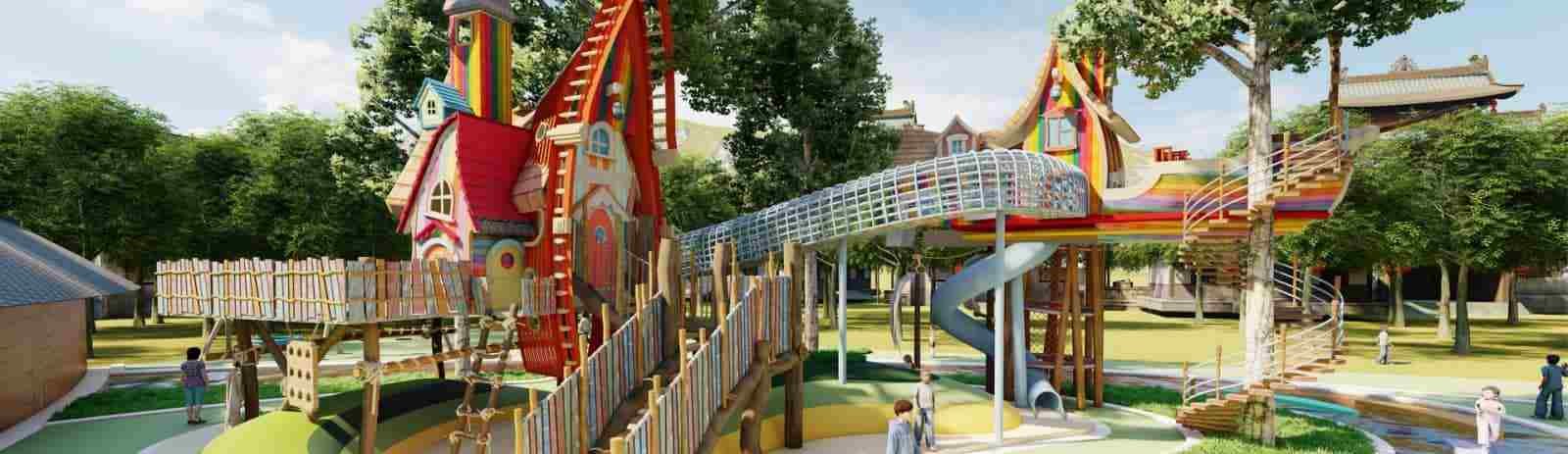
Customization goes beyond simply picking blue plastic instead of red. High-level manufacturers can create entirely unique environments, such as a pirate ship, a castle, or a nature-inspired forest.
There are two main ways manufacturers achieve this:
- Custom HDPE Routing: Manufacturers use high-density polyethylene (HDPE) sheets. They use CNC machines to carve intricate designs, logos, or mascots directly into the panel. This is durable because the design is physically cut into the material, not painted on.
- Custom Rotational Molding: For large projects, a factory might create a brand-new mold. For example, they might mold a slide entrance that looks like a giant frog’s mouth.
Levels of Customization
| Level | Description | Typical Application |
|---|---|---|
| Standard | Choosing from a set palette of colors for metal and plastic. | Budget-conscious schools. |
| Thematic | Adding themed panels (e.g., gears, clocks) to standard posts. | Community parks. |
| Bespoke | Custom structural shapes, unique roofs, and engraved branding. | Destination playgrounds and resorts. |
Provision of Professional CAD Drawings and 3D Renderings
You should never buy commercial playground equipment based solely on a catalog photo. You need to see exactly how it fits in your specific space.
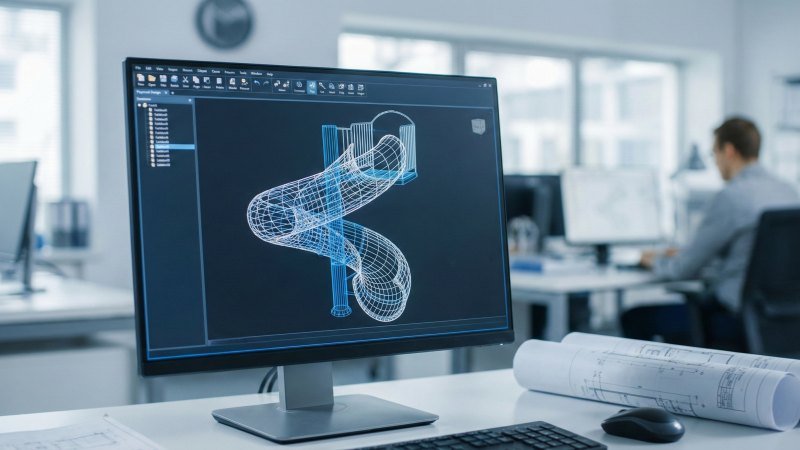
Professional manufacturers employ design teams that use software like AutoCAD and 3DS Max. They take your site dimensions and create a 2D Top View (Plan View). This technical drawing is critical. It shows the “Use Zones” (safety clearance areas) to ensure the slide exit doesn’t hit a fence or a sidewalk.
After the technical layout is approved, they should provide 3D Renderings. These are photo-realistic images that help you visualize the final project from different angles. This is especially useful if you need to present the idea to a school board or a city council for funding approval.
Key Deliverables to Request:
- DWG Files: For your architect to import into the master site plan.
- Renderings: High-resolution images showing the equipment in your actual setting.
- Component List: A detailed breakdown of every play event included in the design.
Integration of Inclusive and ADA Compliant Features
Inclusivity means more than just adding a wheelchair ramp. It involves designing a space where children of all abilities can play together. In the US, the Americans with Disabilities Act (ADA) sets specific guidelines. A competent manufacturer understands these rules deeply.
For example, a Transfer Station is required for elevated play components. This is a series of low platforms that allows a child to lift themselves out of a wheelchair and onto the structure.
But it goes deeper than just ramps. Designers must consider “Ground Level Play Components.” These are activities accessible without climbing. A good design integrates musical instruments, sensory panels, or ground-level sway boats. Designers must also calculate the Slope Ratios. For a wheelchair ramp, the standard slope is usually 1:12. If a manufacturer designs a ramp that is too steep, it is unusable and non-compliant.
Auditing Manufacturing Reliability and Production Capacity
How can a buyer verify that a supplier possesses the actual infrastructure to manufacture high-quality equipment on time?
To validate manufacturing reliability, buyers must conduct live video audits to inspect active machinery and verify in-house production capabilities versus reliance on subcontractors. Then there is the issue of scale: assessing production scalability ensures lead time consistency during peak seasons, while reviewing documented pre-shipment quality control protocols confirms that the final output matches approved specifications.
Requesting Virtual Factory Tours or Live Video Audits
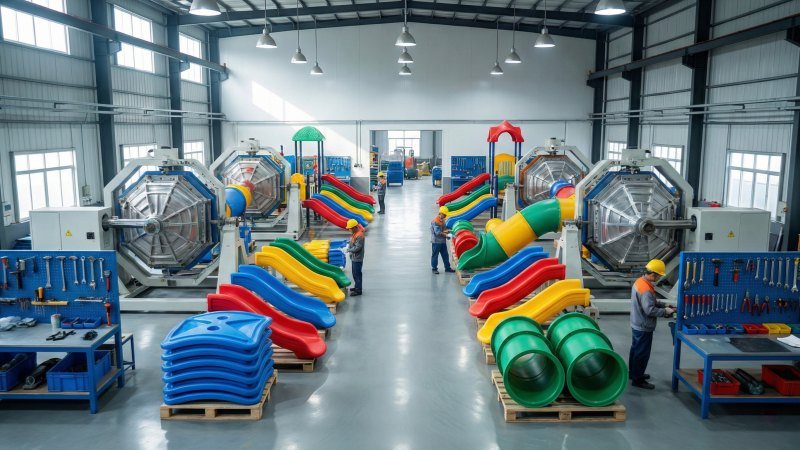
In the digital age, a static photo on a website is not proof of manufacturing capability. Anyone can download a stock image of a factory. Therefore, you must demand a live video audit.
Do not settle for a pre-recorded video. Request a real-time call using Zoom, WhatsApp, or WeChat. During this call, ask the sales representative to walk onto the production floor. You want to see the machines running and sparks flying from welders.
This is similar to a structural engineer inspecting a building site; you need to see the rebar before the concrete is poured. Similarly, seeing the factory in real-time reveals the truth about their operations.
What to look for during the live tour:
- Inventory Levels: Are there stacks of raw steel pipes and plastic resin? This indicates active production.
- Worker Activity: Are staff wearing safety gear and uniforms? This reflects safety culture.
- Machine Operation: Ask to see the rotational molding machine in action.
Verifying In House Production versus Outsourcing
Many companies claiming to be “manufacturers” are actually trading companies. These middlemen buy parts from various small workshops and assemble them. This adds cost and destroys quality control.
You need to verify that the supplier has in-house production capabilities. A true Original Equipment Manufacturer (OEM) controls every step. They should own their own rotational molding ovens, CNC pipe bending machines, and powder coating lines.
If a company outsources its powder coating to a third party, they lose control over the curing process. If the third party rushes the job, your playground will rust, and your “manufacturer” cannot fix it quickly.
Manufacturer vs. Trading Company
| Feature | Genuine Manufacturer | Trading Company / Middleman |
|---|---|---|
| Price Control | Lower; direct factory pricing. | Higher; they must add a margin. |
| Quality Control | Direct oversight of every weld. | No direct control; relies on sub-suppliers. |
| Customization | Can modify designs easily. | Limited to standard catalog items. |
| Problem Solving | Immediate access to engineers. | Delays; must relay messages to the factory. |
Production Scalability and Lead Time Consistency
The playground industry is highly seasonal. Demand spikes in the months leading up to summer. A small factory might handle your order easily in December, but can they handle it in April?
You must ask about production capacity. Specifically, ask how many rotational molding machines (rotomolds) they possess. A typical slide takes about 45 to 60 minutes to mold. If a factory only has one machine, they can only produce a limited number of slides per day.
If you have a large project requiring 20 distinct play structures, a small factory will suffer from bottlenecks. This leads to missed deadlines.
Questions to ask regarding Lead Time:
- “What is your current production queue length?”
- “Do you have a night shift during peak season?”
- “Do you stock standard components like clamps and caps, or are they made to order?”
Pre Shipment Quality Control Protocols and Inspection Reports
Once the equipment ships, it is too late to fix a mistake. Returning a 40-foot container of steel is logistically impossible. Therefore, Pre-Shipment Inspection (PSI) is vital.
A reliable manufacturer performs a Trial Assembly. They should physically build your playground structure in their factory yard before packing it. This ensures all the bolt holes align and the specialized connectors fit the posts.
Ask specifically for a Trial Assembly Report. This report should include photos of your specific playground fully assembled. Do not accept a generic “QC Passed” stamp. You need visual proof.
Essential Checkpoints in the QC Report:
- Weld Quality: Photos showing smooth, “fish-scale” welds with no slag or cracks.
- Coating Integrity: Verification that no scratches occurred during the trial assembly.
- Part Count: A checklist confirming every screw, washer, and cap is in the box. Missing hardware delays installation by days.
Scrutinizing Warranty Terms and After Sales Support
What defines a trustworthy warranty and support package in the commercial playground industry?
A reliable manufacturer provides a tiered comprehensive warranty, typically offering lifetime coverage for structural metal posts, 10 to 15 years for plastic components, and 1 to 3 years for moving parts. But a warranty is useless without support. Buyers must verify the supplier maintains a readily available stock of spare parts for rapid deployment and provides lifetime technical support to resolve installation challenges immediately.
Distinguishing Between Limited and Comprehensive Coverage
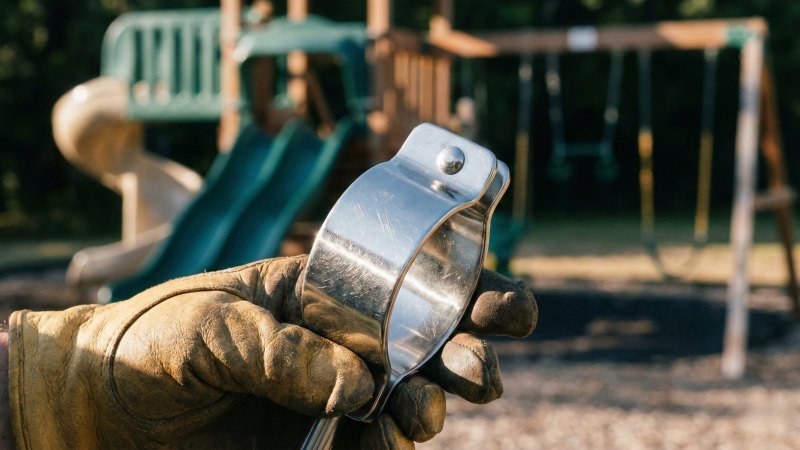
A warranty document is often long and boring, but it is the most critical document you will sign. Many buyers make the mistake of seeing “Lifetime Warranty” on a website banner and assuming it covers everything. It rarely does.
In this industry, warranties are tiered. This means different parts have different coverage periods based on their expected lifespan. You need to distinguish between a “Limited Warranty” that only covers factory defects and a comprehensive policy that stands behind the product’s performance.
This is similar to a commercial construction contract where the structural steel has a decades-long guarantee, but high-wear items like door hinges or flooring have significantly shorter coverage. You must demand a Warranty Schedule that clearly breaks down coverage by material.
Typical Industry Warranty Standards
| Component Category | Standard Warranty Period | What it Covers |
|---|---|---|
| Structural Uprights | Lifetime (or 100 Years) | Structural failure due to corrosion or deterioration. |
| Rotational Molded Plastics | 10 to 15 Years | Structural integrity; exclusion often applies to minor fading. |
| Steel Core Ropes | 3 to 5 Years | Breakage of the steel core; often excludes cosmetic fraying. |
| Moving Parts | 1 to 3 Years | Bearings, swing hangers, and springs. |
| Electronics/Sensors | 1 Year | Circuit boards and speakers in interactive play panels. |
Note: Warranty terms vary significantly by manufacturer. Always ask if the warranty includes labor costs for replacement or only the cost of the part itself.
Availability and Shipping Speed of Spare Parts
Even the best equipment will eventually need maintenance. A swing seat might crack, or a bolt cap might go missing. When this happens, your playground might have to close for safety reasons.
The key question is: How long will the playground be closed?
If your manufacturer is purely a “made-to-order” factory, they might not have spare parts sitting on a shelf. They might have to manufacture a single swing hanger just for you. This could take weeks. A top-tier manufacturer keeps a dedicated After-Sales Inventory of high-wear items.
You should ask: “If a swing bearing breaks today, can you ship a replacement within 24 hours?”
Common “High-Wear” Parts to Check:
- Swing seats and chains.
- Pivoting hangers and bearings.
- Plastic bolt covers and post caps.
- Springs for rocking equipment.
Technical Support for Installation and Maintenance
The relationship with your manufacturer should not end when the truck leaves the dock. Installation is a complex process. Sometimes, an installer might dig a footer hole in the wrong spot, or a specific bracket might seem confusing.
You need accessible technical support. This means having a direct phone number or WhatsApp contact for an engineer or a technical lead, not just a general sales email.
Does the manufacturer provide detailed Installation Manuals? These should be step-by-step guides with diagrams, similar to detailed construction schematics or “LEGO-style” instructions, making assembly intuitive.
Valuable Support Assets:
- Video Tutorials: Short clips showing how to assemble complex net structures.
- Maintenance Checklists: A provided schedule telling your maintenance team what to inspect weekly, monthly, and annually.
- Live Troubleshooting: The ability to video call an engineer from the job site to solve alignment issues.
Clarifying Exclusions for Environmental Wear and Vandalism
Every warranty has a section called “Exclusions.” This is the fine print that tells you what is not covered. You must read this carefully to avoid expensive surprises.
One major exclusion relates to Coastal Installations. If your playground is within a certain distance (often 1 to 5 miles) of the ocean, salt spray can cause rapid rust. Many standard warranties become void in these zones unless you purchased a special “Marine Grade” upgrade package.
Another common exclusion is Cosmetic vs. Structural issues. A plastic slide might fade slightly in the sun over five years. Most warranties classify this as “normal wear and tear” and will not replace the slide unless it actually cracks or breaks.
Standard Exclusions to Watch For:
- Vandalism: Damage caused by graffiti, burning, or intentional destruction is almost never covered.
- Improper Installation: If your installer forgets a washer or uses the wrong concrete mix, the warranty is void.
- “Acts of God”: Damage from tornadoes, floods, or earthquakes.
- Lack of Maintenance: If you cannot prove you greased the bearings annually, they may deny a claim for worn-out bearings.
Analyzing Total Cost of Ownership Beyond the Sticker Price
What hidden financial factors must a buyer calculate to determine the real long-term price of a playground project?
To accurately assess total cost of ownership, buyers must calculate landed costs including ocean freight, import tariffs, and inland trucking, which often add 20% to 40% to the factory price. You also need to budget for the inevitable: allocate 1% to 3% of the initial capital investment annually for maintenance inspections and surfacing top-ups, while prioritizing modular designs to avoid expensive full-structure replacements in the future.
Calculating Shipping Logistics and Import Duties
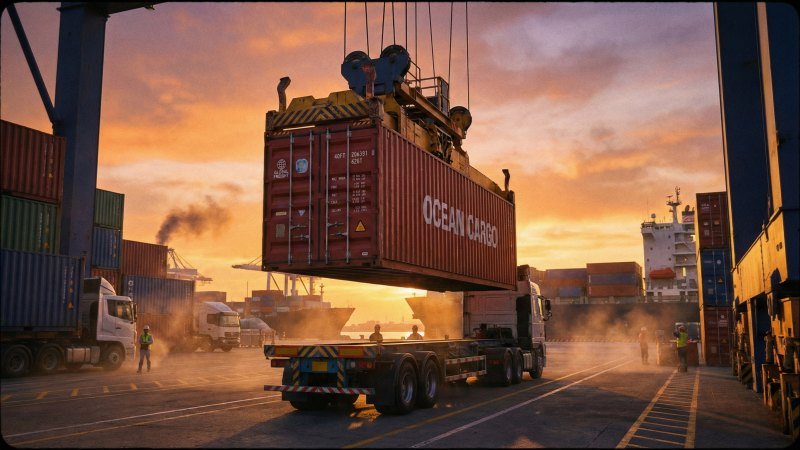
When buying from a manufacturer, the price listed in the catalog is rarely the final price you pay. This is usually the “Ex-Works” (EXW) or “Free on Board” (FOB) price. This covers the equipment only. It does not get the slide to your park.
You must calculate the Landed Cost. Playground equipment is bulky. Even a medium-sized structure can fill a 40-foot shipping container. Unlike buying electronics where weight matters, in shipping playgrounds, volume (CBM) is king. You are paying for “air” because slides and curved tubes take up a lot of space but cannot be stacked tightly. Think about it: why pay to ship empty space when smart packing could save you thousands?
Additionally, you must identify the correct HS Code (Harmonized System Code) for the equipment to determine import duties. For example, in many regions, playground equipment falls under specific codes that might carry tariffs ranging from 0% to 25% depending on trade agreements between countries.
Logistics Cost Breakdown Example
| Cost Component | Description | Estimated Impact |
|---|---|---|
| Ocean Freight | Cost to move container from factory port to destination port. | High (Fluctuates seasonally) |
| Customs Duties | Taxes paid to your government based on the HS Code. | Varies (Check local laws) |
| Port Handling | Fees for cranes to lift the container off the ship. | Fixed fee per container |
| Inland Trucking | Delivering the container from the port to your construction site. | Distance dependent |
Estimating Long Term Maintenance and Repair Costs
Buying the playground is a Capital Expenditure (CAPEX). Keeping it safe is an Operational Expenditure (OPEX). A cheap playground that requires constant repairs will eventually cost more than a premium one.
A smart rule of thumb for budgeting is to set aside 1% to 3% of the total equipment cost annually for maintenance.
Where does this money go?
- Surfacing Top-Ups: If you use loose-fill surfacing like wood chips or engineered wood fiber, it compacts and decomposes. You must top it up every 1-2 years to maintain proper cushion depth.
- Professional Inspections: In many jurisdictions, you are legally required to hire a Certified Playground Safety Inspector (CPSI) annually to audit the site.
- Wear-and-Tear Parts: Even with a warranty, items like swing bearings or net connectors might need replacing after heavy use.
This is similar to the ongoing maintenance required for commercial HVAC systems; the initial install is one cost, but regular filter changes and servicing are required to keep it running safely.
The Relationship Between Modular Design and Upgradeability
The design philosophy of the manufacturer directly impacts your future wallet. You should look for Modular Design.
A modular playground works like a construction set. The decks, posts, and panels are standardized. If a specific slide becomes damaged or if you simply want to refresh the park’s look in 10 years, you can unbolt just that component and replace it.
In contrast, some manufacturers weld their structures into large, singular pieces. This is “monolithic” design. If one part of a monolithic structure fails, or if safety standards change regarding that specific climber, you might have to rip out the entire playground.
Financial Impact of Design Choices
| Feature | Modular System | Monolithic (Welded) System |
|---|---|---|
| Repair Method | Unbolt and replace specific part. | Cut, weld, and repaint on-site. |
| Upgrade Cost | Low; buy one new panel ($500+). | High; replace whole unit ($5,000+). |
| Obsolescence | Adaptable to new standards. | Static; risks becoming non-compliant. |
| Resale Value | Components can be reused/moved. | Scrap metal value only. |
Identifying Red Flags Before Signing the Contract
What are the definitive warning signs that suggest a playground equipment manufacturer may be unreliable or unsafe?
To avoid financial loss and liability, buyers must immediately disqualify suppliers who refuse to provide verifiable contact information for past clients or fail to produce detailed technical datasheets specifying material grades. And watch out for the “too good to be true” discount: price quotes that fall significantly below the industry average often indicate the use of inferior, non-compliant raw materials or recycled plastics that compromise structural safety.
Lack of Verifiable References or Case Studies
A manufacturer might have a beautiful website filled with colorful photos. However, anyone can download images from the internet. The only true proof of competence is a track record of happy customers.
If a supplier hesitates to give you names and phone numbers of previous clients, this is a major warning sign. They might claim “client privacy” prevents them from sharing details. In the B2B construction industry, this is rarely true. Most satisfied school principals or park directors are happy to show off their new playground.
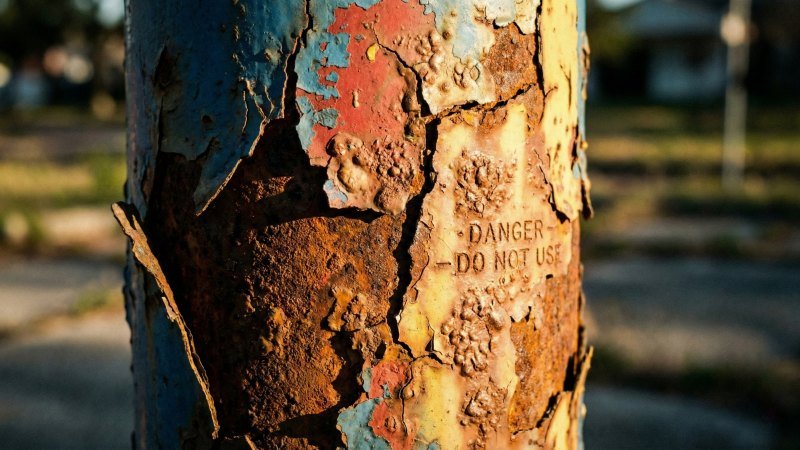
You should specifically ask for references from projects that are at least 3 to 5 years old. Why? Because every playground looks good on day one. You need to speak with a customer who has owned the equipment long enough to see if the paint faded or the ropes snapped.
The Verification Checklist:
- Ask: “Can I have the contact info for a project you installed in 2020?”
- Call: Actually call the reference. Ask, “How did they handle warranty claims?”
- Visit: If possible, drive to a nearby installation to inspect the wear and tear personally.
Vague or Non Existent Technical Specifications
When you receive a formal quotation, look closely at the description line items. A reliable manufacturer lists specific engineering details. A risky supplier uses vague marketing fluff.
For example, a bad quote might simply say: “4-inch Metal Post.”
A professional quote will say: “114mm OD Galvanized Steel Pipe, 2.5mm Wall Thickness, conforming to BS 1387 standards.”
This difference is critical. Without specific numbers, you have no legal ground to complain if the posts arrive with paper-thin walls that bend in the wind. You would never sign a building contract that simply listed “Windows” without specifying double-glazing, thermal ratings, or frame material. Similarly, do not accept generic playground specs.
Red Flag Keywords to Watch For:
- “Standard Material”: This means nothing.
- “High Quality Plastic”: This often hides the use of recycled scrap material.
- “Equivalent to…”: This suggests they are swapping out the specified brand for a cheaper copy.
Unusually Low Prices Compared to Market Averages
Everyone wants a deal. However, in manufacturing, there is a hard floor for costs. Steel, plastic resin, and labor have fixed market prices. If a quote comes in 30% to 50% lower than the other three quotes you received, it is not a bargain; it is a trap.
How do they achieve such low prices?
- Recycled Plastic: Instead of fresh LLDPE resin, they grind up old plastic waste. This material is brittle and will crack quickly in sunlight.
- Thinner Steel: They use 1.5mm steel instead of the standard 2.2mm or 2.5mm commercial grade. You cannot see this once the post is painted, but the post will lack structural strength.
- Toxic Paint: They use cheap, lead-based paints instead of certified non-toxic powder coatings.
Price Analysis Table
| Cost Element | Realistic Manufacturer | “Too Cheap” Manufacturer | The Hidden Risk |
|---|---|---|---|
| Raw Material | 40-50% of price | 20-30% of price | Structural failure; toxic materials. |
| Labor | 20-25% of price | 10-15% of price | Poor welds; missing parts; bad assembly. |
| Profit Margin | 10-20% | 5-10% | No money left for after-sales support. |
| R&D / Safety | 5-10% | 0% | Equipment has not been tested for entrapment hazards. |
Conclusion
Vetting an outdoor playground equipment manufacturer is a complex task that requires looking beyond glossy catalog pages. By systematically verifying safety certifications like ASTM F1487, auditing manufacturing capabilities through live video, and calculating the total cost of ownership, buyers can mitigate risks and ensure their investment lasts for decades. The goal is not just to buy equipment, but to partner with a supplier who values safety and quality as much as you do.
Ready to start your project with a verified manufacturer?
Contact us today to request a free consultation or a virtual factory tour.