-
Whatsapp: +86 15516933785
-
Email: hanlin@hanlinplayground.com
-
Address: Shangjie District, Zhengzhou City, Henan Province, China
-
Whatsapp: +86 15516933785
-
Email: hanlin@hanlinplayground.com
-
Address: Shangjie District, Zhengzhou City, Henan Province, China


Outdoor Gym Playground: The Ultimate Guide to Planning a Community Fitness Park
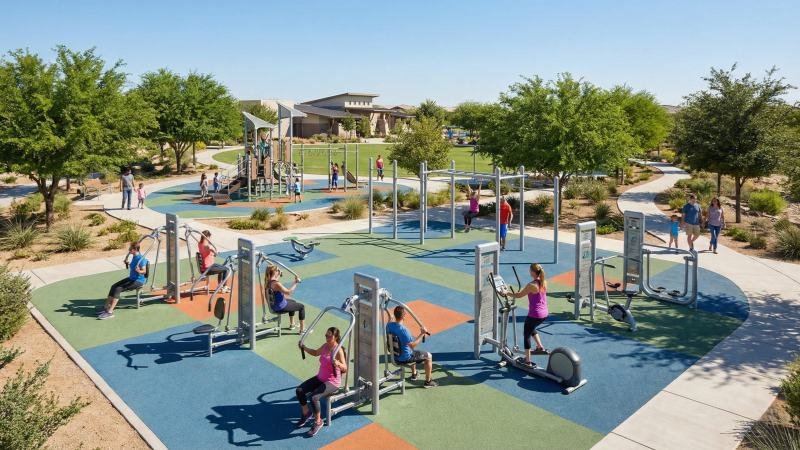
A successful outdoor gym playground integrates durable, weather-resistant equipment with inclusive design layouts that strictly adhere to ASTM F3101 or EN 16630 safety standards. It requires a strategic balance of strength, cardio, and functional fitness stations, supported by impact-absorbing surfacing and a rigorous long-term maintenance protocol to ensure community safety and engagement.
Key Benefits of Integrating Fitness Stations into Public Spaces
Why should municipalities and developers prioritize installing outdoor gym playgrounds in public parks?
Outdoor gym playgrounds transform underutilized green spaces into active wellness hubs by providing free, accessible exercise opportunities for diverse demographic groups. These facilities significantly increase park visitation rates, remove financial barriers to physical fitness for residents, and foster community cohesion through shared activity zones.
Promoting Intergenerational Activity and Social Interaction
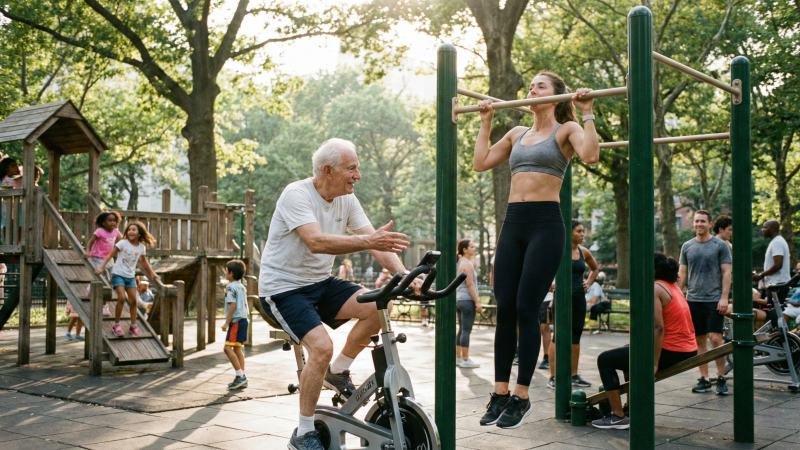
Outdoor gym playgrounds bridge the gap between age groups in a way that standard playgrounds cannot. In the playground industry, traditional designs often isolate demographics; separate zones exist for toddlers, while benches are relegated to adults. However, an outdoor fitness area creates a “multigenerational zone.” This design strategy allows parents or grandparents to exercise on low-impact machines while children play on nearby structures. This proximity promotes “active supervision,” where guardians are physically engaged rather than sedentary.
Here is the real value add: these spaces function as social nodes, similar to a central plaza in a community park. Strangers often interact while waiting for equipment or observing exercises. This interaction strengthens community bonds. For example, a senior using a recumbent bike station might converse with a younger adult doing pull-ups. This shared usage normalizes fitness across generations, making exercise a communal norm rather than a solitary task.
Increasing Park Utilization Rates and Community Wellness
Installing fitness equipment is a proven strategy for “park activation,” a core concept in urban planning. An empty field offers limited utility, but adding structured equipment gives residents a specific reason to visit. The result? Parks with fitness zones see measurable increases in both visitor frequency and “dwell time”—the duration a visitor stays at the site.
From a public health perspective, these installations directly combat sedentary lifestyles. By placing equipment in high-traffic areas, such as along walking trails, planners create a “fitness circuit.” This layout encourages walkers to pause for resistance training, turning a light stroll into a full-body workout.
- Visibility: Equipment placed near paths signals to passersby that the park is an active space.
- Routine: Residents are more likely to return daily if the park offers a complete workout solution.
- Accessibility: Open access removes the intimidation factor often associated with indoor commercial gyms.
Providing Cost-Effective Health Solutions for Local Residents
For many residents, the primary obstacle to regular exercise is the cost of gym memberships. Outdoor gym playgrounds democratize fitness by removing this financial barrier. In the industry, this is viewed as high-value “social infrastructure.” The cost per user for a public fitness court is significantly lower than indoor facilities because there are no staffing costs, electricity fees for AC, or monthly dues for the user.
Below is a comparison of barriers between commercial gyms and outdoor fitness parks:
| Feature | Commercial Indoor Gym | Outdoor Gym Playground |
|---|---|---|
| Financial Cost | High (Monthly fees + initiation) | Zero (Free to public) |
| Access Hours | Limited or restricted | Unlimited (Daylight hours) |
| Commitment | Contracts required | No commitment needed |
| Dress Code | Strict requirements | Casual / Athletic wear |
Ideally, these installations serve as an equalizer in the community. They provide professional-grade biomechanics—similar to indoor selectorized machines—without the price tag. By investing in these structures, local governments essentially provide a permanent, free health subsidy to every resident.
Essential Equipment Categories for a Balanced Outdoor Gym
A balanced outdoor gym playground consists of four core equipment categories: strength training units for muscle development, cardio stations for heart health, functional fitness rigs for agility, and accessible equipment for inclusivity. Integrating a mix of these categories ensures the facility supports diverse workout styles, from bodyweight exercises to endurance training.
Strength Training Units for Calisthenics and Resistance
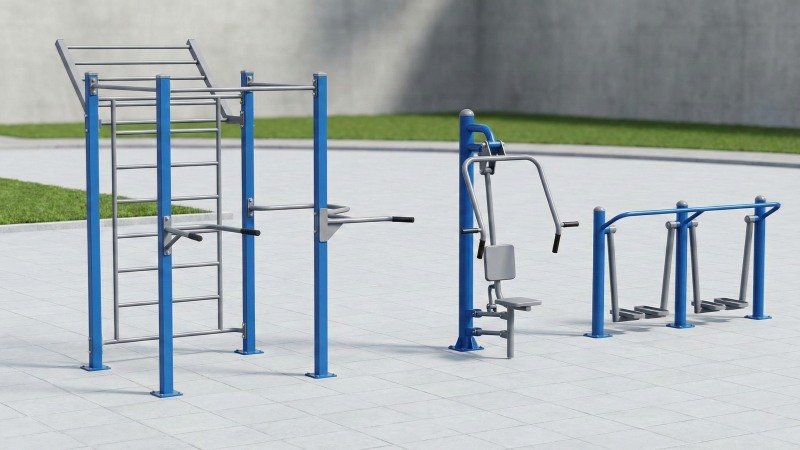
Strength equipment in outdoor settings generally falls into two distinct sub-categories: Static Calisthenics Structures and Dynamic Resistance Machines. Unlike indoor gyms that use heavy iron plates, outdoor equipment relies on different mechanisms to provide resistance.
Static Calisthenics Structures are fixed frames without moving parts. They are similar to the structural framework of a building; they provide a solid, unmoving base for the user to work against. Common examples include:
- Pull-Up Bars: For upper body pulling strength.
- Parallel Bars: For dips and core stability.
- Swedish Ladders (Stall Bars): For flexibility and climbing exercises.
Dynamic Resistance Machines mimic the machines found in commercial health clubs but are engineered for outdoor survival. Instead of weight stacks, these units typically use the user’s own body weight or hydraulic cylinders to create resistance. For instance, a Seated Chest Press machine uses a leverage system. When you push the handles forward, you are lifting a percentage of your own body weight.
Please note: The specific resistance ratio (how much of your body weight you are lifting) varies significantly by manufacturer and lever design. Always consult the supplier’s technical data sheet for exact resistance curves.
| Feature | Static Calisthenics | Dynamic Resistance Machines |
|---|---|---|
| Primary Mechanism | Fixed Bars (Gravity) | Levers / Hydraulics |
| Moving Parts | None | Pivot Points / Bearings |
| User Level | Intermediate to Advanced | Beginner to Advanced |
| Example | Monkey Bars | Leg Press Machine |
Cardio Equipment to Enhance Cardiovascular Endurance
Outdoor cardio equipment is designed to elevate the heart rate without the need for electricity. Since there are no power cords, the mechanics differ from indoor treadmills or ellipticals.
The most common device is the Air Walker (or Sky Walker). This machine operates on a pendulum principle. The user stands on footpads and swings their legs back and forth. The resistance is usually minimal, relying on the friction of the bearings and the momentum of the swing. This is distinct from a motorized treadmill where a belt drives the pace.
Next up is the Outdoor Stationary Bike or Elliptical Cross Trainer. Higher-end models may utilize magnetic resistance or friction brakes to make pedaling harder, similar to a spin bike. However, many standard models are “free-moving,” meaning they spin freely to focus on movement range rather than high-intensity load.
Mechanical Durability in Cardio Units
Because these units have moving parts, they require robust internal stoppers. For example, an Air Walker must have internal limiters to prevent the legs from swinging too wide and causing injury. This acts like the “bump stops” in a vehicle’s suspension system, physically preventing the machine from exceeding its safe range of motion.
Functional Fitness Rigs for Obstacle Course Training
Functional fitness rigs, often called “Ninja” courses or Cross-Training frames, have become increasingly popular. These large, interconnected structures focus on agility, balance, and coordination rather than raw strength.
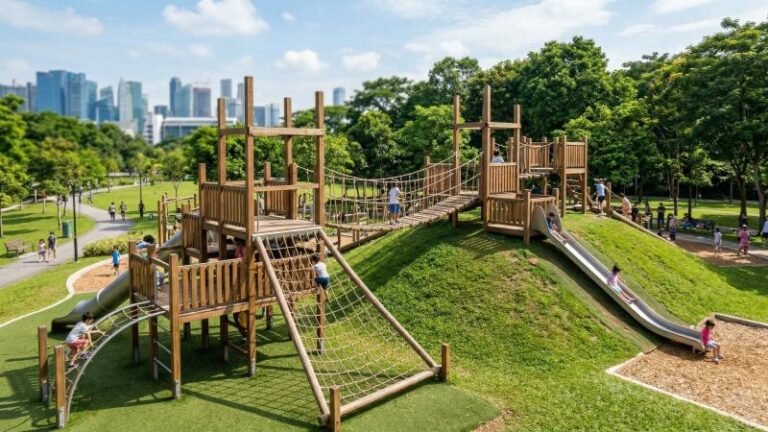
These rigs are modular. Think of them like a complex scaffolding system where different attachments can be clamped on. Instead of isolating one muscle group (like a bicep curl), functional rigs force the whole body to work together. This concept is perfectly embodied in equipment like a natural log fitness trail.
Key components often include:
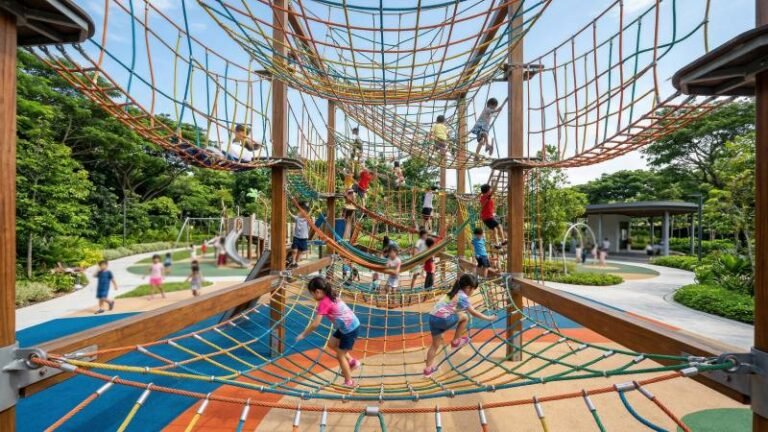
- Cargo Nets: For climbing and foot-eye coordination.
- Suspension Trainers: Unstable handles that require core strength to control.
- Step Pods: Raised platforms for jumping and balance drills.
Why is this category exploding in popularity? It appeals strongly to the “boot camp” demographic. It allows users to perform circuit training, moving rapidly from one station to the next. You can see similar mechanics in our climbing net playground series, which focuses on agility and core stability. The design intent here is “flow”—ensuring the user can transition from a climb to a jump without stopping, simulating real-world physical challenges.
Accessibility Features for Users with Limited Mobility
A truly balanced gym must be usable by everyone, including those using wheelchairs or mobility aids. Accessibility in outdoor fitness goes beyond just having a ramp; the equipment itself must be designed for diverse physical needs according to ADA guidelines.
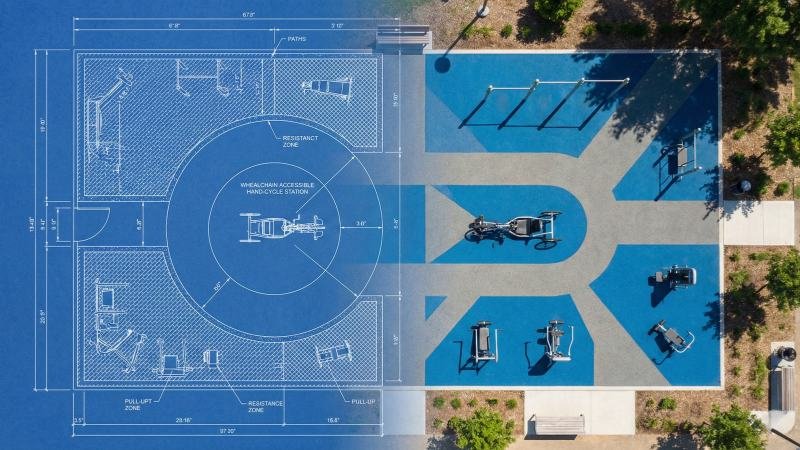
Wheelchair-Accessible Equipment typically features an open base design. This means there is no seat, allowing a wheelchair user to roll directly into the workout position. A prime example is the Hand Cycle (Upper Body Ergometer). The user rolls up to the unit and uses their arms to pedal, building cardiovascular endurance from a seated position.
Dual-Function Design
Many modern units are designed for dual use. For instance, a chest press might have a standard seat on one side and an empty space on the reverse side for a wheelchair user. This mirrors the design of accessible picnic tables commonly found in parks, where one end is extended to accommodate a chair.
Additionally, grip design is critical. Accessible equipment often uses “closed-loop” handles. This ensures that if a user with limited grip strength loses their hold, their hand remains inside the loop rather than slipping off completely.
Please note: Compliance with specific accessibility standards (such as ADA in the US or EN 16630 in Europe) depends on the exact installation clearances and equipment dimensions. Verify certification details with your vendor to ensure code compliance.
Material Standards for Weather Resistance and Durability
To guarantee longevity, high-quality outdoor gym equipment relies on galvanized steel for structural load-bearing and aluminum for rust resistance in coastal areas. These metals must be finished with electrostatically applied powder coating to seal surfaces, while all plastic components require UV stabilizers to prevent fading and cracking from solar exposure.

Galvanized Steel versus Aluminum Structures
Choosing between steel and aluminum is the most critical decision in the manufacturing process. It determines the equipment’s lifespan and its structural integrity.
Galvanized Steel is the industry standard for main posts and heavy-load frames. Steel is incredibly strong and rigid. To stop it from rusting, manufacturers use a process called hot-dip galvanization. In this process, the steel is dipped into a bath of molten zinc. This creates a thick, protective alloy layer. It acts like a sacrificial shield; even if the surface is scratched, the zinc corrodes first to protect the steel underneath.
Aluminum, on the other hand, is naturally rust-proof. It does not need a zinc coating because it naturally forms a protective oxide layer. But here is the trade-off: aluminum is lighter and softer than steel. It is typically used for intricate parts, like moving handles or foot pedals, rather than the main support posts.
Here is a comparison of these two primary materials:
| Material Property | Galvanized Steel | Aluminum |
|---|---|---|
| Primary Use | Main structural posts / Heavy frames | Moving parts / Coastal installations |
| Strength | Very High (Heavy duty) | Moderate (Lightweight) |
| Rust Resistance | High (Relies on Zinc coating) | Excellent (Natural resistance) |
| Cost | Moderate | High |
| Weight | Heavy (Stable) | Light (Easy to ship) |
Please note: The thickness (gauge) of the steel or aluminum walls varies by supplier. Always check the technical specifications to ensure the wall thickness meets local safety standards for public use.
Importance of Anti-Rust Powder Coatings and UV-Stable Plastics
Raw metal is never enough; it needs a “skin” to protect it from the elements. This is where powder coating comes in. Unlike traditional liquid paint, which can drip or peel, powder coating is applied as a dry dust.
The metal part is given an electric charge, acting like a magnet that attracts the powder. The part is then placed in a large oven and baked at high heat. This melts the powder into a smooth, hard plastic-like shell that fuses to the metal. It is similar to how a ceramic glaze is fired in a kiln to become hard and waterproof. This process creates a barrier that is much tougher than standard paint, resisting chips from keys or zippers.
For plastic parts, like seats or pedal covers, the sun is the biggest enemy. Ultraviolet (UV) rays break down plastic chains, making them brittle and chalky. To prevent this, manufacturers add UV Stabilizers to the plastic mix before molding. It functions like permanent sunscreen mixed directly into the material.
- Rotational Molding (Rotomold): This technique creates hollow, durable plastic parts (like slides or roofs) with consistent wall thickness.
- Color Fastness: High-quality stabilizers ensure the bright colors do not fade to white after one summer. Verification of UV resistance hours (e.g., 3000+ hours) should be confirmed with the manufacturer.
Tamper-Proof Hardware to Prevent Vandalism
Public parks are unsupervised, making equipment vulnerable to vandalism. If a user can remove a bolt, the equipment becomes dangerous. Therefore, standard screws from a hardware store are never used.
Manufacturers utilize Tamper-Proof (or Security) Hardware. These are specialized bolts that require a unique tool to install or remove.
- Pin Torx / Pin Hex: These look like normal screws but have a small metal pin in the center of the head. A standard screwdriver or Allen key cannot fit into them. Only a mechanic with the matching “hollow” bit can turn them.
- Button Head Shape: The heads of the bolts are rounded and smooth (like a button). This prevents vandals from gripping the bolt head with pliers or a wrench to twist it off.
- Stainless Steel Grade: The bolts themselves are usually made from Grade 304 or Grade 316 Stainless Steel. Grade 316 is often called “marine grade” because it resists salt corrosion better than Grade 304.
Designing a Safe and Accessible Fitness Layout
Designing a safe outdoor fitness layout requires strict adherence to specific industry standards like ASTM F3101 or EN 16630, which dictate mandatory clearance zones and equipment spacing. Planners must install impact-absorbing surfacing based on the fall height of the units, place clear instructional signage for unsupervised use, and establish wide traffic corridors to prevent collisions between active users and bystanders.
Adhering to ASTM and EN Safety Standards for Fitness Zones
Safety in outdoor fitness is not a guessing game; it is governed by rigid engineering standards. In the United States, the primary standard is ASTM F3101, while Europe and many other regions follow EN 16630. These documents differ significantly from standard children’s playground codes (like ASTM F1487) because they assume the user is an adult or adolescent with higher muscle mass and reach. For a deeper dive into compliance, read our guide on 5 key safety standards you must know.
A critical aspect of these standards is preventing “entrapment.” This refers to gaps where a user’s head, fingers, or clothing could get stuck. For example, the space between a moving pedal and the stationary frame must be carefully calculated. If the gap is too small, it creates a “crush point” or “shear point” where a finger could be injured.
Think of this like the safety protocols for swing sets. Just as you must maintain a safe distance from a swinging seat to avoid impact, outdoor fitness equipment uses internal stoppers and controlled ranges of motion. Engineers design the equipment so that even if a user loses their grip, the machine arm will not swing back dangerously. Note: Compliance certification should always be provided by the manufacturer before purchase; confirm that the certificate specifically references F3101 or EN 16630.
Selecting Proper Surfacing Options to Prevent Fall Injuries
The ground beneath the equipment is just as important as the equipment itself. We call this the “surfacing system.” Its job is impact attenuation—absorbing the shock if a user falls, as detailed in the CPSC Public Playground Safety Handbook. Concrete, asphalt, or packed dirt are strictly prohibited under any equipment where a user is elevated.
The thickness of the surfacing depends on the Critical Fall Height (CFH) of the equipment. If a pull-up bar is 8 feet high, the surfacing underneath must be rated to absorb a fall from that specific height without causing life-threatening head injuries.
Here is a comparison of common surfacing materials used in commercial fitness parks:
| Surfacing Type | Description | Pros | Cons |
|---|---|---|---|
| Poured-in-Place Rubber (PIP) | Two layers of rubber granules bonded with binder. | Seamless, accessible for wheelchairs, highly durable. | High initial cost; requires professional installation. |
| Engineered Wood Fiber (EWF) | Processed wood chips that knit together. | Low cost; natural appearance. | Requires regular topping off; can be difficult for wheelchairs if not maintained. |
| Rubber Tiles | Pre-molded square mats locked together. | Easy to repair individual sections. | Seams can open up over time; potential tripping hazard. |
| Synthetic Turf | Artificial grass with a padded underlayer. | Aesthetic appeal; soft feel for stretching. | Can retain heat in direct sunlight; higher maintenance than rubber. |
Signage and User Instructions for Unsupervised Use
Unlike an indoor gym, an outdoor fitness park usually does not have a trainer on site. Therefore, the signage acts as the “silent instructor.” Standards mandate that every piece of equipment must have a clearly visible instruction label.
These labels typically rely on universal pictograms rather than long paragraphs of text. A pictogram shows a simple figure performing the exercise correctly, highlighting the start and finish positions. This is crucial for inclusivity, allowing users who speak different languages or have lower reading levels to use the machine safely.
Essential Data on Signage
Beyond just “how to use,” the sign must serve as a liability shield. It should explicitly state the intended age group (usually 13+ or 14+ for fitness equipment) and a medical warning advising users to consult a doctor before exercising. Modern layouts often include QR codes on these signs. When scanned, the code links to a video tutorial, providing a digital coaching experience directly on the user’s phone.
Spacing Requirements to Ensure Safe Traffic Flow
Proper spacing prevents overcrowding and accidental collisions. This is technically referred to as the “Use Zone” or “Operational Zone.”
Every piece of equipment has a dynamic envelope—the maximum space the machine (and the user’s body) occupies during full movement. For example, when a user is on an Air Walker, their legs swing outward. The safety zone extends beyond this maximum swing point.
Circulation Areas
Designers must leave a clear path, or “circulation area,” between these use zones. Think of the park layout like street planning, where there are designated “bike lanes” (active equipment zones) and “sidewalks” (safe walking paths). If the walking paths are too close to the equipment, a passerby could be struck by a moving part. Most standards require that the use zones of two distinct moving pieces of equipment do not overlap to prevent users from colliding.
Installation Best Practices and Long-Term Maintenance
Proper installation relies on establishing a deep, reinforced concrete foundation that sits below the frost line to prevent structural shifting. Long-term maintenance requires a tiered inspection schedule—ranging from daily visual checks for vandalism to comprehensive annual audits—alongside seasonal lubrication of moving bearings to counteract environmental wear.
Site Preparation and Anchoring Methods for Stability
The longevity of any outdoor structure is determined before the equipment even arrives. It starts with the ground work. Just as a billboard requires a deep foundation to resist wind loads, outdoor fitness rigs require substantial footing to withstand the dynamic forces of users pushing and pulling.
Drainage and Leveling
Before pouring concrete, the site must be graded. Water accumulation is a primary threat to stability. If water pools around the footing, it can soften the soil or freeze and heave the concrete. Contractors must ensure the sub-base allows water to flow away from the equipment posts.
Anchoring Techniques
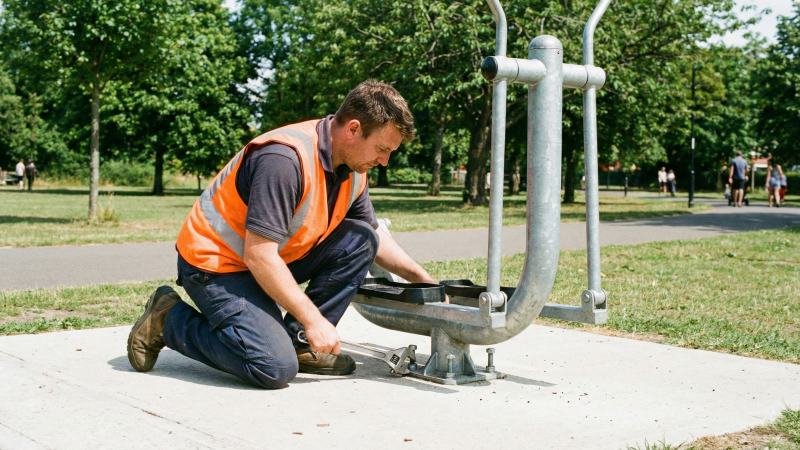
There are two industry-standard methods for securing equipment. The choice often depends on whether you are building on fresh dirt or an existing concrete slab.
- In-Ground Mounting (Direct Bury):
This is the most robust method. The installer digs a hole, places the equipment post inside, and fills the hole with concrete. This integrates the post directly into the foundation. It is similar to setting a heavy-duty fence post, but with much higher grade concrete. - Surface Mounting:
This is used when a concrete slab already exists. The equipment has a flat metal plate welded to the bottom. The installer drills holes into the existing concrete and inserts expansion anchors or chemical epoxy bolts to clamp the plate down.
Please note: Concrete curing times and required compressive strength (psi) vary by region and equipment load. Always reference the manufacturer’s installation manual for specific footing dimensions.
Routine Inspection Checklists to Ensure Safety
Once the equipment is installed, “set it and forget it” is a dangerous mindset. Outdoor gyms are subject to heavy, unmonitored use. A structured maintenance protocol is the only way to mitigate liability and prevent accidents.
This process mirrors the preventative maintenance schedule of any public infrastructure, such as bridges or streetlights. You do not wait for failure; you inspect regularly to catch wear early.
The Three-Tiered Inspection Approach
| Frequency | Inspector Level | Key Actions |
|---|---|---|
| High Frequency (Daily/Weekly) | Custodial Staff | Visual Check: Remove trash, check for broken glass, and identify obvious vandalism (graffiti or missing parts). |
| Medium Frequency (Monthly) | Maintenance Tech | Functional Check: Test moving parts. Do the bearings squeak? Is the resistance smooth? Tighten all hardware to the correct torque specs. |
| Low Frequency (Annual) | Certified Inspector | Structural Audit: Check for hairline cracks in welds, corrosion at the footing base, and foundation shifting. |
Hardware Tightening
Vibration is the enemy of bolted connections. Repeated use can loosen even the most secure bolts over time. Maintenance teams should use a torque wrench to ensure bolts are tightened to the specific Newton-meter (Nm) rating specified by the engineer.
Managing Environmental Factors and Seasonal Wear
Outdoor equipment lacks the climate-controlled protection of an indoor gym. It faces rain, snow, salt spray, and extreme heat. Maintenance routines must adapt to these seasonal changes to preserve the mechanical function of the units.
Lubrication and Moving Parts
In cold climates, grease inside the bearings can thicken, making the equipment hard to use. On the flip side, hot summers can thin the grease. Maintenance teams must re-apply the manufacturer-approved lubricant to pivot points (like the hinges on an air walker). This is similar to maintaining heavy construction machinery; without fresh grease, metal grinds on metal, leading to catastrophic failure.
Fighting Corrosion in Coastal Zones
For parks near the ocean, salt spray is a constant corrosive agent. Even galvanized steel needs help in these environments. A simple but effective maintenance task is a regular freshwater rinse. Washing the equipment monthly removes salt deposits before they can eat through the powder coating.
Surface Temperature Management
In high-heat regions, plastic seats and metal handles can become dangerously hot. While you cannot change the weather, you can manage the impact. Inspections in summer should include a “touch test” during peak sun hours. If surfaces are too hot, the park may need to install shade sails or plant fast-growing canopy trees to block direct solar radiation.
Conclusion
Planning an outdoor gym playground is a strategic investment in the long-term health and social fabric of a community. By moving beyond simple equipment selection to consider inclusive design, material durability under ASTM standards, and proactive maintenance, project managers can create lasting wellness hubs. These spaces not only provide cost-effective fitness solutions but also serve as vital connection points for residents of all generations.
To ensure your community fitness park meets safety regulations and user needs, expert guidance is essential. If you are ready to start planning your site or need technical specifications on equipment durability and layout, please contact us for a detailed consultation.