-
Whatsapp: +86 15516933785
-
Email: hanlin@hanlinplayground.com
-
Address: Shangjie District, Zhengzhou City, Henan Province, China
-
Whatsapp: +86 15516933785
-
Email: hanlin@hanlinplayground.com
-
Address: Shangjie District, Zhengzhou City, Henan Province, China

Understanding Indoor Playground Cost Breakdown: Key Influencing Factors
What are the primary factors that determine the pricing of an indoor playground project?
The cost of an indoor playground is primarily determined by the total venue size, the number of vertical levels, material specifications (such as PVC thickness and steel quality), and the complexity of interactive attractions. Accurate budgeting requires a detailed itemized quotation rather than a flat rate per square meter, as custom designs and safety compliance standards significantly impact the final investment.
Impact of Total Venue Area and Dimensions
How do the size and shape of your building influence the final price of an indoor playground?
The total cost of an indoor playground is primarily driven by the volume of raw materials required to cover the floor area, such as steel pipes, safety netting, and floor mats. While a larger facility increases the overall budget due to higher material consumption, it often lowers the cost per square meter through economies of scale. Additionally, irregular room shapes with obstacles like columns require custom engineering and cutting, which increases labor and waste compared to standard rectangular layouts.
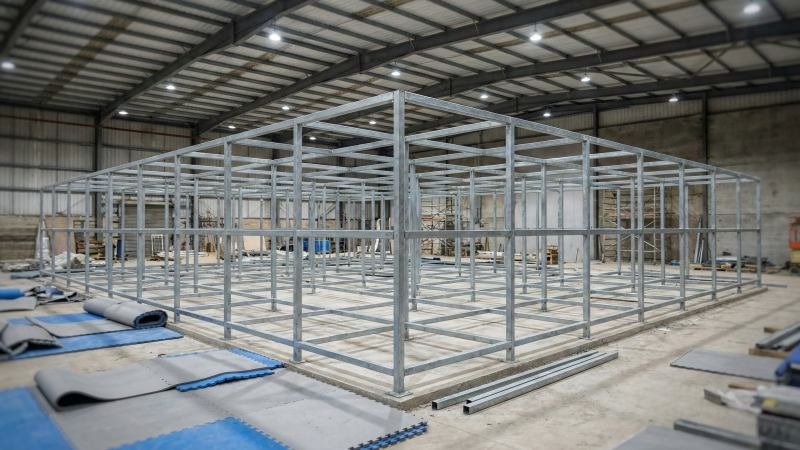
Correlation between square footage and raw material volume
The most direct factor affecting your budget is the sheer amount of space you intend to fill. Every square foot of your playground requires specific base materials, regardless of the games inside. That means the price rises linearly with the floor area because you are purchasing more physical “grid” sections.
In this industry, the structural framework is typically built using a standard grid system, often measuring 4 feet by 4 feet (approx. 1.22 meters). Naturally, a larger area requires more galvanized steel pipes to build these cubes. Furthermore, the entire floor area must be covered with impact-absorbing flooring, such as EVA foam mats.
If you double the size of your playground from 1,000 square feet to 2,000 square feet, you technically double the amount of flooring and steel connectors needed. This relationship is constant. Even if the playground is empty and contains no slides, the cost to build the steel skeleton and floor remains a significant portion of the quote. The bottom line? Owners must calculate the “base build” cost separately from the cost of fun add-ons.
Budget variations for irregular versus rectangular floor plans
The shape of your venue is just as important as the size. A standard indoor playground is designed using square and rectangular modules. Dropping these modules into a perfectly rectangular room is efficient and cost-effective. The manufacturer can use standard pipe lengths without modification.
But here’s the reality: many buildings have irregular shapes, support columns, or angled walls. When a playground design must navigate around these obstacles, the cost increases. Why? Because the factory must perform “custom cuts” on the steel pipes and platform boards.
Think about safety netting. In a square room, the safety netting runs in long, straight lines, which is fast to install. In contrast, if the structure must wrap around a building column, the installer must cut the net, install extra framing bars, and secure multiple small sections. This process increases waste material and installation time.
Comparison of Layout Efficiency
| Layout Type | Material Efficiency | Installation Labor | Estimated Cost Impact |
|---|---|---|---|
| Rectangular / Open | High (Standard parts) | Fast | Standard Base Rate |
| L-Shaped | Medium (Some joints) | Moderate | +5% to 10% |
| Irregular (Columns) | Low (Custom cuts) | Slow | +15% to 20% |
Economies of scale in larger manufacturing orders
While a larger playground costs more in total, it is often cheaper per unit of measurement. This concept is known as economies of scale. In manufacturing, setting up the production line takes time. Once the machines are running, producing 500 connectors is more efficient than producing 50.
For a small 500-square-foot toddler zone, the manufacturer still has to perform design engineering, set up the tooling, and arrange logistics. These fixed costs are spread over a very small area, making the “price per square foot” seem high. Flip the script for a massive 10,000-square-foot Family Entertainment Center (FEC), where these fixed costs are diluted across a huge volume of equipment.
Don’t forget about shipping logistics. A large order might fill a 40-foot High Cube container perfectly. A small order might require “Less than Container Load” (LCL) shipping, which has higher handling fees per cubic meter. Therefore, purchasing a larger structure often yields a better return on investment regarding the material unit price.
Note: Production efficiencies vary by manufacturer. Always verify if your supplier offers volume discounts for orders exceeding specific square footage thresholds.
Role of Vertical Levels and Ceiling Height
How does the number of vertical levels and the overall height of the structure influence the final price of an indoor playground project?
Expanding a playground vertically significantly increases the total cost because multi-story structures require a higher volume of steel framework and safety containment materials than single-level designs. Adding a second or third level multiplies the number of galvanized pipes, fasteners, and platform decks needed per square foot of floor area, while simultaneously increasing installation expenses due to the complexity of working at heights.
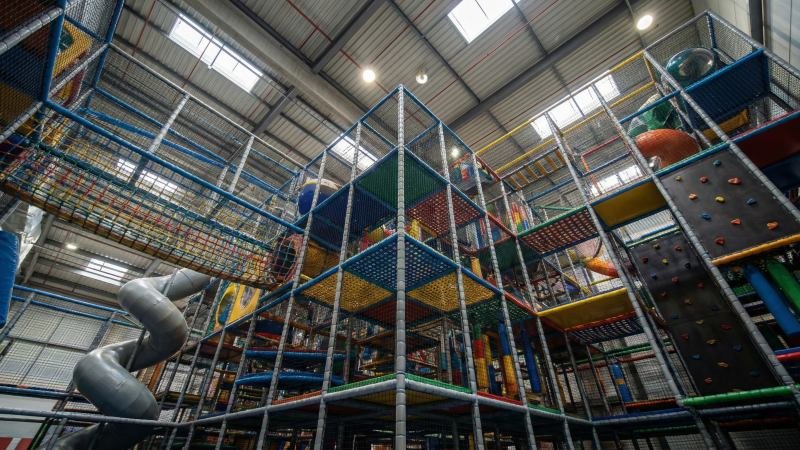
Multiplier effect of multi story structures on steel usage
Many investors mistakenly calculate the budget based solely on the floor footprint. But the real math is determined by the total cubic volume of the grid. An indoor playground is constructed like a steel skeleton. If you build a single-level toddler area, you only need vertical poles and a top rail.
Now, look at a three-level “jungle gym.” You are effectively building three separate floors stacked on top of each other. This means you need horizontal steel crossbars for the first level ceiling, the second level floor, and the third level roof. This effectively means a three-level structure consumes roughly three times the amount of steel pipe compared to a single-level structure of the exact same size.
Plus, taller structures require denser bracing to maintain stability. Engineers must add diagonal support pipes to prevent the tall grid from swaying. This additional structural steel adds weight and cost to the quote without adding any visible play area.
Note: Standard level heights typically range between 1.4 meters (4.6 feet) and 2.0 meters (6.5 feet). Please confirm the exact layer height specifications with your supplier, as this affects the total steel required.
Steel Consumption Comparison
| Structure Height | Framework Density | Stability Requirements | Estimated Steel Cost Factor |
|---|---|---|---|
| 1 Level (Ground) | Low (Basic outline) | Minimal Bracing | 1.0x (Base) |
| 2 Levels | Medium (Double grid) | Standard Bracing | ~1.8x – 2.0x |
| 3 Levels | High (Triple grid) | Heavy Cross-Bracing | ~2.8x – 3.0x |
Additional safety netting requirements for high altitude zones
Height creates risk, and in the amusement industry, risk management costs money. A ground-level ball pit might only need soft padding on the walls. But the moment you introduce a second or third level, gravity becomes a primary safety concern. You must enclose the entire upper structure to prevent children from falling.
Here is where the costs stack up: On a high structure, every open side of the grid must be wrapped in high-strength, anti-climb netting. Additionally, you often need to install “roof netting” or ceiling panels to ensure children cannot climb out over the top of the highest obstacles.
Think of it this way: A low-level play zone is like a fence; it uses minimal material. A high-level play zone is like a cage; it requires full containment. This involves not only buying rolls of netting but also thousands of nylon zip ties and lacing ropes to secure the mesh to the steel pipes.
Installation labor complexity for double or triple decker grids
The height of the playground directly impacts how fast the installation team can work. Building a structure that is 15 feet (4.5 meters) high is much slower than building one that is 5 feet high.
For single-level projects, installers can stand on the floor and work quickly without special equipment. But once you go vertical, the game changes. Installers must hoist heavy steel pipes (often weighing over 20kg each) and platform boards up to the second and third levels using pulley systems or manual labor.
Think of the difference between installing a grounded ball pit and rigging a high-altitude suspension bridge. The vertical logistics problem slows down the assembly process. Installers must also wear safety harnesses, which restricts their movement speed. This is why the labor cost for a high-rise playground is often 30% to 50% higher per square meter than for a low-profile playground, simply due to the difficulty of access and the strict safety protocols required during construction.
Material Specifications and Quality Tiers
How Material Quality Standards Impact the Quote?
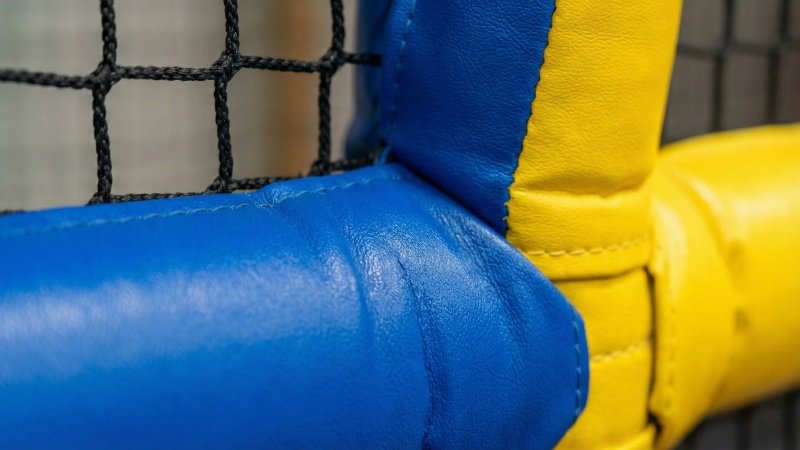
The price variation is often driven by “invisible” material specifications that affect durability and safety. High-quality commercial playgrounds utilize premium components, such as 0.55mm thick PVC vinyl, hot-dip galvanized steel pipes, and certified fire-retardant foam. These materials cost 20% to 30% more than standard residential-grade alternatives but are essential for meeting strict safety codes and withstanding heavy daily traffic.
Cost differences in PVC vinyl thickness and wear resistance
The colorful “skin” that covers all soft play obstacles is made of PVC vinyl. While it all looks shiny and new in photos, the thickness of this material dictates its lifespan. In the commercial amusement industry, the two most common standards are 0.45mm and 0.55mm thickness.
Choosing the thinner 0.45mm vinyl reduces the upfront manufacturing cost because it uses less raw plastic. But this savings is a gamble. In a high-traffic zone, children’s clothing—specifically denim rivets, zippers, and belt buckles—acts like sandpaper against the equipment. Thinner vinyl rips easily under this stress. Once the skin rips, the foam inside is exposed, requiring immediate professional repair.
On the other hand, 0.55mm commercial-grade vinyl is significantly tougher. It resists punctures and tearing much like heavy-duty truck tarpaulins compared to a lightweight camping tent. This durability commands a higher price per square yard.
Note: We strongly advise requesting physical material samples from your supplier to measure the actual thickness before signing a contract.
PVC Material Comparison
| Feature | 0.45mm Standard Vinyl | 0.55mm Commercial Vinyl | Cost Impact |
|---|---|---|---|
| Durability | Moderate | High (Anti-tear) | +15% to 20% |
| Application | Low-traffic / Home use | Commercial Centers | Higher |
| Maintenance | Frequent patches needed | Long-term resilience | Lower long-term |
Price gap between galvanized steel and standard black iron
The structural skeleton of your indoor playground is hidden under foam and netting, so many investors overlook it. But don’t overlook the skeleton. The type of steel pipe used is a major cost factor. There are two primary options: Galvanized Steel Pipe and Black Iron Pipe.
Hot-dip galvanized steel goes through a chemical process that coats the metal in zinc. This zinc layer acts as a shield against rust. Indoor playgrounds can become humid environments due to the body heat and sweat of active children, combined with moisture from cleaning sprays. Galvanized pipes resist this moisture and maintain their structural integrity for decades.
Black iron pipes are raw steel without this protective zinc coating. They are significantly cheaper to buy by the ton. The problem? They are prone to rusting quickly in humid conditions. If a structural pipe rusts, it weakens the entire frame. Replacing a rusted pipe deep inside a playground structure is a massive, expensive construction job. So, saving money upfront on black iron often leads to huge replacement costs later.
Impact of fire retardant standards on foam and padding expenses
Safety regulations are the strictest cost driver in the industry. The soft padding wrapped around the steel pipes is made of high-density foam. The price of this foam changes drastically based on its fire resistance properties.
Standard sponge foam is cheap and readily available. The catch is, it is highly flammable. If a fire starts, standard foam acts as fuel, spreading flames rapidly and releasing toxic smoke.
Fire-retardant foam is treated with specialized chemicals that inhibit combustion. In many regions, such as the UK, USA, and EU, local fire marshals require materials to meet fire safety codes like ASTM E84 or BS 5852. Producing this chemically treated foam is more expensive than producing standard sponge.
It doesn’t stop at the foam; the outer netting must also be fire-retardant. Non-treated nylon netting is cheaper but melts and drips when exposed to flame. Certified fire-retardant netting costs more but self-extinguishes when the heat source is removed. Failing to use these certified materials can result in your facility failing its final safety inspection, preventing you from opening.
Cost Implications of High-Tech and Mechanical Features
The selection of play equipment acts as a major cost multiplier, as electric mechanical rides and interactive digital systems require expensive motors, sensors, and electrical infrastructure compared to standard static obstacles. Incorporating high-tech attractions or custom fiberglass thematic elements typically increases the equipment budget by 30% to 50% per zone, shifting the primary expense from structural steel to advanced entertainment technology.
Budgeting for electric mechanical rides versus static obstacles
The most basic indoor playgrounds rely on “static” play events. These are items like foam rollers, hanging punching bags, and web bridges. They are affordable because they have no moving parts. The children provide the energy to move them. This keeps the cost strictly limited to the foam, PVC skin, and inner wood or steel core.
But when you upgrade to “electric” equipment, the pricing structure changes completely. Electric items, such as a rotating “Coconut Tree” climb or a motorized “UFO” merry-go-round, require a gearbox and an industrial motor. You are not just paying for the plastic shape; you are paying for the machinery inside it.
And remember: installing electric rides adds hidden infrastructure costs. You cannot simply plug them into a wall socket. They often require dedicated electrical circuits run through the floor padding. Additionally, electric rides require stricter safety inspections and certifications (like UL listings or CE markings) compared to a simple foam block.
- Static Example: A hanging “tarzan swing” is just rope and foam.
- Electric Example: A motorized “rotating barrel” involves a heavy-duty motor, a control box, and emergency stop sensors.
Note: Motor specifications and voltage requirements vary by country (e.g., 110V vs 220V). Always confirm compatibility with your local electrical grid standards with the manufacturer.
Higher expense of interactive projection and digital games
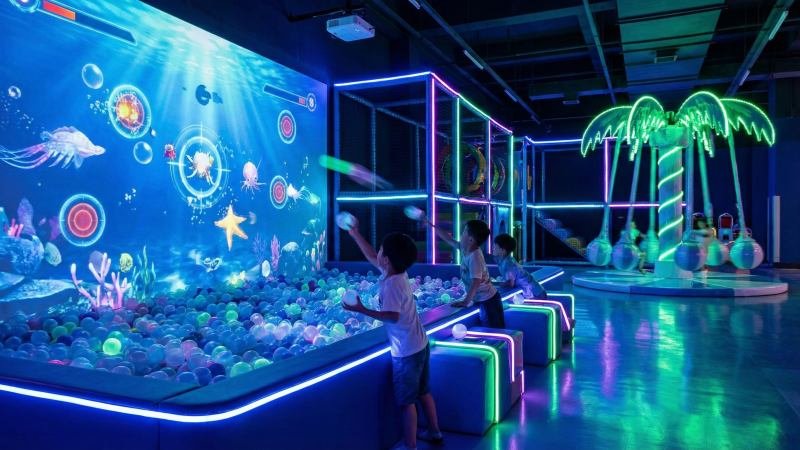
Modern playgrounds often feature “interactive” zones to compete with video games. The most common example is the Interactive Ball Pit. In a standard ball pit, kids simply throw balls at a padded wall. This is a low-cost feature involving only plywood and foam.
Take that same wall and turn it into an Interactive Ball Pit, and you are looking at a giant video game touch screen. This system requires three expensive components: a high-lumen commercial projector, a 3D Lidar or camera sensor to track the balls, and a computer to run the software.
As a result, a single interactive wall can cost as much as an entire small soft play structure. You are paying for both the delicate hardware and the software licensing fees. Unlike a slide, which lasts for years with no updates, digital games may also require software subscriptions or eventual hardware upgrades, creating a different long-term cost profile.
Cost Comparison: Standard vs. Interactive
| Feature | Components | Installation Needs | Relative Cost |
|---|---|---|---|
| Standard Ball Wall | Plywood, Foam, Target Holes | Basic carpentry | Low |
| Interactive Wall | Projector, PC, 3D Sensor, Software | Calibration, Wiring, Darkness control | High (approx. 5x – 8x more) |
Customization costs for themed fiberglass slides and panels
The material used to make slides and decorative panels plays a huge role in the visual impact and the price. Most standard playgrounds use “rotomolded” plastic. This involves a factory pouring liquid plastic into a pre-made metal mold. Because the mold is reused thousands of times, the individual plastic slide sections are very cheap.
But if you want a unique theme, such as a giant pirate ship bow or a dragon head slide, you must use Fiberglass Reinforced Plastic (FRP). Fiberglass allows for incredible detail and smooth, automotive-grade finishes.
But here is the catch: fiberglass is hand-made. Skilled workers must layer the glass cloth and resin by hand, sand it down manually, and spray paint it. This labor-intensive process makes fiberglass components significantly more expensive than mass-produced plastic. A standard spiral slide made of plastic segments might cost a fraction of a seamless, hand-polished fiberglass “Donut Slide.”
- Rotomolded Plastic: Fast production, limited shapes, lower cost.
- Fiberglass (FRP): Custom shapes, high gloss finish, premium cost.
Why You Must Insist on an Itemized Quotation
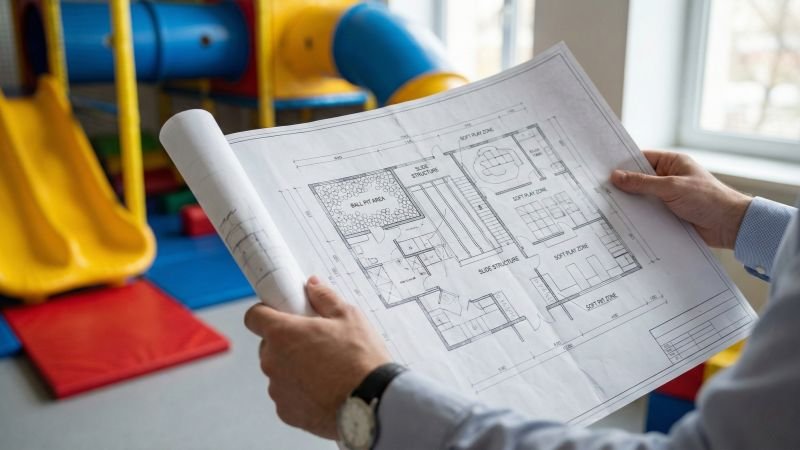
An itemized quotation is essential for accurate financial planning because it calculates the exact cost of every specific component, from steel pipes to slide sections, rather than relying on a vague average price per square foot. This detailed approach ensures transparency, eliminates hidden fees, and allows investors to adjust the design to fit their specific budget constraints without compromising on safety or play value.
Flaws of rough estimation based on floor area alone
Relying solely on a “price per square foot” estimate is the most common mistake new investors make. This method assumes that every section of your playground has the same value, which is factually incorrect. In the real world, the cost depends heavily on “play density,” or how many activities are packed into a specific zone.
Would you quote a “Spider Tower” the same as a “Toddler Area”?
Imagine you are quoting two 50-square-meter zones. Zone A is a “Toddler Area” with only soft blocks and a small ball pit. Zone B is a “Spider Tower” packed with vertical elastic webbing and a spiral slide. Although they occupy the same floor space, the Spider Tower contains five times the material volume and engineering complexity. A flat-rate estimate would severely underprice the Spider Tower or overprice the Toddler Area.
If a supplier gives you a flat rate without seeing your design, they are likely overcharging you to protect themselves or underquoting you to get the sale, only to add fees later. A rough estimate ignores the complexity of the grid. It fails to account for specific expensive items like fiberglass donut slides or spider towers. The result? You end up with a budget shortfall when the final bill arrives.
Transparency benefits of component level pricing
A component-level price list acts as a receipt before you buy. It breaks down the “Lump Sum” into understandable pieces. Instead of seeing a single line that says “Playground: $50,000,” you see a list detailing the cost of the spiral slide, the ball pit balls, the deck boards, and the fasteners.
This level of detail keeps suppliers honest. For example, if you see that a specific plastic tunnel costs $800, you can compare that price with other suppliers. It also proves exactly what materials are included. You can verify if the quote includes the expensive galvanized pipe or the cheaper black iron pipe we discussed earlier.
Quote Comparison: Lump Sum vs. Itemized
| Feature | Lump Sum Quote | Itemized Quote |
|---|---|---|
| Clarity | Vague (“1 Set of Playground”) | Specific (“400x Clamps, 50x Decks”) |
| Adjustment | Hard to change | Easy to remove specific items |
| Hidden Fees | High Risk | Low Risk |
| Trust Level | Low | High |
Accuracy in final budget planning through detailed lists
An itemized list is your most powerful tool for budget control. If the total design cost exceeds your budget, a detailed quote allows you to make surgical cuts rather than shrinking the entire playground. You can look at the list and decide to remove one specific “Electric Merry-Go-Round” to save $3,000, without changing the size of the structure.
Beyond the budget, itemized lists provide crucial data for logistics. They typically calculate the precise Volume (CBM) of the shipment. Knowing the exact volume allows you to get an accurate shipping quote from a freight forwarder. A rough estimate might guess you need a 20-foot container, but an itemized calculation might show you actually need a 40-foot container, which costs thousands more in ocean freight.
And for international importers, an itemized invoice helps with customs. Different playground parts may have different HS Codes for tax purposes. Having a clear list ensures you pay the correct import duties and avoids delays at the port.
Conclusion
Building an indoor playground is a significant investment where the details truly matter. As we have seen, the final price is not a simple calculation of square footage. It is actually a complex sum of structural levels, material quality, and equipment density.
Choosing a supplier who offers a transparent, itemized quotation is the best way to protect your investment. By understanding the cost difference between galvanized and black iron steel, or standard and fire-retardant foam, you can make informed decisions that balance your budget with long-term safety and durability. Avoid the trap of low-ball estimates, and insist on knowing exactly what you are paying for to ensure your playground business starts on a solid financial foundation.
Ready to get a precise quote for your custom project? Contact us today to start planning your playground.