-
Whatsapp: +86 15516933785
-
Email: hanlin@hanlinplayground.com
-
Address: Shangjie District, Zhengzhou City, Henan Province, China
-
Whatsapp: +86 15516933785
-
Email: hanlin@hanlinplayground.com
-
Address: Shangjie District, Zhengzhou City, Henan Province, China

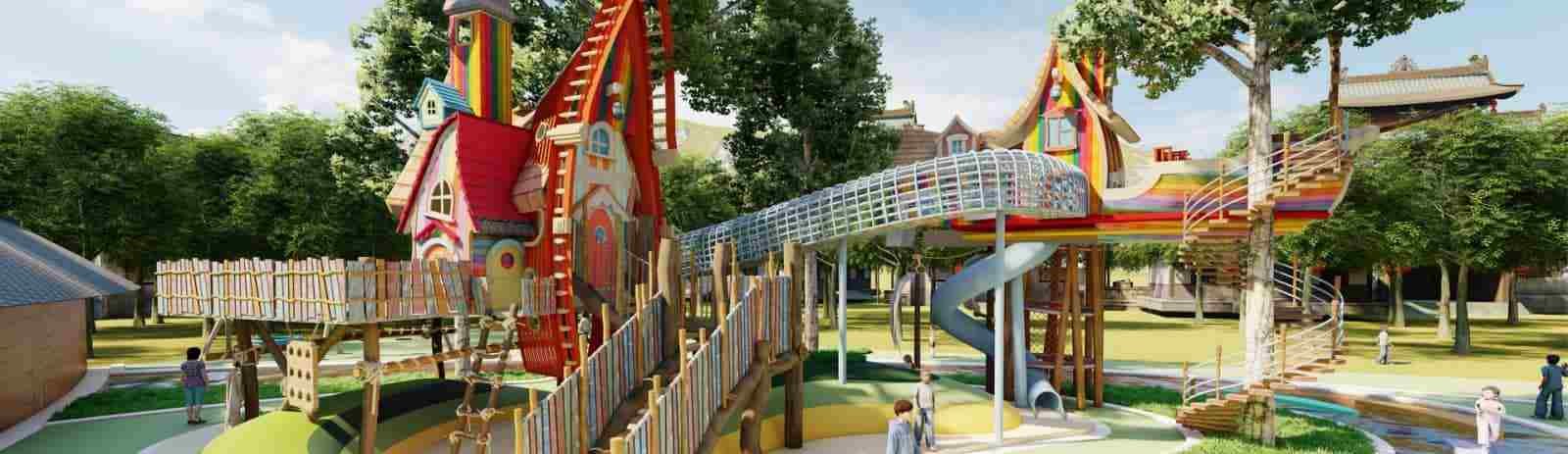
What Equipment Options Are Available for a Commercial Indoor Playground?
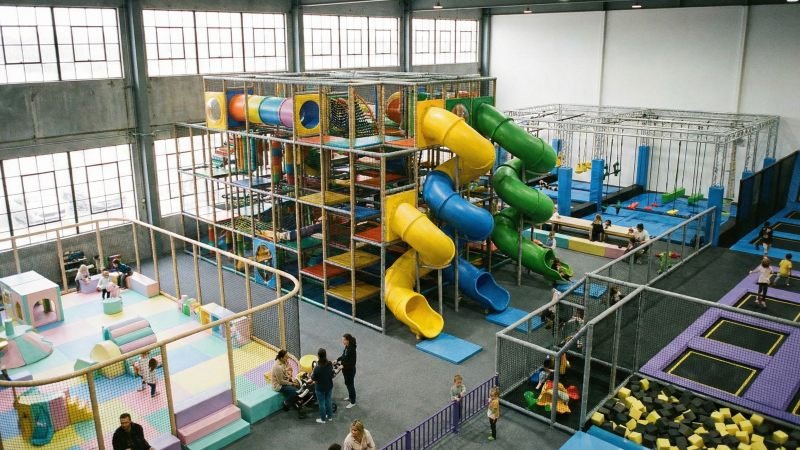
What exactly are the core equipment options available when outfitting a modern commercial indoor playground?
Commercial indoor playgrounds utilize a diverse range of equipment options, primarily categorized into classic soft play structures, space-saving compact frames, dedicated toddler sensory zones, high-energy adventure courses, and interactive digital play areas. By strategically combining multi-level maze systems with advanced attractions like trampoline grids and AR projections, facility operators can safely maximize floor space, cater to specific age groups, and significantly increase overall profitability.
Classic Soft Play Structures
What exactly forms the physical foundation of a traditional indoor play center?
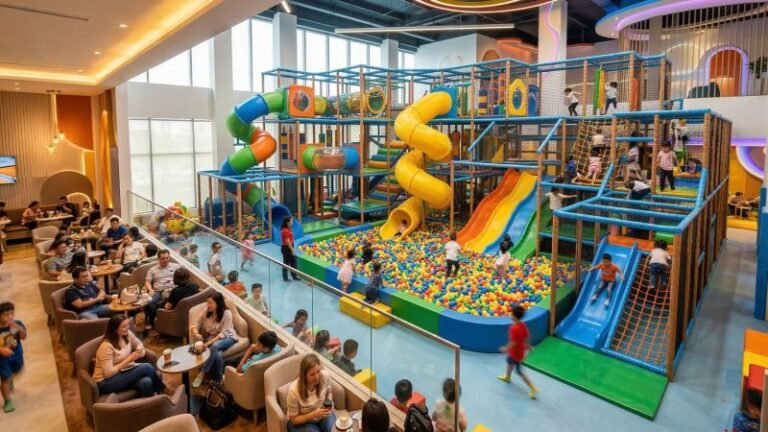
Classic soft play structures are the foundational steel-framed and foam-padded modular systems inside an indoor playground. These durable frameworks consist of interconnected maze pathways, ball pits, and slide variations. They provide safe, high-capacity physical play for children while actively maximizing the vertical footprint of your commercial facility.
Multi-Level Maze Systems
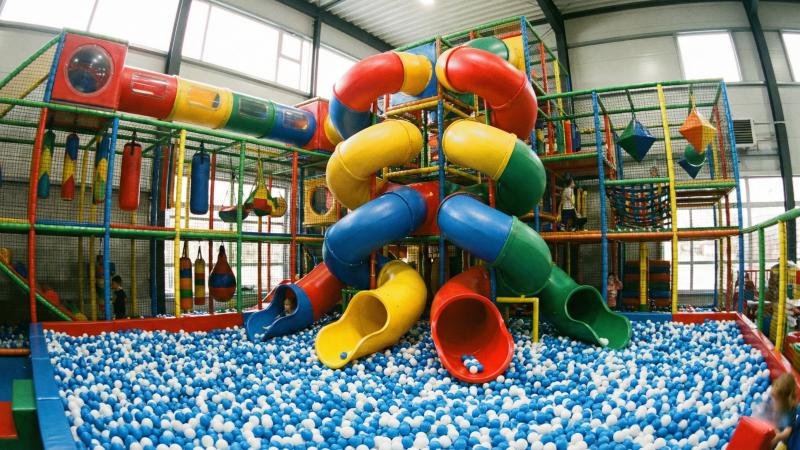
How do you build the main support frame of a large play area? Multi-level maze systems act as the primary skeleton of any indoor playground. Similar to how heavy-duty steel scaffolding supports the weight of an amusement park roller coaster track, the steel grid of a maze system securely holds the entire indoor play structure. This modular framework allows kids to safely climb, crawl, and navigate through different elevations.
In the field, we generally construct these maze grids using galvanized steel pipes. Industry standard pipes feature a diameter of 48mm and a wall thickness of 2.0mm. But here’s the catch: metal specifications and load-bearing capacities frequently vary based on the overall height of the structure. That means you always need to verify the exact pipe dimensions and weight limits with your equipment supplier before installation. To guarantee safety, installers wrap the bare steel with high-density foam tubes and heavy-duty PVC vinyl zip-ties.
Standard Grid Specifications
Most maze systems rely on a standard square grid layout. Why use a rigid grid format? It makes installation straightforward and ensures maximum structural integrity across multiple floors. The standard industry grid size is usually 1.22 meters by 1.22 meters (roughly 4 feet by 4 feet).
| Maze Level | Typical Floor Height | Target Age Group | Best For |
|---|---|---|---|
| First Level | Ground to 1.4m | Toddlers and younger children | Ground-level access, ball pits, and soft obstacles. |
| Second Level | 1.4m to 2.8m | Children ages 4-12 | Crawl tunnels, bridge crossings, and slide entrances. |
| Third Level | 2.8m to 4.2m | Older children | Advanced climbing webs and spiral slide entry points. |
Integrated Ball Pits and Air Jugglers
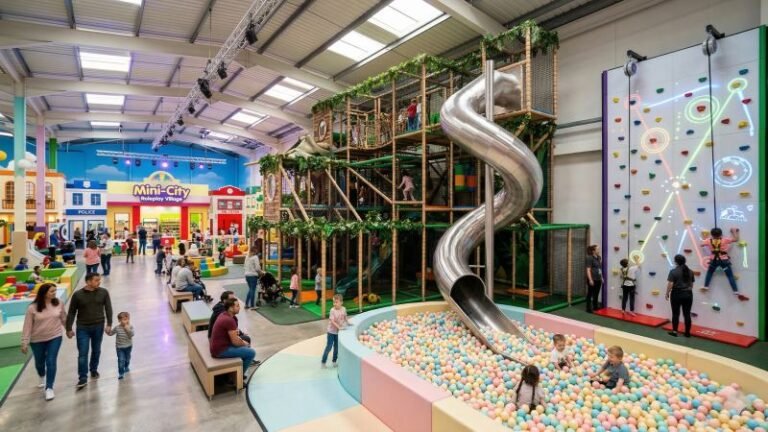
What happens when you combine static play with moving interactive elements? Integrated ball pits remain a mandatory attraction for any indoor park. They provide a vital soft landing zone at the bottom of slides. More importantly, they offer excellent tactile sensory feedback. These days, smart operators upgrade standard pits by installing air juggler machines.
An air juggler is a low-voltage interactive machine built directly into the padded ball pit wall. Much like an inflatable bounce house blower forces continuous air to keep PVC walls rigid, an air juggler uses directed airflow to push air through plastic cones. This continuous pressure allows lightweight plastic balls to magically float in mid-air. The result? Children spend hours trying to balance balls on the invisible air columns.
Ball Pit Material Standards
Durability matters greatly when purchasing thousands of individual pit balls for a commercial venue. Quality manufacturers typically mold these balls using crush-proof Low-Density Polyethylene (LDPE). A standard commercial-grade pit ball measures 80mm in diameter. It must withstand at least 150 pounds of static pressure without permanently deforming. Reviewing crush-test ratings ensures you receive commercial-grade durability for high-traffic environments.
Fiberglass and Spiral Tube Slides
How do children quickly and safely exit the upper levels of a tall maze system? Slides serve as the most efficient and popular exit routes in any playground. Commercial facilities generally rely on two distinct manufacturing materials: molded plastics and fiberglass.
Spiral tube slides generally use Linear Low-Density Polyethylene (LLDPE). Manufacturers create these enclosed tubes using a large-scale rotational molding process. This specific process ensures uniform wall thickness and a completely smooth inner surface. Installers connect these LLDPE tubes in 90-degree or 360-degree sections to create twisting, enclosed pathways. Standard enclosed tubes feature an inner diameter of 800mm to accommodate both children and rescuing adults.
On the flip side, fiberglass slides offer extreme durability for wide, multi-lane wave slides. Fiberglass naturally possesses a very low friction coefficient. Because of this, it provides a much faster sliding experience than standard LLDPE plastic.
Slide Angle Comparisons
When planning playground slides, the descent angle is critical for user safety. Since surface friction varies based on the finishing gel coat, verifying specific slide angles and mandatory safety run-out zones during the design phase is crucial.
| Slide Type | Primary Material | Average Descent Angle | Ideal Playground Application |
|---|---|---|---|
| Spiral Tube Slide | Rotational Molded LLDPE | 30 Degrees | Safe, enclosed descents from 2nd or 3rd levels. |
| Multi-Lane Wave Slide | Gel-Coated Fiberglass | 35 to 40 Degrees | Competitive side-by-side racing for older kids. |
| Vertical Drop Slide | Reinforced Fiberglass | 80 to 90 Degrees | Extreme thrill drops (requires specialized safety mats). |
Space-Saving Attractions for Small Size Indoor Playgrounds
How can you maximize play capacity and profitability when operating within a venue that has severely limited square footage?
Space-saving attractions for small size indoor playgrounds are engineered equipment designs that prioritize vertical space utilization and minimize dead zones. Specifically, these attractions, such as compact two-level frames and vertical drop slides, deliver high play value per square meter. Consequently, they allow operators with limited floor plans, typically under 200 square meters, to maintain a competitive capacity. Ultimately, these targeted solutions offer diverse physical activities without causing layout congestion or compromising safety.
Compact Two-Level Play Frames
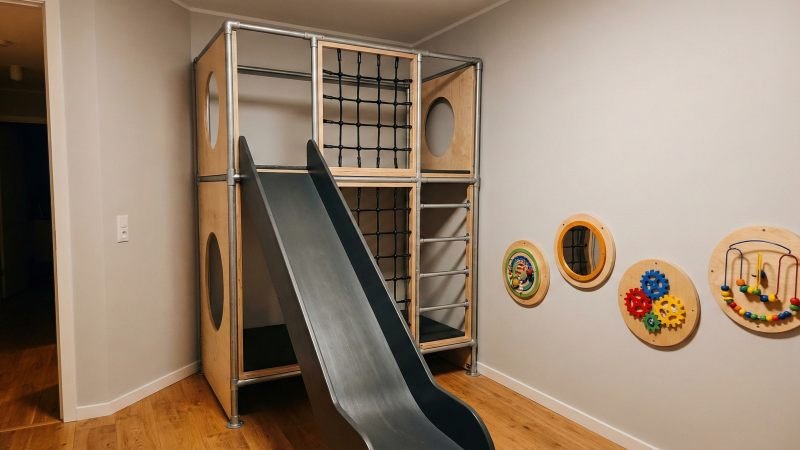
When you’re squeezed for square footage, you have to think vertically. Compact two-level play frames utilize the vertical footprint instead of spreading horizontally. Specifically, they stack distinct play activities directly on top of each other. Think of this design like a multi-level go-kart track. Instead of spreading a long track across a massive floor, the track winds upwards in spirals to fit a thrilling ride into a tight building. Similarly, a compact frame stacks obstacles and pathways upwards.
Bottom line: you can fit a high volume of activities into a very tight corner. The standard industry grid for play structures is typically 1.22 meters squared. However, compact designs often utilize customized half-grids. These smaller grids specifically allow for tighter turns and narrower walkways. Also, keep in mind the overall height of a two-level structure generally ranges from 2.8 meters to 3.5 meters. Always verify ceiling clearances against the structural grid dimensions before finalizing production.
Key Floor Plan Metrics Comparison
| Play Frame Type | Typical Floor Space Required | Average Capacity | Height Requirement |
|---|---|---|---|
| Standard Maze | 150+ sq. meters | 50-100 children | 4.2+ meters |
| Compact Two-Level | 30-50 sq. meters | 15-30 children | 2.8 – 3.5 meters |
Vertical Drop Slides
Let’s talk about high-thrill exits. Vertical drop slides provide an intense experience while requiring drastically less horizontal floor space. Traditional wave slides naturally extend far out into the room. Let’s face it, that footprint eats up valuable real estate. Instead, a vertical drop slide sends riders straight down. This movement is similar to a vertical drop tower ride at an outdoor theme park. Instead of a long, sweeping roller coaster track that eats up acres of land, a drop tower delivers an intense thrill using only a tiny footprint.
The operational advantage here is that the required run-out zone at the bottom shrinks significantly. Manufacturers typically construct these slides using heavy-duty reinforced fiberglass. Next, the fiberglass receives a high-gloss gel coat to drastically reduce friction. This means the rider experiences a near free-fall sensation safely. Specifically, the drop angle usually sits between 85 and 90 degrees. Ensure your floor layout includes the precise safety mat thicknesses required for these high-velocity exits.
Corner Activity Panels
Don’t ignore your structural “dead zones”. Corner activity panels magically transform unused walls and structural pillars into engaging play areas. Usually, structural support columns obstruct playground layouts. However, clever operators can wrap these annoying columns with interactive play panels.
The best part? These panels require absolutely zero floor space. They mount completely flush against the wall. This setup functions much like the queue line interactive games at a major theme park. Those mounted games keep guests entertained without blocking the flow of the waiting line. Similarly, wall panels provide essential play value without blocking child traffic flow.
Beyond saving space, these panels often feature engaging mechanical elements. For instance, popular designs include rotating gears, sliding peg mazes, and tactile sensory boards. Most commercial panels are manufactured from High-Density Polyethylene (HDPE). Because of this, the material strongly resists scratching and fading over time. Typically, these panels protrude only 5 to 10 centimeters from the wall. Pound for pound, they remain the absolute ultimate space-saving addition for any compact indoor playground.
Dedicated Toddler Play Areas
How do operators provide safe, age-appropriate equipment specifically designed for the physical limitations of children under three years old? Are you really protecting your most vulnerable guests if you mix them with the older kids?
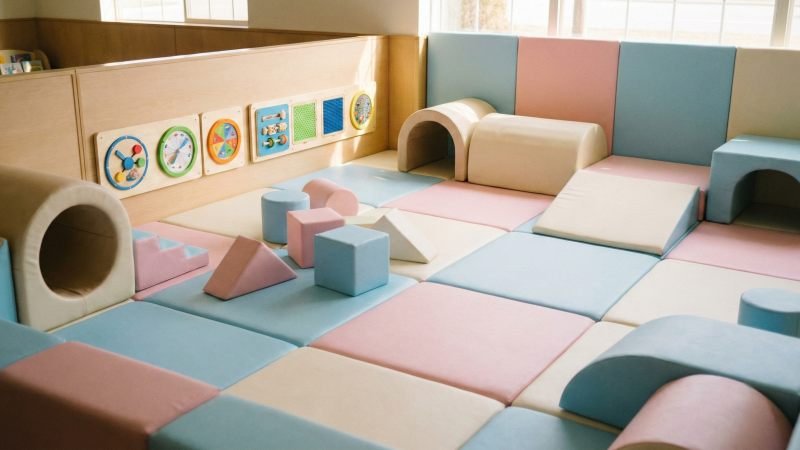
Dedicated toddler play areas are specialized, fully enclosed zones featuring low-impact equipment tailored for early childhood development. These secure sections utilize high-density polyurethane foam and ultra-soft PVC covers to prevent injury during early motor skill acquisition. By physically separating these scaled-down components from older children, commercial playgrounds ensure maximum safety and compliance with international consumer product safety standards.
Low-Level Crawling Tunnels and Ramps
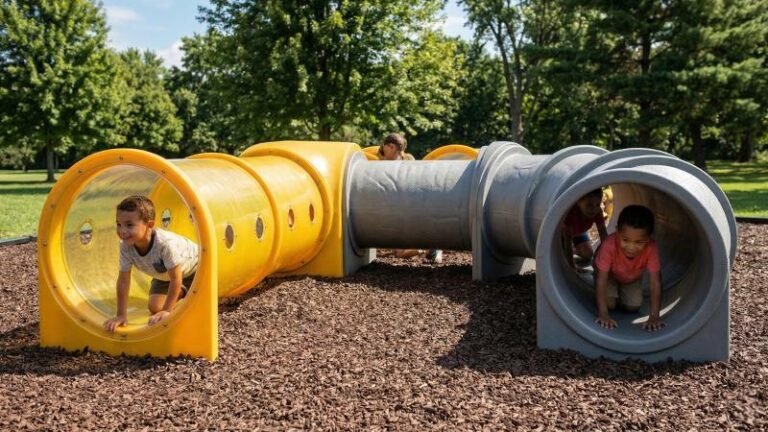
When designing for the under-three crowd, specific mobility equipment is non-negotiable. Low-level crawling tunnels and soft ramps provide essential gross motor skill practice. By keeping toddlers close to the ground, this deliberate design completely eliminates serious fall hazards.
Think of these structures like the gentle, slow-moving lazy river at a water park. Just as a lazy river provides a safe, low-impact water experience separate from the intense wave pool, toddler ramps safely guide young children through gentle elevation changes away from the high-energy main play frame.
On the manufacturing floor, we construct these ramps using dense polyurethane (PU) foam. This foam provides firm support for small, unsteady footsteps. A standard commercial toddler ramp features a maximum incline of 15 degrees. Meanwhile, the connecting tunnels usually feature a standard internal diameter of 600mm. Foam density ratings and PVC fire-retardant certifications must consistently meet early childhood safety standards.
Soft Foam Building Blocks
We also can’t overlook unstructured play. Soft foam building blocks are oversized, modular pieces of equipment. Children use them to construct temporary, imaginative structures safely.
Functionally, these blocks operate like oversized Lego bricks in an interactive children’s museum exhibit. Just as those bricks snap together in various configurations to build completely different structures, these geometric foam shapes stack together to support creative play scenarios.
In a commercial setting, these blocks take a beating. That’s why we typically utilize Expanded Polyethylene (EPE) for the internal core. EPE is highly resilient. It recovers its shape immediately after heavy compression. From there, we wrap this durable core in commercial-grade vinyl.
| Block Shape | Standard Dimensions | Primary Function |
|---|---|---|
| Basic Cube | 20cm x 20cm x 20cm | Foundation stacking and color recognition. |
| Rectangle | 40cm x 20cm x 20cm | Creating walls and structural bridging. |
| Cylinder | 20cm diameter, 40cm length | Rolling activities and architectural accents. |
Industrial vinyl covers usually feature a thickness ranging from 0.45mm to 0.55mm. Confirming the vinyl denier count and heavy-duty seam strength is vital for equipment longevity.
Educational Wall Play Panels
For fine motor skill development, you need specialized tactile equipment. Educational wall play panels offer mechanical activities mounted safely at toddler eye level.
These panels function much like the interactive steering wheel dashboards found on arcade driving simulators. Just as a driving game dashboard features steering wheels, buttons, and glowing dials for a player to manipulate, a sensory play panel features mechanical gears, sliding pegs, and spinning dials for a toddler to explore.
Unlike the structural space-saving panels discussed in other sections, toddler-specific panels focus purely on sensory education. They strictly avoid incorporating physical climbing holds. Manufacturers typically machine these panels from solid High-Density Polyethylene (HDPE) sheets. HDPE effectively prevents splintering. Even better, it completely resists bacterial growth.
Quality suppliers engrave the designs directly into the plastic. This completely eliminates the use of surface paint. As a result, it prevents toxic paint chipping and ensures a completely safe tactile environment.
High-Energy Adventure Attractions
How do you keep teenagers coming back when they’ve outgrown the ball pit? What specific equipment options effectively engage older children who need a real physical challenge?
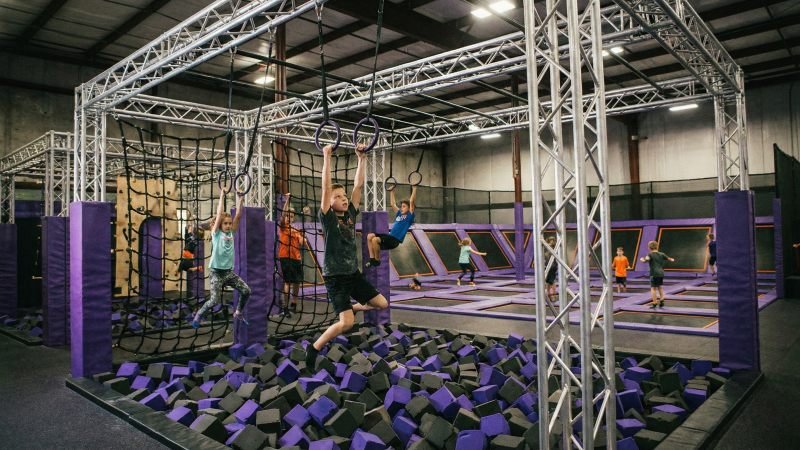
High-energy adventure attractions are physically demanding, interactive equipment installations specifically designed for children aged 7 and older. These advanced structures, including ninja courses and climbing walls, actively challenge cardiovascular endurance, balance, and upper body strength. By integrating these high-adrenaline components, commercial facilities successfully attract a wider demographic, dramatically increasing both average dwell time and repeat visitor rates.
Ninja Warrior Obstacle Courses
Let’s look at ninja warrior courses. They offer competitive, timed physical challenges. Operators typically build these complex courses using heavy-duty modular aluminum truss systems.
Functionally, this setup mimics the heavy-duty rigging grids used for trapeze acts or indoor circus performances. That rigid metal framework safely spans wide areas to support swinging performers. Similarly, a ninja course uses a rigid metal frame to support interchangeable hanging obstacles. Because of this modularity, you can easily swap out hanging rings, cargo nets, and swinging monkey bars. This vital interchangeability keeps the attraction fresh for repeat visitors without requiring a completely new build.
Industry Insight: Standard commercial ninja courses utilize 290mm x 290mm square aluminum truss segments for maximum stability.
However, aluminum alloy grades, such as 6061-T6, and overall structural load limits fluctuate widely between factories. Make no mistake, you must always verify the exact truss dimensions and maximum weight capacities directly with your supplier. Safety remains the highest priority for overhead structures.
Indoor Trampoline Parks and Foam Pits
Moving on to cardiovascular zones, commercial trampoline grids combine multiple jumping beds into one massive, interconnected floor.
Mechanically, a commercial trampoline grid acts much like the safety catch nets used underneath high-wire stunt shows. Those heavy-duty nets absorb massive kinetic energy to safely catch falling performers. Similarly, a trampoline grid uses hundreds of high-tensile steel springs to absorb and safely redirect human kinetic energy. Installers tightly connect woven Polypropylene (PP) mats to a heavy steel frame. To cap it off, installers place deep foam pits at the end of specific jumping runways. These specialized pits are filled with flame-retardant polyurethane foam cubes. This provides a completely safe landing zone for aerial stunts.
Selecting the correct spring tension and mat elasticity for your target demographic is essential for optimal bounce performance and user safety.
Comparison of Standard Trampoline Mat Types
| Mat Category | Primary Material | Target User | Bounce Profile |
|---|---|---|---|
| Main Court Mat | Standard Woven PP | General public, children | Standard rebound, highly durable. |
| High-Performance Mat | Specialized Nylon Webbing | Teenagers, gymnasts | Extreme rebound, requires higher ceilings. |
Climbing Walls and Volcano Slides
When it comes to vertical challenges, a volcano slide is a massive, conical climbing structure that dominates the center of a room.
Structurally, it resembles the wide, conical base of a classic carousel ride. The wide, circular base firmly distributes massive structural weight across the floor, providing extreme stability. Meanwhile, the smooth, angled sides allow for a rapid, gravity-fed descent. Children use molded resin climbing grips to scale the steep sides. Once they reach the flat top platform, they quickly slide down the curved fiberglass surface.
Of course, traditional flat climbing walls offer varying levels of vertical difficulty. Most modern commercial climbing walls utilize mechanical auto-belay systems. These specialized retracting devices automatically control a climber’s descent speed if they fall. Here is the critical engineering detail: auto-belay descent speeds and maximum weight ratings depend heavily on the internal magnetic braking mechanism. Never cut corners here; you must strictly verify these critical safety parameters and certification standards with your chosen supplier prior to installation.
Interactive and Immersive Play Zones
How do modern playground operators blend technology with traditional physical equipment to maximize visitor engagement?
Interactive and immersive play zones are specialized playground sectors that integrate advanced digital technology, mechanical ride systems, and highly themed architectural environments. Specifically, these attractions, including augmented reality projections and motorized track rides, transition children from purely physical exertion into cognitive and imaginative engagement. By offering these diverse multimodal experiences, commercial facility owners successfully extend average customer dwell times and significantly boost overall ticket value.
Role-Play Pretend Towns
Why are miniature cities consistently popular in commercial play centers? They offer essential imaginative role-playing opportunities.
Structurally, building a pretend town mimics constructing a modular haunted house or escape room maze. These entertainment attractions use prefabricated, interlocking wall panels to create immersive, themed rooms quickly. Similarly, playground manufacturers use prefabricated, CNC-routed panels to assemble miniature grocery stores, hospitals, and fire stations directly on site. Operators arrange these individual structures into a cohesive miniature neighborhood.
From a fabrication standpoint, we construct these miniature houses using 15mm to 18mm medium-density fiberboard (MDF). Alternatively, they use solid pine or fire-retardant plywood. After that, we apply heavy-duty, commercial-grade vinyl laminates for visual theming. Inside, each house features scaled-down props. For instance, a mini supermarket includes plastic food, small shopping carts, and working toy cash registers.
Because local fire safety codes and wood emission standards vary globally, you must continuously verify the exact material certifications and chemical treatments with your manufacturer. Compliance is non-negotiable.
Common Pretend Town Configurations
| Town Module | Average Footprint | Primary Educational Focus |
|---|---|---|
| Mini Supermarket | 10 to 15 sq. meters | Basic math, sorting, and social interaction. |
| Veterinary Clinic | 8 to 12 sq. meters | Empathy, biology, and fine motor skills. |
| Construction Zone | 12 to 20 sq. meters | Spatial awareness and teamwork. |
AR Interactive Projection Games
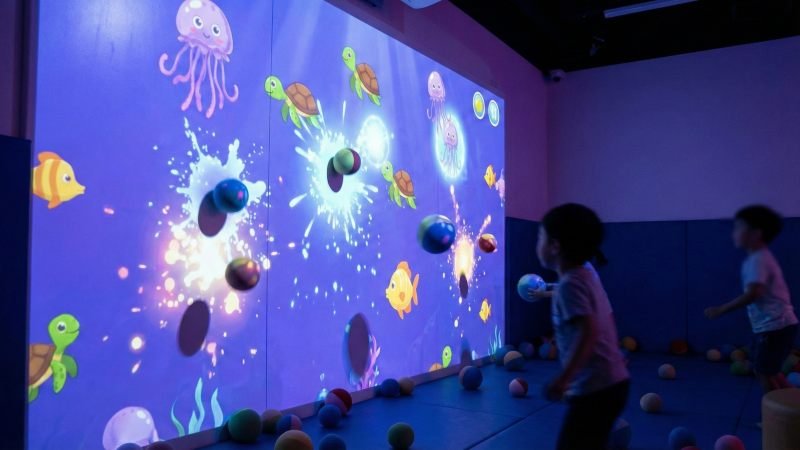
What happens when you combine physical play areas with advanced software? Augmented Reality (AR) interactive projection games transform standard walls and floors into reactive digital environments.
This technology functions exactly like modern optical tracking systems used in advanced laser tag arenas. A laser tag arena uses specialized infrared receivers to instantly detect a precise beam hit. Similarly, an AR projection system utilizes Light Detection and Ranging (LiDAR) sensors or infrared cameras to instantly detect a child’s movement or a thrown object.
In practice, when a child throws a plastic pit ball at a projected wall image, the sensor detects the exact impact location. Instantly, the software triggers a visual explosion or point score on the screen. This interactive feedback loop keeps children highly engaged.
The most critical hardware component is the commercial projector. The projector’s brightness is measured in ANSI lumens. Commercial indoor environments generally require projectors outputting between 3,000 and 4,000 lumens. Evaluating ambient ceiling lighting is critical to choosing the correct lumen output and ensuring accurate sensor tracking.
Indoor Electric Track Rides
How do you safely introduce motorized transportation into an enclosed play center? Indoor electric track rides offer controlled, mechanized movement for younger visitors.
Mechanically, these miniature trains and motorized cars operate similarly to the scenic monorails or antique car rides at a major theme park. They travel along a predetermined, controlled path at a heavily governed, constant speed to ensure guest safety. Likewise, an indoor track ride strictly follows a fixed steel rail or a designated conductive floor grid. It operates at a governed, exceptionally low speed to ensure child safety.
These rides typically use either continuous track-supplied power or internal rechargeable batteries. Track-powered systems, like floor-grid bumper cars, require specialized conductive flooring. On the other hand, battery-operated trains offer far more layout flexibility. You can place them anywhere on a flat surface.
Under the hood, standard battery-operated rides often utilize 12V or 24V deep-cycle lead-acid batteries. Newer models use modern lithium-ion equivalents. Understanding the specific motor wattage and required daily charging cycles is crucial for uninterrupted daily operation.
Conclusion
Selecting the right mix of equipment is the most critical step in building a successful commercial indoor playground. Whether you are maximizing a small footprint with compact two-level frames, accommodating early learners in dedicated toddler zones, or designing a massive facility with high-energy trampoline parks, understanding your available options is key. By combining classic soft play structures with modern, immersive technology, you can successfully create a safe, highly engaging, and profitable play environment that appeals to a wide variety of age groups.
Contact our team today to engineer a custom equipment layout and secure a precise quote for your commercial indoor playground project.