-
Whatsapp: +86 15516933785
-
Email: hanlin@hanlinplayground.com
-
Address: Shangjie District, Zhengzhou City, Henan Province, China
-
Whatsapp: +86 15516933785
-
Email: hanlin@hanlinplayground.com
-
Address: Shangjie District, Zhengzhou City, Henan Province, China

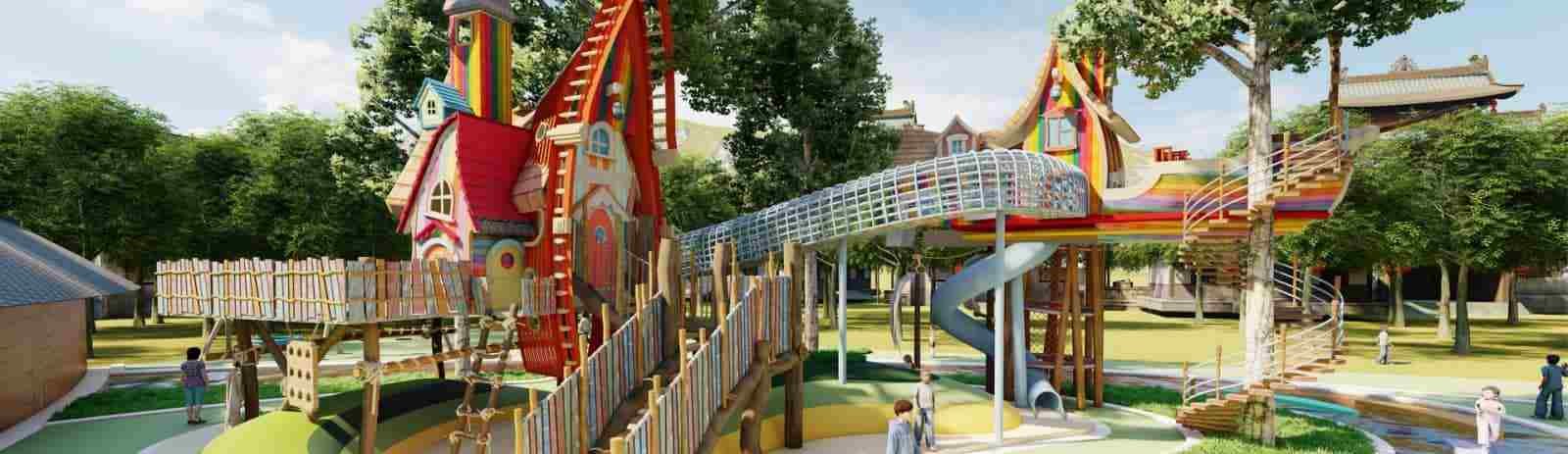
Wooden vs. Plastic Playground Equipment: Choosing the Right Material for Your Project
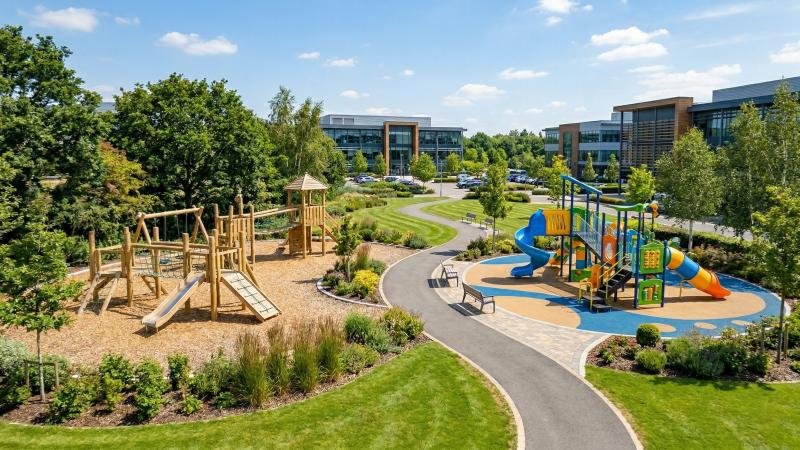
When planning a commercial play area, what are the fundamental differences between commercial wooden playground equipment and plastic playground equipment that will dictate your project’s long-term success?
The choice between commercial wooden and plastic playground equipment hinges on specific project priorities; wood offers exceptional heavy-traffic load capacity and natural aesthetic integration but requires intensive cyclical maintenance, whereas commercial plastic provides predictable long-term durability, low-maintenance routines, and superior resistance to vandalism, albeit often with higher initial material costs.
Evaluating Site Environment and Climate Conditions
Local weather patterns and environmental conditions play a definitive role in determining whether commercial wood or plastic is the most resilient choice for your new playground.
Climate directly determines material performance; commercial-grade plastic requires moderate temperature ranges to prevent structural warping and winter brittleness, while timber demands adequate site drainage and controlled humidity to resist ground-level moisture absorption and fungal decay.
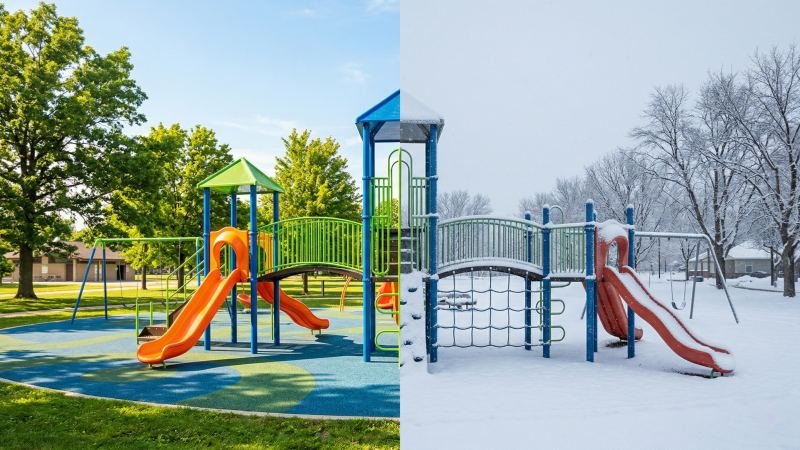
How Extreme Temperatures Affect Plastic Structures
Does your project site experience harsh winters or scorching summers? Extreme temperatures physically alter commercial-grade plastics. Most modern playgrounds utilize High-Density Polyethylene (HDPE), a material that responds immediately to thermal changes.
Thermal expansion and contraction occur daily. For instance, large plastic tube slides or modular activity panels expand under direct sunlight and contract when temperatures drop overnight. High heat makes plastic softer, and prolonged exposure to ambient temperatures above 100°F can cause slight structural warping at connection points.
Flip the script to freezing temperatures, and you face an entirely different threat. When the thermometer drops below freezing, HDPE loses its inherent flexibility and becomes increasingly brittle. Older plastic swing seats or unreinforced plastic activity panels face risks of cracking upon hard impact during severe cold snaps. Since the exact temperature tolerance depends heavily on the specific polymer blend used during manufacturing, always verify the thermal working range and expansion coefficients with your equipment supplier.
Temperature Impacts on HDPE Playground Components
| Temperature Condition | Physical Reaction | Structural Consequence |
|---|---|---|
| Sub-Zero Cold | Loss of elasticity | Increased risk of impact cracking |
| High Ambient Heat | Thermal expansion | Potential warping or fastener stress |
| Rapid Fluctuations | Continuous shifting | Loosening of structural hardware |
Moisture and Humidity Impact on Wooden Materials
Unlike manufactured plastic, wood is a porous, biological material that constantly interacts with surrounding environmental moisture. High humidity and heavy rainfall significantly impact timber performance.
Wood behaves much like a rigid sponge, naturally absorbing water from both the air and the ground. The internal wood fibers swell, and when the surrounding air finally dries out, the wood loses moisture and shrinks. This continuous swelling and shrinking cycle causes checking—the natural, deep cracks that appear along the timber’s grain.
Let’s be clear on this next point: excessive ground moisture is the absolute biggest enemy of wooden playground installations. Wooden playground border timbers or deeply buried structural posts will wick water directly from damp soil. If the wood’s internal moisture content remains above 20% for extended periods, rapid fungal decay begins. To combat this moisture absorption, commercial projects typically use pressure-treated pine or naturally resistant species like cedar. You should verify the specific ground-contact chemical treatment specifications to ensure it matches your site’s soil moisture levels.
- High Humidity Zones: Require excellent site airflow to quickly dry out damp wood fibers.
- Heavy Rainfall Areas: Demand proper sub-surface drainage to prevent water from pooling around footings.
- Coastal Environments: Airborne saltwater moisture accelerates the degradation of timber cells.
Assessing Safety and Structural Compliance
Evaluating the strict safety standards required for public playgrounds reveals distinct differences in how commercial wood and plastic materials perform under stress and environmental exposure.
Commercial playground safety relies heavily on a material’s inherent strength and surface integrity. Heavy-duty timber structures provide superior load-bearing capacities for high-occupancy play zones, while commercial-grade plastics offer engineered impact absorption and eliminate natural surface defects. Selecting the compliant material requires matching the structural yield strength to your expected user volume, alongside actively mitigating material-specific hazards like thermal retention or natural splintering.
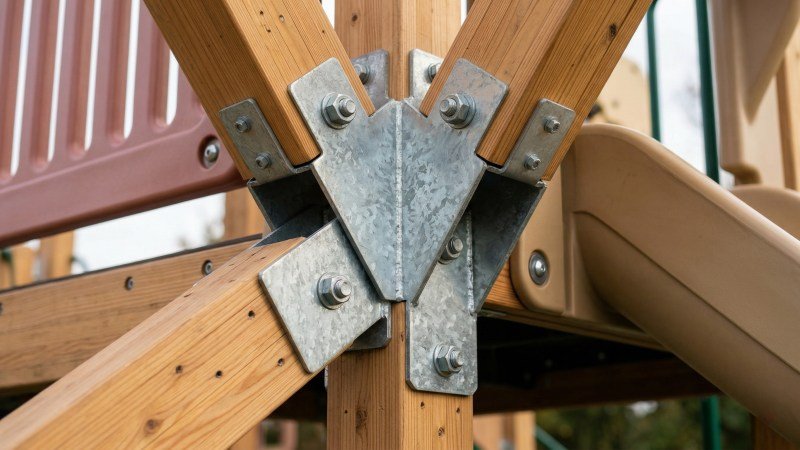
Structural Stability and Weight Capacity Differences
When planning a public project, structural failure is not an option. You must carefully consider how different materials handle physical stress, evaluating both static weight and dynamic movement. You wouldn’t under-spec the shoring in a commercial trench, so why would you compromise on the structural core of a high-capacity playset?
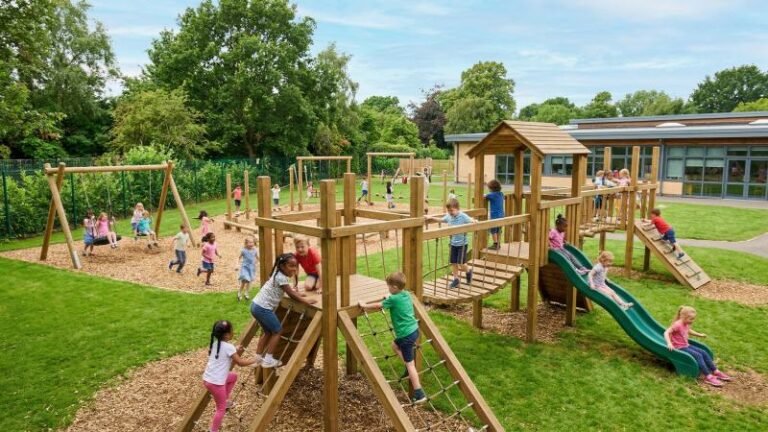
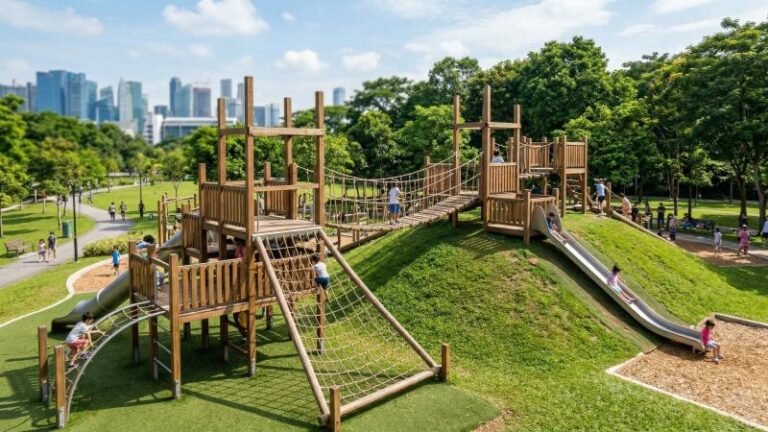
Wood provides exceptional natural rigidity, making it excel in high-capacity environments. Consider the massive wooden beams used in custom-built park obstacle courses or multi-tower climbing structures. The thick wood fibers naturally resist heavy compression, allowing a standard 6×6-inch solid timber post to easily handle massive vertical loads and create a highly stable foundation.
Plastic, on the other hand, plays by a completely different set of engineering rules. Solid plastic lacks the rigid stiffness of solid wood, so manufacturers rarely use pure plastic for structural load-bearing uprights. Instead, they use rotationally molded plastics sleeved over heavy-gauge galvanized steel pipes. The internal steel provides the required core strength, while the external plastic serves as a protective shell.
Load Bearing Variations
These engineering differences directly impact maximum weight capacity. Solid timber frames often natively support a higher density of users per square foot. However, steel-reinforced plastic systems provide highly consistent, predictable load ratings. Project planners must ensure the chosen material meets the specific static and dynamic load limits required for the anticipated user volume.
“A compliant public playground must safely support the dynamic weight of active children, plus the potential static weight of adult caregivers or emergency responders.”
Mitigating Surface Hazards Like Splinters or Overheating
Beyond structural collapse, localized surface injuries are a primary liability concern. Both materials present unique surface hazards that project managers must understand how to mitigate effectively.
Let’s look at timber first. Traditional wooden equipment is organic, meaning it naturally dries out and cracks as it ages. While surface checking rarely impacts structural integrity, it creates rough edges. To prevent splinters, commercial timber requires extensive factory sanding and the routing of all sharp 90-degree corners into smooth, rounded edges.
Plastic equipment completely eliminates the risk of splinters but introduces severe thermal hazards. Dark-colored plastic slides and roof panels absorb and retain solar energy rapidly. According to the Consumer Product Safety Commission (CPSC), bare skin contact with overheated plastic slides can cause severe thermal burns. Plastic surfaces in direct, intense sunlight can quickly exceed 140°F (60°C).
Hazard Mitigation Strategies
To solve this thermal issue, modern playground designs incorporate strategic shade structures, and manufacturers formulate specialized UV-reflective plastics. Since thermal resistance changes based on color and resin blend, verify the UV protection ratings directly with your supplier before installation.
Comparison of Common Surface Hazards
| Material Type | Primary Surface Hazard | Mitigation Strategy |
|---|---|---|
| Commercial Wood | Splinters and checking | Factory sanding and rounded edges |
| HDPE Plastic | Extreme heat retention | Lighter color choices and shade canopies |
| Plastic Hardware | Static electricity buildup | Anti-static chemical additives |
Determining Lifespan and High-Traffic Durability
Anticipating the realistic operational lifespan of wood versus plastic materials is essential before committing to major structural investments for public spaces.
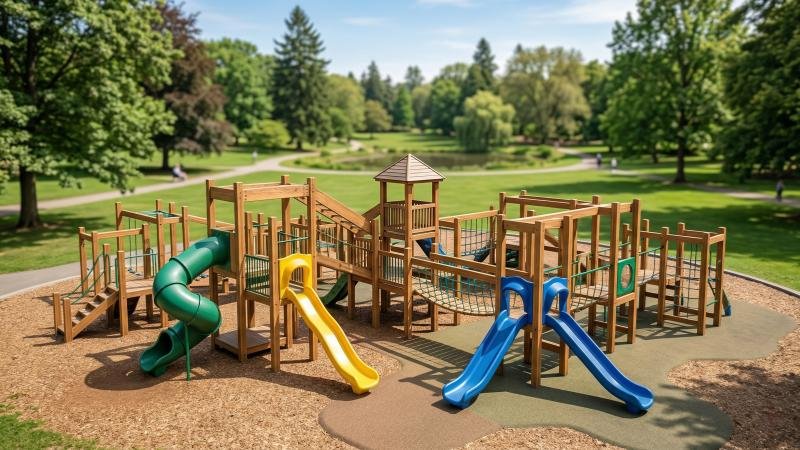
The operational lifespan of a commercial playground depends entirely on the material’s resistance to continuous physical abrasion and high-volume foot traffic. Commercial-grade plastics typically offer a 15-to-20-year lifespan by effectively resisting surface friction. Meanwhile, engineered wood structures can easily exceed 20 years of service life when specifically manufactured for heavy commercial impact.
Wear Resistance of Commercial Grade Plastics
Commercial playgrounds endure thousands of footsteps daily, making the physical wear resistance of the primary material absolutely crucial. Modern playgrounds heavily utilize rotationally molded polyethylene, which is specifically engineered to withstand constant abrasive friction.
Consider the high-traffic exit zones of commercial spiral slides. These specific plastic components are engineered to endure continuous physical friction without losing their structural thickness. Add to that the fact that the color pigment is typically molded completely through the plastic wall. Consequently, daily scuffs and deep scratches do not reveal a different color underneath, allowing the equipment to maintain its visual integrity despite heavy physical abuse.
Impact of Material Thickness
This wear resistance heavily depends on the actual wall thickness of the plastic components. Thicker plastic walls directly correlate to a longer operational lifespan in busy public parks. Always verify the exact material thickness specifications with your equipment supplier, as manufacturing tolerances vary significantly among different product lines.
Longevity of Pressure-Treated and Engineered Wood
Wood is a classic playground choice, but its survival against decades of heavy physical impact relies on using highly dense engineered wood products rather than standard residential lumber.
Consider the towering wooden structural posts used in destination park playgrounds. These structures must support massive, continuous foot traffic without the wood fibers failing. Engineered wood, such as glued laminated timber (glulam), provides superior physical longevity by compressing multiple wood layers with industrial resins. This process eliminates the natural weak points found in solid logs, allowing the posts to resist physical degradation and fiber crushing.
Physical Density and Gouge Resistance
For solid timber options, physical longevity depends directly on the wood’s density. Denser woods naturally resist physical denting and gouging much better than standard softwoods. Selecting the appropriate wood grade and density rating is critical for ensuring long-term wear resistance.
Comparing Lifespan and Wear Factors
| Material Type | Estimated Lifespan | Primary Wear Resistance Feature |
|---|---|---|
| Commercial Plastic (HDPE) | 15 – 20 Years | Color-through molding hides deep scratches |
| Engineered Wood (Glulam) | 20+ Years | Laminated layers prevent physical fiber crushing |
| Solid Heavy Timber | 15 – 25 Years | High natural density resists surface gouging |
Factoring in Ongoing Maintenance Requirements
The month-to-month and year-to-year upkeep routines differ drastically between these two playground materials, directly impacting your long-term operating budget and labor allocation.
Commercial playground maintenance varies drastically based on the material’s physical properties. Plastic structures require frequent but superficial cleaning to remove surface grime and vandalism. Meanwhile, wooden structures demand less frequent but highly intensive chemical treatments, such as cyclical staining and sealing, to actively preserve their core integrity.
Routine Cleaning and Vandalism Removal for Plastics
Plastics have a reputation for being low-maintenance. True, but they aren’t magic—you still need a baseline cleaning schedule. Dust, sticky spills, and biological debris accumulate quickly on broad plastic platforms.
Maintenance crews typically rely on commercial pressure washers to clean sprawling plastic play structures, as the smooth, non-porous surface of commercial HDPE easily releases everyday dirt. A standard mix of mild industrial detergent and water handles most basic cleaning tasks.
Handling Graffiti and Vandalism
Public park installations frequently attract vandalism. The good news? Permanent markers and spray paint can usually be wiped away from plastic surfaces using commercial citrus-based solvents or specialized wipes. But tread carefully here. Applying harsh industrial chemicals or excessively high-pressure water can cloud the plastic or strip factory-applied UV coatings. It is crucial to strictly adhere to the manufacturer’s approved cleaning guidelines to prevent accidental surface damage.
Sealing and Staining Schedules for Timber Preservation
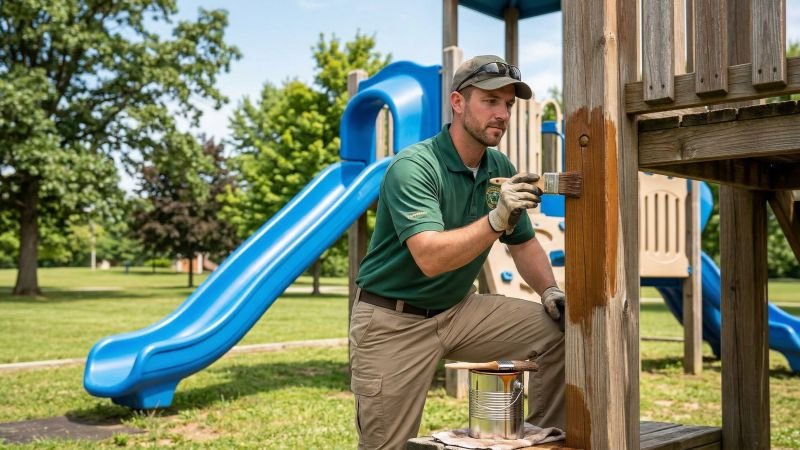
Unlike plastic, commercial wood requires deep preventative maintenance. Timber is a porous, biological material that slowly loses its surface defenses over time, requiring facility teams to actively replenish these defenses through scheduled chemical treatments.
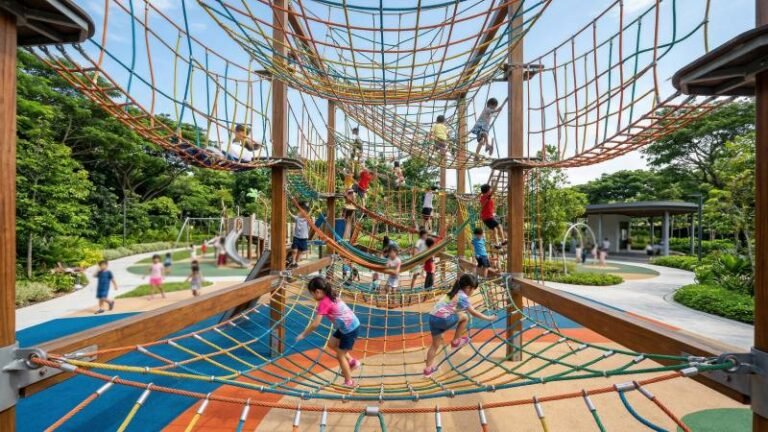
Think about the rigorous maintenance required for a large wooden playset exposed to the elements year-round. Sun, rain, and heavy foot traffic constantly break down the wood’s protective outer barrier. The reality? Maintenance crews must periodically apply high-grade commercial water repellents or penetrating stains to physically block moisture and deflect harmful UV rays.
The Treatment Cycle
Here is what that treatment cycle actually looks like in the field. Typically, commercial wooden playgrounds require a full surface reseal every two to three years. Crews must first lightly sand any rough high-traffic areas to remove minor surface splinters. Next, the timber must be completely dry; applying a waterproof sealant over damp wood traps moisture inside the post, rapidly accelerating internal fungal rot.
Finally, crews brush or spray the commercial stain onto the structure. Because wood porosity changes based on the species and initial factory treatments, you should verify the exact required stain formulas and application schedules with your lumber supplier to avoid voiding warranties.
Comparing Maintenance Labor Workflows
| Maintenance Category | Plastic Equipment | Wooden Equipment |
|---|---|---|
| Routine Cleaning | Frequent power washing | Occasional debris sweeping |
| Vandalism Removal | Chemical solvent wipe-downs | Deep sanding and spot refinishing |
| Preventative Care | Checking structural fasteners | Cyclical staining and sealing |
| Overall Labor Profile | Low intensity, high frequency | High intensity, low frequency |
“Effective playground maintenance is about matching your available labor resources to the specific demands of your chosen material.”
Analyzing the Total Cost of Ownership
Comparing the actual financial realities of purchasing and owning commercial playground equipment reveals diverging cost structures over a typical twenty-year period.
The total cost of ownership reveals that commercial plastic equipment typically requires a higher initial capital investment but offers highly predictable, fixed long-term financial forecasting. Conversely, heavy timber structures often present lower upfront material costs but demand a dedicated, compounding annual operating budget for chemical treatments and specialized labor to prevent premature structural failure.
Initial Installation and Material Expenses
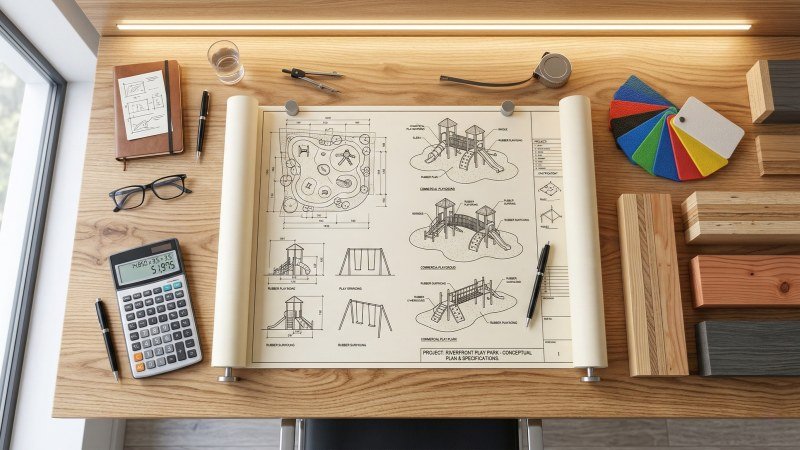
Securing capital is usually the biggest hurdle. So, let’s talk real numbers and accurate upfront cost projections. Generally, commercial-grade plastic and steel systems carry a premium purchase price.
The factory fabrication of specialized plastic playground components, such as custom-molded triple-chute slides or elaborate themed roofs, combined with specialized freight transport, drives up the starting price. Switching gears to timber, the initial procurement often looks much cheaper on paper. Raw lumber is widely available and packs flat on standard flatbed trucks, keeping freight costs relatively low.
But don’t let that initial invoice fool you. You have to factor in the installation labor. Plastic modular systems often bolt together quickly on-site. Meanwhile, wooden structures frequently require extensive, skilled carpentry work during assembly. Installers must measure, cut, drill, and level heavy timber manually. Consequently, the cheaper material cost of wood is sometimes offset by higher local labor rates. Project managers should always secure complete, turnkey installation quotes to accurately finalize the capital budget.
“A lower initial invoice does not always guarantee a cheaper project. Always calculate the combined cost of raw materials, freight delivery, and skilled installation labor.”
Long-Term Repair and Replacement Projections
Once the playground is open, the financial focus shifts to the operating budget and the cost of replacing broken parts over the next decade. Are you prepared to absorb compounding skilled labor costs year after year?
When a plastic component fails, the replacement cost is usually high. You cannot simply patch a cracked modular plastic slide tube; you must order an exact, custom-molded replacement part directly from the original manufacturer. However, the labor to swap out a single plastic module is usually very fast and straightforward.
Wood presents a completely different scenario for structural repairs. While the physical repair process utilizes traditional carpentry tools, maintaining strict safety certifications dictates that facility managers cannot simply purchase standard commercial lumber to replace a broken step or platform deck board. To prevent critical entrapment hazards, chemical exposure from non-compliant treated wood, and unpredictable dynamic load failures, any replaced structural component must be a certified, playground-grade part sourced directly from the manufacturer or evaluated by a specialized engineer. The replacement must perfectly match the original millimeter-level gap tolerances and structural yield strength. Therefore, wooden playground repairs require sourcing highly specific, compliant materials followed by skilled, precision labor to ensure continuous public safety.
Comparing Long-Term Financial Projections
| Budget Category | Commercial Plastic | Engineered Wood |
|---|---|---|
| Initial Material Cost | High (Custom molding) | Medium (Raw timber) |
| Installation Labor | Low to Medium (Modular assembly) | High (Skilled carpentry required) |
| Component Replacement | Custom-molded modular parts | Certified playground-grade timber |
| Financial Predictability | High (Fixed part costs) | Variable (Depends on compliant sourcing and skilled labor) |
Conclusion
Selecting the ideal material for your commercial playground is not a one-size-fits-all decision. It requires a careful balancing of your specific site environment, safety requirements, maintenance capabilities, and long-term budget. Whether you opt for the robust, natural appeal of engineered timber or the vibrant, low-maintenance durability of commercial plastic, understanding these core differences ensures a successful, safe, and long-lasting installation.
Ready to start planning your next project? Please contact us today to discuss your project needs and find the ideal equipment solutions!