-
Whatsapp: +86 15516933785
-
Email: hanlin@hanlinplayground.com
-
Address: Shangjie District, Zhengzhou City, Henan Province, China
-
Whatsapp: +86 15516933785
-
Email: hanlin@hanlinplayground.com
-
Address: Shangjie District, Zhengzhou City, Henan Province, China

How Much Does It Cost to Start an Indoor Playground in 2026
What is the total financial investment required to open and operate an indoor playground business in 2026?
In 2026, the total cost to start an indoor playground typically ranges from $50,000 for a small play café to over $1,000,000 for a large-scale Family Entertainment Center. On average, prospective owners should budget between $150,000 and $400,000 for a standard 5,000 sq. ft. commercial facility, which covers essential expenses such as play structures, safety flooring, professional installation, liability insurance, and initial lease deposits.
Estimated Startup Costs by Facility Size
How does the facility’s square footage directly impact your budget calculation?
Calculating costs by area is the most accurate method for planning. In 2026, prospective owners should budget between $15 and $40 per square foot for a complete turnkey setup. This unit cost covers the play structure, necessary facility renovations, and initial site preparation, allowing you to scale your budget linearly whether you are building a compact 2,500 sq. ft. zone or a massive 15,000 sq. ft. center.
Small Toddler Zones and Play Cafés
Size Range: 2,500 – 5,000 sq. ft.
Estimated Budget: $50,000 – $150,000
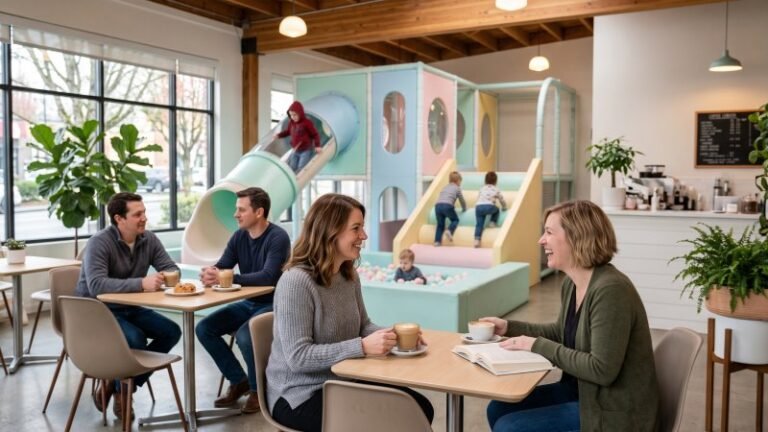
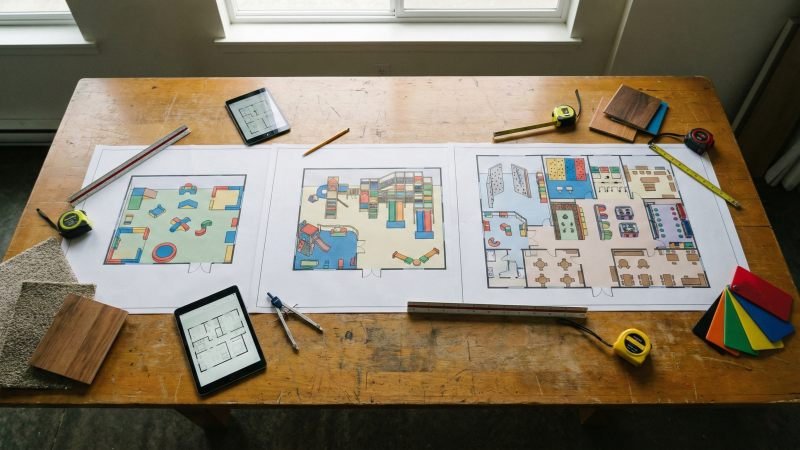
Small facilities often follow the “Play Café” model. In this setup, the business focuses equally on the play area and the parents’ relaxation space. Because the total square footage is lower, your total financial risk is reduced. But here’s the kicker: the cost per square foot might actually be higher than average. You still need to purchase expensive core systems like a Point of Sale (POS) system and café equipment, but you have fewer square feet to spread those costs across.
For a facility of this size, the play equipment is usually less complex. You are likely installing a single-level or two-level soft play structure rather than a massive three-story grid. Think of this like a compact, high-density storage system in a small retail backroom; it is efficient and organized, but holds significantly less volume than a major distribution center. That means your budget will lean heavily toward interior decoration and café assets rather than just steel and plastic.
| Cost Factor | Estimated Allocation | Notes |
|---|---|---|
| Play Equipment | $25,000 – $60,000 | Focus on soft play, sensory walls, and low-height climbers. |
| Interior/Café | $20,000 – $50,000 | Includes seating, coffee machines, and aesthetic flooring. |
| Renovation | $15,000 – $40,000 | Basic lighting, painting, and bathroom upgrades. |
Medium Commercial Indoor Playgrounds
Size Range: 5,000 – 10,000 sq. ft.
Estimated Budget: $150,000 – $400,000
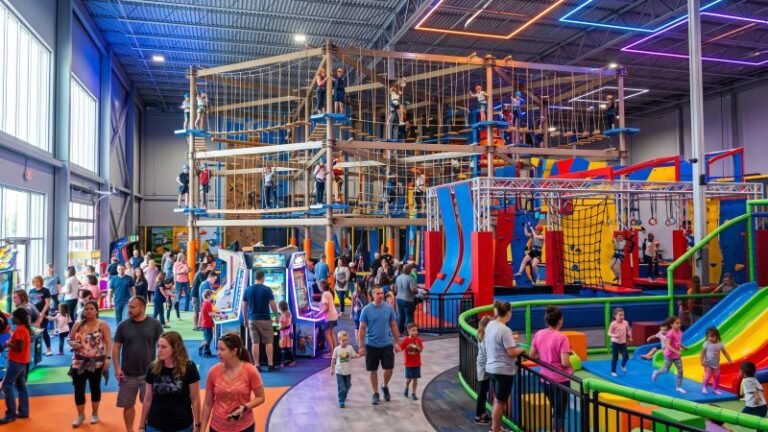
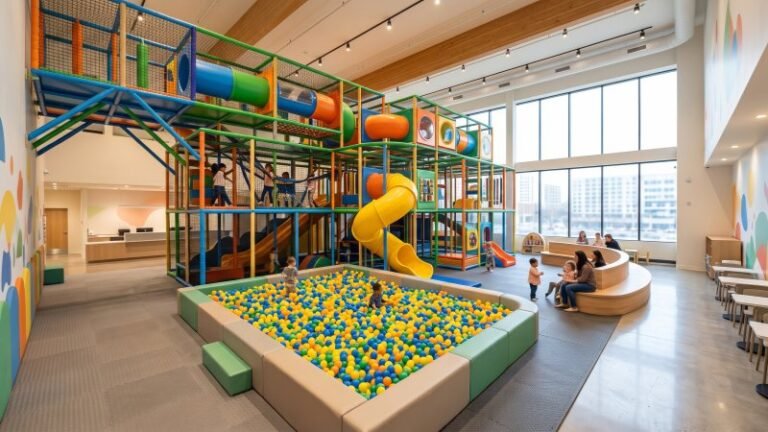
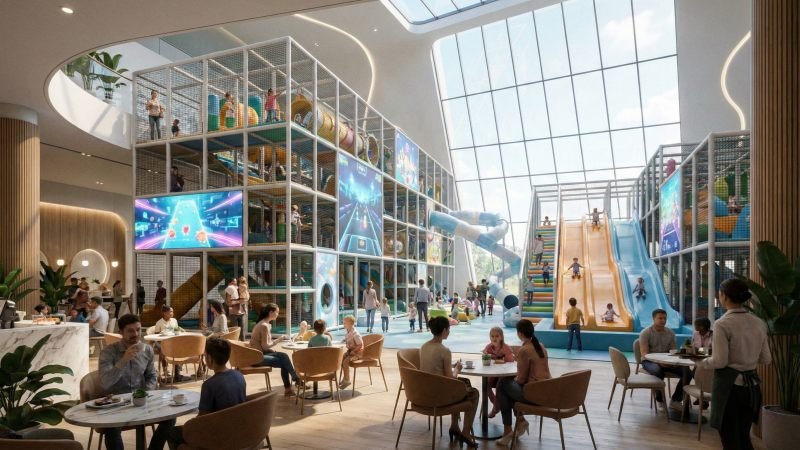
This size is the industry standard for a dedicated indoor playground. Here, the primary product is the entertainment experience, not the coffee. With a budget in this range, you can install a large, multi-level “jungle gym” structure that acts as the anchor attraction. The higher budget allows for diverse zones, such as a separate toddler area and a challenging ninja course for older kids.
In this tier, the structure itself becomes the largest expense. You will need a ceiling height of at least 15 to 20 feet to accommodate three-level equipment. Make no mistake: equipment costs can fluctuate based on the complexity of the design and the density of play events per level. Therefore, always verify specific capacity ratings and structural load requirements with your equipment supplier to ensure your budget matches your building’s specifications.
A medium facility operates like a high-traffic public transit station. It is designed for consistent flow, durability, and moderate volume. You are investing in commercial-grade materials capable of handling the wear and tear of weekend birthday party rushes, which requires a more robust initial investment compared to the lighter usage seen in a small size indoor playground.
Large Scale Family Entertainment Centers
Size Range: 10,000+ sq. ft.
Estimated Budget: $650,000 – $1,000,000+
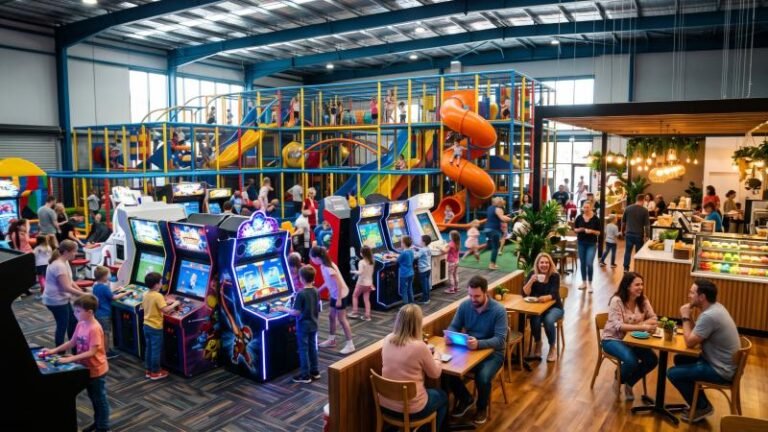
Family Entertainment Centers (FECs) are the “big box” stores of the industry. At this level, you are not just building a playground; you are building an indoor amusement park. The budget jumps significantly because you are filling a massive volume of space. An empty warehouse looks cheap, but filling 15,000 square feet with active entertainment requires significant capital.
The cost drivers here extend beyond plastic slides. You are likely incorporating high-tech attractions like mechanical rides, trampoline parks, or laser tag arenas. These active entertainment units require specialized installation and expensive safety certifications. Plus, dealing with a facility this size often requires major electrical and HVAC upgrades to handle the heat load generated by hundreds of active guests.
Key Budget Allocations for FECs:
- Diversified Attractions: 40% of the budget goes to varied equipment (Arcades, VR, Soft Play).
- Infrastructure: 30% is often spent on heavy construction (Mezzanines, commercial kitchens, HVAC).
- Technology: High-end RFID wristband systems and automated gates are standard, adding to the initial tech startup cost.
Core Capital Expenses Breakdown
What are the primary hard costs that business owners must allocate funds for when building an indoor playground facility?
The core capital expenses for an indoor playground typically consist of four main categories: the play equipment itself (30-50%), safety flooring and surfacing (10-15%), shipping and professional installation services (15-20%), and necessary facility renovations like HVAC and lighting (20-25%). For a standard 5,000-square-foot facility, these combined hard costs often range between $150,000 and $300,000, depending heavily on the complexity of the custom design and local labor rates.
Play Structures and Interactive Equipment
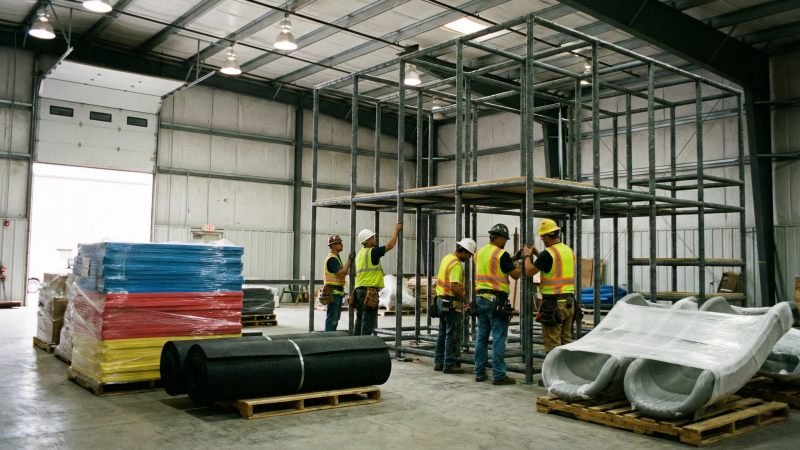
The play structure acts as the engine of your business. Without it, the facility cannot function. But here is the reality: the cost of this equipment is not determined solely by the size of the room. Instead, the price depends on the “play density,” or how many activities are packed into that space. A large open room with a simple ball pit costs significantly less than a compact room filled with mechanical spin zones, donut slides, and interactive projection games.
Industry data suggests that high-quality play structures typically cost between $100 and $150 per square meter (roughly 10 sq. ft.) when sourced directly from manufacturers. But watch out—if you choose high-tech interactive elements, this cost can double. Think of this like outfitting a trampoline park zone; a standard trampoline bed is affordable, but adding a digital interactive target wall or a mechanical sweeper arm drastically increases the price of that specific zone.
Please note: Raw material costs for steel and plastic fluctuate globally. Therefore, you should always verify the current price per square meter with your supplier before finalizing your budget.
Shipping and Professional Installation
Many new owners underestimate the logistics of getting the equipment from the factory to the front door. Most commercial playground equipment is manufactured overseas and shipped in 40-foot High Cube containers. You are responsible for the ocean freight, customs clearance, and trucking to your site.
Once the equipment arrives, you cannot simply put it together like a bookshelf. Commercial playgrounds require certified installers. These professionals ensure the structure meets safety standards like ASTM (USA) or EN (Europe). Installation costs generally run between 15% and 25% of the total equipment price. This is similar to installing a commercial elevator; while general construction workers can build the shaft, you need certified specialists to install the mechanical components to ensure they are safe for public use.
| Expense Category | Estimated Cost Range | What is Included? |
|---|---|---|
| Ocean Freight | $3,000 – $15,000 per container | Port-to-port shipping fees. |
| Inland Trucking | $1,000 – $5,000 | Transport from the local port to your venue. |
| Installation Labor | 15% – 25% of Equipment Cost | Team of 3-5 technicians for 10-20 days. |
| Room & Board | Variable | Hotel and food for the installation crew. |
Flooring and Safety Surfacing
Flooring is your primary safety net. You cannot place play equipment directly on concrete. You must install impact-absorbing flooring that meets “critical fall height” requirements. This ensures that if a child falls from a specific height, the floor will absorb enough shock to prevent serious injury.
There are two main types of flooring used in the industry:
- EVA Foam Mats: These puzzle-style mats are cheaper and easier to replace. They cost approximately $1.50 to $3.00 per square foot.
- Commercial Carpet or PVC Padding: This provides a seamless, high-end look and offers better durability. This option can cost $4.00 to $7.00 per square foot.
Is it worth cutting corners here? Absolutely not. Investing in cheap flooring is risky. If the flooring wears out quickly, you have to shut down the entire play zone to replace it. This is comparable to a bowling alley having to close a lane because the wood is warped; downtime equals lost revenue. To ensure you are meeting the right requirements, refer to our soft indoor playground equipment buying guide regarding safety standards.
HVAC and Facility Renovations
Your building requires more than just a fresh coat of paint. Indoor playgrounds generate a massive amount of body heat. When you have 50 children running and climbing, the temperature rises rapidly. Trust me, a standard retail air conditioning system won’t cut it.
You may need to upgrade the HVAC (Heating, Ventilation, and Air Conditioning) units to handle this increased “heat load.” Industry experts recommend budgeting $10,000 to $50,000 for HVAC upgrades alone, depending on the age of the building. On top of that, you must ensure your lighting is bright enough for safety but positioned high enough so children cannot reach the fixtures from the top levels of the play structure.
- Ceiling Height: Ensure you have at least 15-20 feet of clearance.
- Lighting: Switch to LED high-bay lights to reduce heat and energy costs.
- Bathrooms: You may need to add more stalls to meet local building codes based on your capacity.
Operational Reserves and Soft Costs
Beyond the physical equipment and renovation, what financial reserves and non-tangible costs must an owner prepare for before opening day?
Operational reserves and soft costs for an indoor playground typically range from $50,000 to $150,000, depending on the location and lease terms. These critical funds cover upfront lease deposits, legal fees, comprehensive liability insurance premiums, pre-launch marketing campaigns, and a mandatory cash buffer to sustain the business during the initial months when revenue is still ramping up.
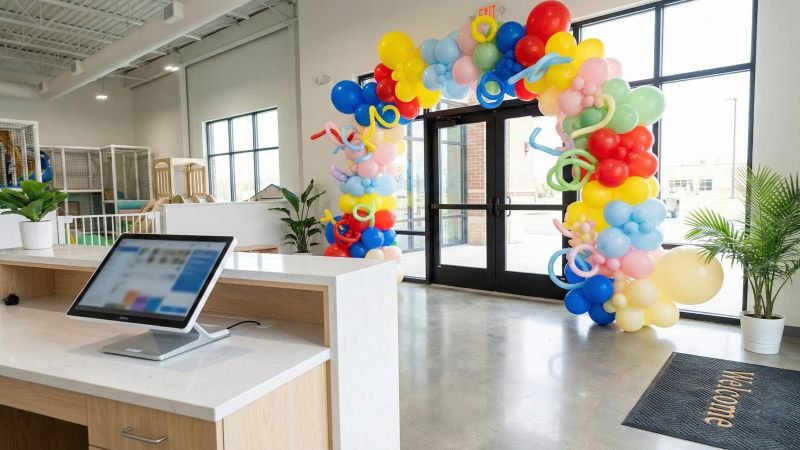
Lease Deposits and Real Estate Fees
Securing a commercial space requires much more capital than renting an apartment. Landlords in 2026 often view indoor playgrounds as “high-risk” tenants because the specialized build-out (like bolting structures to floors) is hard to remove if the business fails. That is exactly why landlords frequently demand a security deposit equivalent to 3 to 6 months of rent.
If your monthly rent is $10,000, you might need to write a check for $60,000 just to get the keys. Additionally, you must budget for a commercial real estate attorney. You should never sign a lease without a lawyer reviewing it, especially to check for Triple Net (NNN) clauses. In a Triple Net lease, you are responsible for paying the building’s property taxes, building insurance, and maintenance costs on top of the base rent.
- Security Deposit: $30,000 – $60,000 (varies by credit score).
- Legal Fees: $3,000 – $7,000 for lease negotiation.
- Utility Deposits: $1,000 – $3,000 for high-capacity electricity and water setups.
Liability Insurance and Permits
Insurance is not optional in the amusement industry; it is your financial survival gear. Just as a trapeze artist relies on a safety net, your business relies on General Liability insurance to protect against injury lawsuits. Face it: in 2026, insurance premiums have risen due to tighter market regulations.
You will need a specific policy that covers “Amusement and Recreation.” A standard small business policy is insufficient. The cost depends heavily on your specific attractions; for example, a facility with high-risk trampolines will pay significantly more than a facility with only soft play areas. Because insurance rates vary wildly by zip code and claim history, always request quotes from specialized brokers before finalizing your budget. For a deeper dive into premiums, read our article on indoor playground insurance costs.
| Insurance Type | Estimated Annual Cost | Purpose |
|---|---|---|
| General Liability | $5,000 – $12,000 | Covers slips, falls, and customer injuries. |
| Workers’ Compensation | $2,000 – $8,000 | Mandatory coverage for employee injuries. |
| Property Insurance | $2,500 – $6,000 | Protects your equipment from fire or theft. |
Marketing and Grand Opening Budget
You cannot simply unlock the doors and expect families to flood in. You must build momentum before you open. This is similar to a movie studio releasing trailers months before a film hits theaters; you need to create anticipation to ensure a strong opening weekend box office.
A successful launch strategy involves spending money on digital ads and local events at least two months prior to opening. You need to capture the attention of local parents on social media platforms and search engines like Google Ads. And don’t forget the big day. Your “Grand Opening Weekend” is a distinct cost center. This event often includes hiring face painters, balloon artists, or catering to ensure the first impression is magical.
Key Marketing Allocations:
- Website Design & SEO: $3,000 – $8,000.
- Pre-Launch Ad Spend: $2,000 – $5,000 (Social Media & Google Ads).
- Grand Opening Event: $3,000 – $10,000 (Entertainment, freebies, staff overtime).
Recommended Cash Buffer for First 6 Months
Why do so many indoor playgrounds fail in the first year? It is rarely a lack of customers—it is a lack of cash flow. It takes time to build a recurring membership base. During this “ramp-up” period, your outgoing expenses (bills) will likely exceed your incoming revenue (ticket sales).
Industry analysis suggests you should have enough cash in the bank to cover 3 to 6 months of operating expenses. This reserve acts as a fuel tank for your business journey; if you run out of fuel before you reach the destination (profitability), the vehicle stops. Your biggest monthly drain will be payroll. Staffing a front desk, a café, and floor monitors requires a substantial labor budget.
Calculating Your Safety Net:
If your estimated monthly burn rate (Rent + Payroll + Utilities) is $25,000, you should ideally have $75,000 to $150,000 sitting in a liquid savings account. This ensures you can pay your staff and keep the lights on even if your first few months are slower than expected. To prepare for this phase, consider reviewing our guide on how to start an indoor playground business, which details these early planning stages.
Franchise vs Independent Cost Comparison
Does joining a well-known indoor playground franchise cost more than starting your own independent brand?
Starting an independent indoor playground is generally less expensive than joining a franchise because it eliminates substantial upfront licensing fees and ongoing revenue sharing. Independent owners typically save between $30,000 and $60,000 in initial franchise fees and avoid the long-term burden of paying 6% to 8% of their gross revenue in monthly royalties. This financial freedom allows independent operators to reinvest those funds directly into better equipment or marketing strategies.
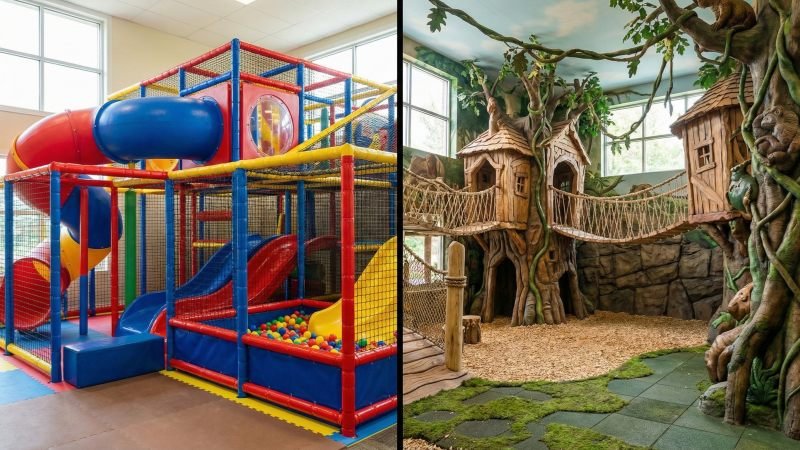
Franchise Fees and Monthly Royalties
When you sign a contract with a franchise, you are essentially renting their business model. The most immediate cost is the Initial Franchise Fee. This is a one-time payment made just for the right to use their name and logo. In 2026, this fee typically ranges from $30,000 to $60,000. It does not buy you any equipment, paint, or carpet; it is purely an access fee.
The real wallet-drainer, though, is the Monthly Royalty. Franchisors usually collect 6% to 8% of your Gross Sales. It is crucial to understand that this is calculated on your total sales, not your profit. Even if your business loses money in a slow month, you still owe the franchisor their percentage of the revenue. Additionally, many franchises mandate a “Marketing Fund” contribution, often adding another 1% to 2% to your monthly bill.
Think of this financial structure like a software subscription service for your business operations. You never truly own the system; you are perpetually paying a premium to use it. Over a standard 10-year contract, these royalties can amount to hundreds of thousands of dollars that could have otherwise gone into your pocket.
| Cost Category | Franchise Model | Independent Model | Impact on Budget |
|---|---|---|---|
| Initial Fee | $30,000 – $60,000 | $0 | Immediate savings for independent owners. |
| Royalty Fees | 6% – 8% of Gross Sales | 0% | Independent owners keep 100% of revenue. |
| Marketing Fund | 1% – 2% of Gross Sales | Variable (Your Choice) | You control your own ad spend budget. |
| Renewal Fee | $5,000 – $15,000 (every 5-10 yrs) | $0 | No cost to continue operating your own brand. |
Savings Potential of Custom Designs
Choosing the independent route offers massive cost advantages during the build-out phase. Franchises enforce strict brand standards. They often require you to purchase equipment and furniture from “approved vendors.” These vendors frequently pay a commission to the franchisor, which drives up the price you pay. Industry analysis shows that equipment packages from franchise-approved suppliers can be 20% to 30% more expensive than sourcing directly from manufacturers.
Beyond the fees, think about the build-out. Independent design offers flexibility that saves construction costs. Franchise designs are often rigid “cookie-cutter” templates. If your building has an odd shape or a structural column in the middle of the room, a franchise template might force you to perform expensive demolition or renovation to make the room fit their specific layout.
In contrast, an independent custom design works like custom architectural joinery. You design the playground around the existing building columns and obstacles, ensuring a perfect fit without wasted space. By adapting the equipment to the room rather than forcing the room to fit the equipment, you can avoid thousands of dollars in unnecessary general contracting work. Note: Always confirm with your equipment designer that custom modifications do not alter the safety zones required by ASTM or EN standards.
Calculating Your Return on Investment
How long does it typically take for an indoor playground business to earn back the money spent on startup costs?
The average return on investment (ROI) period for a well-managed indoor playground is typically between 18 and 24 months. While facilities relying strictly on general admission tickets may take up to 36 months to break even, owners who successfully leverage high-margin revenue streams like birthday party packages and food service can often recover their initial capital investment within the first year of operation.
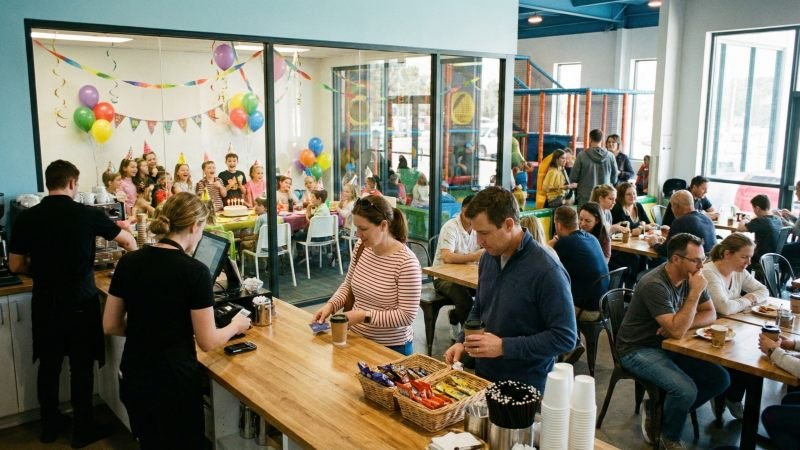
Average Payback Period in the Industry
In the family entertainment industry, the “payback period” is the time required for your net profits to equal your initial startup expense. You should view your business timeline in two distinct phases:
- Operating Break-Even: This is when your monthly revenue covers your monthly bills (rent, payroll, utilities). Most playgrounds reach this point within months 3 to 6.
- Capital Recovery: This is when your accumulated profits finally match the total cash you spent to build the place.
According to 2026 industry benchmarks, a standard commercial playground (5,000 sq. ft.) aims for a 30% to 40% annual return. This means if you invested $300,000, you should aim to generate $90,000 to $120,000 in net profit (money left after all expenses) per year.
Think of your playground like a claw machine game. The startup cost is the price of the machine itself. The monthly bills are the electricity to run it. The profit is the coins players drop in. You must collect enough coins to pay for the electricity first, and only after that do you start paying off the cost of the machine. For a more detailed breakdown, check out our analysis on is an indoor playground really a profitable business.
Please remember: These figures are averages. Your specific payback period will fluctuate based on local competition and rent prices. Always calculate your break-even point using your actual lease terms.
| Business Phase | Typical Timeline | Financial Goal |
|---|---|---|
| Launch Phase | Months 1 – 3 | Build traffic; often operating at a slight loss. |
| Stabilization | Months 4 – 6 | Revenue covers monthly operating costs (Operating Break-Even). |
| Growth Phase | Months 7 – 18 | Profits are used to pay down initial debt/investment. |
| Profit Phase | Month 18+ | Initial capital is fully recovered; purely profit generation. |
High Margin Revenue Streams to Accelerate ROI
If you rely solely on selling $15 entry tickets, your road to profitability will be long. The ticket price covers the “wear and tear” of the facility, but it rarely generates significant profit. So, how do you speed up your ROI? You must focus on products with higher profit margins.
Birthday Parties are the financial engine of this industry. When you sell a party package, you are bundling low-cost items (a reserved table, a few pizzas, and entry passes) at a premium price. The labor and space are already paid for; the extra cost to host the party is minimal. That is why party packages often carry a 60% to 80% profit margin.
Food and Beverage (F&B) is the second accelerator. This functions similarly to a movie theater concession stand. The theater makes little money on the movie ticket (the playground entry), but makes massive profit on the popcorn (the café). Selling coffee to parents and snacks to children can increase your revenue per customer by 30% without requiring additional square footage.
- Party Packages: Pre-sold revenue that guarantees income regardless of weather.
- Socks and Merchandise: Mandatory grip socks have margins upwards of 400%.
- Memberships: Provides consistent monthly cash flow to cover rent during slow seasons.
Conclusion
Starting an indoor playground in 2026 is a significant financial commitment, but it offers a proven path to profitability for owners who plan meticulously. Whether you open a small $50,000 toddler zone or a $1,000,000 mega-center, success depends on balancing your upfront capital expenses with your long-term operational cash flow.
By choosing the right equipment, managing your renovation costs, and prioritizing high-margin revenue streams like parties, you can maximize your ROI and build a thriving community hub. If you are ready to get a precise cost estimate tailored to your specific building and budget, contact us today to start planning your custom indoor playground.