-
Whatsapp: +86 15516933785
-
Email: hanlin@hanlinplayground.com
-
Address: Shangjie District, Zhengzhou City, Henan Province, China
-
Whatsapp: +86 15516933785
-
Email: hanlin@hanlinplayground.com
-
Address: Shangjie District, Zhengzhou City, Henan Province, China

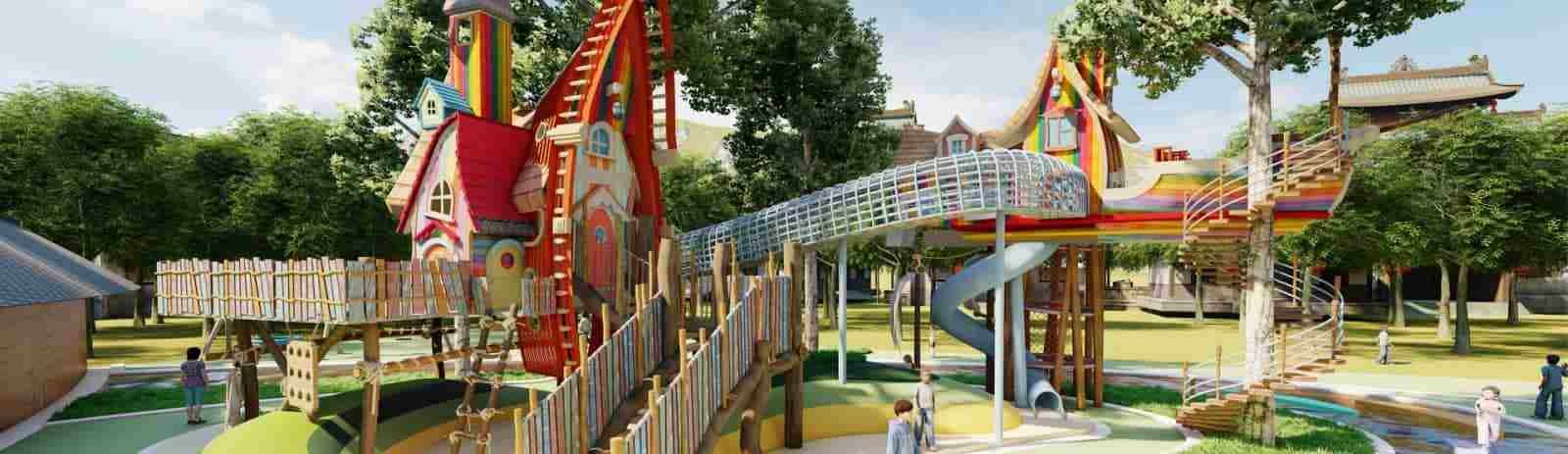
How to Start an Indoor Playground Business: The Ultimate Guide
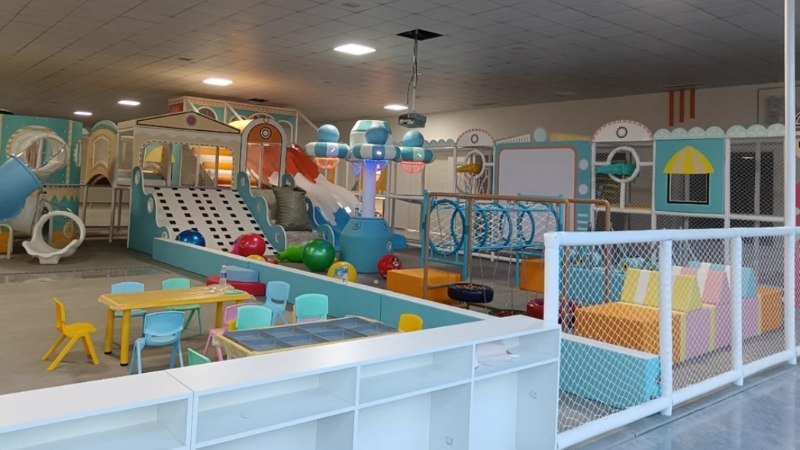
Starting an indoor playground business is a complex but rewarding process. Success requires more than just filling a room with colorful slides; it demands a structured approach divided into four key phases: business planning, legal and location setup, equipment sourcing, and operational launch. Here is exactly what it takes to build a facility that is both safe for children and profitable for you.
Phase 1: Business Planning and Market Positioning
Long-term success starts with a rock-solid business plan. Long before looking at real estate or browsing equipment catalogs, you need to define your target audience, project your expenses, structure your revenue, and secure capital.

Market Analysis: What Age Range Will Your Playground Serve
You cannot safely or effectively cater to every child. A space designed for a 2-year-old will bore a pre-teen, while older kids’ equipment poses significant safety risks to toddlers. Your chosen demographic dictates your equipment, facility size, and insurance rates.
Why Your Niche Matters
Your target age group defines your entire business model.
- Toddler-Focused (0-5): Demands soft-play equipment, sensory panels, and wide sightlines for parents. Safety and gentle stimulation are the priorities.
- General Play (2-10): The most popular but operationally demanding model. It requires physically separated, fenced-in zones for toddlers to prevent collisions with older, faster children.
- Activity Center (8+): Focuses on challenge-based features like ninja courses and climbing walls, requiring significantly higher ceilings and specialized insurance.
Conducting Local Market Research
Analyze your local landscape to find your sweet spot:
- Competition: Are there already multiple soft-play centers nearby? If so, the toddler market might be saturated.
- Market Gaps: Look for underserved demographics, such as tweens who have aged out of traditional playgrounds.
- Demographics: Ensure your chosen neighborhood has the population density of young families needed to sustain your business long-term.
Cost Estimation: The Initial Investment for an Indoor Playground Business
A realistic budget is your best defense against failure. A small facility in a suburban market might start around $50,000, while a massive, custom-designed center in a major metro area can easily exceed $500,000. Prepare for two main categories of expenses.
Startup Costs:
- Main Play Equipment: Your largest capital expenditure.
- Lease Security Deposit: Landlords often require several months’ rent upfront.
- Build-Out and Renovation: Bathrooms, party rooms, flooring, and HVAC modifications often surprise new owners with their high costs.
- Furniture, Fixtures & Equipment (FF&E): Cafe seating, check-in desks, and storage lockers.
- Licenses, Permits, and Legal Fees: Registration costs and lease review by an attorney.
- Initial Inventory: Stocking up on cafe snacks, grip socks, and cleaning supplies.
Always ask equipment suppliers for the all-inclusive cost—including shipping and installation—to avoid sudden budget overruns.
Revenue Models: Designing Tickets, Memberships, and Party Services
Relying purely on walk-in traffic is a recipe for cash flow issues. A profitable indoor playground diversifies its income streams.
| Revenue Stream | How It Works | Strategic Purpose |
|---|---|---|
| General Admission | Walk-in daily visitors paying for 2 hours or all-day play. | Attracts first-time visitors but fluctuates heavily with weather and school schedules. |
| Memberships | Monthly or annual recurring subscriptions for unlimited entry. | Creates predictable, stable cash flow to cover fixed costs like rent. |
| Birthday Parties | Pre-booked private room, food, and playtime packages. | Your highest margin service. Easy to staff and highly profitable. |
| Retail & Concessions | Selling branded grip socks, snacks, and beverages. | Essential high-margin add-ons. Required grip socks alone represent a significant revenue stream. |
Funding and Capital: Analyzing Startup Costs and Operating Reserves
With your costs mapped out, you can approach funding sources like personal savings, SBA loans, or equipment financing. However, the most critical financial rule of opening an indoor playground is budgeting for operating reserves.
Never spend every dollar on your build-out. It takes time for marketing to catch on and word-of-mouth to spread. Industry veterans recommend having six to twelve months of operating costs (rent, payroll, utilities) saved in a reserve account. This working capital is what keeps your doors open during the initial slow months.
Phase 2: Legal Compliance and Location Scouting
A solid business plan needs a legal shield and a strategic physical home. This phase focuses on protecting your personal assets and securing real estate that drives foot traffic.
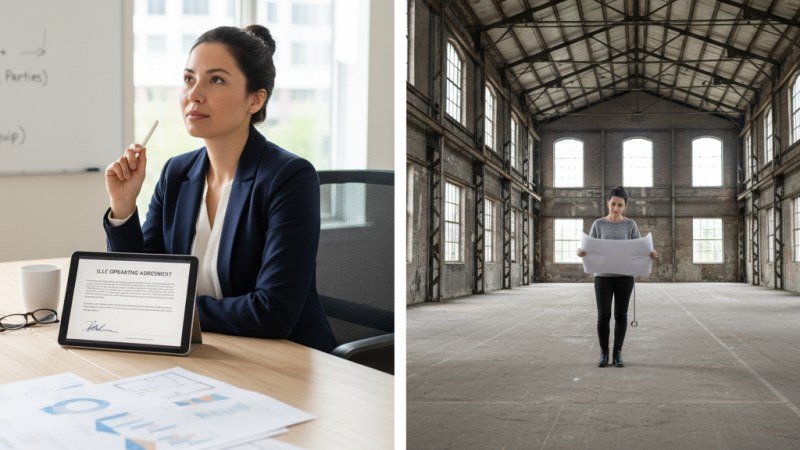
Critical Legal Steps: Business Registration and Securing Insurance
Operating an indoor playground comes with inherent liabilities. Structuring as a Limited Liability Company (LLC) or a Corporation creates a legal barrier between your business and your personal assets. Operating as a Sole Proprietorship leaves your personal property exposed in the event of a lawsuit and should be avoided.
Insurance is non-negotiable; landlords will not hand over the keys without it. You need a robust General Liability Insurance policy (typically $1 million+ per incident) to cover potential injuries. Additionally, if you are hiring staff, Workers’ Compensation insurance is legally required in almost all jurisdictions to protect your employees.
What Permits and Licenses Do I Need to Open an Indoor Playground
Compliance is highly localized. While you should always consult your local zoning office, expect to secure:
- Business License: Standard operating permission for your municipality.
- Certificate of Occupancy (CO): Confirms the building is structurally safe for recreational use.
- Accessibility Compliance: Adherence to the ADA (in the US) or similar local laws (like AODA in Ontario) is mandatory. This dictates ramp access, wheelchair-friendly routes, and compliant restrooms.
- Health Department Permit: Required if you prepare or sell food and beverages.
- Building Permits: Necessary for any interior demolition, plumbing, or electrical work.
Location Criteria: Analyzing Foot Traffic, Rent, and Local Competition
The right real estate balances visibility with affordability. Evaluate potential spaces based on:
- Demographics and Co-Tenancy: Look for locations anchored by grocery stores or family restaurants. Placing your business where parents already run errands gives you built-in visibility.
- Affordability: Prime retail spaces demand premium rent. Ensure your projected membership and party revenue can comfortably support the monthly lease.
- Local Competition: Map out nearby soft-play centers, trampoline parks, and public community centers to ensure the neighborhood can support another family entertainment venue.
Site Requirements: How Many Square Feet Are Needed
Your facility’s size must match your business model:
- Small (Toddler-Focused): 2,500 – 4,000 square feet accommodates soft play, a reception area, and a single party room.
- Medium (Mixed-Age): 5,000 – 8,000 square feet allows for a large main structure, a separate toddler zone, and multiple party spaces.
- Large (Activity Center): 10,000+ square feet is necessary for adding trampolines, ninja courses, and extensive cafe seating.
Beyond square footage, ceiling height is the ultimate deal-breaker. Multi-level structures require a minimum clear height of 14 to 18 feet, though 20+ feet is preferred. Additionally, prioritize open floor plans with minimal columns and ensure the parking lot can comfortably handle weekend birthday party crowds.
Phase 3: Equipment Sourcing and Build-Out
Transforming an empty commercial shell into an engaging play space requires careful procurement, rigorous safety vetting, and intelligent floor planning.

The Essential Checklist: What Do I Need to Open an Indoor Playground
Your procurement list spans three main categories:
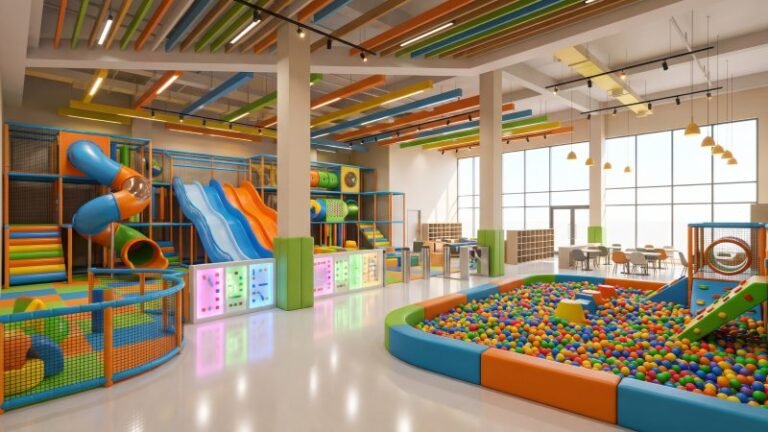
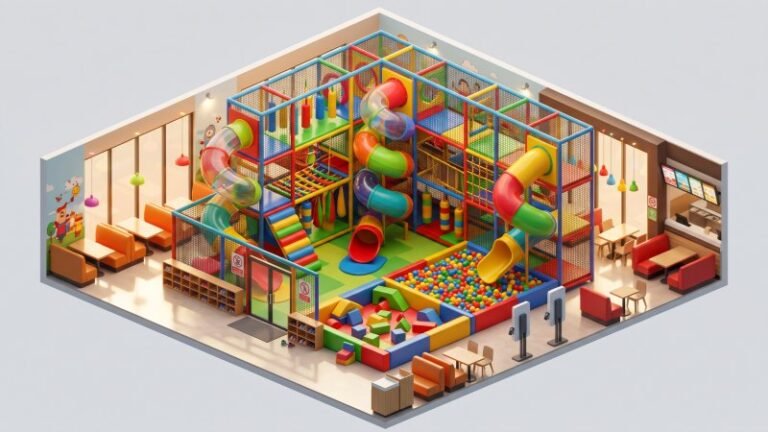
- Core Play Equipment: The main attraction. This includes the primary multi-level play structure, a physically separate and fenced toddler soft-play zone, and ancillary features like ball pits or interactive projection games.
- Operational Equipment: The technology that runs the business. You need a modern Point-of-Sale (POS) system integrated with digital waiver stations (kiosks or tablets) and party-booking software. Don’t forget cafe equipment if you plan to serve snacks.
- Furniture and Amenities: Parent seating (prioritize comfort and durability), shoe cubbies, secure double-gate entry systems at the front door to prevent runaways, and essential safety padding for exposed walls and columns.
Equipment Sourcing: How to Choose Safe and Compliant Suppliers
Your equipment supplier is a long-term partner, not just a vendor. Never buy a structure based solely on an attractive 3D rendering.
Demand proof of safety compliance. In the United States, reputable manufacturers build strictly to ASTM F1918 standards for soft contained play equipment. In Europe, look for EN 1176 and CE certifications.
When interviewing suppliers, ask for technical specifications regarding foam density, steel pipe gauge, and the fire-retardant properties of their vinyl. Clarify their warranty terms and ask if they provide their own certified installation teams—improper installation voids warranties and creates massive safety risks.
Layout Design and Theming: Balancing Safety Standards with Atmosphere
A well-designed floor plan prevents bottlenecks and keeps kids safe.
Parental sightlines are the golden rule of playground layouts. The main seating area must offer an unobstructed view of the play structures so parents can supervise without following their kids into the equipment. The toddler area must be securely partitioned from the main play zone to protect smaller children from older kids running past.
When it comes to aesthetics, theming can set you apart, but custom 3D fiberglass elements rapidly inflate costs. If budget is a concern, invest in high-quality, brightly colored standard equipment and rely on wall murals, lighting, and interior paint to establish your theme.
Phase 4: Operations Prep and Market Launch
Before welcoming the public, you need to establish a strong brand identity, finalize your operating procedures, and execute a launch strategy that guarantees a busy opening weekend.

Brand Building: Naming, Logo Design, and Your Brand Story
Choose a business name that is memorable, easy to spell, and clearly communicates what you do. A clean, professional logo will anchor your signage, digital presence, and employee uniforms.
Beyond the visuals, define your brand story. Figure out your unique selling proposition—whether that is an obsessive focus on sanitization, a premium cafe experience for parents, or a focus on STEM-based play. This story becomes the core of your marketing message.
Setting Operational Rules: Ticketing Systems and Staff Handbooks
Consistency is the key to safety and customer satisfaction. Implement an online booking system to manage capacity and avoid overcrowded, chaotic weekends. This system must seamlessly integrate with your liability waivers.
Clearly post facility rules at the entrance and train staff to deliver a brief, friendly safety orientation at check-in. Standard rules should enforce mandatory grip socks for all guests, require active parental supervision, and prohibit outside food or visibly sick children.
Document all of this in a comprehensive staff handbook. From opening cleaning checklists to emergency evacuation protocols, your team needs a written standard to follow when you are not on the floor.
Grand Opening Marketing: How to Build Buzz and Attract Customers
Marketing begins the day you sign your lease. Document the build-out process on social media to generate community curiosity. Running a pre-launch contest or offering discounted “Founders Memberships” can secure your first wave of loyal customers before the equipment is even fully installed.
For the grand opening event, coordinate with local family influencers and neighboring businesses to maximize reach. Offer entry promotions to get as many families through the door as possible—their firsthand experience is your best long-term marketing asset.
Regional Considerations: Opening an Indoor Playground in Ontario as an Example
Always verify your exact steps against regional laws. For instance, in Ontario, Canada, facilities with certain mechanical rides, large inflatables, or trampolines may fall under the strict oversight of the TSSA (Technical Standards and Safety Authority). However, standard soft-play equipment often does not trigger TSSA requirements, though it still requires standard municipal, public health, and building code approvals. This highlights why hyper-local research is mandatory; assumptions based on other regions can lead to delayed openings and hefty fines.
Conclusion
Starting an indoor playground is a major entrepreneurial undertaking that requires meticulous planning. By deeply understanding your target demographic, maintaining healthy cash reserves, partnering with compliant equipment manufacturers, and executing a smart layout, you build a foundation for a thriving family entertainment business. If you are ready to take the next step in sourcing high-quality, safety-certified play equipment for your new venture, contact us today to discuss your project.