-
Whatsapp: +86 15516933785
-
Email: hanlin@hanlinplayground.com
-
Address: Shangjie District, Zhengzhou City, Henan Province, China
-
Whatsapp: +86 15516933785
-
Email: hanlin@hanlinplayground.com
-
Address: Shangjie District, Zhengzhou City, Henan Province, China

Is an Indoor Playground Really a Profitable Business?
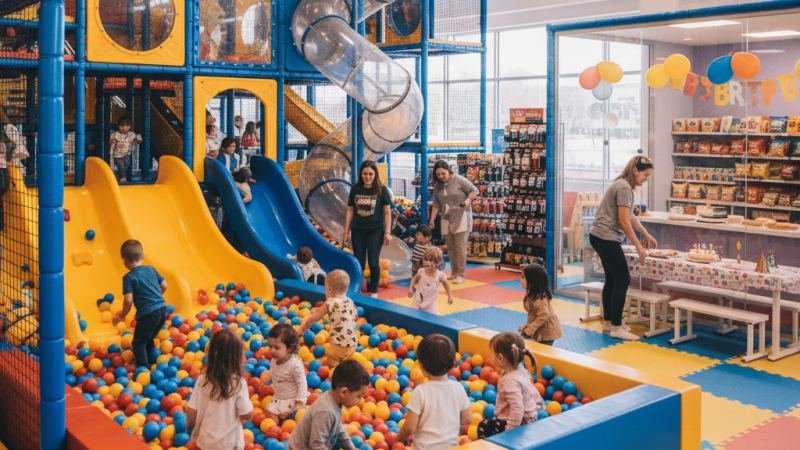
You are considering opening an indoor playground and want to know: is it a profitable business?
Yes, an indoor playground can be highly profitable, but its success is not guaranteed. Profitability hinges on managing high fixed costs like rent and insurance, and maximizing high-margin revenue streams, particularly birthday parties, rather than relying on general admission alone. Success is ultimately determined by a strategic location, operational excellence, and strong community marketing.
Where Will Your Revenue Actually Come From?
So, if you build a playground, how exactly do you make money?
An indoor playground’s profitability rarely comes from general admission tickets alone. Instead, revenue is primarily driven by high-margin, pre-booked events, with birthday parties being the most critical. Additional profits are generated through diversified streams like concessions, memberships, and specialized classes.
Why Birthday Parties Are Your Core Profit Driver
Many new owners mistakenly believe that “Open Play” (general walk-in customers) will pay the bills. However, seasoned operators know that the business truly runs on parties.
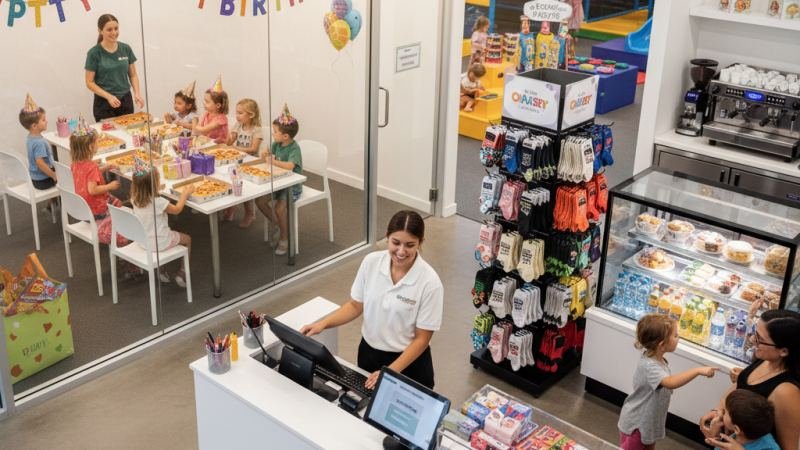
A birthday party is not just a $15 ticket; it is a high-value bundled package. A parent buying an “Open Play” pass is making a simple, low-cost transaction. A parent booking a “Birthday Party” is purchasing a high-value, full-service event. You are selling convenience, a private space, and a curated experience, which justifies the premium price—often $300 to $600+.
A well-run facility might aim to book 10-20 parties every weekend. If the average profit on each party is $150-$250, you can see how this quickly becomes the primary engine of the business. It would take hundreds of individual “Open Play” tickets to generate that same amount of profit.
Key elements of a profitable party structure include:
- Tiered Packages: Offer “Good, Better, Best” options (e.g., Basic, Deluxe, Ultimate) to encourage upselling.
- Private Rooms: The exclusivity of a dedicated party room is a major selling point.
- Dedicated Host: Including a staff member to run the party removes stress from parents and justifies the high price tag.
- Built-in Upsells: Add-ons like pizza, goodie bags, or character appearances further increase the revenue per party.
The Role of Open Play vs. High-Margin Add-Ons
While parties are the profit engine, “Open Play” is essential for marketing and community building. It’s essential for building a community and generating cash flow, especially on slower weekdays.
However, “Open Play” on its own is a low-margin activity. Once you factor in your massive fixed costs (like rent and insurance, which we’ll cover later), the profit on a single $15 ticket is very small.
The real financial goal of “Open Play” is to serve as a funnel to sell high-margin add-ons. These are small purchases that have a huge impact on your bottom line.
Here is a simple comparison of revenue sources:
| Revenue Source | Purpose | Typical Profit Margin |
|---|---|---|
| Open Play Ticket | Traffic Driver / Marketing | Low |
| Birthday Party | Core Profit Driver | High |
| Grip Socks | Required Add-On / Safety | Very High (often 80%+) |
| Arcade/Game Cards | Passive Revenue | Medium to High |
| Snacks & Drinks | Convenience / Upsell | High (often 50-70%) |
From an operational standpoint, requiring all guests (even adults) to purchase your facility’s branded grip socks is a standard industry practice. This isn’t just a sneaky way to make $3. It’s a critical tool for hygiene control and limiting liability from slips and falls, all while being a high-profit-margin item.
Essential Income Streams: Memberships, Classes, and Concessions
Relying only on walk-ins and parties makes your income “spiky” and unpredictable. Successful playgrounds build a stable financial base by diversifying their income.
Memberships for Predictable Cash Flow
A monthly or annual membership is the single best way to create predictable income. It provides you with guaranteed cash flow at the beginning of every month, which is vital for covering fixed costs like rent. In return, the customer gets unlimited play, which builds a loyal following and ensures your facility stays busy, even on slow days.
Classes and Special Events
Your expensive playground space probably sits empty on Tuesday and Wednesday mornings. Why? Use that downtime. Hosting “Mommy & Me” yoga, toddler art classes, or STEM workshops utilizes your space during off-peak hours. You can run these yourself or partner with local instructors for a revenue split. This also attracts new customers who might not have come for “Open Play.”
The High-Margin Concession Stand
Never underestimate the power of snacks and coffee. A well-stocked concession stand or small café is a major profit center.
- Parents will stay longer (and are more likely to return) if they can get a good cup of coffee.
- Kids will always want pizza, pretzels, ice cream, and drinks.
The profit margins on items like fountain sodas or drip coffee can be over 80%. Be aware, however, that running a café requires managing food inventory, local health permits, and potential waste. Your exact profit margin on food items will depend heavily on your costs from your suppliers, so be sure to get quotes before setting your menu prices.
What Are the Make-or-Break Financial Hurdles?
So, you have a plan for making money, but what are the major costs that can sink your business?
Your biggest financial hurdles are the massive, ongoing fixed costs, primarily commercial rent and liability insurance. You also face a very large upfront investment for equipment and build-out. Understanding your break-even point is essential to managing these costs profitably.
The “Big Two” Fixed Costs: Rent and Insurance
These are the bills you must pay every single month, whether you have one customer or one hundred. They do not change with your sales and are the primary reason why this business can be high-risk.
1. Commercial Rent
This is almost always the single largest expense and the most dangerous one.
- Space Requirements: You need a large, open-concept commercial space (like a warehouse or large retail storefront), which is expensive.
- Lease Terms: Landlords often demand long-term leases (5-10 years). This means you are locked into that massive payment, even if your business is slow.
- “Triple Net” Leases (NNN): Be very careful with these common “Triple Net” Leases (NNN)”. This means you (the tenant) must pay the monthly rent plus the property taxes, building insurance, and all maintenance costs. This can add thousands more to your monthly bill.
2. Liability Insurance
This is the second non-negotiable, and it is extremely expensive.
- High Risk: The business model is “kids climbing, jumping, and running.” From an insurer’s perspective, this is a very high-risk environment for injuries.
- Cost: Do not budget based on a standard business. Liability insurance for an indoor playground can cost $1,000 to $3,000+ per month, not per year.
- Requirement: You cannot legally or safely operate for a single day without a comprehensive liability policy in place.
Calculating Your Initial Investment (Equipment and Build-Out)
These are the one-time costs you must pay before you can open your doors. This is often called your “startup capital.”
Equipment
This is the main attraction. It includes the large play structure (jungle gym, slides, ball pit), any separate toddler soft-play areas, arcade games, and safety flooring.
Industry Example: A medium-sized, high-quality play structure from a reputable supplier can easily cost $80,000 to $200,000+. This price can change a lot based on the size, theme, and interactive features you choose. Always get detailed quotes from multiple certified playground suppliers to compare costs and safety standards.
Build-Out
This is the cost to turn your empty rental space into a functional playground.
- Construction: Building your dedicated party rooms, a reception/check-in area, ADA-compliant bathrooms, and a kitchen/concession stand.
- Fixtures: Installing specialty safety flooring (critical), lighting, and furniture (tables, chairs, benches).
- Other Costs: Business licenses, point-of-sale (POS) systems, and initial inventory (like grip socks and snacks).
Here is a simplified look at potential startup costs. (Note: These are estimates and vary wildly by location.)
| Cost Category | Estimated Range (USD) | Notes |
|---|---|---|
| Play Equipment | $80,000 – $200,000+ | Varies by size and supplier. |
| Build-Out & Construction | $50,000 – $150,000+ | Includes party rooms, bathrooms, etc. |
| Furniture & Fixtures | $15,000 – $30,000 | Tables, chairs, POS system, kitchen. |
| Initial Deposits & Fees | $10,000 – $40,000 | Lease deposit, insurance deposit, licenses. |
| Working Capital | $20,000 – $50,000 | Cash on hand to survive the first few slow months. |
| Total Estimated Investment | $175,000 – $470,000+ |
Understanding Your Break-Even Point
This is the most important number you need to know.
The Break-Even Point is the exact amount of sales (in dollars or in customers) you need each month to pay all your bills. In simple terms, this is the minimum revenue you must generate each month just to pay your bills (both fixed and variable). You are not making a profit, but you are not losing money either.
Why is this so important? It makes your goals real and concrete. You can calculate, for example: “To break even, I must sell X number of birthday parties and Y number of ‘Open Play’ tickets every single month.”
If your break-even point seems impossibly high (for example, you need to sell 40 parties a month, but your space can only handle 25), then you know your business model is broken before you sign that expensive lease.

What Critical Factors Separate Success from Failure?
Beyond just revenue and costs, what truly makes one playground a beloved local spot while another closes in a year?
Success is not accidental; it depends on securing the right location for your target demographic and standing out from the competition. Profitability is then sustained through non-negotiable daily operations—specifically, extreme cleanliness, visible safety, and excellent staff—and built upon by effective marketing that creates a loyal community.
The Importance of Location, Demographics, and Competition
You can have the best playground equipment in the world, but if you put it in the wrong place, it will fail. This is the strategic foundation of your entire business.
- Location: This is not just about cheap rent. A cheap warehouse 30 minutes outside of town will cost you more in lost customers than you save. You need a location that is easy for busy parents to get to. Look for spots in family-friendly retail plazas with ample, easy-access parking. Visibility is also key; you want families to see you while they are already out running errands.
- Demographics: This means knowing who lives nearby. Before you sign a lease, you must research the local area. How many families are there? What are the average household incomes? What is the median age of children? Industry Example: Opening a complex, high-energy “ninja warrior” course designed for ages 10-14 in a neighborhood full of new-build homes for young families with toddlers is a mismatch. You must match your main play attractions to the specific ages of the children in your 10-mile radius.
- Competition: You are not just competing with other indoor playgrounds. You are competing with trampoline parks, free city parks, children’s museums, and even movie theaters. You must find your niche. If a large trampoline park nearby already has the “big kid” market, you could succeed by focusing only on ages 0-6, offering a cleaner, safer, and calmer environment for toddlers.
Operational Essentials: Cleanliness, Safety, and Staffing
If your location gets customers in the door, your operations determine if they ever come back. For parents, these three factors are not bonuses; they are the minimum requirement.
1. Extreme Cleanliness
This is the single most important factor for parents, especially in a post-2020 world. It must be visible.
- The Bathroom Test: Parents will absolutely judge the cleanliness of your entire facility by the state of your bathrooms. They must be checked and cleaned hourly.
- Visible Action: Staff should be seen constantly wiping down surfaces, tables, and high-touch areas.
- Deep Cleaning: You must have a strict, documented schedule for deep-cleaning your equipment and ball pits. A “dirty” reputation is impossible to recover from.
2. Visible Safety
Parents must feel that your space is a secure and safe environment. This trust is essential.
- Secure Check-in: A professional check-in/check-out system is critical. Many successful centers use matching wristbands or photo check-ins to ensure a child can only leave with the adult who brought them.
- Staff Training: Your staff must be more than just supervisors. They should be trained in First Aid and CPR.
- Equipment Maintenance: You must perform and log daily and-weekly maintenance checks on all equipment to prevent injuries.
3. Quality Staffing
Your staff is the human face of your brand. They are not just minimum-wage supervisors; they are customer service representatives.
- Engagement is Key: The difference between a profitable playground and a failing one is often the staff. An engaged employee who smiles, interacts with kids, and helps parents creates a warm atmosphere.
- The “Phone Test”: A bored employee sitting in a corner looking at their phone sends a powerful negative message to parents: “We don’t care, and your child is not being watched.”
Marketing That Works: Community Building and Social Proof
Great operations are useless if nobody knows you exist. Marketing is how you build a customer base, but community is how you keep it.
- Community Building: You don’t want “customers”; you want “members.” You want to be the “third place” for local families (after home and school/work).
- Host Events: Use your space for more than just play. Host “Toddler Tuesday Story Time,” “Character Meet-and-Greets,” or free workshops. This builds loyalty beyond the play structure.
- Know Your Regulars: Train your staff to learn the names of families who come often. This personal touch makes people feel like they belong.
- Social Proof: This is modern word-of-mouth. Before visiting, parents will Google you. What they find will determine their decision.
- Manage Your Reviews: You must actively monitor and respond to all Google, Yelp, and Facebook reviews—especially the bad ones. A professional, calm response to a negative review shows other parents that you take concerns seriously.
- Encourage “User-Generated Content”: Create a fun, well-lit “photo-op” wall with your logo. When parents take cute pictures of their kids and post them on Instagram, they are giving you free, authentic advertising.
Conclusion
In summary, an indoor playground is a complex but potentially rewarding business. It is not a passive investment. Profitability is a direct result of balancing high-margin services (like parties) against your high fixed costs (like rent and insurance). Lasting success depends on strategic planning before you open, rigorous operational management (especially cleanliness), and becoming a valued, trusted part of the local community.