-
Whatsapp: +86 15516933785
-
Email: hanlin@hanlinplayground.com
-
Address: Shangjie District, Zhengzhou City, Henan Province, China
-
Whatsapp: +86 15516933785
-
Email: hanlin@hanlinplayground.com
-
Address: Shangjie District, Zhengzhou City, Henan Province, China

How to Create a Profitable Indoor Play Area
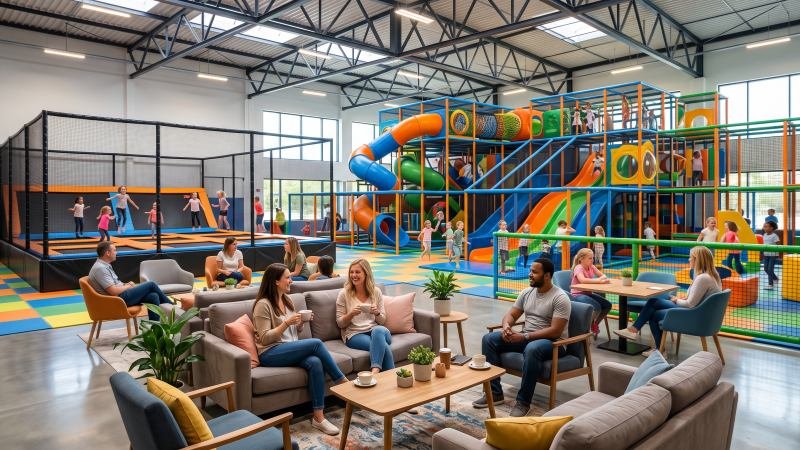
What are the essential steps required to build and sustain a highly profitable indoor playground business?
To create a profitable indoor play area, operators must secure an optimal location with high ceilings, establish diverse and recurring revenue streams, select durable signature equipment, and utilize technology to streamline daily operations while minimizing overhead costs.
Finding the Ideal Location and Designing the Space
How do you choose and arrange the perfect commercial space for your new family entertainment center?
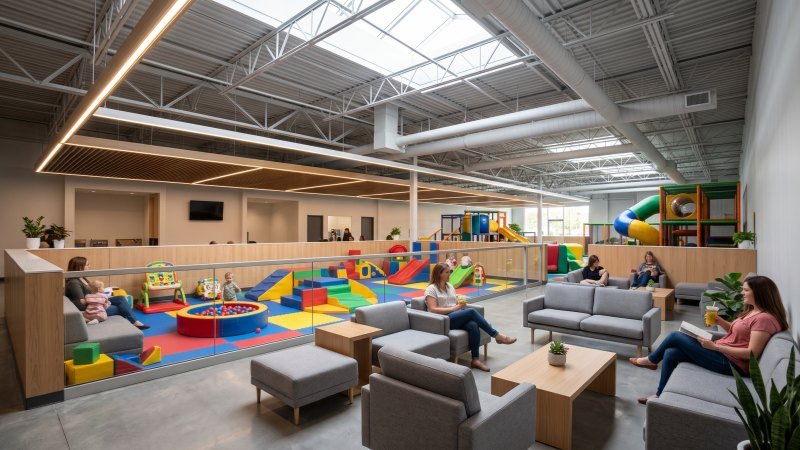
The ideal location requires high ceilings for multi-level equipment, an open floor plan without obstructive columns, and a strategically designed traffic flow to safely accommodate both active children and observing parents.
Ceiling Height and Floor Plan Requirements
Let’s get right to it: finding the right building is your first critical step. You cannot just lease any standard retail space; you need a facility that safely fits large, active play structures.
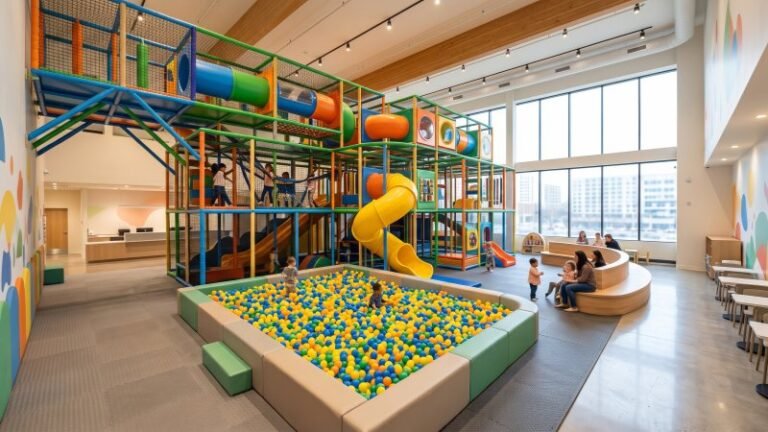
Look at the vertical footprint. Multi-level play frames require significant vertical space. For example, a standard three-level climbing structure typically needs a clear ceiling height of 15 to 20 feet. However, always verify exact clearance dimensions with your equipment supplier, since required heights vary based on specific structural designs and padding thickness.
On top of that, your floor plan needs to be wide open. Excessive support columns can block parental sightlines and restrict where you place large attractions. The bottom line? Securing an open, clear-span floor plan allows you to maximize your usable square footage and fit more profitable equipment without compromising safety or visibility.
| Play Zone Type | Recommended Minimum Ceiling Height | Ideal Floor Space (Sq. Ft.) |
|---|---|---|
| Toddler Soft Play | 9 – 10 Feet | 300 – 500 |
| Standard 2-Level Frame | 12 – 14 Feet | 800 – 1,500 |
| Advanced 3-Level Frame | 16 – 20 Feet | 1,500 – 3,000+ |
| Trampoline Section | 18 – 22 Feet | 2,000+ |
Designing a Comfortable Parent Lounge
Children do not drive themselves to your facility. Parents hold the wallets and make the final purchasing decisions. Here’s a reality check: designing a premium space for adults directly impacts your long-term profitability.
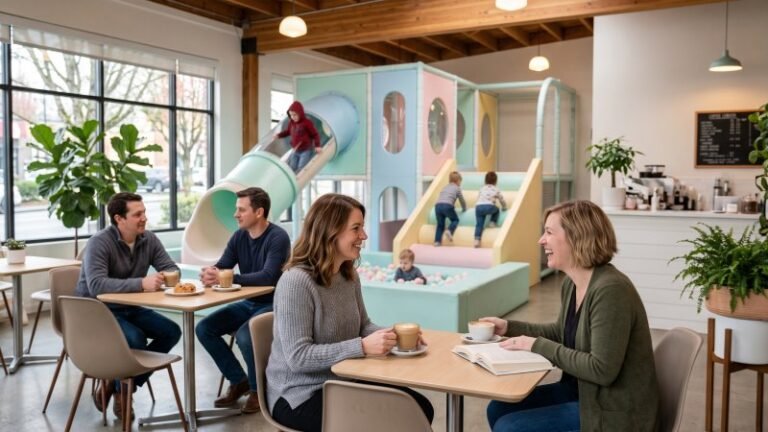
To start, a comfortable parent lounge must function as the central observation hub. It needs to offer unobstructed sightlines to the main attractions. Similar to how a trampoline park positions its viewing mezzanine to oversee all jump courts, parents need that same clear vantage point to monitor their children across different play zones without constantly standing up.
Don’t skimp on the basics. You must provide high-speed Wi-Fi, plenty of power outlets, and ergonomic seating. When parents are comfortable, they stay at your facility longer. It’s simple math: longer visits naturally lead to higher secondary spending on food, beverages, and retail items.
Optimizing Traffic Flow to Avoid Bottlenecks
Good spatial design moves guests smoothly through your building. Conversely, poor design causes crowding, safety hazards, and frustration. You must strategically plan how families navigate your space from the moment they walk through the door.
Walk through the front door in your mind and carefully evaluate the main entry sequence. Families enter, pay at the counter, remove their shoes, and store their belongings. Naturally, this area often becomes a major operational chokepoint. To solve this, design a wide transition zone. Similar to the dedicated ticketing and waiver lobby of a busy indoor water park, this open zone allows groups to pause and organize their belongings without blocking the main entrance.
Beyond the entrance, you must separate high-energy areas from calm zones. For instance, do not place the exit of a high-speed slide directly next to the slow-paced toddler crawling area. Instead, keep traffic patterns logical and predictable. Use clear floor markings and low physical barriers to guide guests smoothly. When you nail this strategic layout, you prevent collisions, improve overall safety, and create a premium guest experience.
Core Revenue Streams That Drive Profitability
What are the most effective ways to generate steady, predictable income in an indoor playground?
To drive profitability, operators must build multiple revenue streams beyond standard admission tickets. The core income generators include structured birthday party packages, recurring monthly memberships, and secondary retail sales such as food, beverages, and mandatory grip socks.
Why Birthday Parties Are Your Biggest Moneymaker
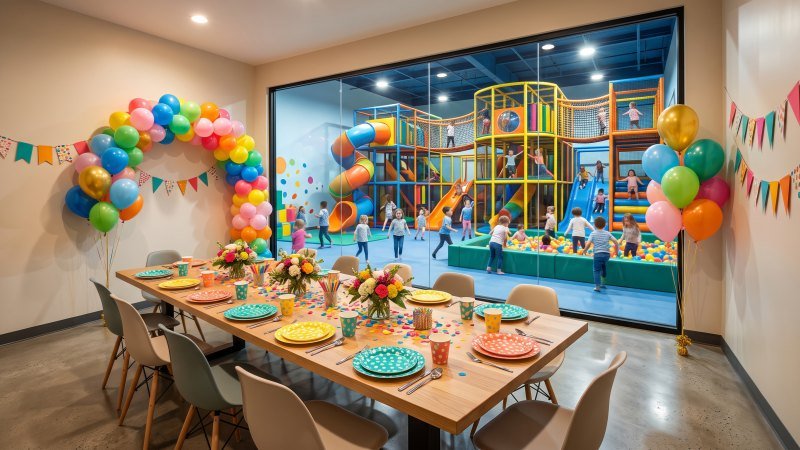
Walk-in traffic helps cover basic overhead costs, but let’s be honest, birthday parties actually generate your real profit. Why rely only on unpredictable daily admissions? Private events provide guaranteed revenue long before the guests even arrive.
Just as booking a dedicated laser tag arena for a private group yields much higher margins than selling individual walk-in tickets, hosting dedicated birthday parties maximizes your revenue per square foot. Families gladly pay premium prices for convenience. When you provide the private room, the food, and the entertainment, you solve a major problem for busy parents.
Another massive advantage? Parties operate on strict time limits. You can seamlessly host multiple events in a single room every weekend. This structured turnover drastically increases your overall earning potential.
| Revenue Source | Average Spend Per Child | Predictability | Profit Margin |
|---|---|---|---|
| General Admission | $15 – $25 | Low | Moderate |
| Birthday Party Package | $35 – $50+ | High | High |
Implementing Subscription Models and Memberships
Indoor play businesses often face seasonal dips. Warm weather frequently reduces indoor attendance. So, how do you bulletproof your balance sheet? Securing predictable cash flow is vital for your survival, and you achieve this by offering monthly or annual memberships.
Think of a membership like a digital arcade card that automatically reloads every month. Even if a family skips a few weeks of visits, your bank account still receives that steady membership fee. This is known as monthly recurring revenue (MRR).
If you want to execute this correctly, create tiered options. For example, a basic pass might only allow weekday access. Meanwhile, a premium pass could include weekend entry and discounts on party bookings. Memberships build intense customer loyalty. When parents have an active membership, they will bypass competing centers and bring their children directly to your facility.
Maximizing Secondary Income with Food and Retail
Once families enter your building, you have a captive audience. Because of this, secondary spending should account for a massive portion of your total sales. Do not miss these highly profitable retail opportunities.
Let’s talk F&B. You must sell food and beverages. Children burn incredible amounts of energy, and parents need caffeine to keep up. A simple cafe setup selling premium coffee, bottled water, and pre-packaged snacks keeps families in your building much longer. If they have to leave to find lunch, they rarely return. Ensuring you have the proper electrical and plumbing setup for this cafe during the initial build-out will prevent costly upgrades later.
Then there’s the low-hanging fruit: required retail items. Grip socks are the perfect example. Most facilities mandate grip socks for safety and hygiene on soft play equipment. Because parents frequently forget to bring them, you can sell custom-branded socks right at the front desk. This simple item boasts a huge profit margin. Selling just 50 pairs of socks a day adds significant revenue to your bottom line by the end of the year.
Selecting High-ROI Playground Equipment
How do you choose the right play structures to guarantee a strong return on your initial investment?
To maximize your return on investment, you must select commercial playground equipment that acts as a powerful marketing draw while minimizing long-term repair costs. A profitable equipment mix includes high-impact signature attractions, inclusive sensory zones, and highly durable industrial-grade materials.
Signature Attractions That Draw Crowds
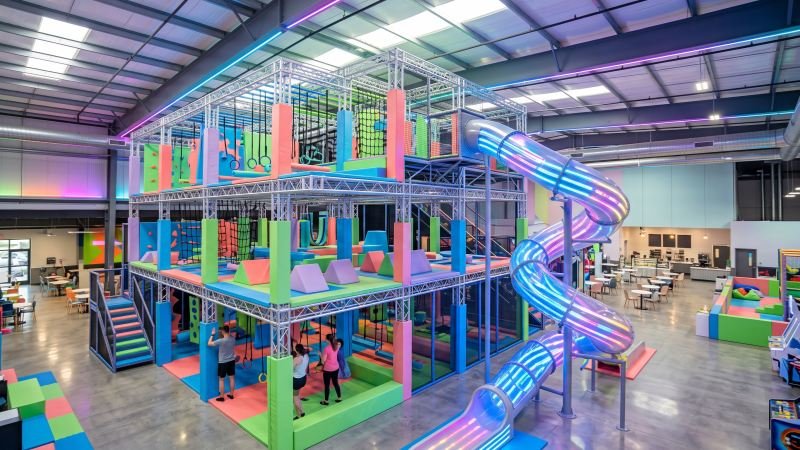
Are you really going to build a 5,000-square-foot facility just to install the exact same plastic slides they have at the local fast-food joint? To break through the noise, you must install premium signature attractions. These large-scale features serve as your primary marketing assets to easily beat free local municipal parks.
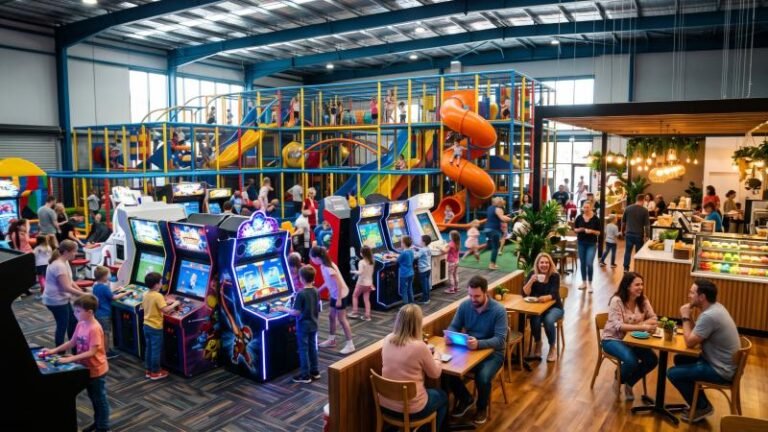
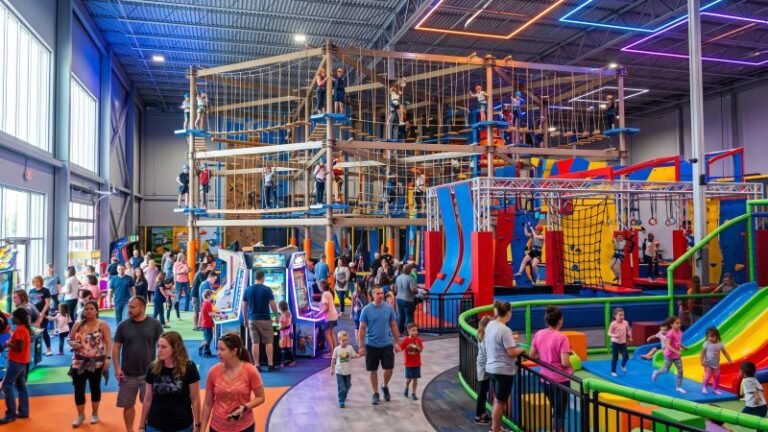
A signature attraction should visually dominate the space and immediately excite guests the moment they walk in. In an indoor setting, this could be a towering multi-level ninja warrior course or a large-scale interactive augmented reality (AR) trampoline wall.
These anchor attractions directly increase your profitability. They create unique photo opportunities for parents. Consequently, these photos spread quickly on social media, driving free word-of-mouth marketing. Furthermore, exclusive attractions allow you to confidently charge premium entry fees.
Sensory Friendly and Inclusive Play Zones
Profitability also comes from expanding your target market. You must not exclude families with special needs. From an operational standpoint, designing inclusive play zones is a highly smart business decision.
Many children experience sensory overload in loud, bright environments. If a child feels overwhelmed, the family will leave early and rarely return. To prevent this, build dedicated quiet areas. Just as a commercial family entertainment center uses soundproof booths for intense simulator games to isolate noise, you can use acoustic paneling to create calm, isolated play zones away from the main floor.
Include tactile play panels, soft lighting, and gentle motion equipment. This thoughtful design builds immense loyalty within the local community. The end result? Loyal families visit more frequently and increase your annual revenue.
| Feature Type | Standard Play Zone | Sensory Friendly Zone |
|---|---|---|
| Lighting | Bright, flashing LEDs | Dimmable, soft color washes |
| Acoustics | High echo, loud ambient noise | Sound-absorbing wall panels |
| Equipment Type | High-speed slides, foam blasters | Tactile wall panels, slow rockers |
Balancing Durability with Maintenance Costs
The initial equipment cost is only half of the financial equation. You must also calculate the total cost of ongoing maintenance. Cheaply made equipment breaks frequently. As a result, you lose money from machine downtime and constant emergency repairs.
Take it from the veterans: always prioritize industrial-grade materials over budget options. For example, high-quality soft play structures typically utilize 18-ounce fire-retardant PVC vinyl and heavy-duty galvanized steel pipes. However, material specifications and structural pipe diameters frequently vary based on global manufacturing standards. Make no mistake, you should always verify the exact material ratings and weight limits directly with your chosen equipment supplier before finalizing any purchase.
Consider the severe wear and tear on a commercial bumper car track. If the electrical contacts fail daily, the ride loses massive amounts of money. Similarly, if your indoor ball pit netting tears every week, you face ongoing replacement costs. It comes down to this: investing in premium durability upfront protects your profit margins over the long term.
Streamlining Daily Operations and Reducing Costs
How can operators efficiently manage daily facility activities while keeping overhead expenses low?
Operators must actively streamline tasks to reduce overhead expenses and protect profit margins. To achieve this, facilities should implement automated point-of-sale systems, maintain strict yet efficient cleaning protocols, and use dynamic staff scheduling to balance labor costs during fluctuating traffic periods.
Automating Check-ins with Digital Waivers and POS Systems
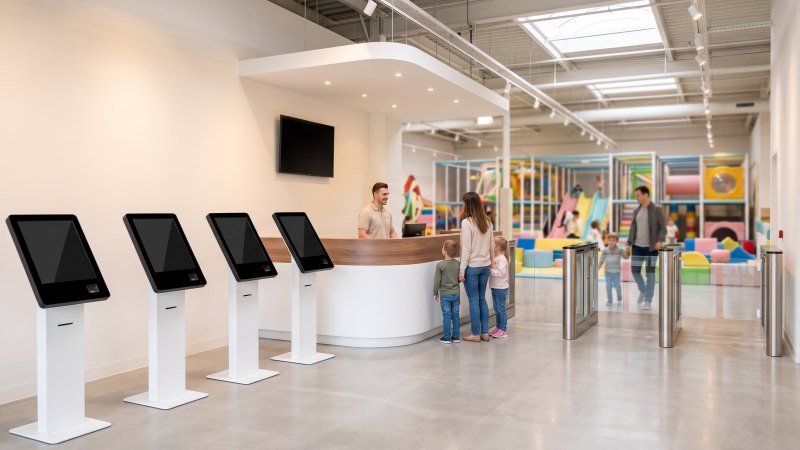
Labor is typically your largest operational expense. To survive the weekend rush, you must use technology to reduce front-desk bottlenecks. Do you want your highly paid staff manually typing customer details during a busy Saturday morning rush? Instead, require families to sign digital waivers online before they even arrive.
Take it a step further and install self-service check-in kiosks at the entrance. Think of this like a modern redemption arcade using reloadable RFID swipe cards instead of dispensing and counting physical paper tickets. This automation completely eliminates massive lines. The immediate payoff? You need fewer employees working the main cash register.
To tie it all together, a cloud-based point-of-sale (POS) system centralizes your entire business operation. It automatically tracks retail inventory, manages complex party bookings, and processes payments securely. At the end of the day, this seamless technological integration dramatically lowers your daily operational costs.
Strict Hygiene Protocols to Build Trust
Cleanliness directly impacts your long-term profitability. If parents see a dirty facility, they will simply never return. Let’s be clear: strict hygiene protocols are absolutely essential for building lasting customer trust.
Start by establishing a highly visible daily cleaning schedule. Staff should constantly wipe down high-touch surfaces during operating hours. Once the doors lock, perform extensive deep cleaning immediately. Many successful operators utilize commercial electrostatic foggers to quickly sanitize complex climbing frames. However, strong chemical concentrations can sometimes damage soft play materials over time. Always verify the exact dilution ratios and approved sanitizing solutions directly with your equipment supplier to prevent vinyl degradation.
When families trust your strict hygiene standards, they visit much more frequently. That immense peace of mind translates directly into higher recurring revenue.
Staffing Strategies for Peak and Off-Peak Hours
Proper staffing requires a very careful financial balance. If you schedule too many employees on a quiet Tuesday, you waste money. Conversely, being understaffed on a busy weekend ruins the guest experience. So, what’s the solution? Dynamic scheduling is absolutely crucial.
Just as a large indoor amusement park only opens secondary ride queues and additional snack bars during peak holiday attendance, you must actively adjust your daily labor. Look at the hard numbers. Analyze your POS data to accurately identify historically slow periods. Then, deliberately schedule minimal staff during those specific times.
Beyond scheduling, you must rigorously cross-train your employees. A single worker should know how to operate the cafe, check in guests, and safely monitor the play floor. With this setup, cross-trained staff can quickly shift between departments as crowd levels suddenly change. The real-world result is that this flexibility significantly reduces your total payroll expenses.
| Operational Area | Peak Hours (Weekends/Holidays) | Off-Peak Hours (Weekday Mornings) |
|---|---|---|
| Front Desk Check-in | 2-3 Dedicated Cashiers | 1 Cross-trained Attendant |
| Play Zone Monitoring | 3+ Active Floor Supervisors | 1 Roaming Attendant |
| Cafe & Food Service | 2 Dedicated Kitchen Staff | Handled by Front Desk Worker |
| Birthday Party Hosts | 1 Host per Booked Room | Areas Closed / Maintenance Time |
Proven Marketing Tactics to Fill Weekday Slumps
What are the best marketing strategies to attract customers during quiet weekday mornings and afternoons?
To fill weekday slumps, operators must target specific demographics available during standard work hours. Effective strategies include building partnerships with local homeschool organizations, hosting exclusive ticketed daytime events, and leveraging local social media influencers.

Partnering with Local Schools and Homeschool Groups
Most public schools operate from Monday to Friday. As a result, indoor play areas often sit completely empty during these hours. You must actively find groups with flexible daily schedules.
Let’s look at the hidden markets. Local homeschool associations are incredibly valuable. These groups actively seek physical education opportunities during the day. Just as an indoor trampoline park offers daytime bulk discounts for summer camps, you should create special daytime rates specifically for homeschool networks.
Don’t overlook local daycares and preschools, either. Create a comprehensive field trip package. Offer them a discounted group rate that includes private access to the toddler zone and a simple snack. This strategy quickly brings large groups of children into your facility at once. Let’s face it, filling your space at a discounted rate is always better than earning zero revenue from an empty building.
Hosting Special Events and Parents Night Out
Standard walk-in traffic is unpredictable. To counter this, you must create a sense of urgency through limited-time events. You want families to circle a specific weekday on their calendars.
For example, host a “Toddler Tuesday” featuring a popular mascot meet-and-greet. Parents will gladly bring their young children during the week for this unique experience. Alternatively, you can host educational workshops, like a Wednesday morning sensory art class. These structured events force parents to visit on specific, historically slow days.
Want to really maximize your square footage? Consider hosting a “Parents Night Out” on a Thursday evening. This is a drop-off event where parents leave their children for three hours. You provide pizza, supervised games, and a safe environment. Parents get a quiet evening, and you generate massive revenue. However, legal staff-to-child ratios for drop-off events frequently vary based on state regulations. Always verify the exact ratio and licensing requirements with your local childcare authority before launching this service.
Leveraging Local Influencers and Social Media
Traditional advertising is often expensive and highly inefficient. Here’s a smarter play: utilize local micro-influencers to reach your exact target audience. Specifically, look for local mom bloggers or family-focused content creators. These local influencers already possess the deep trust of local parents.
You do not need a massive marketing budget for this. Instead, offer them a free VIP family pass. In exchange, they post authentic videos and photos of your facility on a quiet weekday. Just as a family entertainment center trades VIP arcade passes for a local magazine feature, you are trading excess capacity for highly targeted exposure.
To close the loop, always give the influencer a unique discount code. For instance, their followers can use the code for 10% off weekday admission. This precise tracking allows you to easily measure the exact return on investment (ROI) of every single partnership.
| Marketing Channel | Initial Cost | Target Audience Reach | ROI Tracking |
|---|---|---|---|
| Local Influencers | Low (Trade for Admission) | Highly Specific (Local Parents) | Easy (Custom Promo Codes) |
| Social Media Ads | Moderate to High | Broad (Regional Targeting) | Moderate (Pixel Tracking) |
| Print Flyers | High (Printing & Mailing) | Very Broad (General Public) | Difficult (Hard to measure) |
Conclusion
Building a successful indoor play business involves much more than simply filling a large room with toys. It demands careful strategic planning, from analyzing your initial floor plan to developing structured, recurring revenue streams. When you select commercial playground equipment designed for high ROI, automate your front-desk operations, and implement creative marketing tactics to combat weekday slumps, you can build a highly resilient business model. If you are ready to take the next step and launch your own profitable family entertainment center, please feel free to contact us to discuss your vision.