-
Whatsapp: +86 15516933785
-
Email: hanlin@hanlinplayground.com
-
Address: Shangjie District, Zhengzhou City, Henan Province, China
-
Whatsapp: +86 15516933785
-
Email: hanlin@hanlinplayground.com
-
Address: Shangjie District, Zhengzhou City, Henan Province, China

Designing Engaging Soft Play Spaces for Teens and Older Children
How can facility operators successfully design and implement indoor soft play spaces that actually engage teenagers and older children?
To design engaging soft play spaces for teens, operators must integrate high-adrenaline physical challenges, implement strict age zoning, upgrade to commercial-grade structural materials, and incorporate interactive gamified technology. By catering to their unique need for perceived risk and peer bonding, facilities can safely and profitably attract this mature demographic.
Identifying the Unique Play Needs of Adolescents
What exactly drives teens and older children to actively engage with indoor play spaces?
Adolescents require play environments that prioritize physical challenge, perceived risk, and robust social interaction. Unlike toddlers who need simple sensory exploration, older children demand complex spatial navigation and peer-focused activities to remain engaged and prevent boredom.
The Shift Toward Physical Challenge and Perceived Risk
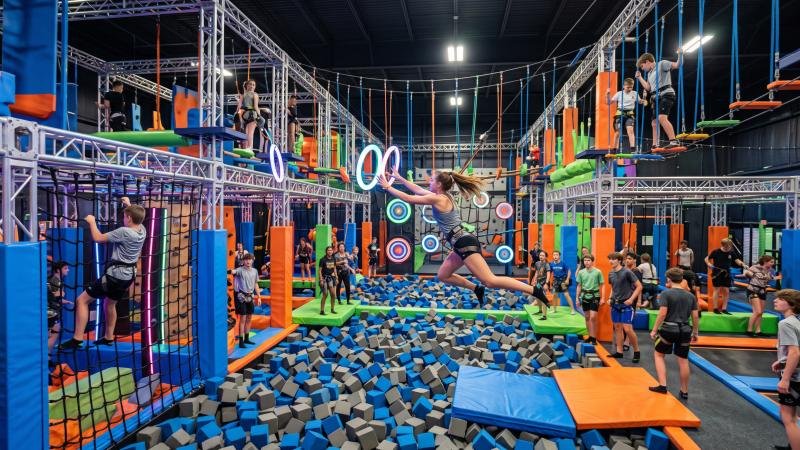
If you’re designing these spaces, you have to recognize this fundamental shift. Young children often enjoy simple, repetitive motions. Teens, on the flip side, crave activities that rigorously test their limits. Why do older kids need this intense physical challenge? They are actively developing advanced gross motor skills. Beyond that, they are hardwired to seek out perceived risk.
Perceived risk means the activity feels thrilling and highly adventurous, but the actual hazards are heavily managed through strict engineering controls. For instance, falling from a high structure into a deep foam pit offers a sudden rush of adrenaline. However, the engineered padding—when compliant with strict industry safety standards and paired with proper landing guidelines—significantly mitigates the risk of impact injury while maintaining the thrill. This concept is vital for teen engagement.
“Creating perceived risk through advanced engineering allows adolescents to test their limits without exposing them to unmitigated physical danger.”
Let’s put this into perspective. Think about the transition from a standard ball pit to a multi-level drop slide. A toddler finds a shallow ball pit incredibly exciting. A teenager, though, requires vertical drops and complex climbing routes to feel that exact same excitement. Industry data shows a sharp drop in attendance for ages twelve to fifteen when facilities only offer standard, low-level climbing grids. Because of this, integrating height and complexity isn’t just an option—it’s non-negotiable.
When planning these areas, required foam pit depths or drop slide incline angles vary significantly based on material density. Always verify the exact specifications and weight capacities with your chosen equipment supplier. You must ensure the equipment matches the physical weight and force of older children.
Why Social Interaction and Peer Bonding are Primary Drivers
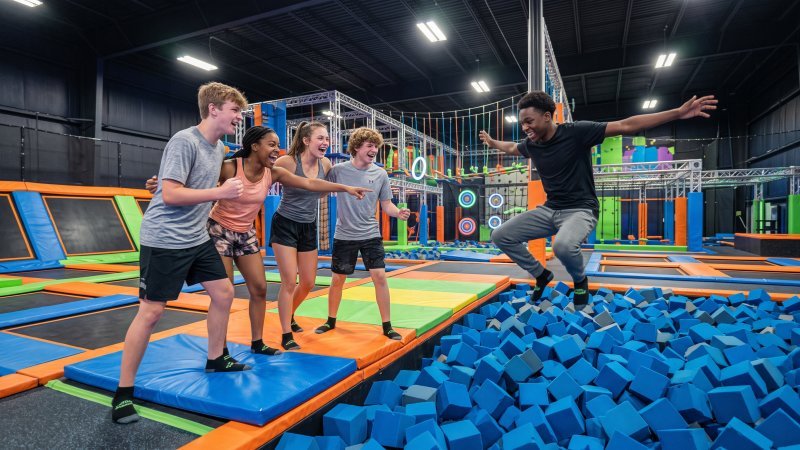
Physical thrills aside, we can’t ignore how drastically social dynamics change during adolescence. Teenagers prioritize peer bonding over individual exploration. Because of this shift, they don’t just want to play; they want to play together. Are you building a playground, or are you building a social hub?
How does this affect your overall design strategy? You must deliberately create spaces that encourage group activities and friendly competition. Younger kids usually engage in parallel play, playing next to each other without much direct interaction. Older children, by contrast, actively seek cooperative or highly competitive environments.
For example, consider the layout of a standard arcade compared to a modern laser tag arena. In a traditional arcade, players interact primarily with the machine itself. In contrast, a laser tag arena forces players to interact directly with each other, forming alliances and strategizing. Soft play for teens must effectively mimic this interactive, team-based dynamic.
To better understand this psychological shift, review the following comparison:
| Feature | Toddler Play Needs | Adolescent Play Needs |
|---|---|---|
| Primary Focus | Sensory exploration and basic movement. | Complex physical challenges and peer validation. |
| Play Style | Solo or basic parallel play. | Highly social, team-based, or competitive. |
| Key Motivator | Discovering new colors and textures. | Proving physical capability to their peers. |
Bottom line: if a play space lacks clear opportunities for social interaction, teens will quickly lose interest. They need dynamic areas where they can easily congregate, watch others, and compete safely. Getting a grip on this social shift is the true foundation of any successful teen attraction.
Must-Have Equipment and Attractions for Older Demographics
Identifying the specific types of equipment that actually capture and maintain the attention of teenagers is crucial for modern indoor parks.
To successfully attract older demographics, facilities must install high-adrenaline physical challenges like ninja courses. Furthermore, they need interactive gamified technology and dedicated lounge pods for socialization. These specialized attractions move beyond simple climbing structures to offer the highly competitive experiences that adolescents demand.
Ninja Warrior Courses and Elevated Rope Adventures
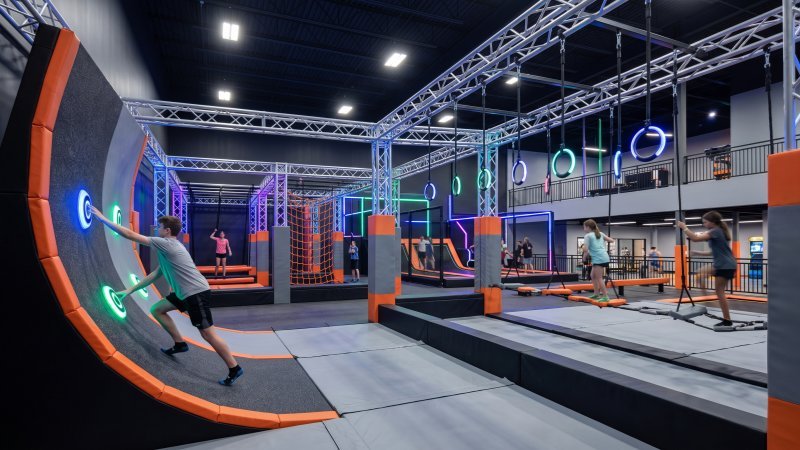
Teenagers quickly outgrow traditional soft play mazes. To keep them engaged, you have to step up your game and upgrade those attractions to meet their physical capabilities. Ninja warrior courses and elevated rope adventures are perfect solutions. These attractions require significant upper body strength, balance, and agility.
Take a standard ninja course, which includes warped walls, salmon ladders, and swinging rings. This lets teens push their bodies to the absolute limit. Elevated rope courses add another layer of excitement. By placing the attraction near the ceiling, you drastically increase the perceived risk.
Think of this transition like upgrading from a standard flat trampoline bed to a high-performance angled trampoline wall. A flat bed is designed for basic bouncing. But an angled wall allows for advanced parkour routines. Similarly, elevated ropes demand much higher physical coordination than ground-level soft play.
When installing these structures, facility height and strict safety protocols are major factors. Standard elevated rope courses usually require a minimum ceiling clearance of 18 to 22 feet. Crucially, because operating at these heights far exceeds standard free-fall limits for unharnessed soft play, these courses must be equipped with industry-compliant Continuous Belay Systems (PPE) or utilize fully enclosed heavy-duty netting systems to guarantee absolute fall protection. You also have to remember that aluminum truss systems have strict load-bearing limits. Because ceiling heights and truss strength vary based on materials, always verify the exact clearance requirements, weight capacities, and fall protection standards with your chosen equipment supplier before purchase.
Gamified Tech Integration and Digital Scoreboards
Physical challenges are foundational. But when you layer technology over those challenges? That’s when it gets highly addictive. Gamified tech integration is a massive trend in the amusement industry today. It literally turns a standard physical obstacle into a competitive real-life video game.
How does this system work? Facilities install interactive targets, timing gates, and RFID tracking wristbands throughout the play frame. When teens hit glowing targets or complete a run, they earn points. Instantly, these points appear on large digital scoreboards.
This setup taps directly into their natural competitive drive. Friends can race against the clock or compete for the top spot on a daily leaderboard. This dynamic is very similar to how a redemption arcade operates. A standard arcade machine is fun for just a few minutes. But strap a ticket-reward system to it, and watch customers play repeatedly. Digital scoreboards trigger that exact same loop for teens running the obstacle course multiple times.
“Integrating technology into physical play creates a highly repeatable experience that significantly drives customer retention.”
Consider the key differences outlined in this comparison:
| Feature | Traditional Soft Play | Gamified Play Experience |
|---|---|---|
| User Tracking | None. Purely physical movement. | RFID wristbands track time and points. |
| Instant Feedback | Internal personal satisfaction. | Flashing lights, sounds, and digital scores. |
| Replay Value | Moderate. Teens quickly get bored. | High. Teens constantly compete for high scores. |
Dedicated Chill-Out Pods and Lounge Areas
Action-packed equipment brings them in the door. But let’s be realistic—teenagers also need a place to crash and recharge. Dedicated chill-out pods and lounge areas are actually essential attractions for this demographic. Adolescents value peer interaction just as much as intense physical activity.
They need designated spaces to hang out, observe others, and use their phones. That’s why installing heavy-duty hammock zones or tiered padded seating is highly effective. These areas should be integrated directly into the outer play frame perimeter.
This specific placement allows teens to stay close to the action while taking a necessary break. You should also consider adding built-in charging stations for their mobile devices. Providing a comfortable resting zone ensures that teenagers will stay at your facility much longer. When you get down to it, these socialization pods are every bit as important as the high-energy obstacle courses.
Space Planning and Age Zoning Strategies
How can facility owners effectively manage a play space that caters to both energetic teenagers and vulnerable toddlers simultaneously?
To successfully manage multi-age indoor parks, operators must implement strict age zoning strategies using physical barriers and strategic spatial layouts. By securely separating high-energy teen zones from delicate toddler areas, facilities prevent dangerous collisions and allow staff to maintain unobtrusive supervision over older demographics.
Effectively Separating Toddler Zones from High-Energy Teen Areas
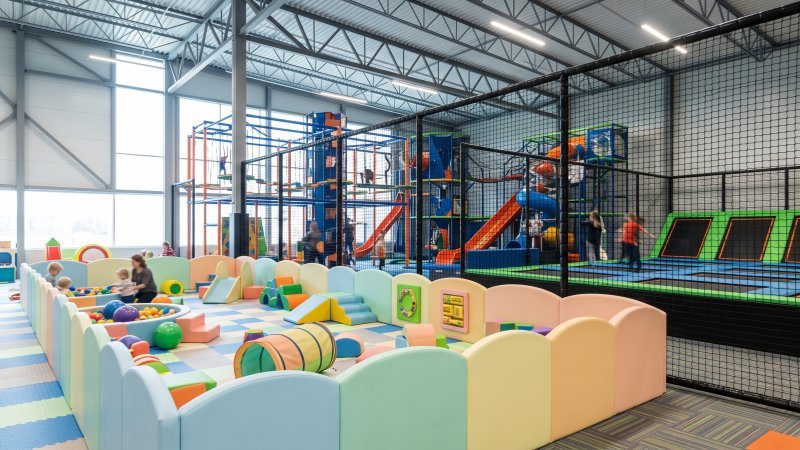
Mixing different age groups in a single play frame creates significant safety hazards. That means establishing clear, physical boundaries is job one. Teenagers move with high velocity and extreme force. Toddlers, predictably, lack spatial awareness and move unpredictably. Mix those two dynamics, and you’re practically asking for accidents. Would you put a bumper car track right next to a sandbox without a fence?
Industry safety audits reveal a stark reality. Specifically, facilities without strict age zoning report a 40% higher rate of minor injury incidents. How do we solve this? You must use dedicated structural barriers. For example, half-walls or heavy-duty netting can successfully divide the active space.
Consider the layout of a modern family entertainment center. Operators always place high-intensity VR simulators far away from toddler ticket redemption games. Similarly, indoor soft play zones require the exact same physical separation. When designing these dividers, barrier height and mesh density are critical factors for ensuring proper containment and keeping everyone safe.
| Zoning Element | Toddler Zone Layout | Teen Zone Layout |
|---|---|---|
| Location placement | Near the front entrance or cafe. | Deeper in the back of the facility. |
| Physical Barrier | Low half-walls for easy parent access. | High-tension ceiling netting for containment. |
| Traffic Flow | Slow-paced and heavily congested. | Fast-paced, dynamic, and independent. |
Strategic Layouts for Unobtrusive Supervision
Teenagers crave independence above all else. Add to that their absolute disdain for feeling babysat by parents or staff. Even so, as operators, you still carry that strict legal duty to supervise the entire floor. The trick for designers is balancing that safety with adolescent independence.
Strategic layouts provide the perfect solution. You must design clear lines of sight that allow for unobtrusive supervision. What does this mean exactly? It means adults can clearly see the teens, but the teens do not feel crowded.
“Unobtrusive supervision is the silent guardian of adolescent play, ensuring maximum safety without sacrificing the illusion of total independence.”
To achieve this, utilize transparent architectural elements. For instance, install wide-gauge safety netting instead of solid padded walls. On top of that, placing parent lounge areas on an elevated mezzanine provides an excellent bird’s-eye view. This specific setup allows adults to monitor the area passively.
Think about the design of a commercial laser tag arena. The central control booth features large observation windows. Because of this, the operator monitors the entire game safely from afar. Meanwhile, the players feel completely immersed and independent in the arena. Your teen soft play area must replicate this exact dynamic. By implementing clear but distant sightlines, you protect the teens while respecting their natural need for autonomy.
Safety Standards and Durability Upgrades
Designing indoor play structures specifically for teenagers rather than small children requires critical material upgrades to ensure long-term structural integrity.
To safely accommodate older demographics, facilities must drastically upgrade their materials by reinforcing structural steel frameworks to handle significantly higher dynamic weight capacities. Alongside that, operators have to select specialized, high-density impact padding and extreme wear-resistant PVC vinyls to withstand intense, repetitive use.
Reinforcing Structural Integrity and Weight Capacity for Larger Bodies
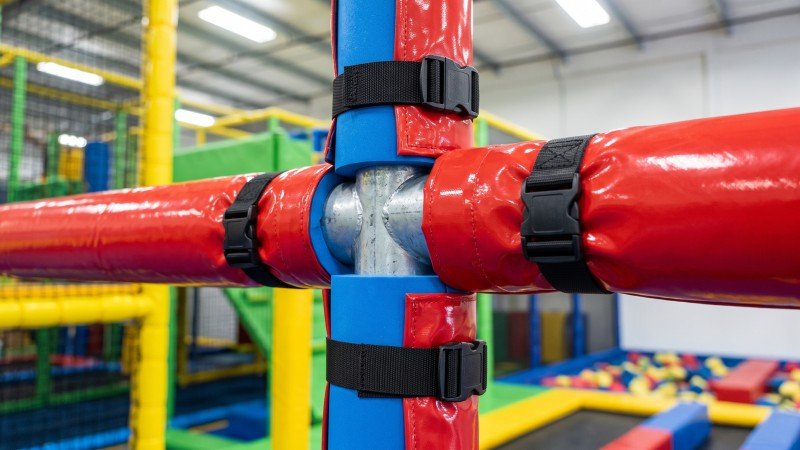
Standard soft play equipment simply cannot handle a teenager’s weight. Because of that reality, reinforcing your structural integrity is non-negotiable. Toddlers exert very little force on a play frame. Take a 16-year-old running full tilt, though, and you’re dealing with immense dynamic force. If the underlying framework is weak, the entire structure becomes incredibly dangerous.
How do you prevent structural failure? You must upgrade the primary load-bearing materials. Most toddler structures use standard-gauge steel pipes. Teen structures, however, require heavy-duty, thick-walled galvanized steel.
Consider the mechanics of a commercial trampoline park. The steel grid supporting the trampolines must absorb constant, heavy impacts. That’s exactly why engineers spec out specialized high-tensile steel. Your teen soft play frame requires the exact same engineering approach. The joints and brackets must also be industrial grade to prevent shifting under heavy loads.
“Designing for adolescents means planning for maximum dynamic impact, not just static weight.”
Industry data shows that adolescent play structures require a minimum weight capacity rating that is roughly 300% higher than toddler zones. Because exact pipe thickness and steel tensile strength vary heavily among global manufacturers, always verify structural load certifications with your chosen equipment supplier before finalizing a purchase.
Selecting High-Density Padding and Wear-Resistant Materials
Structural steel forms the skeleton of the play area. But the outer padding? That’s your primary safety barrier. Teenagers slide, fall, and crash with significant momentum. Put them on standard foam padding, and it’s going to bottom out and tear in no time.
This is where investing in high-density padding pays off. Standard EPE (Expanded Polyethylene) foam works fine for little kids. When you upgrade to teens, you need heavy-duty EVA (Ethylene-Vinyl Acetate) foam or multi-layered crash mats. This denser foam absorbs heavy impacts without bottoming out against the steel pipe beneath it.
Beyond the foam, the outer covering has to be exceptionally tough. Teenagers wear jeans, belts, and sometimes sturdy shoes. These items quickly destroy thin vinyl. You must use commercial-grade PVC vinyl with a very high tear-resistance rating.
| Material Type | Standard Toddler Grade | Upgraded Teen Grade |
|---|---|---|
| Inner Foam Core | Low-density EPE foam. | High-density EVA or bonded foam. |
| Outer Covering | Standard PVC vinyl (0.45mm). | Heavy-duty, rip-stop PVC vinyl (0.55mm+). |
| Fastening System | Basic zip ties. | Reinforced industrial webbing and heavy-duty buckles. |
Think about the impact mats used under a commercial indoor rock climbing wall. They use highly dense foam and ultra-thick, tear-resistant vinyl to withstand constant heavy drops from adult-sized users. Standard toddler soft play vinyl would shred in minutes under those conditions. You must apply this same durability logic when selecting materials for high-energy teen attractions. Proper materials reduce maintenance costs and keep the users safe.
Monetizing the Teen Demographic in Indoor Parks
How can indoor park operators effectively turn teenage foot traffic into a highly profitable, consistent revenue stream?
Operators can successfully monetize the teen demographic by shifting from standard hourly admission models to event-based revenue streams. By organizing competitive leagues, hosting exclusive teen-only events, and heavily optimizing secondary spend through targeted food, beverage, and arcade upsells, facilities significantly increase their average transaction value.
Organizing Competitive Leagues and Teen-Only Events
Simply relying on daily walk-in traffic is a poor strategy for this older age group. Teenagers strongly desire exclusivity and structured competition. That’s exactly why hosting organized competitive leagues and teen-only events is a highly lucrative approach.
How does this work in practice? You can utilize your ninja warrior courses or interactive play frames to host weekly time-trial tournaments. By charging a flat registration fee for a six-week league, you instantly secure recurring, predictable revenue.
Think about the operational transition from open lane bowling to a structured bowling league. Open play brings in random, unpredictable income. A league, on the flip side, locks in steady revenue over several weeks. Your indoor park must adopt this exact same recurring revenue model for teens.
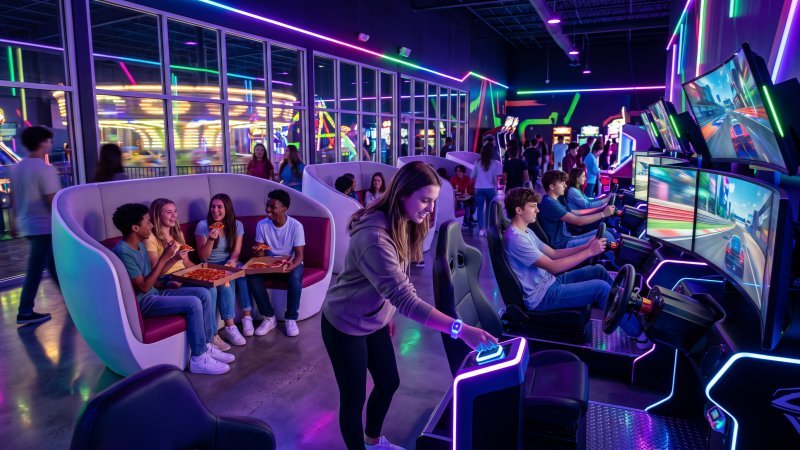
Beyond leagues, exclusive “Teen Nights” are massive revenue drivers. Industry data indicates that hosting an after-hours “Glow Night” exclusively for ages 13 to 17 can boost weekend revenue by up to 30%. During these specific events, facilities dim the main lights, turn on UV lighting, and play energetic music. This creates a vibrant, club-like atmosphere that teenagers love. It successfully transforms your facility from a simple playground into a premium entertainment venue.
Optimizing Food, Beverage, and Arcade Upsells
While admission tickets generate primary revenue, secondary spend is where facilities truly maximize their overall profits. Optimizing food, beverage, and arcade upsells for teenagers is absolutely essential for long-term financial success.
Consider the standard revenue model of a modern family entertainment center (FEC). The main physical attraction gets the teenager through the front door. But the real profit margins? Those live at the concession stand and the arcade floor.
Teenagers consume significantly more food than toddlers. Plus, they frequently walk in with their own disposable income. Why let those dollars walk out the door to a nearby pizza joint? They do not want basic juice boxes or small fruit snacks. Instead, they demand shareable appetizers, premium energy drinks, and freshly made pizza. Upgrading your cafe menu to match these mature tastes directly increases the average transaction size.
“Optimizing secondary spend transforms a standard one-hour visit into a highly profitable three-hour stay.”
Your arcade selection has to evolve right alongside the menu. Teenagers quickly ignore basic ticket redemption games aimed at small children. They prefer high-stakes prize merchandisers, competitive racing simulators, and immersive virtual reality booths.
| Upsell Category | Toddler Demographic Focus | Teen Demographic Focus |
|---|---|---|
| Food Options | Pre-packaged snacks and juice. | Hot pizzas, sliders, and energy drinks. |
| Arcade Machines | Simple whack-a-mole and coin pushers. | High-skill merchandisers and VR simulators. |
| Payment Method | Parents carry cash or credit cards. | Teens use pre-loaded RFID wristbands. |
To maximize these upsells, many successful operators utilize cashless RFID wristbands. Teens can load money directly onto a band to seamlessly purchase food and arcade credits. By providing the right food and arcade options alongside seamless payment methods, you keep teenagers spending money on-site for hours, drastically boosting your bottom line.
Conclusion
Designing a soft play space for older children requires a fundamental shift in strategy, moving away from simple sensory play towards intense physical challenges, digital integration, and robust social environments. When you carefully manage age zoning, upgrade materials to handle dynamic loads, and implement smart monetization tactics like competitive leagues and premium food options, operators can turn an overlooked demographic into a primary driver of revenue. If you are ready to implement these profitable strategies and elevate your indoor amusement center, please contact us today to discuss your next big project.