-
Whatsapp: +86 15516933785
-
Email: hanlin@hanlinplayground.com
-
Address: Shangjie District, Zhengzhou City, Henan Province, China
-
Whatsapp: +86 15516933785
-
Email: hanlin@hanlinplayground.com
-
Address: Shangjie District, Zhengzhou City, Henan Province, China

Why Commercial Centers Need to Invest in Climbing Net Playgrounds: The Secret to Boosting Foot Traffic
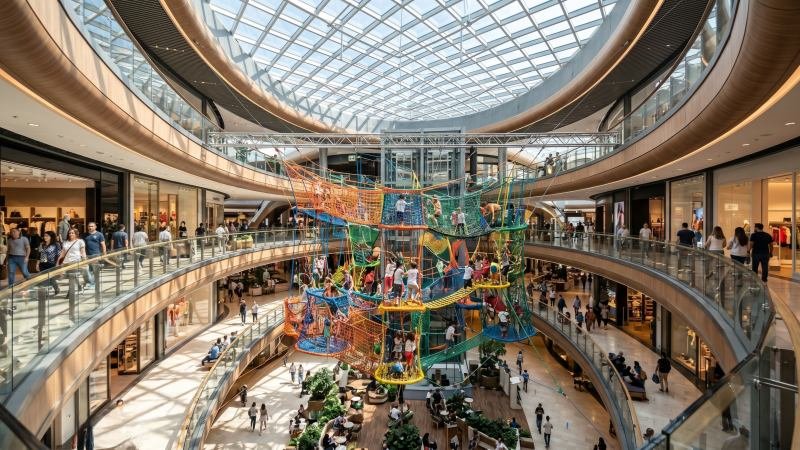
How can commercial centers combat the rise of e-commerce and transform their properties into high-traffic community hubs?
Commercial centers achieve this transformation by investing in vertical climbing net playgrounds. This strategic retailtainment solution maximizes unused atrium space to significantly increase family dwell time, anchor food and beverage zones, and directly drive secondary retail spending across the entire property.
Maximizing Vertical Space Without Sacrificing Retail Area
How can shopping malls add large-scale entertainment attractions when every square foot of the ground floor is already leased?
Commercial centers maximize their vertical space by installing suspended climbing net playgrounds inside high atriums. These tensioned rope structures provide massive visitor capacity with a minimal ground footprint. The payoff? They turn empty air space into a powerful foot traffic driver without sacrificing leasable retail areas.
Capitalizing on Dead Zones and High Ceilings
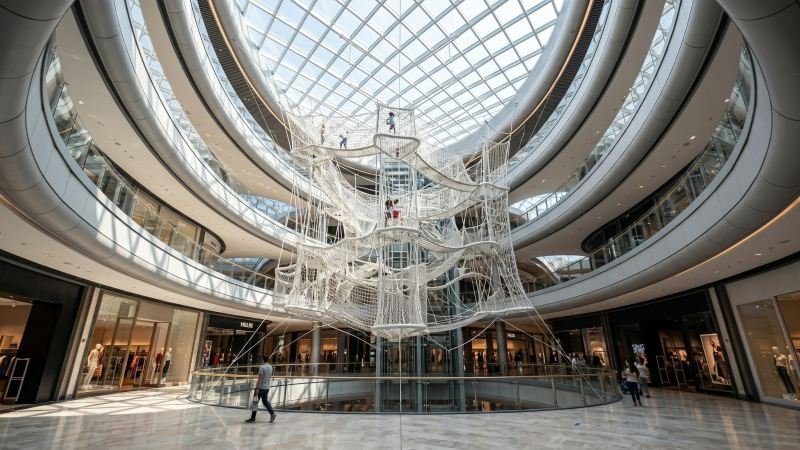
Most modern malls feature tall open spaces known as atriums. These areas look visually impressive, but they do not generate foot traffic on their own. How can property managers activate these empty vertical areas? Climbing nets offer a highly effective solution. Instead of spreading out horizontally, these structures build upwards.
So, what’s the play? Developers can install suspended nets between existing floor levels. Take a look at how wire-rope play structures can anchor directly to structural support beams. This strategy instantly transforms a dead zone into a major attraction point.
Consider how a multi-level laser tag arena utilizes vertical platforms to double the player capacity within a standard room. It’s the exact same logic when you deploy a multi-level climbing net to create usable volume out of thin air. On top of that, the sheer height of these installations acts as a visual magnet. Shoppers on different floors can clearly see the playground. Naturally, this high visibility pulls more visitors toward that specific mall zone.
The Footprint to Capacity Ratio of Rope Structures
Floor space remains the most expensive asset in any shopping center. That means nailing your footprint-to-capacity ratio is non-negotiable. This metric defines how many users an attraction can hold compared to the ground space it occupies.
Traditional indoor play centers demand massive floor areas to hold a crowd. Flip that around, and climbing nets stack play zones vertically. Why waste premium floor area when you have 40 feet of vertical clearance doing absolutely nothing? A rope structure taking up just 50 square meters of ground space can easily yield 150 square meters of actual play surface. Because exact user capacities and structural dimensions vary based on design factors, you should always verify specific load-bearing parameters with your equipment supplier.
“Vertical playgrounds effectively decouple visitor capacity from floor area.”
Below is a quick comparison of spatial efficiency.
| Feature | Traditional Flat Soft Play | Multi-Level Climbing Net |
|---|---|---|
| Ground Floor Required | Very High | Very Low |
| Play Capacity per Sqm | Low | High |
| Vertical Space Usage | Poor | Excellent |
At the end of the day, this high capacity directly translates to more families visiting the center at the same time. More importantly, it achieves this without forcing developers to remove valuable retail kiosks or pedestrian walkways.
The Economics of Dwell Time and Cross-Selling
How exactly does a commercial indoor playground translate into higher retail sales?
Commercial centers increase their overall revenue by using climbing nets to maximize visitor dwell time. When children engage in prolonged play, parents naturally remain on-site much longer. Consequently, this extended duration directly boosts secondary spending at nearby food vendors and retail shops, converting a quick visit into a highly profitable trip.

Keeping Families Anchored in the Food and Beverage Radius
Shopping malls carefully plan their layout to direct foot traffic efficiently. That makes placing a climbing net near the Food and Beverage (F&B) zone a highly strategic move.
Think of how a large-scale carousel or an indoor Ferris wheel acts as a central visual magnet that draws crowds to a specific entertainment wing. A dynamic climbing structure pulls the exact same trick. It acts as an active entertainment anchor, intentionally pulling families deep into the dining sector.
Physical climbing requires significant energy. The result? Kids burn out and get hungry fast. If the playground sits directly beside cafes or food courts, the transition from playing to eating is immediate. Parents do not need to leave the mall to find food elsewhere. Instead, they walk a few steps to buy snacks, drinks, or full family meals.
Better yet, parents frequently purchase coffee or premium beverages for themselves while they wait and watch. You’re basically engineering a steady, predictable stream of captive customers for the surrounding food vendors.
Converting Childrens Play Time into Parent Retail Spend
When kids enter a climbing net, they typically stay engaged for an extended period. This dynamic creates a captive audience of waiting parents. Developers monetize this waiting period through strategic cross-selling.
Ever watched a parent try to kill 45 minutes while their kid is stuck in a climbing loop? Much like how arcade operators place high-value redemption prize counters right next to the most popular ticket-dispensing games to capture immediate interest, malls surround play areas with targeted retail stores. While the children climb securely, parents often browse the immediately adjacent storefronts. Suddenly, a standard 45-minute play session turns into a lucrative window-shopping opportunity.
Knowing the structural user capacity helps mall operators accurately predict how many parents will be waiting nearby at any given time. According to broad retailtainment research from organizations like the International Council of Shopping Centers (ICSC), extending a shopper’s dwell time significantly increases their average transaction value.
Below is a clear breakdown of how extended dwell time impacts spending behavior.
| Shopper Profile | Primary Visit Goal | Average Dwell Time | Cross-Selling Potential |
|---|---|---|---|
| Targeted Shopper | Buy a specific item and leave | Under 45 minutes | Very Low |
| Retailtainment Family | Play, dine, and browse | 2 to 4 hours | Extremely High |
When you boil it down, this layout captures idle time perfectly. Investing in a play structure is not just about entertaining children. Rather, it is fundamentally about increasing the purchasing window for adult shoppers.
Operational Viability and Risk Management
How do shopping centers ensure large climbing structures remain safe and manageable within a busy retail environment?
Commercial centers mitigate operational risks by strictly adhering to international play safety standards and implementing robust acoustic and crowd control measures. This proactive management ensures that high-traffic climbing playgrounds operate securely without disrupting the surrounding retail experience.
Compliance with International Play Safety Standards
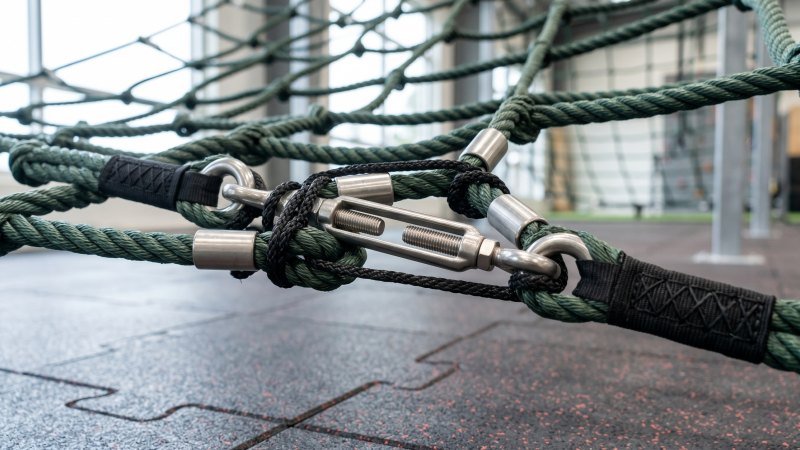
Commercial playgrounds must handle intense daily use. That means safety isn’t just a priority; it’s the whole ballgame. Malls simply cannot afford equipment failures. You have to lock in on strict regulations like the EN 1176 (European) or ASTM F1918 (American) standards for indoor commercial play equipment.
Think of a high-speed indoor roller coaster or a mechanized drop tower. These mechanical rides require rigorous structural testing, strict weight limits, and scheduled daily inspections to move riders safely. A suspended climbing net demands that same level of engineering respect to handle dynamic human loads. Every rope connection, anchor point, and mesh size must meet legal safety codes. This precision prevents entrapment hazards and minimizes fall risks.
Don’t forget the ground game, either. The flooring directly beneath these structures must absorb impact effectively. Malls typically install specialized rubberized safety surfacing. Because exact fall-height ratings (Critical Fall Height) and material tensile strengths vary based on custom structural designs, operators must verify these precise safety limits with their equipment supplier to ensure proper flooring selection. Meeting these standards protects the children. In addition, it protects the commercial property from costly liability issues.
Acoustic Control and Crowd Flow Solutions in Malls
High foot traffic brings a major operational challenge: noise and congestion. Children playing are naturally loud. Do you really want an echoing playground driving away high-end retail shoppers? If left unchecked, this noise can easily frustrate nearby adult shoppers. Because of this, engineering effective acoustic control into the design is vital for a commercial center.
Operators solve this issue by installing sound-dampening materials. For instance, acoustic baffles hung from the ceiling above the net absorb echoing sounds. Pair that with high-grade glass barrier walls, and you contain high-frequency noise while keeping the play area highly visible to walking shoppers.
Beyond noise, malls must manage the physical crowd. A popular climbing net will naturally attract long lines of families. If a queue spills into main walkways, it blocks retail storefronts and creates a fire hazard. To prevent this, property developers design dedicated waiting zones. They use digital queuing systems or physical stanchions to organize the crowd smoothly.
“Effective operations balance high visitor engagement with the comfort of traditional shoppers.”
Below is a comparison of facility management approaches regarding playground integration.
| Management Area | Poor Operational Planning | Professional Facility Strategy |
|---|---|---|
| Acoustic Control | Unfiltered echoes disrupt nearby retail shops | Sound-dampening baffles absorb high-frequency noise |
| Crowd Flow | Queues block main pedestrian walkways | Dedicated staging areas hold waiting lines |
| Visibility | Obscured views cause security monitoring issues | Clear sightlines assist staff and parents |
The bottom line? Smart spatial design solves these operational hurdles before the mall even opens to the public.
Structuring a Profitable Business Model
How can mall operators turn a large-scale play structure into a direct revenue generator rather than just a sunk marketing cost?
Commercial centers structure a profitable business model by diversifying their income streams. They achieve this by combining direct ticketing revenue, integrating the attraction into existing retail loyalty programs, and securing lucrative corporate sponsorships. Consequently, the playground pays for itself while simultaneously driving center-wide sales.
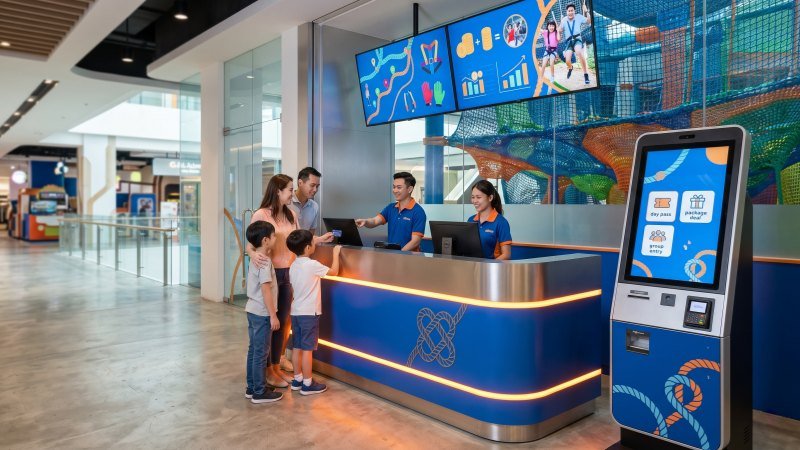
Direct Ticketing versus Loyalty Program Integration
First, operators must decide how families access the climbing net. Direct ticketing works exactly like a standalone indoor trampoline park. Customers simply buy an hourly pass at a dedicated kiosk. This approach creates immediate, predictable cash flow. Furthermore, it easily covers daily staffing costs.
But here’s the catch: pure ticketing misses a larger retail opportunity. That’s why the smart money integrates play access directly into their loyalty programs. Think of how a Family Entertainment Center (FEC) uses a reloadable RFID game card system to reward frequent visitors with bonus arcade credits. It’s the same mechanic here: a mall can offer free climbing time as a reward for retail purchases. For example, spending $50 at any mall store might unlock a 30-minute play session.
This strategy transforms the playground from a standalone business into a retail catalyst. It forces families to shop first before they play. Much like retail parking validation, where a store purchase covers the parking fee, “play validation” encourages center-wide spending.
Below is a comparison of the two main access models.
| Access Method | Primary Financial Benefit | Main Drawback |
|---|---|---|
| Direct Ticketing | Generates immediate, direct daily revenue | May deter highly budget-conscious shoppers |
| Loyalty Integration | Drives massive center-wide retail spending | Requires complex tracking software integration |
In practice, a hybrid approach often works best. Shoppers can flexibly choose to either pay cash or redeem their accumulated loyalty points.
Leveraging Brand Partnerships and Corporate Sponsorships
Beyond ticket sales, commercial centers can monetize the physical structure itself. High-traffic playgrounds offer incredible visibility to hundreds of passing shoppers daily. That makes them prime real estate for corporate sponsorships.
Consider how an indoor ice skating rink often features a major beverage brand’s logo on the safety boards. A massive climbing net functions exactly the same way. Regional banks, pediatric dental clinics, or children’s clothing brands are eager to sponsor these family-centric zones.
Sponsors can purchase naming rights, wrap the surrounding safety glass with their branding, or host promotional events nearby. In return, the mall receives a substantial monthly or annual fee. This passive income significantly accelerates the return on investment.
Take it a step further: operators can leverage brand partnerships for strategic cross-promotions. A sponsored children’s apparel brand might give out discount coupons to every child who enters the playground. Nail down just one or two anchor sponsors, and you can offset the initial capital expenditure rapidly.
“Strategic sponsorships convert the playground from a simple utility into a high-value media asset.”
Conclusion
When it’s all said and done, investing in a climbing net playground is much more than simply adding a family amenity; it is a highly calculated business strategy that revitalizes commercial spaces. By efficiently utilizing vertical dead zones, mall operators can drastically extend visitor dwell time and trigger cross-selling opportunities throughout the property. When supported by strict safety compliance and a diversified, profitable business model, these dynamic play structures serve as powerful engines for long-term foot traffic and sustained retail growth.
If you are looking to elevate your commercial property’s appeal and maximize per-square-meter revenue through innovative spatial play design, please contact us to explore customized climbing net solutions.