-
Whatsapp: +86 15516933785
-
Email: hanlin@hanlinplayground.com
-
Address: Shangjie District, Zhengzhou City, Henan Province, China
-
Whatsapp: +86 15516933785
-
Email: hanlin@hanlinplayground.com
-
Address: Shangjie District, Zhengzhou City, Henan Province, China

Custom Climbing Net Playgrounds: How to Maximize Indoor and Outdoor Play Spaces?
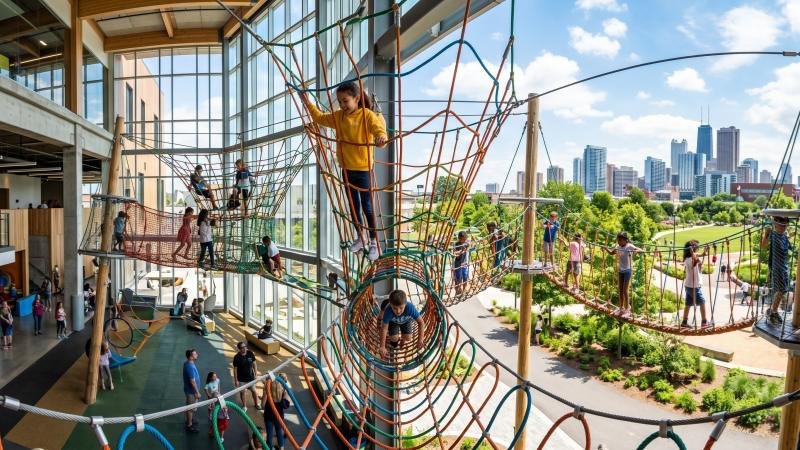
How can developers and park planners effectively maximize limited indoor and outdoor spaces using custom climbing net playgrounds?
By strategically implementing multi-level vertical structures indoors and high-density footprint designs outdoors, developers can significantly multiply user capacity within a limited physical area. Integrating custom climbing nets allows for dual-use spaces, transparent supervision, age-appropriate zoning, and rigorous safety compliance, ultimately transforming constrained environments into highly efficient, high-volume recreational destinations.
Strategies for Utilizing Vertical Indoor Areas
How can indoor commercial play centers effectively use their vertical space to increase visitor capacity?
Commercial play centers can maximize their vertical space by installing custom multi-level climbing nets. This approach stacks play zones upwards rather than spreading them outwards. Consequently, businesses can drastically increase their total active play volume and daily visitor capacity without needing to expand their expensive physical floor plan.
Multi-Level Structures to Triple Capacity
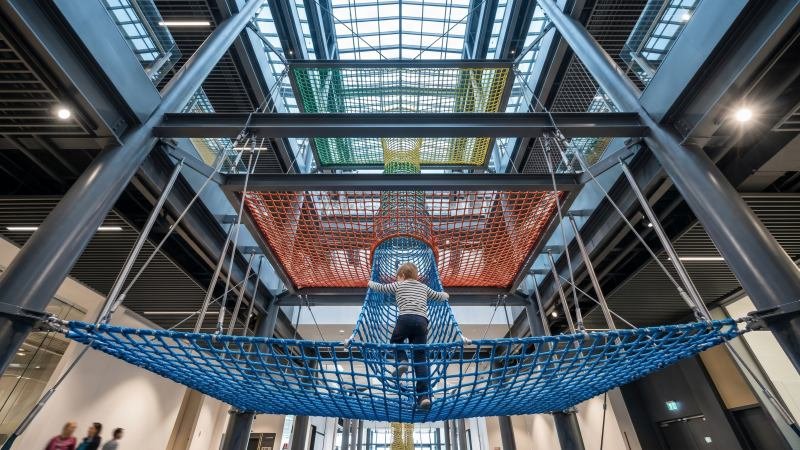
Indoor real estate is expensive. Let’s be practical: you have to make every square inch earn its keep. A single-level playground limits how many guests can play at once. That’s where multi-level custom climbing nets change the math. They effectively stack multiple layers of walkable netting on top of each other.
Similar to how a multi-tier laser tag arena holds more players than a single flat room, multi-level nets multiply your usable space. Why pay for more floor space when you already own the air above it? For instance, a basic 1,000-square-foot floor plan usually supports a limited number of children. By adding three suspended net tiers, you suddenly create 3,000 square feet of active play volume.
“Building upwards is the most cost-effective way to boost ticket sales without renting a larger building.”
This vertical expansion keeps children engaged much longer. They can climb up, crawl across, and easily navigate different elevations. Better yet, multiplying your play space kills those long wait times for your guests. Customer satisfaction increases, and your facility handles a much higher volume of weekend traffic without bottlenecking.
Ceiling Height Requirements and Structural Integration
But let’s not get ahead of ourselves. You can’t just hang two tons of netting from any ceiling. Your first engineering check? Clearance.
Most commercial indoor playgrounds require a strict minimum height to function well. A standard rule is that each play level needs enough clearance for children to stand and move comfortably.
| Ceiling Height | Suggested Number of Net Levels | Typical Commercial Application |
|---|---|---|
| 12 to 15 Feet | 1 to 2 Levels | Small family entertainment centers. |
| 16 to 20 Feet | 3 Levels | Standard commercial play parks. |
| 20+ Feet | 4 or More Levels | Large-scale indoor adventure parks. |
Ceiling height is just half the equation, though. The building’s framework must actually be strong enough to hold the suspended weight. Think of the building’s existing steel I-beams as the main structural columns of a massive indoor jungle gym. The climbing nets must anchor securely directly to these existing supports. Because structural capacities and building codes vary wildly between locations, always verify exact clearance dimensions and load requirements with your specific equipment supplier before you even think about starting construction. Proper structural integration ensures the nets remain taut and secure during peak operational hours.
Suspending Nets Above Ground-Level Attractions
Want to really push your ROI? Fly those nets directly over your existing attractions. You do not have to dedicate expensive floor space exclusively to the climbing playground. Instead, you create a highly profitable dual-use footprint.
The Dual-Use Footprint Advantage
A dual-use footprint simply means two completely different activities happen in the exact same vertical space. For example, you can suspend a sturdy climbing net directly over a cafe seating area, a bustling arcade zone, or a toddler soft play section.
Similar to how an elevated ropes course operates safely above a busy indoor trampoline park court, these suspended nets utilize empty “dead air.” This space near the ceiling normally generates absolutely zero revenue. By filling it with a custom climbing net, you instantly activate that dead zone.
- Increased Revenue Per Square Foot: You collect revenue from the arcade below and the climbing attraction above.
- Improved Traffic Flow: Ground-level pathways remain clear for parents and staff to walk freely.
- Enhanced Visual Appeal: A massive net floating overhead creates a highly impressive visual attraction for guests entering the building.
But here’s the reality check: you can’t just hang an open-mesh net over a coffee bar. Kids drop things. Coins, phones, sneakers—you name it. So, how do you prevent your play zone from becoming an overhead hazard? You engineer a secondary safety layer. Install an ultra-fine, debris-catching membrane or a solid transparent barrier directly beneath the main climbing net. This non-negotiable addition prevents falling objects from striking guests below, ensuring your dual-use zone remains completely safe and sanitary.
Expanding Outdoor Capacities in Urban Environments
How can urban planners maximize limited outdoor spaces to accommodate more children in public playgrounds?
Urban planners can maximize outdoor capacities by deploying high-density custom climbing nets that utilize vertical layouts instead of sprawling horizontal footprints. These structures allow multiple children to play simultaneously within a compact area, seamlessly integrating with existing landscapes while maintaining clear visibility for safety supervision.
High-Density Footprint Designs
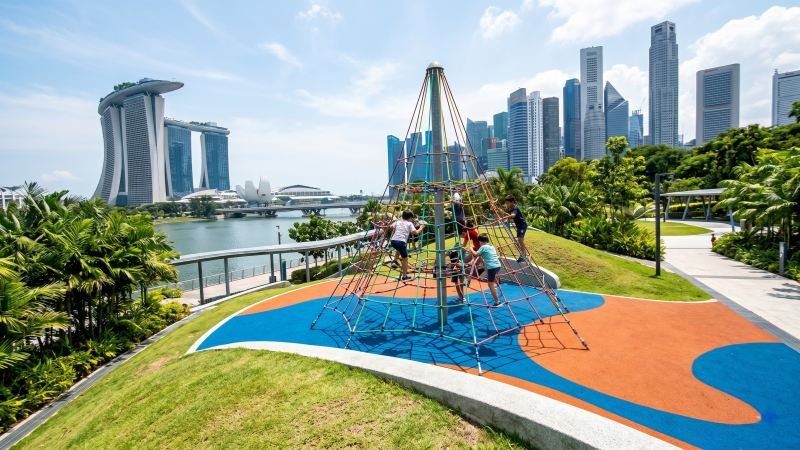
Urban parks often face strict space limitations. The mandate is simple: pack maximum play value into a microscopic footprint. Instead of spreading wide, these custom climbing nets stretch upward and inward.
Think about it like a compact carousel ride accommodating many riders in a tight circle, unlike a sprawling go-kart track. A central climbing net tower requires very little ground space, yet it holds dozens of children at once. A traditional swing set might eat up 500 square feet just to entertain four children. A tall net pyramid on that exact same 500 square feet? It can actively engage 30 children.
| Play Structure Type | Average Ground Footprint | Estimated Child Capacity |
|---|---|---|
| Traditional Swing Set (2 bays) | 400 – 500 sq. ft. | 4 to 6 |
| Standard Modular Play Structure | 800 – 1,000 sq. ft. | 15 to 20 |
| High-Density Net Pyramid | 400 – 500 sq. ft. | 25 to 35 |
The immediate payoff? You drastically reduce the required safety surfacing area, saving a fortune on expensive poured-in-place rubber flooring. This allows parks to reserve remaining land for benches, pathways, or additional landscaping.
Visual Transparency for Supervision and Aesthetics
Safety supervision is the absolute highest priority in any public park. Parents and caregivers must maintain a clear line of sight to their children at all times. Custom climbing nets excel here for one reason: immense visual transparency.
Solid plastic tubes and large wooden playhouses create dangerous blind spots. These dark corners hide potential hazards and make it nearly impossible to locate a child quickly. Climbing nets act like transparent acrylic safety barriers at a busy water park splash pad. You see straight through the ropes from almost any angle.
“Transparent play structures eliminate blind spots, significantly reducing the risk of accidents in crowded urban parks.”
Beyond safety, transparency solves a major urban design headache. Many city parks sit near historic buildings or waterfronts. Drop a massive, solid plastic playground there, and you’ve just blocked the view. Because nets consist mostly of empty space, they blend seamlessly into the surrounding environment, providing massive play volume without looking like a bulky eyesore.
Integrating Topography and Natural Landscapes
Traditional playgrounds fight the terrain, demanding perfectly flat, level ground and expensive excavation. Custom climbing nets, on the other hand, adapt to the land.
Adapting to Slopes and Mounds
Instead of flattening a natural hill, designers can drape a climbing net directly over it. This creates a thrilling hillside scramble net. Children use the ropes for grip to scale the natural slope. This approach mirrors how embankment slides utilize existing grassy hills to provide long, exciting descents without the need for tall, artificial staircases.
Why spend thousands moving dirt when you can just drape a scramble net directly over the existing hill? Not only does this slash your site prep budget, but it also creates a completely organic play experience. Nets bridge the gaps between existing natural features, like large boulders or sturdy landscape mounds.
By working with the land rather than against it, urban planners create beautiful, nature-inspired play spaces. The custom nets simply become an extension of the park’s natural geography. The end result? You monetize every uneven inch of the environment.
Material Selection for Different Environments
To maximize the lifespan of a play space, developers must match netting materials directly to the specific environmental demands of the site. Outdoor playgrounds require heavy-duty, UV-resistant steel-core cables to survive harsh weather, while indoor play spaces utilize soft, fire-retardant knotless ropes to ensure maximum skin comfort and meet indoor fire codes.

Weather-Resistant Cables for Exterior Durability
Outdoor play spaces face brutal conditions. Sunlight, rain, and extreme temperatures chew through weak materials fast. If you cut corners here, you’ll be replacing your equipment in two years.
For exterior environments, industry professionals spec steel-core combination ropes. These ropes feature a strong galvanized steel cable wrapped in a thick synthetic yarn, such as polypropylene or nylon.
The Steel-Core Advantage
Think of these combination ropes like the heavy-duty braking cables used on commercial ziplines. The outer synthetic layer provides a firm, grippy surface for children to climb, while the hidden steel core delivers massive tensile strength. This metal core is your primary defense against vandals trying to cut the structure with pocket knives.
On top of that, UV degradation is a relentless enemy. Constant sunlight makes cheap plastics brittle. High-quality combination cables use UV-stabilized yarns to prevent vibrant colors from fading and stop the rope from snapping under heavy ultraviolet (UV) damage.
| Material Type | Core Material | Best Environment | Key Advantage |
|---|---|---|---|
| Standard Nylon | Synthetic Fiber | Light Indoor Use | High elasticity and softness |
| Combination Rope | Galvanized Steel | Heavy Outdoor Use | Extreme durability and cut resistance |
Because steel-core diameters, load capacities, and UV-resistance ratings can vary based on specific manufacturing processes, always verify exact material specifications with your equipment supplier. Selecting the right outdoor material ensures you replace outdoor nets less often, keeping your play space open and profitable.
Soft Knotless Ropes for Interior Comfort and Fire Safety
Indoor environments flip the script on material requirements. Since indoor parks don’t face rain or snow, exterior weather durability doesn’t matter. Here, you prioritize user comfort and aggressive building safety regulations.
Maximizing Comfort with Knotless Designs
Children frequently play in indoor centers wearing only socks. Traditional knotted ropes create hard, abrasive bumps that cause friction burns on bare skin. That’s why any serious modern indoor center specifies knotless netting.
Knotless ropes are woven together seamlessly, creating a perfectly smooth, flat intersection wherever the ropes cross. Compare this to the smooth, seamless vinyl padding used around commercial trampoline park courts—it’s designed to prevent skin scrapes during high-speed impacts. The result? Kids can crawl and slide across these soft nets for hours without discomfort.
Addressing Indoor Fire Codes
Then comes the non-negotiable part: commercial fire codes. Building codes require indoor play equipment to resist catching fire. You have to spec highly specialized, fire-retardant synthetic fibers.
If an incident occurs, standard plastics melt and drip like hot lava, causing severe burns to people escaping below. Because of this, professional indoor netting must carry a strict “self-extinguishing” and “non-dripping” rating. When exposed to extreme heat, these treated nets extinguish the flame immediately without dropping hazardous molten materials.
“Using properly certified, non-dripping netting protects your facility from severe code violations and ensures a safe evacuation environment during emergencies.”
Since local fire safety regulations and required flame-spread certifications differ greatly by region, always verify the specific fire ratings of your netting with your supplier before installation. By selecting safe materials, you successfully secure the integrity of your indoor play space.
Age-Appropriate Zoning with Net Barriers
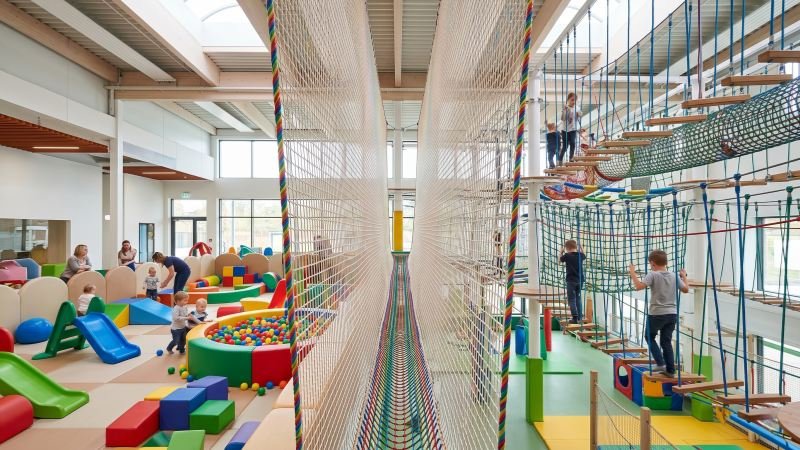
Operators can maximize limited floor plans by using custom climbing nets as physical barriers to create distinct, age-appropriate play zones. This zoning strategy safely isolates delicate toddler areas from high-impact activities, while simultaneously providing complex, challenging structures specifically designed for the physical abilities of older children.
Creating Dedicated Safe Zones for Toddlers
Toddlers require entirely different play environments compared to older children. Throwing them into the same small space isn’t just bad design; it’s a massive liability. Custom nets solve this space-planning headache efficiently by acting as soft, physical walls.
This allows you to chop up the floor plan logically without erecting dead, solid walls that kill visibility and eat up square footage. Think of a commercial indoor trampoline park: operators always build a separate, enclosed jump court for small children to prevent large teenagers from accidentally colliding with toddlers.
Inside these dedicated net enclosures, the climbing angles remain very gentle—usually inclines of less than 30 degrees. This shallow angle allows small children to crawl safely without falling backward. As an added bonus, mesh keeps the HVAC flowing and the sightlines wide open, allowing parents standing outside the zone to supervise easily.
Building Challenging Obstacles for Older Children
Flip the script for the older kids—they need to be pushed. If your older kids conquer the structure in five minutes, why would they ever return? Worse, bored teenagers might forcefully misuse the toddler equipment out of frustration. To keep this demographic coming back, you have to build complex, vertical challenges.
Designers use advanced twisted net geometries—steep vertical tunnels, suspended spatial towers, and wobbly rope bridges. This setup closely mimics the advanced rigging found in a commercial ninja warrior obstacle course, safely forcing older children to use problem-solving skills and intense upper body strength.
| Design Feature | Toddler Zone (Ages 2-5) | Older Child Zone (Ages 5-12+) |
|---|---|---|
| Climbing Angle | Gentle slope (Under 30 degrees) | Steep incline or vertical (Up to 90 degrees) |
| Pathway Structure | Simple, flat, wide platforms | Complex, twisted, narrow transitions |
| Challenge Level | Low physical demand, mostly crawling | High physical demand, swinging and hanging |
By utilizing nets to divide the space logically, you capture the entire market. You don’t need two separate parks; you serve two completely different customer demographics right on the exact same footprint.
Engineering Compliance and Safety Standards
Guaranteeing safety in maximized play spaces requires strict adherence to international playground compliance standards. Engineers must meticulously calculate exact net mesh sizes to eliminate bodily fall risks and design robust anchor systems to safely manage immense load-bearing forces.
Calculating Mesh Sizes to Prevent Falls and Entrapment
Designing a suspended web is where the engineering gets aggressively precise. You are suspending kids in mid-air. You must protect them from falling through the floor or getting their limbs trapped. Playground standards, like ASTM F1487 in the United States or EN 1176 in Europe, dictate these gaps strictly.
While rigid boundaries and solid fencing sometimes allow gaps larger than 9 inches (230 mm) to ensure a head won’t get stuck, applying this large-gap rule to a suspended walkable net creates a fatal high-altitude fall hazard. A child’s entire body could slip through a 9-inch hole.
To engineer this fall hazard out of existence, we tightly restrict the walkable net openings. For flooring and primary climbing surfaces, gaps are typically kept well under 3.5 inches (89 mm). This precise measurement ensures a child’s foot cannot slide deeply enough to trap their leg or ankle, absolutely eliminating any risk of a full-body fall through the net.
“Properly engineered mesh geometry is the invisible floor that prevents life-threatening falls and limb entrapment on suspended play equipment.”
Because specific safety standards and required mesh measurements frequently vary based on the net’s intended use and angle, always verify the exact gap compliance specifications with your equipment supplier.
Load-Bearing Requirements and Anchor Points Installation
Maximizing your space means holding more children simultaneously, and more kids equal significantly more weight. At this scale, the structural physics are unforgiving.
Engineers must calculate two distinct types of weight: static loads and dynamic loads.
| Load Type | Definition | Playground Example |
|---|---|---|
| Static Load | The permanent weight of the structure itself. | Heavy steel cables, heavy metal connection rings, and the netting. |
| Dynamic Load | The moving, changing forces applied by active users. | Thirty children bouncing, swinging, and pulling on the ropes simultaneously. |
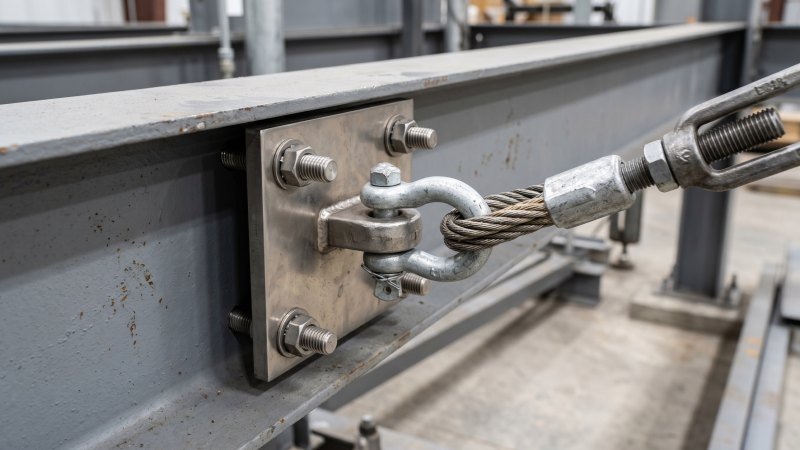
A multi-level custom net acts like a massive sail catching wind. It pulls aggressively against the building’s walls or support poles. To manage this massive structural tension, you cannot simply bolt a climbing net into standard drywall or hollow cinder blocks.
Instead, your riggers must bolt heavily reinforced steel anchor plates directly to primary structural I-beams or thick concrete foundations. This process is identical to how large-scale commercial swing frames are anchored deep into concrete footings to prevent the entire rig from lifting during intense swinging motions.
These anchor points must absorb and distribute the violent, shaking energy generated by dozens of playing children. Lock down your load-bearing compliance, and you can safely push your play capacity to the absolute limit.
Conclusion
Custom climbing net playgrounds offer a powerful, high-yield solution for developers and park operators looking to squeeze every drop of value out of their physical real estate. By building vertically indoors and deploying high-density, topography-adaptive designs outdoors, your spaces host more users and deliver better engagement. When you back those structural strategies with the right commercial-grade materials, smart demographic zoning, and bulletproof engineering, your investment doesn’t just survive—it drives long-term, high-volume profitability.
If you are ready to maximize your facility’s potential with a custom netting solution, please contact us.