-
Whatsapp: +86 15516933785
-
Email: hanlin@hanlinplayground.com
-
Address: Shangjie District, Zhengzhou City, Henan Province, China
-
Whatsapp: +86 15516933785
-
Email: hanlin@hanlinplayground.com
-
Address: Shangjie District, Zhengzhou City, Henan Province, China

Can Rainbow Slides Be Built on Flat Ground? Latest Site Construction & Customization Solutions
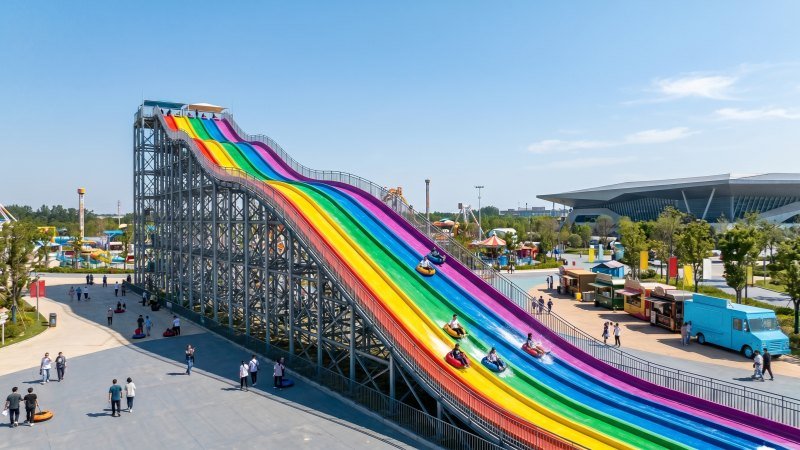
Can you actually build a massive, thrilling rainbow slide on a completely flat plot of land without a natural hill?
Yes, rainbow slides can be successfully built on flat ground by utilizing engineered support structures to create artificial elevation. Developers achieve this by assembling modular steel scaffolding, constructing artificial earthwork mounds, or anchoring heavy-duty steel trusses to concrete foundations, providing both the necessary slope and strict structural safety.
Core Construction Methods for Level Terrain
What are the primary techniques used to build a sloped rainbow dry snow slide when your project site is completely flat?
To build a rainbow slide on flat ground, developers primarily use three construction methods: assembling modular steel frame scaffolding, excavating and compacting soil to create artificial earthwork mounds, or employing a hybrid system that anchors steel support trusses directly into poured concrete foundations. These techniques effectively create the required elevation drop without relying on a natural hill.
Steel Frame Scaffolding Structures
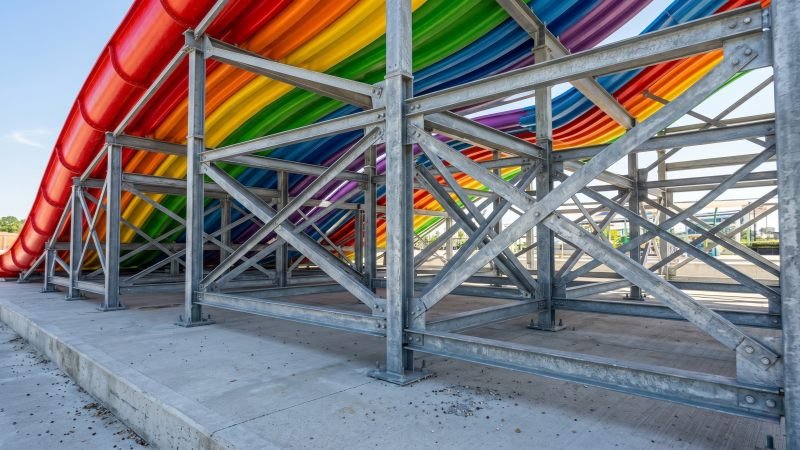
How do you build a tall slope quickly on a flat plaza? You use a steel frame scaffolding structure. That’s why this remains the most popular choice for flat-ground rainbow slides.
This method involves connecting hundreds of galvanized steel pipes using specialized clamps and joints. Think of it like assembling the temporary steel support grid for a drop tower ride or a Ferris wheel base. The scaffolding builds the high starting platform and safely supports the entire track downhill. Better yet, builders can easily adjust the pipe height at different points to create the slide’s exciting “waves.”
Because this structure is highly modular, workers can assemble and dismantle it relatively fast. Why build a permanent mountain when a modular steel grid gives you total seasonal flexibility? This adaptability makes it ideal for leased land or seasonal amusement parks.
When specifying materials, standard scaffolding pipes often have an outer diameter of around 48mm. However, exact structural specifications depend heavily on the slide’s total height. Before you break ground, always verify the exact pipe thickness, diameter, and load ratings with your specific slide supplier to ensure it meets local safety codes.
“Modular steel scaffolding significantly reduces site preparation time compared to traditional heavy excavation.”
Earthwork and Artificial Mound Building
Instead of building up with metal, why not change the ground itself? Earthwork involves moving large amounts of soil to create a permanent, artificial hill directly on your flat land.
In practice, bulldozers and excavators pile dirt onto the flat site. Then, heavy rollers compact the soil tightly. This process is very similar to how construction crews build the elevated berms for a water park wave pool or the graded foundation for a landscape park train. The primary goal is to build a solid, permanent slope that will not sink over time.
From an aesthetic standpoint, this method feels much more natural. Once the slide track is installed, the exposed dirt can be covered with grass or artificial turf. As a result, the ride blends seamlessly into the surrounding park environment.
Here is a quick breakdown of the standard earthwork process:
- Site Clearing: Removing loose topsoil and debris from the flat area.
- Soil Layering: Adding dirt in thin layers, usually 20 to 30 centimeters thick.
- Compaction: Pressing each layer down strictly to achieve high density and prevent future settling.
Because earthwork relies on massive volumes of heavy soil, it is only suitable for permanent installations.
Combining Concrete Foundations with Steel Supports
For maximum permanence on flat ground, builders use a highly durable hybrid approach. This method combines deep poured concrete foundations with heavy-duty steel supports.
To pull this off, workers dig holes into the flat ground and pour reinforced concrete piers. Then, large steel beams are bolted securely to these solid concrete bases. This setup is fundamentally identical to how the towering support columns of a massive steel roller coaster are anchored to a flat concrete pad. The concrete handles the immense ground weight, while the steel provides the specific sloped track shape.
Why choose this complex method? Sometimes the flat ground has soft or unstable soil. In these scenarios, simple temporary scaffolding might sink into the dirt. To solve this, concrete foundations distribute the massive weight safely deep into the solid ground below.
| Feature | Steel Scaffolding | Artificial Mound | Concrete & Steel Hybrid |
|---|---|---|---|
| Best Application | Temporary or leased sites | Permanent, natural-looking parks | Soft soil, extreme heights |
| Installation Speed | Very Fast | Slow (requires heavy machinery) | Moderate |
| Site Modification | Minimal digging | Heavy excavation | Moderate digging for footings |
At the end of the day, choosing the right method depends strictly on your land type and project timeline. By selecting the correct foundational approach, any flat plot of land can successfully host a large-scale slide attraction.
Structural Stability and Safety Standards
To guarantee structural stability, engineers strictly calculate load-bearing capacities for the elevated platforms, apply industrial anti-corrosion treatments to the steel, and implement robust ground anchoring techniques to resist high winds. These rigorous safety standards prevent structural failure and ensure the ride safely supports thousands of dynamic passenger movements daily.
Load-Bearing Capacity Requirements for Elevated Platforms
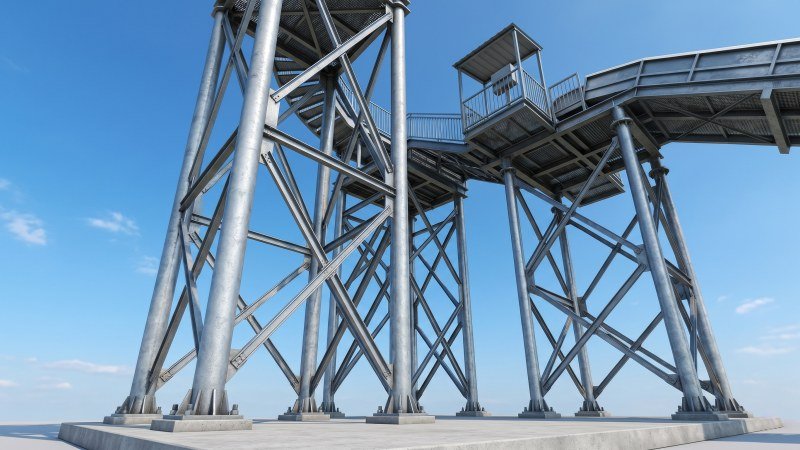
Building a high starting platform on a flat field requires careful weight management. The structure must safely support two distinct types of weight. First, it must hold the static load, which is the heavy weight of the steel pipes and the plastic slide tiles themselves. Second, it must handle the dynamic load.
When dozens of passengers stand on the top platform holding their heavy snow tubes, the structure experiences massive dynamic stress. Add in the constant impact of riders pushing off, and you’ve got vibrating forces cascading down the track. This is identical to calculating the dynamic passenger load for the elevated waiting queue of a swinging pirate ship ride. If the structure is weak, it will bend or collapse.
To handle this, engineers use thick, heavy-duty steel grids for the platform floor. Typically, commercial amusement platforms are engineered to support dynamic loads exceeding 400 to 500 kilograms per square meter, depending on local safety codes. To maximize safety, builders also install cross-bracing. Specifically, diagonal steel tubes are clamped between the vertical posts. This bracing prevents the tall platform from swaying laterally when heavy riders slide down the slope.
Anti-Corrosion Treatments for Steel Frameworks
Outdoor amusement equipment faces constant exposure to harsh weather. Rain, morning dew, and even soil moisture constantly attack the steel framework. Make no mistake, rust is the biggest enemy of a flat-ground rainbow slide. Rust eats away the metal, significantly weakening the structure over time.
To prevent this, the industry relies on rigorous anti-corrosion treatments. This is the exact same protective technology used on the massive steel tracks of outdoor roller coasters. The most effective method is hot-dip galvanizing.
During this process, manufacturers submerge the raw steel pipes into a vat of boiling, molten zinc. This creates a thick, permanent chemical bond. The zinc layer physically blocks water from reaching the steel. Standard galvanized pipes usually feature a zinc coating thickness of 60 to 80 microns. But remember, operators must ensure the chosen zinc coating thickness matches the moisture and salinity demands of their specific local climate.
“A properly galvanized steel structure can safely operate outdoors for over a decade without major structural rusting.”
| Treatment Method | Rust Prevention | Maintenance Need | Industry Lifespan |
|---|---|---|---|
| Hot-Dip Galvanizing | Excellent | Very Low | 10+ Years |
| Standard Spray Paint | Poor | High (Frequent repainting) | 2 to 3 Years |
| Powder Coating | Good | Moderate | 5 to 7 Years |
As the table shows, hot-dip galvanizing is superior. For this reason, professional builders strictly avoid basic spray-painted steel for permanent structural supports.
Wind Resistance and Ground Anchoring Techniques
Flat ground offers zero natural windbreaks. Without natural shelter, an artificially elevated slide platform acts like a giant sail. What happens when a sudden squall hits a towering grid of plastic and steel? High winds can easily push, twist, or overturn the structure if it is not secured properly. This wind load challenge is highly similar to anchoring a towering Ferris wheel against storm winds.
Engineers must firmly lock the steel structure to the ground. They achieve this using specific ground anchoring techniques. If the slide is built on a poured concrete pad, workers use heavy-duty chemical anchors. They drill deep into the concrete, insert steel bolts, and inject a strong industrial epoxy. This bonds the steel base plates permanently to the ground.
If pouring concrete isn’t an option and the slide sits on soft dirt or a grassy field, builders use heavy concrete ballast blocks. They tie massive concrete weights to the bottom of the scaffolding. Additionally, they drive long steel ground screws deep into the earth to grip the soil tightly.
Typically, these rides are designed to cease operations safely at wind speeds of 15 meters per second, while the heavy-duty framework itself is engineered to withstand extreme non-operating storm winds exceeding 35 to 45 meters per second. Because wind patterns vary wildly by geographic location, you should always verify the specific wind resistance ratings and recommended anchoring methods with your manufacturer to prevent weather-related hazards.
Customization Options to Maximize Visitor Appeal
How can you design a flat-ground rainbow slide that instantly grabs attention and keeps guests coming back for more?
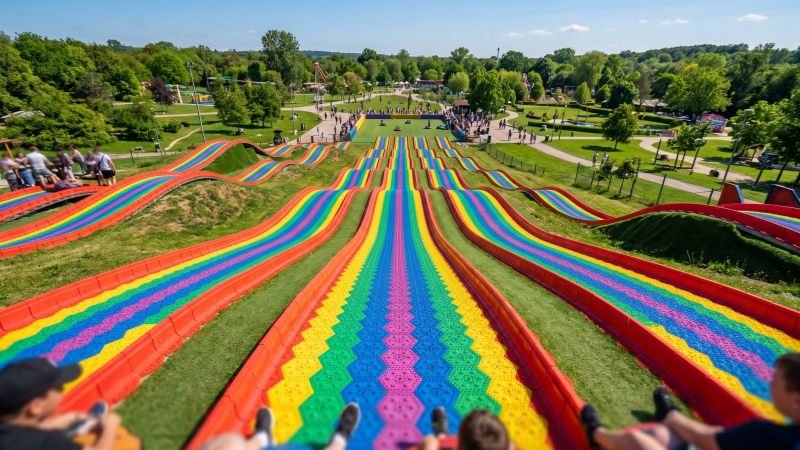
To maximize visitor appeal, developers customize the ride experience through three key strategies. First, they calculate precise slope ratios and add exciting wave elements. Second, they select specific lane configurations to boost rider capacity. Finally, they apply vibrant color schemes for perfect visual integration.
Calculating Ideal Slope Ratios and Wave Designs
Flat ground offers a perfect blank canvas. You are not restricted by the natural shape of a hill. With flat terrain, you can engineer the exact thrill level you want. The thrill heavily depends on the slide’s slope ratio.
The slope ratio determines the maximum downhill speed. For a family-friendly attraction, a standard slope ratio is typically 1:6 to 1:8. However, extreme thrill slides might push closer to a steep 1:4 ratio. Because local safety regulations and friction coefficients vary, it is crucial to adhere to strict allowable slope ratios during the professional design phase.
But let’s be honest, a straight drop is often too basic. To increase excitement, engineers add “waves” to the track. These waves act exactly like the bunny hills on a steel roller coaster. They provide riders with brief moments of weightlessness, often called “airtime.” By using adjustable steel supports on flat ground, builders can precisely place two or three waves along the descent.
“Strategically placing waves transforms a simple downhill slide into a dynamic, highly repeatable attraction.”
Single vs Multi-Lane Configurations
When building on flat terrain, you control the footprint. You can expand the width of the structure as much as your land allows. This flexibility forces a critical choice: how many lanes should you build?
A single-lane slide is cheaper and requires less space. But here’s the catch: it severely limits your hourly rider capacity. During busy weekends, a single lane creates long, frustrating queues. This is similar to operating a single-dispatch zip line.
On the flip side, multi-lane configurations dramatically increase throughput. Most commercial parks install three to six parallel lanes. More importantly, multi-lane designs introduce a competitive racing element. Guests love racing their friends and family to the bottom. This interactive racing aspect strongly encourages repeat ticket purchases, just like a multi-lane mat racer water slide.
| Feature | Single-Lane Slide | Multi-Lane Slide (3+ Lanes) |
|---|---|---|
| Hourly Capacity | Low (approx. 60-100 riders) | High (approx. 200-400+ riders) |
| Interactive Appeal | Individual experience only | High (encourages group racing) |
| Footprint Width | Narrow (around 2 to 3 meters) | Wide (6 meters or more) |
As a rule of thumb, each standard slide lane requires a width of about 2 meters. So, you must measure your flat plot carefully before choosing your lane count.
Visual Integration and Color Scheme Selection
A towering structure on flat ground is impossible to hide. It instantly becomes a massive visual landmark. Because of this, aesthetic customization is crucial for marketing and park integration.
The slide track is built using interlocking plastic tiles. These tiles come in almost any color. The classic “rainbow” theme uses seven alternating vibrant colors. This bright pattern is highly photogenic and performs incredibly well on social media.
That said, you are not forced to use a rainbow. Many parks customize the colors to match their specific themes. This is identical to how a theme park paints a roller coaster track to match a specific “jungle” or “space” zone. For example, a winter-themed park might use alternating blue and white tiles. Meanwhile, a forest adventure park might blend in using dark green and brown tiles.
These tiles are usually made of high-density polyethylene (HDPE). They must withstand intense sunlight. Since UV index and color fading rates differ greatly by geographic region, sourcing tiles with high UV-resistance specifications and robust color warranties is essential to ensure your custom colors remain vibrant for years.
Space Planning and Cost Analysis
To successfully plan space and manage costs for a flat-ground slide, developers must budget significantly for the artificial elevation structure, accurately size the elevated starting platforms for efficient crowd flow, and dedicate enough ground space for long, safe braking zones. Managing these factors correctly ensures a profitable return on investment.
Budgeting for Artificial Elevation vs Natural Slopes
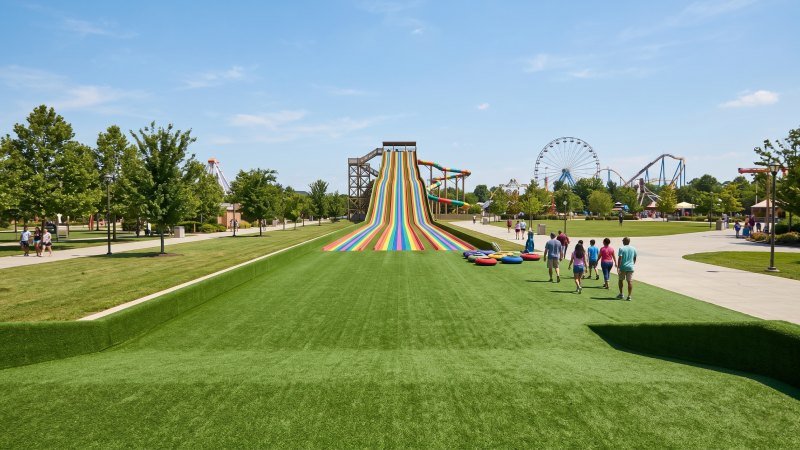
Building a slide on flat ground fundamentally changes your project budget. You are not just buying the slide track; you are paying to build the hill itself. As a result, this artificial elevation represents a major portion of your total investment.
Building on a natural slope is highly cost-effective. Workers simply lay the track directly onto the graded earth. This is similar to laying a miniature park train track directly onto flat ground. In stark contrast, an artificially elevated slide requires massive steel scaffolding or extensive earthmoving. This is exactly like financing the towering steel support columns for a high-speed roller coaster.
Knowing this, park investors must carefully weigh the costs. The table below outlines the general financial differences.
| Expense Category | Natural Slope Installation | Flat Ground (Artificial Elevation) |
|---|---|---|
| Foundation Costs | Very Low (Basic ground leveling) | High (Concrete piers or heavy ballasts) |
| Support Structure | None required | High (Steel scaffolding framing) |
| Installation Labor | Standard | High (Requires elevated working gear) |
| Total Project Cost | Baseline Budget | Typically 40% to 70% Higher |
The reality is, while flat-ground projects cost more upfront, they allow you to place a highly profitable attraction exactly where foot traffic is highest.
Sizing the Starting Platform and Boarding Area
Space planning begins at the very top. The starting platform is the operational heart of your slide. If this area is cramped, your entire attraction will run slowly and unsafely.
Obviously, the platform must match the total width of your slide lanes. But the depth of the platform is just as critical. Operators need enough space to safely position the heavy snow tubes. And don’t forget, riders need space to board the tubes comfortably without crowding the edge.
Think of this area like the loading station of a log flume water ride. There must be distinct zones for waiting, boarding, and dispatching. Generally, a professional boarding platform requires a minimum depth of 3 to 5 meters behind the launch gate. Crucially, you must allocate space for the return conveyor belt system. This belt brings empty tubes back up to the top. If you ignore this in your space planning, operators will have to carry tubes up the stairs manually, destroying your hourly rider capacity.
“A well-sized starting platform directly increases ticket revenue by speeding up the rider dispatch rate.”
Designing Safe and Effective Braking Zones
What goes up must safely come down. On a flat-ground slide, the rider reaches their maximum speed right at the bottom. Because of this physics reality, you must dedicate a massive portion of your flat real estate exclusively for stopping.
This area is called the braking zone, or runout lane. It functions exactly like the long, straight brake run at the end of a steel roller coaster. You cannot simply let riders slide onto the grass. Instead, the track must continue flat along the ground to safely bleed off speed. Engineers typically install special deceleration carpets or dense artificial turf in this zone to increase friction.
Ever seen a rider overshoot a runout lane because someone tried to save ten square meters of real estate? It’s a dangerous mistake you can easily avoid. Industry standard dictates the braking zone must be at least 30% to 40% of the total sloped track length. Even so, braking distances are heavily influenced by specific track materials and local humidity. Therefore, always verify the exact required braking zone length with your equipment supplier. This guarantees your park layout meets strict deceleration safety standards.
Conclusion
At the end of the day, building a rainbow slide on flat ground isn’t just feasible—it’s highly profitable when engineered correctly. By utilizing engineered steel scaffolding or artificial earthworks, park investors can transform empty, level terrain into a major visual landmark. Success ultimately relies on adhering strictly to structural load and wind safety standards, customizing the lanes and slope ratios for maximum thrill, and properly budgeting the space for expansive braking zones and efficient boarding platforms. If you need help evaluating your specific flat-ground site, designing a layout, or calculating structural parameters, please contact us to discuss a custom solution tailored to your venue.