-
Whatsapp: +86 15516933785
-
Email: hanlin@hanlinplayground.com
-
Address: Shangjie District, Zhengzhou City, Henan Province, China
-
Whatsapp: +86 15516933785
-
Email: hanlin@hanlinplayground.com
-
Address: Shangjie District, Zhengzhou City, Henan Province, China
Attraction Traffic Magnet: How to Leverage “Rainbow Slides” to Create a Viral Landmark
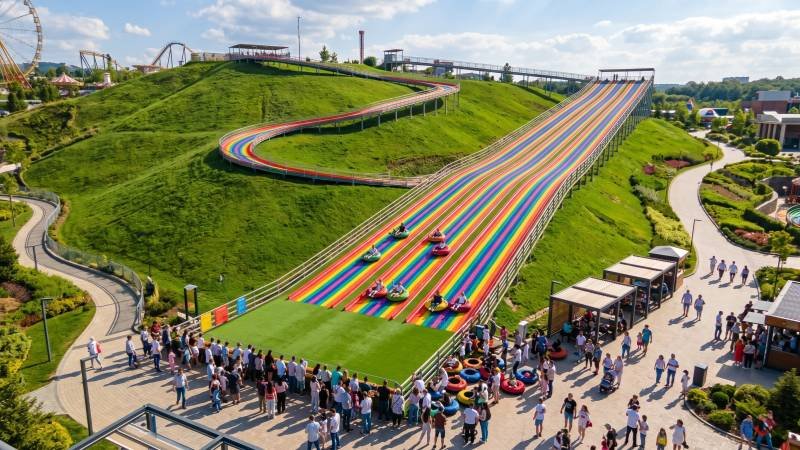
How can amusement park operators effectively leverage rainbow slides to transform a standard venue into a highly profitable, viral landmark?
Let’s cut to the chase. To successfully create a viral landmark, operators must strategically combine high-impact visual design with targeted social media marketing, implement multi-tiered monetization models like combo ticketing, and strictly enforce daily safety protocols. By executing these core strategies, venues can maximize both organic foot traffic and long-term return on investment.
Site Selection and Design Requirements for Maximum Visual Impact
To maximize visual impact, park planners must select a site with a natural incline of 9 to 15 degrees, utilize high-contrast color combinations, and install strategic LED lighting. More importantly, clearing surrounding sightlines and framing the installation with attractive landscaping is essential to create perfect viewing angles from anywhere in the park.
Ideal Terrain and Slope Specifications
Finding the right hill makes or breaks this project. You need a slope that provides enough thrill without requiring massive earth-moving costs. A natural incline is always the best choice. Building a heavy steel support structure on flat ground is incredibly expensive and often looks forced within a scenic environment.
Generally, you’re looking for an incline between 9 and 15 degrees. Too flat, and riders lose momentum and stall out mid-track. On the flip side, push the grade too steep and you’re fighting excessive speeds, which skyrockets friction and chews through your plastic sliding tiles. Here’s the kicker: exact slope limits and material friction ratings fluctuate based on weather and tile design. Therefore, always verify the specific parameter ranges with your chosen equipment supplier before finalizing your site plan.
Ever engineered a water park log flume? Then you know you need a steady, controlled gradient to maintain momentum before the final drop. Similarly, a rainbow slide demands a smooth, consistent decline to balance thrill and safety.
| Terrain Feature | Ideal Specification | Impact on Project |
|---|---|---|
| Slope Angle | 9° to 15° | Balances rider speed and safety |
| Track Length | 100 to 150 meters | Provides a satisfying ride duration |
| Ground Type | Ground anchors or concrete footings | Prevents soil erosion and track deformation |
| Run-out Zone | Uphill counter-slope & high-friction mats | Ensures safe deceleration and prevents collisions |
Color Combinations and Lighting Strategies for Night Operation
Color is the defining feature of this attraction. To stand out, the slide must visually pop against its natural background. If your site is heavily wooded, lean into bright neon colors. Bright pink, electric blue, and vibrant yellow create a stunning, aggressive contrast against dark green trees.
Daytime visibility is great, but how are you driving revenue after sunset? You have to bake lighting directly into the initial design.
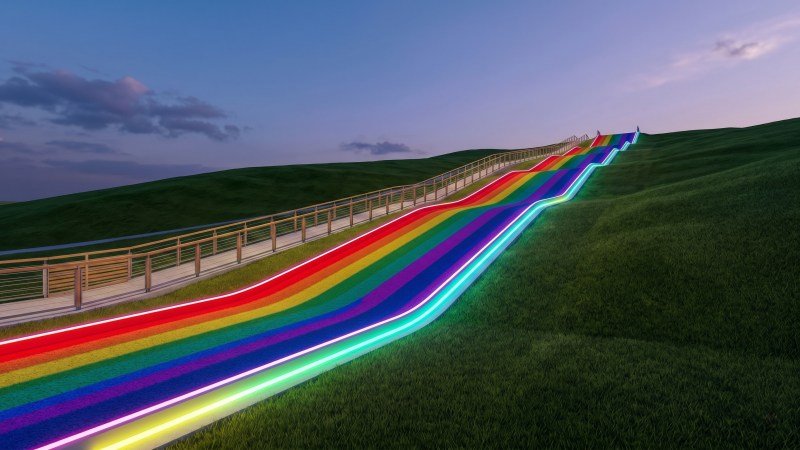
Wire in programmable LED light strips along the outer edges of the track. These lights can be programmed to chase the riders as they slide down the hill, turning the slide into a glowing, dynamic ribbon at night. This technique is very similar to how modern Ferris wheels use animated LED spokes to dominate a theme park’s night skyline. Proper lighting doesn’t just extend your profitable operating hours—it completely transforms the visual appeal of the venue.
Optimizing the Surrounding Landscape for Photo Opportunities
What’s the point of investing in a massive, visually stunning slide if it’s hidden behind the treeline? The physical environment immediately surrounding the slide dictates how impressive it looks from a distance.
Start by aggressively clearing any obstructed sightlines. Remove overgrown brush, low-hanging branches, and dead trees. The entire sweeping length of the slide should be visible from your park’s main walking paths. Next, look at the background. When people look up at the top of the slide, a clear blue sky or a neat forest canopy is ideal. Strictly avoid backgrounds cluttered with utility power lines or maintenance buildings.
Don’t overlook the spectator psychology, either. Creating dedicated viewing platforms near the bottom run-out zone is essential. Family members need a safe, clear area to stand and watch the riders coming down. By shaping the landscape to include these wide viewing zones, you naturally control where people gather. This guarantees observers have the best possible framing to view and photograph the attraction.
Social Media Marketing Strategies for Viral Growth
Achieving viral growth requires designing visually striking photo zones and actively incentivizing user-generated content through targeted campaigns. By collaborating with niche travel influencers, operators can effectively turn a physical attraction into a highly visible digital landmark that rapidly reaches broader audiences.
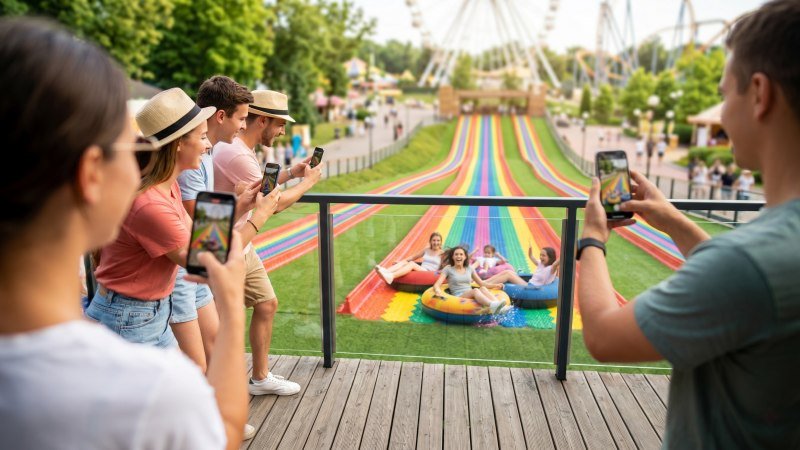
Designing Natural Check-In Spots for TikTok and Instagram
The secret to dominating social media feeds lies in deliberately designing physical spaces for digital sharing. You cannot rely solely on the slide itself to generate photos. Instead, construct dedicated check-in spots for TikTok and Instagram around the attraction.
Set up a designated viewing platform at the highest point of the hill to give riders a panoramic background before they launch. Next, position oversized, colorful park signage near the deceleration zone. The immediate payoff? Every video of a rider finishing their run will naturally capture your park’s branding.
This strategy directly mirrors the entrance plaza of a major roller coaster. Park designers strategically place giant, branded marquee signs right where the track executes a dramatic loop. As a result, the park’s brand is baked into every visitor’s photo. Apply this exact visual framing technique to your slide area.
Incentivizing User Generated Content
How do you motivate thousands of visitors to advertise your attraction for free? Actively incentivize User Generated Content (UGC). Visitors are already taking photos; you just need them to post those photos publicly with your specific branding.
Put a clear reward system in place. For example, offer a fast-track lane pass for their next ride if they post a video using your official park hashtag. Alternatively, run a monthly photo contest where the prize is a free family season pass. Ensure your official hashtag is printed clearly on wristbands, safety fences, and entry tickets.
Look at how large indoor trampoline parks operate. They frequently offer free branded grip socks to guests who tag the venue on Instagram. A minimal operational cost generates massive organic marketing reach.
| Reward Strategy | Implementation Cost | Marketing Impact |
|---|---|---|
| Branded Hashtag Contest | Low | High organic reach |
| Fast-Track Lane Upgrade | Medium | Immediate high engagement |
| Small Merchandise Giveaway | Medium | Long-term brand visibility |
Partnering with Local Influencers and Travel Vloggers
Want to generate immediate traction for a new installation? Partner with local influencers and family travel vloggers. These creators already have the exact target audience you want to attract.
Focus your outreach on micro-influencers within a 100-mile radius, specifically looking for accounts dedicated to weekend family getaways or local theme park reviews. Forget expensive celebrity endorsements. Instead, invite these targeted vloggers for a VIP experience before the official opening day. Give them exclusive access to film point-of-view (POV) videos while riding the slide.
When a new wave pool opens at a commercial water park, operators rarely rely on traditional print ads alone. They invite local parenting bloggers to test the waters first. Their authentic, first-hand reviews carry significantly more weight than standard corporate advertising and drive immediate bookings.
Proven Monetization Models to Accelerate ROI
To accelerate ROI, operators must implement a multi-tiered monetization strategy that goes beyond simple admission. This includes optimizing ticket structures through combo packages, introducing high-margin upselling via professional action photography, and capturing secondary revenue from strategically placed concession stands.
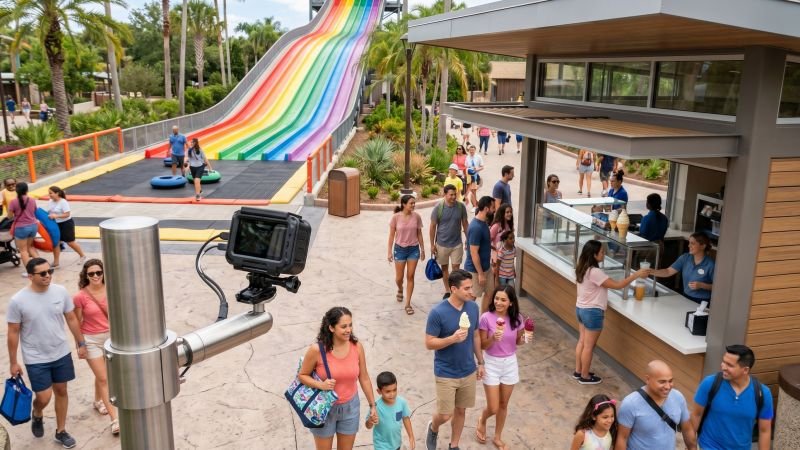
Standalone Ticketing vs Combo Packages
You have to nail down your ticketing strategy early. Standalone ticketing allows you to charge a specific fee for a single ride. This model works well for small, independent attractions as it generates direct, trackable revenue. However, it can cause transaction bottlenecks and long lines at the ticket booth.
Alternatively, combo packages bundle the slide ticket with other park attractions, significantly increasing the total money spent per visitor. For example, a family entertainment center might sell a premium admission wristband that includes unlimited standard rides and exactly two priority turns on the rainbow slide. This operates exactly like a large water park bundling general admission with limited access to a premium wave simulator. Ultimately, bundling drives much higher upfront sales and streamlines park operations.
Upselling Strategies Using Professional Photography Services
Riding a steep hill generates incredible, expressive reactions—so why leave that money on the table? Install an automated high-speed camera near the bottom of the track to capture riders just before they hit the deceleration zone.
After the ride, route guests past digital kiosks where they can view and purchase their action shots. You can sell printed photos, digital downloads, or customized keychains. This setup mirrors the ride-photo systems used on major steel roller coasters. Because the cost of reproducing a digital photo is practically zero, the profit margins are huge. To ensure the system captures crisp action shots, coordinate closely with your technology provider regarding optimal camera placement and shutter speeds.
Secondary Revenue Streams from Surrounding Concessions
A high-capacity attraction naturally acts as a crowd magnet. People will stand around to watch their friends, and other guests will queue up in line.
Place high-margin concession stands right next to the viewing platforms to sell cold beverages, ice cream, and quick snacks. The profit margins on items like bottled water and cotton candy are exceptionally high. In the amusement industry, keeping guests hydrated and fed directly extends their total dwell time at the park.
Think about how a major theme park drops snack carts directly across from the exit of their most popular log flume. Adrenaline-pumped riders will immediately buy cold drinks right after finishing their turn, maximizing your secondary revenue.
| Revenue Stream | Setup Cost | Operational Effort | Profit Margin |
|---|---|---|---|
| Combo Tickets | Low | Low | High |
| Action Photography | Medium | Low | Very High |
| Snack Concessions | Low | Medium | High |
Essential Safety Management and Daily Maintenance
Guaranteeing operational safety requires park managers to strictly enforce physical rider restrictions, implement continuous weather monitoring systems, and execute comprehensive daily equipment inspections. Standardizing these safety protocols effectively mitigates risks and maintains a secure environment for all guests.
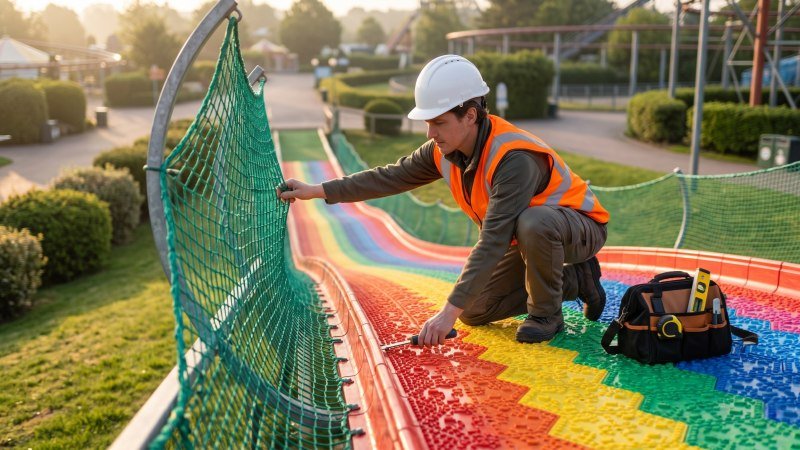
Strict Rider Restrictions and Staff Training Protocols
Physical restrictions directly prevent dangerous incidents on the track. Every passenger must meet specific height, weight, and age requirements. If a rider is too light, they might stall mid-ride. If a rider is too heavy, they will carry excessive momentum into the run-out zone, making deceleration unsafe.
Because friction coefficients and tube designs differ across manufacturers, safe operating capacities will fluctuate. You must always verify the exact weight and height parameters with your specific equipment supplier before clearing the ride for opening.
But hardware is only half the equation. You must train your floor staff to enforce these rules without exception. Ride operators serve as your frontline defense and must actively verify guest suitability at the boarding zone. Think about how attendants operate a high-speed roller coaster: they physically check every safety harness before dispatch. Similarly, your slide attendants must verify that guests are seated securely in their tubes before launching them.
Weather Monitoring and Emergency Response Plans
Environmental factors drastically alter how an outdoor slide performs. Even a light rain shower makes the plastic sliding tiles incredibly slick, pushing ride speeds well beyond safe limits. High winds present a completely different hazard, as strong gusts can easily lift lightweight inflatable tubes off the track.
Because of this, relying on generic weather apps won’t cut it. You need localized weather monitoring tools, such as real-time anemometers mounted at the top of the launch platform. Just as outdoor aerial cable cars automatically halt operations during high winds, your slide must have clear, non-negotiable weather shutdown triggers.
Beyond the hardware, map out a bulletproof emergency response plan. If a rider requires assistance in the deceleration zone, do your medics have a fast, clear access route? Practicing emergency drills regularly ensures your staff can safely handle medical incidents or quickly clear the launch platform during a sudden severe storm.
Routine Equipment Inspection Checklists
We all know daily wear and tear is the reality for any high-volume attraction, right? That makes routine inspections your ultimate preventative tool. Maintenance crews must walk the entire length of the track every single morning before opening the gates.
During this walk, technicians need to hunt for cracked plastic tiles, loose connecting bolts, and damaged safety netting. While you’re walking the track, keep a close eye on the inflatables. Staff must check the air pressure and inspect the seams for slow leaks. If a tube deflates during a run, you’re looking at a severe safety risk.
To put it in perspective, consider the maintenance of a wooden roller coaster. Technicians walk the wooden track daily to spot loose track bolts and splintered boards. You must apply this exact same level of daily scrutiny to your rainbow slide.
| Inspection Area | Daily Check Items | Action if Defective |
|---|---|---|
| Track Tiles | Cracks, sharp edges, alignment | Replace tile immediately |
| Safety Nets | Tension, tears, anchor points | Repair or replace netting |
| Riding Tubes | Air pressure, fabric tears, handles | Remove tube from service |
| Launch Gates | Mechanical movement, hinges | Lock out ride until fixed |
Conclusion
Look, deploying a profitable rainbow slide takes a lot more than just unrolling colorful plastic tracks down a hill. It requires a comprehensive approach that balances striking visual design, aggressive social media marketing, smart monetization, and uncompromising safety standards. By carefully applying the strategies outlined in this guide, park operators can successfully transform this scalable equipment into a true viral landmark that consistently drives foot traffic and secures high profit margins.
If you are ready to start planning your next viral attraction or need expert guidance on equipment and park layout, please Contact us today!