-
Whatsapp: +86 15516933785
-
Email: hanlin@hanlinplayground.com
-
Address: Shangjie District, Zhengzhou City, Henan Province, China
-
Whatsapp: +86 15516933785
-
Email: hanlin@hanlinplayground.com
-
Address: Shangjie District, Zhengzhou City, Henan Province, China

The Complete Guide to Trampoline Park Equipment Prices and Investment Costs
How much does it really cost to build a commercial trampoline park from the ground up, and what hidden expenses should investors prepare for?
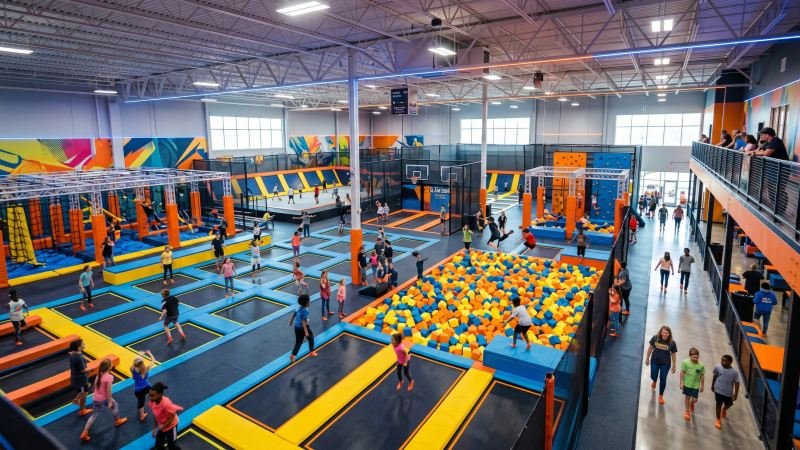
The total initial investment for a commercial trampoline park generally ranges between $300,000 and $1,500,000, depending heavily on the facility size, attraction mix, and necessary building modifications. A comprehensive budget must account for core equipment manufacturing costs, global freight logistics, specialized installation labor, facility zoning compliance, and initial operational capital reserves.
Breaking Down the Initial Budget Allocation
What are the core components that make up the initial budget allocation for a new trampoline park?
Nailing down your startup budget requires breaking down the investment into three primary pillars: manufacturing procurement costs, business model structure fees, and mandatory emergency capital reserves. Understanding this distribution prevents critical funding shortages before your opening day.
Average Equipment Cost Per Square Foot
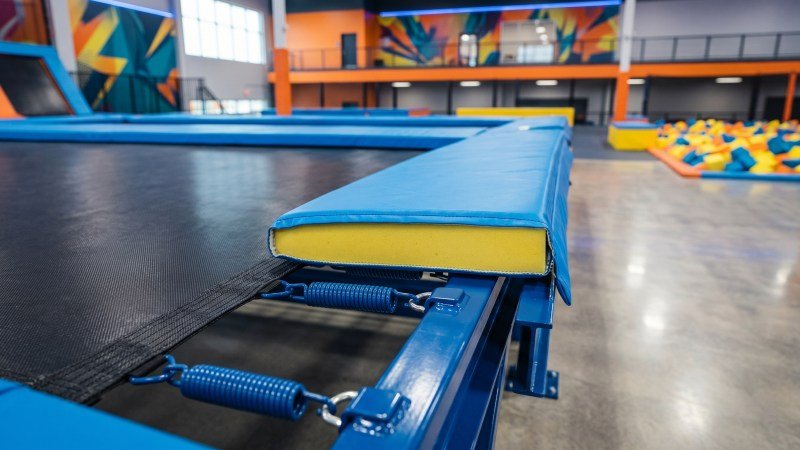
When calculating your core expenses, the jumping surface and steel structures are your biggest line items. As a baseline rule of thumb, high-quality, commercial-grade trampoline equipment costs between $100 and $200 per square foot of the jumping area.
Think a few foam pits won’t change the bottom line? Think again. Just as the complexity of holds and panel materials dictates the price of a professional climbing wall system, the specific type of trampoline zones—such as high-performance beds versus standard foam pit segments—drastically shifts your cost per square foot.
| Equipment Type | Estimated Cost Intensity |
|---|---|
| Standard Jump Beds | Baseline |
| Foam Pit Modules | Moderate |
| Professional Performance Beds | High |
| Ninja Warrior Obstacle Sections | Very High |
These figures are estimates and will fluctuate based on current raw steel prices, manufacturing labor demands, and regional logistics. Always verify the most current square footage pricing directly with your chosen equipment manufacturer before finalizing your budget.
Franchise Fees vs Independent Startup Models
Choosing between a franchise and an independent model creates a massive shift in how you allocate your initial capital.
Franchising provides a pre-packaged business system, complete with branding, operational software, and specialized staff training. That said, these benefits come with upfront franchise fees that typically range from $30,000 to $50,000, plus ongoing royalty payments.
On the flip side, an independent model allows you to reinvest those franchise fees directly into custom equipment or specialized facility upgrades. While this lowers your initial entry cost, it places the entire burden of brand development and operational system design squarely on your shoulders.
Comparing Investment Distribution
- Franchise Route: Higher upfront liquid capital is required for brand entry and standardized systems.
- Independent Route: Capital is concentrated in facility customization and long-term marketing strategy.
Capital Reserve Requirements for Early Operations
Launching a park is only the first step. You must maintain a healthy cash reserve to survive the “burn rate” during your first six months of operation.
Industry veterans will tell you to keep a cash buffer equal to at least 15% to 20% of your total project cost. This reserve ensures you can cover fixed operational expenses, such as utility payments, staff wages, and scheduled equipment safety inspections, even if initial visitor numbers are lower than projected.
Without this reserve, many new parks fail within the first year simply because they cannot bridge the gap between their opening surge and consistent, recurring revenue. Treat this fund as an essential structural component of your business, much like the load-bearing supports under your trampoline frames.
Key Factors That Influence Manufacturing Quotes
When you review proposals from different equipment builders, why do the total prices often vary so dramatically for the exact same floor plan?
Manufacturing quotes fluctuate primarily due to three core variables: physical building limitations, specific attraction combinations, and raw material quality required for safety certifications. But here’s the reality: builders must engineer every steel frame to match your exact structural footprint. Custom design adjustments will always impact the final production cost directly.
Impact of Park Size and Ceiling Height Restrictions
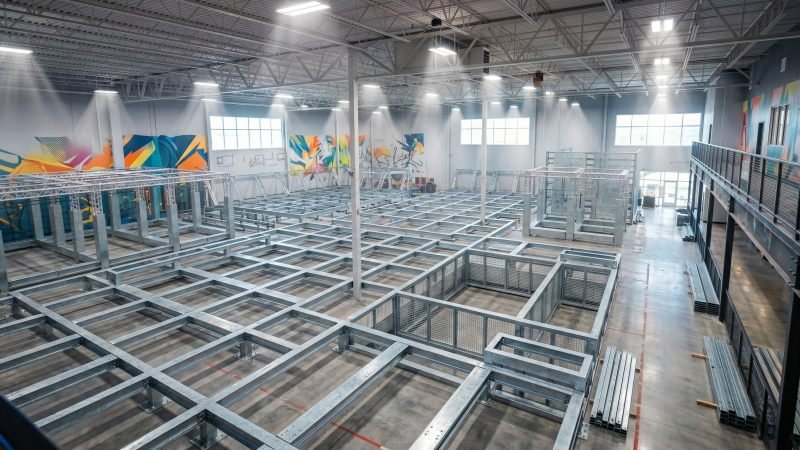
Let’s talk about the physical dimensions of your chosen building—they play a massive role in equipment pricing. Most commercial trampoline parks require a minimum ceiling clearance of 17 feet (about 5.2 meters). However, you must verify the exact clearance requirements with your manufacturer, as specific mechanical attractions might demand more vertical space.
This situation is very similar to installing a multi-level indoor soft play structure. If your building has low ceilings or awkwardly placed concrete support columns, manufacturers cannot use standard pre-cut steel components. Instead, they must engineer and produce custom frame lengths to navigate those obstacles safely. The result? This custom engineering labor and unique fabrication work directly increase your total manufacturing quote. Factor this in, too: larger parks benefit from economies of scale. Purchasing 20,000 square feet of equipment often yields a lower price per square foot than buying just 5,000 square feet.
Choosing the Right Attraction Mix
The specific games and activity zones you select will heavily dictate your final equipment bill. A park built entirely of basic flat jump beds will cost significantly less to manufacture. But let’s be honest, modern commercial parks must include diverse attractions to stay competitive.
Adding specialized zones requires entirely different manufacturing processes. Take this scenario: ninja warrior courses demand heavy-duty aluminum trusses and custom safety rigging, while mechanical wipeout machines require industrial-grade motors and electronic control panels. These complex components cost much more to produce than standard steel tubes and springs.
| Attraction Type | Cost Impact on Quote | Manufacturing Complexity |
|---|---|---|
| Main Court (Flat Beds) | Baseline | Low (Standard Fabrication) |
| Performance Trampolines | Moderate | Medium (Requires High-Tension Springs) |
| Ninja Warrior Courses | High | High (Custom Trusses & Rigging) |
| Interactive Electronic Zones | Very High | Very High (Sensors & Software Integration) |
Your selected mix of attractions acts as a direct sliding scale for your final budget.
Material Quality and International Safety Certifications
Quality materials command a premium. Reputable manufacturers typically use double-galvanized steel tubes with a standard 3mm thickness to build the main framework. You must verify the exact steel thickness and material specifications with your supplier to ensure they meet your local building requirements.
Using high-density EPE foam padding costs more upfront than standard packaging foam. Yet, commercial-grade EPE foam prevents rapid wear and tear from heavy daily traffic. Beyond the raw materials, complying with international safety standards—such as ASTM F2970 in the US, BS EN 17409 in Europe, or the broader ISO 23659 standard—requires rigorous third-party testing. Manufacturers inevitably pass these premium material costs and certification testing fees into their final quotes. Purchasing cheaper equipment often means sacrificing these critical safety materials, creating severe long-term risks for your business.
Identifying Hidden Expenses in the Supply Chain
What are the hidden financial pitfalls that often surprise investors when sourcing commercial trampoline park equipment?
Beyond the raw manufacturing quote, you’ve got to budget for the logistical reality of the supply chain. These hidden costs primarily include international sea freight charges, fluctuating import duties, specialized professional installation labor, and mandatory commercial liability insurance premiums.
Global Freight and Import Duties
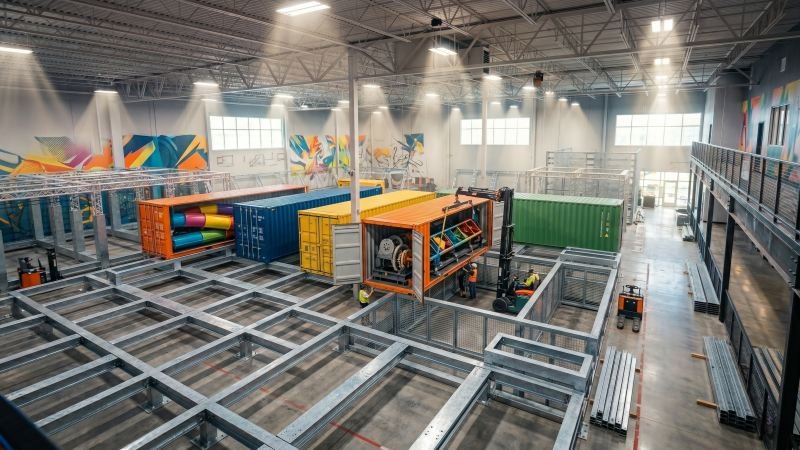
When you buy equipment overseas, shipping it to your building is a massive expense. Most commercial trampoline frames are incredibly heavy and bulky, requiring multiple 40-foot High Cube shipping containers.
Ocean freight costs change constantly. Because of this, you must work closely with your manufacturer and a licensed customs broker to estimate current shipping container rates and tariff percentages. International logistics costs fluctuate heavily based on fuel prices and global trade agreements.
Think of this process like importing heavy commercial arcade machines. The price tag on the machine does not include the delivery truck. On top of that, you must pay import duties when the containers arrive at your local port. Your customs broker will charge fees based on the specific material codes of the steel and foam padding.
| Supply Chain Expense | What It Covers | Cost Predictability |
|---|---|---|
| Ocean Freight | Cargo ship transport from factory to port | Low (Changes frequently) |
| Import Duties | Government taxes on imported goods | Medium (Based on trade laws) |
| Port Fees | Unloading and holding containers | High (Usually fixed rates) |
| Inland Trucking | Moving containers from port to your building | Medium (Depends on distance) |
Professional Installation and Technical Labor Rates
Think a local general contractor can safely rig a commercial trampoline park? Not a chance. Setting up commercial trampolines requires highly specialized technical labor.
Just like tensioning steel cables on a commercial indoor zipline, tightening trampoline springs requires strict precision. If a worker makes a mistake, the entire equipment grid becomes a liability. Because of this, manufacturers usually send their own expert installation team to do the job right.
This expert labor isn’t free. You must pay the installation team’s daily wages, and you’re also on the hook for their plane tickets, hotel rooms, and daily food expenses during the build. This building process usually takes three to four weeks, meaning these travel and labor rates quickly add up to thousands of extra dollars.
Navigating Liability Insurance Premiums
Insurance is often the blind spot for new owners. Operating a dynamic jumping facility carries a high risk of injury, meaning standard business insurance is simply not enough. You need specialized commercial liability insurance.
Insurance companies base their prices on your park’s size and specific equipment. For example, a park with extreme mechanical wipeout games will command higher premiums than a park with simple indoor playground foam pits.
Because insurance rates vary significantly by state and country, you must verify exact premium coverage requirements with a specialized amusement insurance provider. They will carefully examine your chosen equipment list and daily safety rules.
“Always secure an estimated insurance quote before you finalize your equipment order. Certain extreme attractions might make your monthly premiums too expensive to operate profitably.”
At the end of the day, paying for robust insurance is what protects your massive initial investment from expensive customer lawsuits.
Essential Facility Modifications and Build-Outs
What specific building modifications must you fund before you can install commercial trampoline equipment in an empty warehouse?
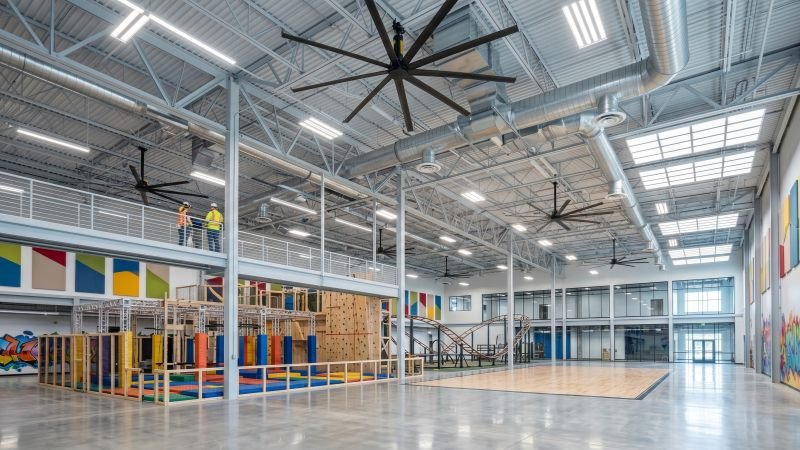
Converting an empty warehouse into a commercial indoor trampoline park requires serious capital for essential facility build-outs. You must upgrade commercial HVAC systems to manage intense heat loads, install specialized lighting, and strictly modify the building architecture to comply with local fire safety codes and zoning regulations.
Commercial HVAC Upgrades and Lighting Systems
Commercial trampoline parks generate an immense amount of body heat. Ever walked into a poorly ventilated indoor park on a busy Saturday? It’s a dealbreaker for customers. A standard warehouse HVAC system simply cannot cool hundreds of active jumpers simultaneously, meaning you must significantly upgrade your air conditioning capacity.
For instance, a standard storage warehouse might use one ton of cooling per 500 square feet. An active entertainment facility, however, often requires one ton of cooling per 250 square feet. You should verify the exact tonnage and ductwork details with a commercial HVAC contractor to match your regional climate demands.
Think of this upgrade like ventilating an intense indoor laser tag arena. You need rapid air circulation to keep the environment safe and comfortable. If the facility gets too hot, customers will leave early and rarely return.
Then there’s the lighting. Proper lighting prevents severe injuries. You need bright, even illumination across the entire jumping surface without creating blinding spots. Just like positioning overhead lights in a massive indoor roller rink, you must avoid placing harsh fixtures directly above high-jump areas.
| Building System | Standard Warehouse Level | Trampoline Park Requirement |
|---|---|---|
| HVAC Capacity | Low (Minimal airflow needed) | High (Rapid air exchange required) |
| Lighting Style | Basic industrial bulbs | Glare-free, high-lumen LED arrays |
| Ceiling Fans | Rarely required | Large industrial fans recommended |
Fire Safety Code and Zoning Compliance
Securing the right building is just step one. Local zoning boards typically classify empty industrial buildings as “storage” or “manufacturing” spaces. A trampoline park, however, operates as an “assembly” or “entertainment” space.
The catch? This major classification change triggers a completely different set of strict building codes. Because you are inviting hundreds of people inside, the occupancy load changes drastically. You will likely need to spend money adding extra emergency exit doors and expanding your public bathroom facilities.
Upgrading your fire suppression system is another massive, unavoidable expense. Building large indoor attraction frames can accidentally block existing ceiling sprinklers. Much like upgrading an old retail space into a high-capacity indoor climbing center, you must guarantee water can reach every corner. Contractors often have to drop the sprinkler heads lower or install additional water lines beneath large obstacle courses.
“Never sign a commercial lease until an architect confirms the building can legally handle an assembly zoning classification. Ignoring this step can bankrupt your project before you even buy equipment.”
Finally, you must ensure full Americans with Disabilities Act (ADA) compliance. This often involves building custom ramps, widening hallways, and redesigning entryway doors to accommodate all guests safely.
Estimating Return on Investment and Ongoing Operations
How long does it actually take for a commercial trampoline park to become profitable after the doors finally open?
A commercial trampoline park typically hits full ROI within 12 to 24 months of operation. But getting there requires owners to carefully manage their monthly operational overhead, maximize weekend capacity, and maintain steady weekday group bookings to offset fixed costs.
Anticipated Monthly Operational Overhead
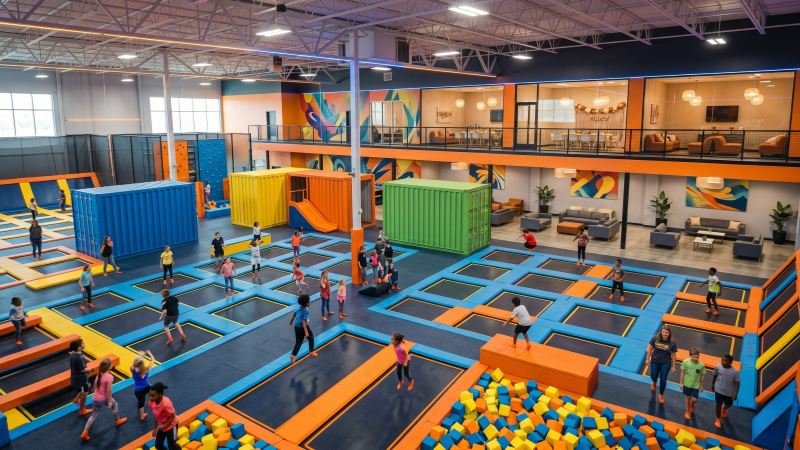
Operating a massive indoor jumping facility burns cash daily. Because of this, you must thoroughly understand your fixed and variable costs. Running a trampoline park is exactly like operating a large indoor go-kart track—even if only ten customers visit on a Tuesday morning, your baseline utility systems and safety staff must remain fully active.
Facility rent is typically your largest fixed monthly expense. Add your utility bills to that list; keeping the massive building cool and well-lit at all times is not cheap. Staff payroll also demands a large monthly budget. You need trained court monitors stationed at every attraction to enforce safety rules, plus cashiers, party hosts, and shift managers.
Equipment maintenance is a crucial variable expense. Jump beds and safety padding wear down from heavy daily traffic. High-tension steel springs, for example, gradually stretch and lose their bounce. Always verify the expected replacement schedule and spring lifecycle parameters with your manufacturer to accurately project maintenance costs. Replacing worn parts quickly ensures customer safety and prevents much more expensive equipment failures down the line.
| Expense Category | Estimated Monthly Cost | Expense Type |
|---|---|---|
| Facility Rent | $15,000 – $30,000 | Fixed |
| Staff Payroll | $15,000 – $25,000 | Variable (Scales with traffic) |
| Utilities (HVAC/Power) | $3,000 – $6,000 | Fixed |
| Maintenance & Parts | $1,000 – $3,000 | Variable |
| Marketing & Software | $2,000 – $4,000 | Fixed |
Realistic Payback Period Timeline
Industry data shows a healthy, well-managed park recovers its initial capital within 12 to 24 months. That timeline, however, depends entirely on your specific revenue streams. General admission tickets alone will not cover your costs quickly enough. You must focus heavily on secondary, high-margin sales channels.
Are you banking entirely on weekend walk-ins to keep the doors open? If so, rethink your business model. Birthday party packages are the most lucrative revenue source for any family entertainment center. Parents happily pay premium prices for private rooms, dedicated hosts, and catered food service. Selling mandatory grip socks and branded merchandise also provides incredible profit margins. A $2 pair of grip socks often sells for $15 at the front desk.
Your first three months will serve as an initial ramp-up phase where you will spend heavily on local marketing. Afterward, your operations will stabilize into a predictable rhythm, and you will begin to see steady, highly profitable weekend traffic.
“To accelerate your payback period, always prioritize booking high-margin birthday party packages over standard general admission ticket sales.”
Parks that aggressively market to local schools and sports teams reach profitability much faster. A facility that relies solely on walk-in traffic, on the other hand, will experience a severely delayed payback period.
Conclusion
Let’s wrap this up. Building a commercial trampoline park is a significant financial undertaking that requires meticulous planning and a deep understanding of industry-specific variables. From the initial procurement of highly engineered jump equipment to successfully navigating complex global freight logistics and strict municipal zoning codes, every step carries associated costs. By carefully projecting your fixed operational overhead and focusing on high-margin revenue streams like private event packages, you can safely launch your facility and secure a strong return on your investment within a realistic timeframe.
Ready to bring your commercial trampoline park vision to life? Contact us today for a customized equipment quote and professional business planning support.