-
Whatsapp: +86 15516933785
-
Email: hanlin@hanlinplayground.com
-
Address: Shangjie District, Zhengzhou City, Henan Province, China
-
Whatsapp: +86 15516933785
-
Email: hanlin@hanlinplayground.com
-
Address: Shangjie District, Zhengzhou City, Henan Province, China

Transforming Malls into Destinations: Key Trends in Shopping Center Attractions
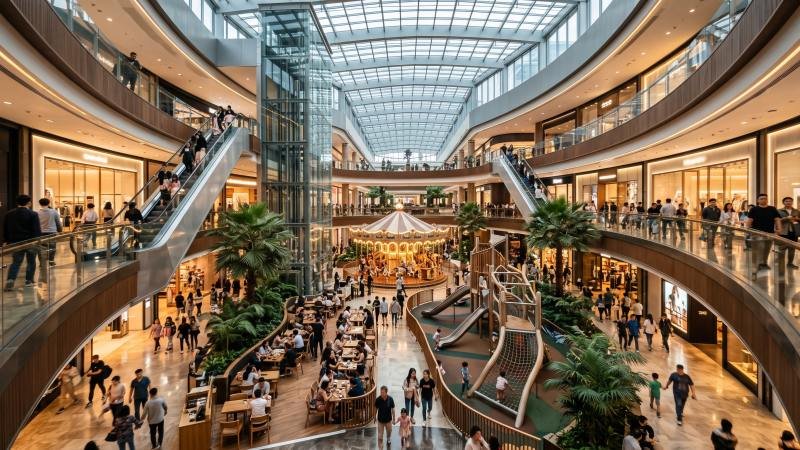
How can developers effectively transform traditional shopping malls into highly profitable entertainment destinations?
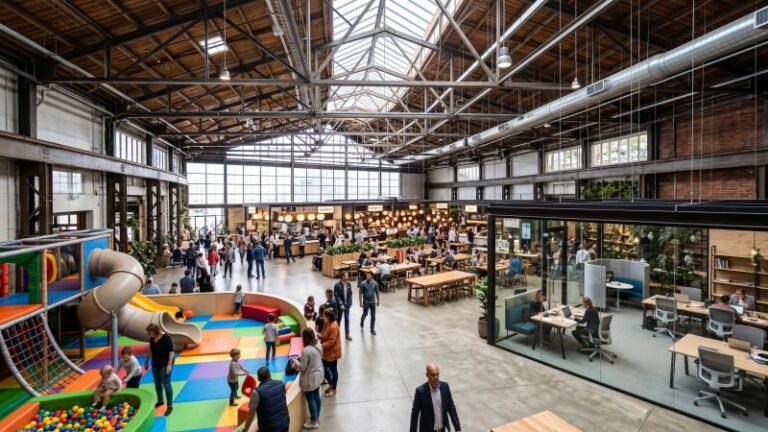
Shopping center operators transform traditional retail environments into thriving destinations by integrating active play zones, deploying shareable immersive technologies, and strategically fusing eatertainment concepts, which collectively drive consistent foot traffic, maximize space utilization, and significantly extend visitor dwell time.
Integrating Active Play to Boost Dwell Time and Repeat Visits
To effectively keep visitors on-site longer and encourage regular return trips, shopping center operators can significantly increase visitor dwell time by replacing static retail spaces with active play attractions. Facilities like indoor adventure parks and multi-generational family entertainment centers (FECs) turn passive shoppers into active participants through physical challenges, structured group play, and engaging social environments.
High-Throughput Indoor Sports and Adventure Parks
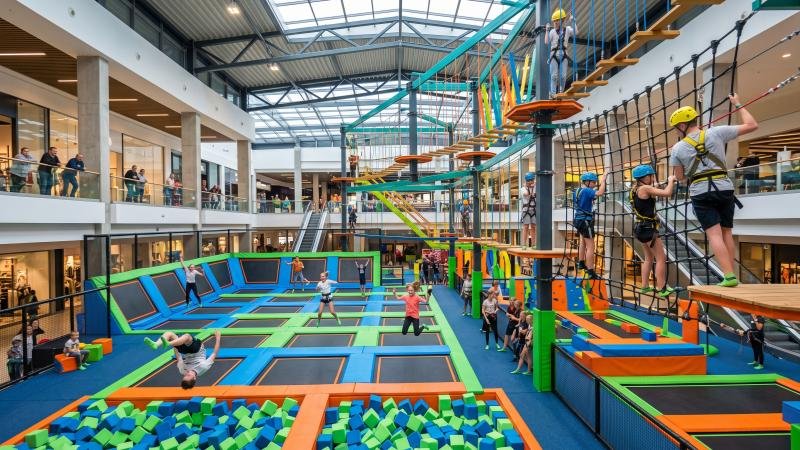
Why are mall operators replacing traditional anchor department stores with high-energy sports parks? The answer lies in visitor volume and steady engagement.
Traditional retail relies on hoping people walk in. Modern adventure parks, on the other hand, run like high-capacity amusement park rides. They move hundreds of guests through designated activity zones every hour without creating long bottlenecks.
Key Operational Metric: In location-based entertainment (LBE), high-throughput systems maximize revenue per square foot by continuously cycling participants through timed, structured activity blocks rather than allowing uncontrolled crowding.
| Attraction Feature | Average Throughput Rate | Typical Floor Space Required | Primary Operational Requirement |
|---|---|---|---|
| High-Ropes Aerial Course | 40–60 guests/hour | 2,500–5,000 sq. ft. | Certified track inspection & harness safety checks |
| Modular Ninja Obstacle Lane | 60–90 guests/hour | 1,500–3,000 sq. ft. | Impact matting alignment & safety staff |
| Auto-Belay Climbing Wall | 80–120 guests/hour | 1,000–2,000 sq. ft. | Daily hydraulic/magnetic brake inspections |
| Multi-Court Trampoline Zone | 100–150 guests/hour | 8,000–15,000 sq. ft. | Real-time court monitoring & spring-pad integrity checks |
Note: Specific throughput capacities, ceiling height minimums (commonly 18 to 24 feet), and floor-load tolerances vary significantly based on equipment manufacturers and building engineering standards. You should verify exact structural specifications with your installation supplier and local building code authority.
Key Elements of High-Throughput Adventure Parks
- Modular Obstacle and Ninja Courses: These courses use standardized truss structures and interchangeable foam or composite obstacles. They allow staff to safely manage participant intervals every 30 to 60 seconds per lane.
- Automated Ropes Courses and Climbing Walls: Using magnetic auto-belay mechanisms drastically reduces staffing needs while ensuring rapid turnover on climbing routes.
- Trampoline and Air-Court Arenas: High-durability vinyl and interwoven synthetic webbing support high-impact use. They also allow large groups to play dodgeball or jump concurrently under minimal supervision.
Designing Multi-Generational Family Entertainment Centers
What makes an active play attraction appealing to both a seven-year-old child and a sixty-year-old grandparent? The secret is intentional multi-tiered design.
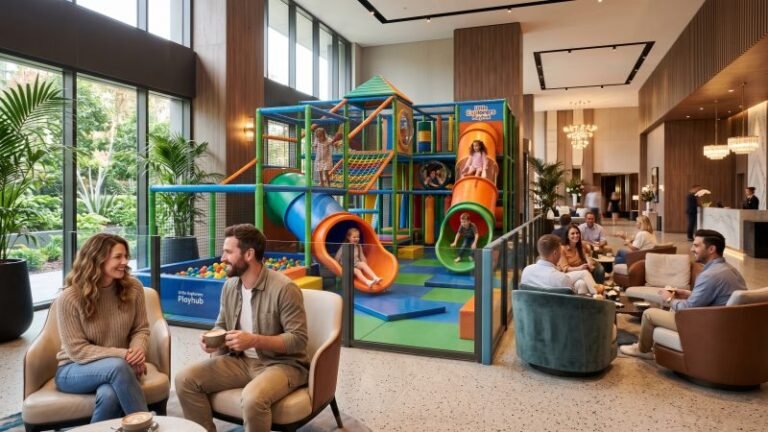
Earlier family entertainment centers focused strictly on small children. The result? You had parents and older relatives stuck waiting passively on benches. Modern multi-generational FECs resolve this issue by integrating parallel activity zones within a shared footprint.
Multi-Tiered Layout Strategy
- Integrated Sightlines: Low-barrier partitions and elevated viewing decks enable older family members to watch younger children easily without feeling isolated from the action.
- Tiered Physical Difficulty: Attractions feature tiered levels of difficulty. For example, a climbing zone can offer low-incline textured walls for young beginners right next to vertical timed routes for energetic teens and fit adults.
- Active Co-Play Zones: Spaces feature non-intimidating, low-impact games like high-tech mini bowling, interactive digital throwing walls, and soft-foam challenge zones where varied age groups can safely play together.
By accommodating the entire family unit simultaneously, these venues extend average mall visit durations beyond standard shopping trips, creating a dependable anchor for recurring community visits.
Leveraging Immersive Tech for Viral Marketing
Let’s talk tech. Shopping center operators drive viral marketing by installing highly visual, shareable immersive technologies—such as free-roam virtual reality (VR) arenas and interactive mixed-reality projections. These systems prompt visitors to record and post their unique gameplay on social media, effectively turning guests into organic brand ambassadors.
Profitable VR and Mixed-Reality Zones
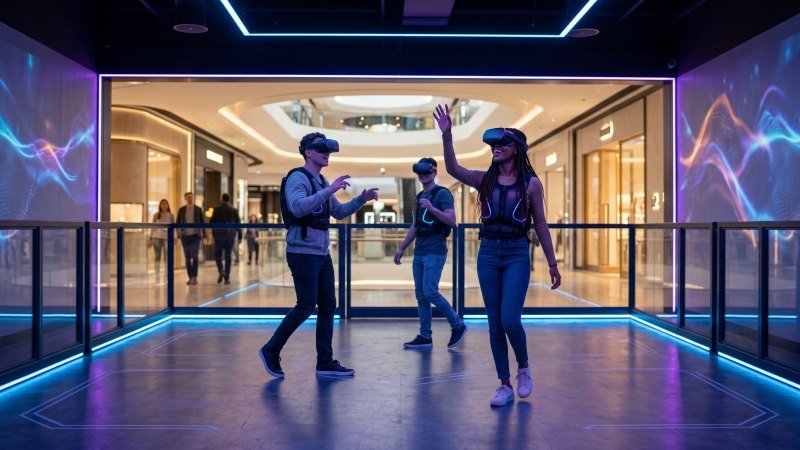
Virtual reality (VR) and mixed-reality (MR) attractions are no longer experimental gimmicks. They are proven revenue generators. Operators love them because they offer a high return on investment (ROI) within a relatively small footprint.
Look at a modern VR pod like a classic arcade cabinet. Both rely on fast player turnover to make money. However, a modern VR pod charges a premium ticket price for a premium, multi-sensory experience. Visitors cannot replicate this high-end experience in their living rooms. They need the specialized haptic vests, wind simulators, and motion floors provided by the facility.
The Shift to Free-Roam VR
The most profitable format currently is “free-roam” VR. In this setup, players wear wireless headsets and walk around a physical room. Their movements are perfectly mapped to a digital world. Brands like Sandbox VR and Zero Latency have proven this model highly successful. Groups of friends book these sessions together. Naturally, they pull out their phones to film each other reacting to virtual zombies or aliens. When they share these videos on platforms like TikTok or Instagram, the mall receives free, highly effective viral marketing.
Industry Insight: Social sharing is built into the business model. Many VR attraction suppliers now automatically email guests a polished, mixed-reality video of their gameplay right after the session ends, specifically designed for instant social media uploading.
| VR Format | Space Requirement | Capital Investment Level | Social Sharing Potential |
|---|---|---|---|
| Stationary VR Pods | 50–100 sq. ft. | Low to Medium | Moderate |
| Free-Roam VR Arenas | 1,500–2,500 sq. ft. | High | Very High |
| Mixed-Reality Rooms | 200–500 sq. ft. | Medium | High |
Gamifying the Physical Retail Environment
You do not always need bulky equipment to create an immersive experience. You can gamify the entire shopping center using the supercomputers visitors already carry: their smartphones. Gamification means adding game-like mechanics, such as point scoring and competition, to non-game environments.
But what’s the real payoff of turning your physical floor space into a digital game board? By integrating Augmented Reality (AR) and Bluetooth beacons, developers turn passive walking into an interactive adventure that keeps people on-site longer.
AR Wayfinding and Digital Scavenger Hunts
Instead of staring at a static mall directory, guests can open an app. They can use their phone camera to see digital arrows or animated characters guiding them down the hallway.
Take it a step further with digital scavenger hunts. Visitors hunt for AR markers hidden near specific storefronts. When they scan a marker, they trigger a 3D animation on their screen. They also earn digital tokens. Shoppers can trade these tokens for real-world discounts at participating retailers.
Interactive Projection Mapping
Another powerful gamification tool is interactive projection mapping. Projectors cast moving images onto mall floors or walls. Motion sensors detect when people walk over or touch the projections.
- Reactive Floors: A projection of a digital koi pond where the water ripples and fish scatter when a child steps on it.
- Active Walls: A digital canvas where visitors can “paint” by waving their hands in the air.
These setups look incredible. Because of that, you practically guarantee parents will pull out their phones to record their children playing. This creates a steady stream of user-generated content for the shopping center. By gamifying the physical space, operators give guests a compelling reason to visit the mall instead of shopping online.
Optimizing Space Utilization and Operational Efficiency
To maximize the profitability of entertainment spaces without facing unmanageable overhead costs or rigid floor plans, shopping center operators utilize modular attraction designs that adapt easily to existing structural constraints, combined with automated ticketing and crowd management software that streamline guest flow and minimize staffing requirements during peak hours.
Modular Attraction Designs for Flexible Layouts
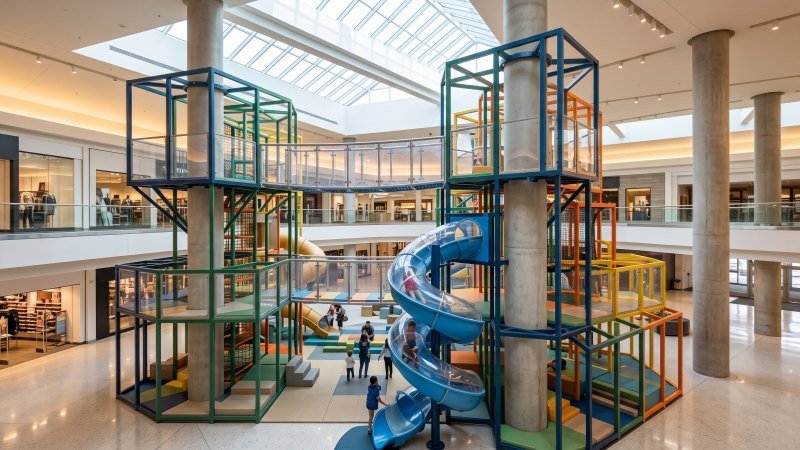
Commercial real estate isn’t getting any cheaper, and nobody can afford dead space. But let’s be real—traditional mall units often saddle you with challenging layouts. They might have low ceilings, awkward load-bearing pillars, or irregular shapes. Modular attraction designs specifically solve this problem.
Think about modular frameworks like traveling carnival structures. Just as carnival rides are engineered to be assembled, operated, and dismantled quickly without permanent foundations, modern indoor modular attractions use standardized, interlocking steel frames. Installers can easily fit these structures around existing architectural obstacles. You do not need to alter the base building.
Adapting to Tricky Floor Plans
Ever tried retrofitting a permanent climbing wall around a low-hanging HVAC duct? It’s an operational nightmare. A fixed-build attraction requires custom construction, making the process costly and highly permanent. In contrast, modular systems use a simple bolt-together design. If a mall operator needs to move an attraction to a different tenant unit next year, they simply unbolt it and move it.
Even better, these systems let you maximize your vertical clearance. With standard 14-foot mall ceilings, operators can easily install two-level modular structures. This design effectively doubles the usable square footage within the exact same footprint.
| Feature | Fixed-Build Attractions | Modular Attractions |
|---|---|---|
| Installation Time | Weeks or months | Days to a few weeks |
| Relocation Ability | Cannot be moved easily | Highly mobile and reconfigurable |
| Construction Cost | High custom labor costs | Lower standardized part costs |
| Space Efficiency | Limited by initial blueprint | Adaptable to pillars and corners |
Automating Ticketing and Peak Crowd Management
Optimizing physical space is only half of the profitability equation. Operational efficiency is the other crucial half. Foot traffic is great, but long ticket lines kill the vibe and drain your payroll with front-desk staffing.
Smart operators solve this bottleneck by automating the entry process. Just as major theme parks utilize express digital pass systems and automated entry turnstiles instead of manual ticket tearing, modern indoor attractions use digital gateways to control visitor flow.
Streamlining the Guest Experience
Modern entertainment centers heavily utilize self-serve kiosks and mobile booking platforms. Guests purchase tickets on their smartphones before they even arrive at the mall. When they walk in, they simply scan a digital QR code at an automated turnstile. This process bypasses the front desk entirely. Industry data shows that implementing self-serve kiosks can reduce front-gate labor costs by up to 30%.
On top of that, we’re seeing massive adoption of RFID wristbands. Guests wear these connected wristbands to activate games and open gates. This technology completely eliminates the need for staff members to manually punch tickets at every single activity zone.
Managing Peak Capacity
Weekends inevitably bring massive crowds. Automated capacity management software prevents dangerous overcrowding. The software tracks exactly how many people enter and exit the zone in real-time. If the attraction hits its safe capacity limit, the system automatically stops selling digital tickets for that specific time slot. It seamlessly shifts buyers to the next available hour. Bottom line? This keeps the building safe while making your operational costs highly predictable.
Fusing Attractions with Dining to Drive Cross-Shopping
To seamlessly convert the high foot traffic generated by entertainment venues into direct food and beverage sales, shopping center operators drive cross-shopping by strategically fusing entertainment anchors with integrated dining concepts, capturing the immediate post-activity hunger of guests and significantly increasing the average transaction value per visitor without requiring them to relocate to a separate food court.
Strategic Placement of Eatertainment Concepts
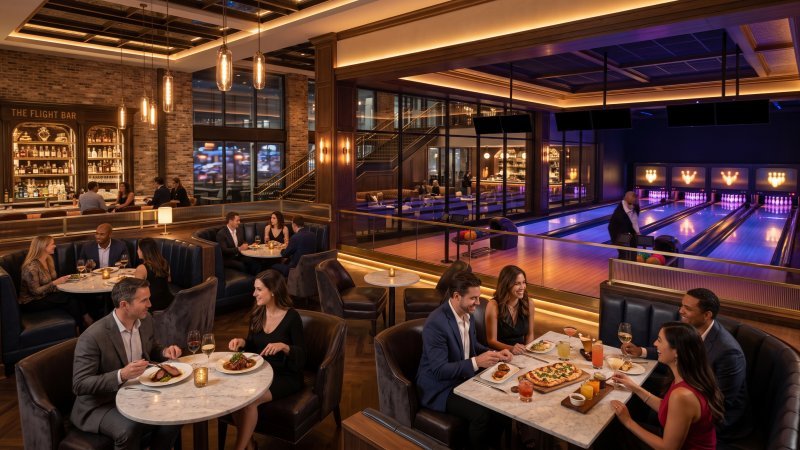
“Eatertainment” venues perfectly combine food and play in one single space. That means you need to be ruthlessly strategic about your floor layouts. Where exactly should you place the dining area?
In large-scale theme parks, gift shops and snack stands are purposely placed at the exit of major roller coasters to capture immediate post-ride spending. Similarly, facility developers place food and beverage counters directly adjacent to the exit paths of entertainment zones.
When guests finish a physical activity, they are naturally thirsty and hungry. Why let that post-game thirst walk right out your doors to a competitor? If an attractive dining area is right in their line of sight, they sit down and order. It’s instant cross-shopping.
Industry data shows this integrated model works incredibly well. Major brands consistently see massive success by keeping dining and gaming under one roof. As a result, the big players routinely report a highly profitable, nearly even split between food sales and amusement revenue.
Pairing Upscale Dining with Adult-Focused Attractions
Are adult visitors truly satisfied with basic concession stand food? Usually, they expect a much higher quality experience.
That’s exactly why the smart money is pairing upscale dining with adult-focused attractions. These specific attractions include boutique bowling alleys, high-tech indoor golf simulators, and premium social darts. These modern venues replace cheap plastic seating with plush lounge chairs. On the beverage side, they replace basic soda fountains with premium craft cocktail bars.
This specific strategy targets adults who have higher disposable incomes. When adults eat premium food in a comfortable setting, they naturally stay longer. The natural outcome? They spend significantly more money per visit while playing games with friends.
| Feature | Traditional Mall Food Court | Upscale Eatertainment Venue |
|---|---|---|
| Target Audience | Rushed shoppers seeking quick meals | Adults seeking a full social night out |
| Average Dwell Time | 20 to 30 minutes | 2 to 4 hours |
| F&B Profit Margin | Low to moderate | High (boosted by premium beverages) |
| Seating Design | Hard plastic, tightly packed | Cushioned seating, spacious lounges |
By elevating the food quality, operators transform a simple gaming session into a complete, premium night out. Ultimately, this makes the shopping center a primary destination for adult nightlife.
Implementing Cost-Effective Seasonal Strategies
To consistently attract new visitors throughout the year without spending millions on permanent construction, shopping center operators maintain year-round foot traffic by utilizing temporary pop-up entertainment and interactive holiday installations that create a sense of urgency, encourage repeat visits, and maximize unused common areas with minimal upfront capital investment.
Rotating Pop-Up Entertainment Experiences
Why do customers visit the exact same mall multiple times a year? They visit because the attractions keep changing.
Rotating pop-up entertainment offers a highly profitable solution for empty retail units. Instead of leaving a large storefront vacant, developers lease the space to traveling entertainment vendors. These temporary setups operate for a few weeks or months. After that, they pack up and leave. Then, a brand new experience moves in.
This strategy mirrors the operational model of seasonal traveling funfairs. Just as a funfair brings a unique, limited-time assortment of rides to a town square, pop-up entertainment adapts to current consumer trends to activate empty anchor spaces. One month, an empty anchor store might host a traveling interactive dinosaur exhibit. The next month, it transforms into an indoor roller-skating rink.
This constant rotation creates a strong sense of urgency. Guests know the attraction will leave soon. Therefore, they are highly motivated to visit immediately. They cannot delay their trip.
| Strategy Element | Permanent Attractions | Rotating Pop-Ups |
|---|---|---|
| Capital Investment | Very High | Low to Moderate |
| Construction Time | Months to Years | Days to Weeks |
| Visitor Urgency | Low (Always available) | High (Leaves soon) |
| Lease Structure | Long-term (5-10 years) | Short-term (1-6 months) |
Holiday-Themed Interactive Installations
Holiday seasons naturally bring heavy foot traffic to shopping centers. However, modern operators must do more than simply put up traditional decorations. They must provide active, memorable experiences.
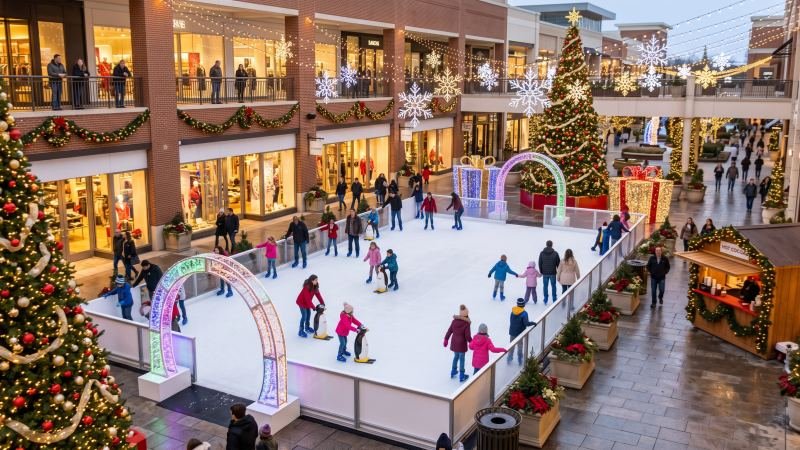
To fix this, developers are ditching static displays for fully interactive installations. For instance, many malls now replace basic winter dioramas with synthetic ice skating rinks located right in the main atrium. These rinks use interlocking polymer panels. They mimic the glide of real ice but require absolutely no expensive refrigeration equipment.
Another highly effective installation is the walk-through holiday light maze. These temporary structures use lightweight aluminum frames and LED lighting. They instantly transform an empty parking lot or a large plaza into a ticketed evening event.
Industry Insight: Upgrading a standard visual holiday display to an interactive, ticketed installation can increase the average visitor’s dwell time by over 45 minutes during peak shopping days.
By offering these engaging, seasonal experiences, developers give families a compelling reason to choose their physical location over convenient online shopping. They turn a simple shopping trip into an annual family tradition.
Conclusion
The future of traditional retail lies in the ability to create dynamic, shared experiences that cannot be replicated online. By embracing active play, immersive technology, strategic dining concepts, and flexible seasonal installations, developers can successfully pivot from simple transaction centers to thriving community destinations. These investments not only revive empty storefronts but reliably drive long-term foot traffic and maximize overall property revenue.