-
Whatsapp: +86 15516933785
-
Email: hanlin@hanlinplayground.com
-
Address: Shangjie District, Zhengzhou City, Henan Province, China
-
Whatsapp: +86 15516933785
-
Email: hanlin@hanlinplayground.com
-
Address: Shangjie District, Zhengzhou City, Henan Province, China

High ROI, Zero Power: The Business Case for Commercial Pin Art Walls
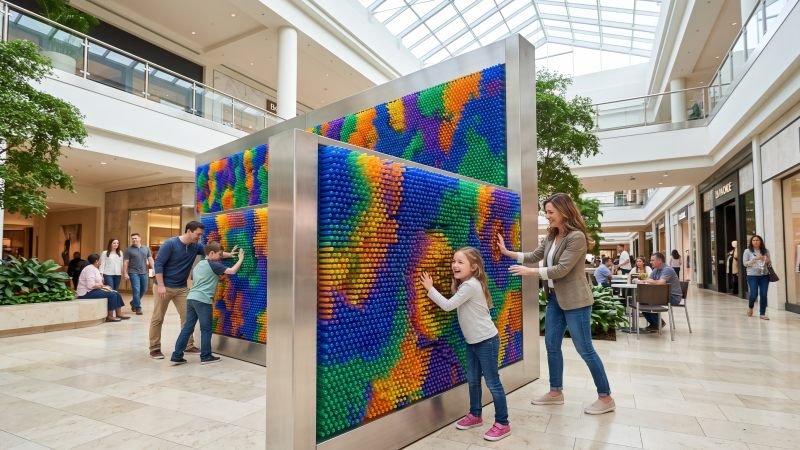
Why are commercial property managers and facility planners increasingly abandoning digital video walls in favor of zero-power tactile installations?
Commercial pin art walls deliver a significantly higher return on investment by completely eliminating the continuous operational expenses associated with electricity, software licensing, and IT maintenance. These industrial-grade physical installations drive organic social media engagement, increase visitor dwell time, and provide a screen-free sensory experience without the ongoing financial liabilities of traditional digital displays.
The Financial Reality of Interactive Installations
Why do traditional interactive displays often fail to deliver a true return on investment for commercial spaces?
The initial purchase price is only a fraction of the total cost. Ongoing expenses like electricity and hardware replacements quickly drain profitability. Commercial pin art walls solve this problem by eliminating power consumption entirely. This zero-power design creates an immediate, permanent financial advantage over digital alternatives.
Upfront CAPEX vs Long-Term OPEX
When planning a commercial space, buyers must analyze two main numbers. Look at the standard facility budget: Capital Expenditure (CAPEX) is the money you drop on day one. Then comes the recurring hit: Operational Expenditure (OPEX) is the capital bleeding out every month just to keep the asset running.
The true cost of an installation, as any veteran planner knows, equals CAPEX plus OPEX. Interactive digital screens might look manageable on the initial purchase order, but their OPEX grows relentlessly over time. On the flip side, commercial pin art walls require a higher initial CAPEX for premium materials, but their OPEX remains exactly zero. That completely rewrites the long-term financial picture.
Think about the difference between a passive indoor playground structure and a mechanized arcade attraction. Both assets successfully entertain guests. However, the arcade machine continuously drains your electrical budget just to stay powered up and requires constant part repairs. In the same vein, a physical pin art wall engages users without pulling a single watt from the electrical grid.
“In commercial facility planning, a zero-OPEX asset effectively pays for itself much faster than any continuously powered alternative.”
Let us examine a basic financial comparison over a standard five-year period. Please note that exact prices fluctuate based on the supplier, frame materials, and custom dimensions, so you should always verify exact specs and costs with your chosen manufacturer before finalizing budgets.
| Expense Category | Digital Video Wall | Commercial Pin Art Wall |
|---|---|---|
| Initial CAPEX | $12,000 | $12,000 |
| Year 1 OPEX | $2,500 | $0 |
| Year 3 OPEX | $7,500 | $0 |
| Total 5-Year Cost | $24,500 | $12,000 |
As the table shows, the powered option doubles its initial cost over five years. Meanwhile, the pin art wall stops costing money the exact moment you bolt it to the floor.
Hidden Costs of Digital Video Walls
Are you truly prepared to pay massive utility bills just to entertain guests? Digital screens hide serious financial traps. Most buyers fixate solely on the sticker price, completely forgetting about the constant drain of electricity and hardware decay.
Let’s talk raw power draw. A standard 100-square-foot commercial LED wall can consume up to 10,000 watts at peak brightness. Running this display for 12 hours a day creates a massive utility bill.
But the electrical drain doesn’t stop at the plug. Digital screens generate extreme heat. Do you really want to pay to ramp up your HVAC system just to keep a display from overheating? Running a large digital wall is functionally identical to running a commercial HVAC compressor at full blast all day. Both machines pull heavy continuous power and require massive cooling loads.
And then there’s the hardware decay. LED nodes naturally dim and burn out over time. End result? You are forced to regularly buy expensive replacement display panels.
- Utility Bills: Continuous power draw during all operating hours.
- Cooling Costs: Extra HVAC load to offset the heat generated by the screens.
- Hardware Decay: Mandatory budget for physical panel replacements as pixels fail.
When you strip away the flash, a physical pin art wall protects your bottom line. It operates entirely on human kinetic energy. Because it uses zero electricity, it completely shields your operations from unexpected utility spikes and expensive hardware replacements.
How Zero Power Transforms Facility Management
Take electricity out of the equation, and your daily facility operations change overnight.
A zero-power design completely removes the burden of electrical infrastructure and continuous technical oversight from facility operations. By relying on mechanical kinetic interaction rather than electrical grids, venues avoid costly installation delays, eliminate ongoing software troubleshooting, and significantly reduce immediate electrical fire liabilities.
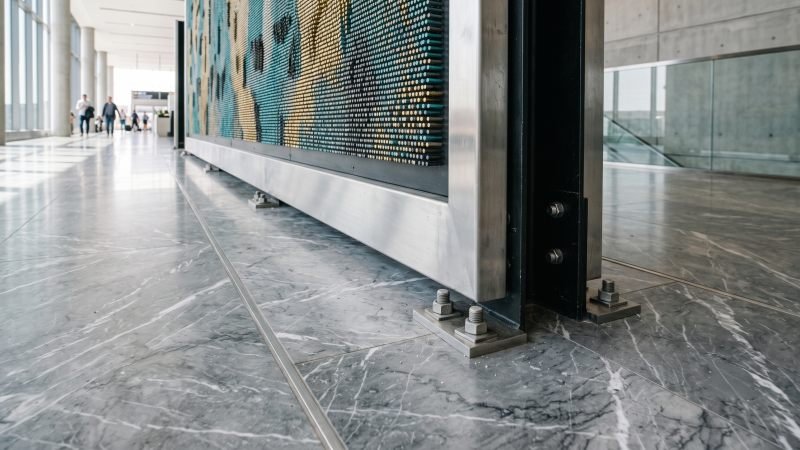
Freedom from Electrical Permitting and Wiring
Any project engineer will tell you that installing digital displays means wrestling with complex electrical infrastructure. Commercial video walls require dedicated electrical circuits, transformers, and intricate cable routing. That means facility managers have to bring in expensive commercial electricians and secure local municipal electrical permits. Before you know it, installation timelines stretch from a few days into several weeks.
Compare that to a commercial pin art wall, which operates entirely off the grid. It requires absolutely zero electrical wiring. Think of the difference between installing a complex VR simulator and a traditional static climbing structure. The VR simulator demands extensive electrical routing, dedicated circuits, and strict electrical safety inspections. Conversely, while the physical pin wall requires standard structural anchoring for public safety, it completely bypasses the electrical permitting bottleneck.
Without power cords to hide, you dodge the headache of running electrical conduits across premium lobby floors or dropping unsightly power poles from the ceiling. Venue managers simply coordinate standard physical floor bolting—a straightforward mechanical installation—without waiting on specialized commercial electricians.
Eliminating Software Glitches and IT Maintenance
Let’s pivot to the IT headaches. Traditional interactive screens demand constant digital upkeep, and software crashes are ultimately inevitable in public settings. When a digital touchscreen fails, it usually broadcasts an embarrassing error message directly to your guests. Why tie up your specialized network engineers just to reboot a frozen lobby display? That continuously wastes highly valuable technical resources.
A mechanical pin wall operates without any operating system. There are no touch sensors to recalibrate. There are no digital media players to update. Even better, you will never get hit with an unexpected software licensing fee to keep the device active.
The maintenance protocol shifts drastically. Instead of escalating urgent IT troubleshooting tickets, the unit only needs basic janitorial cleaning. A standard facility worker simply wipes down the plastic pins during routine nightly cleaning. It’s predictable, low-skill maintenance that perfectly protects your operational budget.
Safety and Liability Considerations in High-Traffic Areas
Let’s get down to brass tacks: public safety and liability. Powered kiosks naturally introduce severe physical risks to high-traffic areas.
Exposed power cables and raised conduit covers create immediate tripping hazards. If a guest trips over an improperly secured cord, the venue is looking at instant legal liability. Add to that the thermal risks—digital screens generate substantial heat, and over time, poorly ventilated electrical components can degrade into serious fire hazards.
Zero-power installations instantly neutralize these exact facility risks. Since there is no electricity involved, the risk of an electrical short circuit is literally zero.
| Facility Risk Factor | Powered Interactive Display | Zero-Power Pin Art Wall |
|---|---|---|
| Tripping Hazards | High (Requires routed power cables) | None (Completely cord-free) |
| Electrical Fire Risk | Moderate (Continuous high voltage draw) | None (Zero electricity used) |
| Public IT Errors | High (Blue screens, frozen software) | None (100% mechanical) |
Simplifying the electrical footprint lowers your insurance exposure. Facility managers can confidently integrate these units into dense crowds without sweating electrical safety codes, focusing strictly on standard mechanical securement.
Quantifying the ROI of Screen-Free Tactile Engagement
How do you accurately measure the financial return on an interactive installation that cannot track digital clicks or collect user data?
You calculate the ROI of screen-free installations by measuring three specific proxy metrics. These include increased visitor dwell time, organic user-generated content, and elevated brand recall. These physical engagement factors directly translate into higher venue spending and reduced marketing costs. Ultimately, this data proves the solid financial viability of tactile assets.
Increasing Visitor Dwell Time and Venue Spend
It’s a given that commercial spaces live and die by foot traffic retention. When visitors stay in a venue longer, they spend more money. Therefore, extending visitor dwell time is the primary financial target for any commercial property manager.
Digital screens routinely suffer from “banner blindness” in public spaces; people just walk right past them. Drop a physical pin art wall in that same space, and you create a natural friction point. It actively halts foot traffic. Visitors stop to push their hands, faces, or bodies into the pins, then step back to admire the 3D impression. This physical loop easily adds several minutes to a visitor’s stay.
Look at standard family entertainment center (FEC) layouts. Operators intentionally place the redemption prize counter at the back of the arcade to force guests to walk past other game cabinets. Apply that same logic here: placing a pin art wall in a commercial plaza or FEC lobby forces patrons to pause. While they interact with the wall, they subconsciously observe the surrounding retail storefronts and dining options.
Industry data backs this up hard. Facility studies consistently show that increasing guest dwell time by just 1% can lift overall on-site sales by 1.3%. Provide a free, engaging activity, and you keep families in your venue longer. The longer they stick around, the higher the likelihood they grab a meal, buy a coffee, or hit the retail stores.
Driving Organic Social Media Impressions Through UGC
What about the marketing side? A commercial pin art wall acts as a relentless engine for User-Generated Content (UGC).
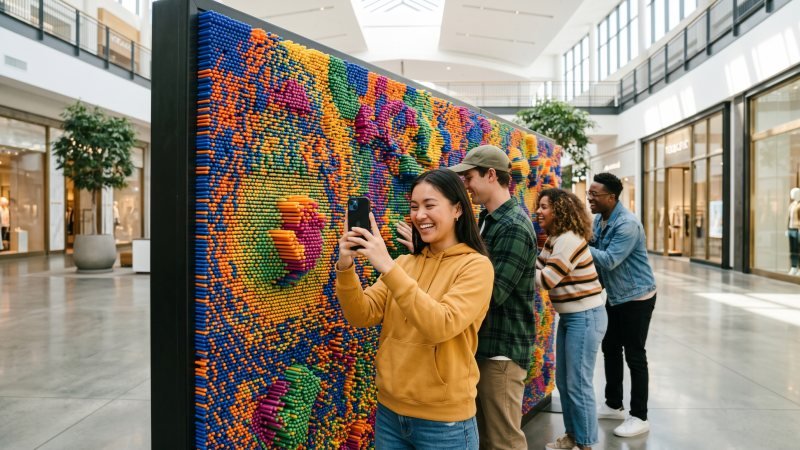
When guests create a unique shape on the wall, they immediately want to show it off. They pull out their smartphones, shoot photos, and upload them to their social feeds. This behavior hands your venue free, continuous digital marketing.
Think of a branded photo booth activation at an industry trade show. That requires cameras, printers, and Wi-Fi networks just to generate an image. A pin art wall achieves the exact same output using zero electricity. Users supply their own hardware and data connections. Since the resolution of the physical impression relies entirely on pin density, verify these exact specifications with your manufacturer to ensure high-quality, shareable photo outcomes.
To gauge the financial impact, stack UGC up against traditional paid advertising.
| Marketing Metric | Paid Digital Ads | Pin Art Wall UGC |
|---|---|---|
| Cost Per Impression | Variable (Requires daily budget) | $0 (After initial installation) |
| Audience Trust Level | Low (Viewed as corporate promotion) | High (Viewed as authentic peer recommendation) |
| Content Creation Cost | High (Requires graphic designers) | $0 (Created by the venue visitors) |
Every photo a guest posts is a free billboard for your commercial space. Over the lifespan of the asset, these organic impressions heavily offset the initial purchase price.
Enhancing Brand Recall with Physical Interaction
Here’s something else to consider: tactile engagement builds far stronger memories than passive observation. We operate in a highly digitized world where consumers suffer from severe screen fatigue. Another glowing digital video wall isn’t going to leave a lasting impression.
Tactile engagement cuts through the noise. When a user physically pushes into a pin art wall, they trigger multiple senses at once. They feel the weight of the pins. They hear the distinct mechanical sound of the plastic sliding. They see the exact physical replica of their movement.
This multi-sensory feedback anchors the memory of your venue in the visitor’s mind. When a corporate lobby or a retail plaza delivers a rare, screen-free physical activity, it genuinely stands out.
“Physical interaction creates a cognitive anchor. Guests remember the spaces where they actively played, rather than the spaces where they passively watched.”
Because of this, the brand recall tied to your location spikes. When visitors plan their next outing, they remember the unique physical experience. That enhanced memory drives repeat visits and cements customer loyalty.
Assessing Durability and Lifespan
Guaranteeing that a tactile interactive installation will survive continuous physical contact in a busy public venue requires specific engineering standards.
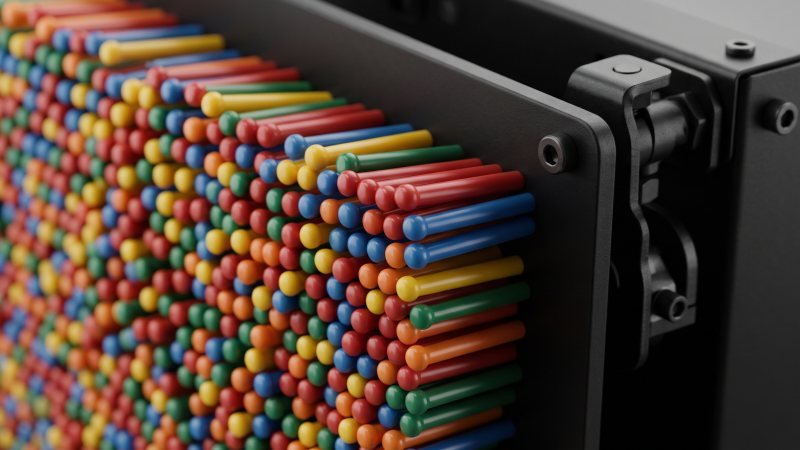
Commercial pin art walls achieve long-term durability by utilizing industrial-grade materials designed specifically for heavy public use. By combining structural steel frames with shatter-resistant injection-molded pins, these robust installations easily withstand thousands of daily interactions, effectively driving down the long-term amortized cost of the asset.
Industrial-Grade Materials Required for Commercial Use
How many times have you watched a cheap plastic display disintegrate after a month of heavy public abuse? A successful installation has to survive relentless physical wear. You simply cannot drop fragile materials into a high-traffic commercial plaza. Commercial pin art walls have to be engineered like permanent architectural fixtures, not disposable props.
Look at the difference between a lightweight residential trampoline and a commercial-grade indoor trampoline park. Both handle physical bouncing, but the commercial park relies on heavy-duty steel and reinforced springs to survive years of harsh public exposure. A commercial pin wall follows that exact architectural standard.
Structurally speaking, the frame has to handle immense weight and relentless dynamic force. Manufacturers typically build these frames out of thick, powder-coated steel or heavy-duty anodized aluminum. When this metal backbone is properly secured using concealed commercial floor anchors, it absolutely neutralizes tipping moments and prevents the structure from warping when a crowd presses against it simultaneously.
As for the interactive pins themselves, standard consumer plastics simply won’t cut it. This is where advanced polymer engineering comes into play. Commercial units utilize high-density ABS plastic or aerospace-grade polycarbonate. These advanced polymers resist shattering, scratching, and discoloration. Plus, the pins are machined with rounded, polished tips to eliminate user injury risks.
“In high-traffic facility design, selecting industrial-grade polymers and ensuring rigid structural anchoring is the only way to prevent rapid degradation and massive liability risks.”
Calculating the Amortized Cost Over Five Years
When it comes down to proving the financial value of a physical asset to stakeholders, the math comes down to amortized cost. You spread the initial purchase price over the usable lifespan of the product.
When you procure a durable, industrial-grade pin wall, you lock in a long-term asset. It doesn’t rely on fragile digital screens or failing software, meaning the hardware holds up for years. What looks like a large initial investment rapidly distills into a fractional daily expense.
Say your venue drops $15,000 on a custom commercial pin art wall. If that wall operates for five years, the annual cost falls off a cliff. Factor in the zero electricity and zero software updates, and there are no hidden operational fees creeping into your ledger.
| Asset Lifespan | Total Upfront Cost | Amortized Annual Cost | Amortized Daily Cost |
|---|---|---|---|
| Year 1 | $15,000 | $15,000 | $41.09 |
| Year 3 (Cumulative) | $15,000 | $5,000 | $13.69 |
| Year 5 (Cumulative) | $15,000 | $3,000 | $8.21 |
As this table illustrates, the daily cost of providing a premium interactive experience drops to just over eight dollars by year five. Compare that to the commercial event space, where renting a basic photo booth for a single day easily clears $1,500.
The math is pretty clear. Purchasing a permanent, durable tactile wall offers massive financial leverage. The industrial materials guarantee the product survives for 60 months or more, transforming a premium capital purchase into one of the most ruthless, cost-effective marketing tools on your floor.
Strategic Placement Strategies for Maximum Impact
Where exactly should facility planners position a zero-power tactile installation to guarantee the highest possible engagement rates?
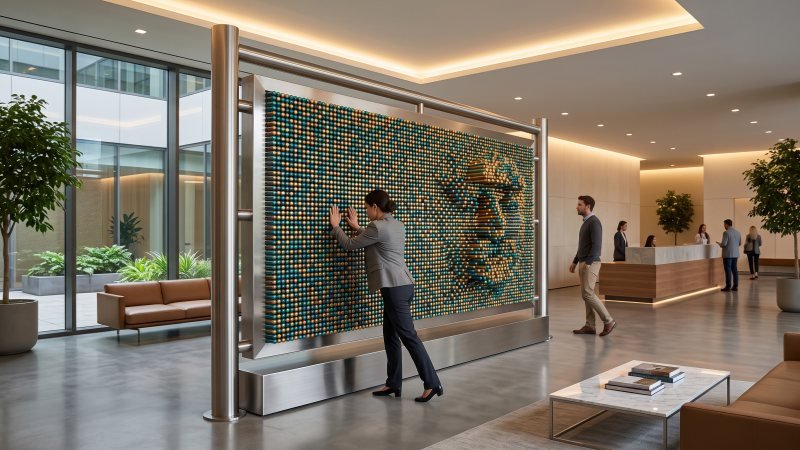
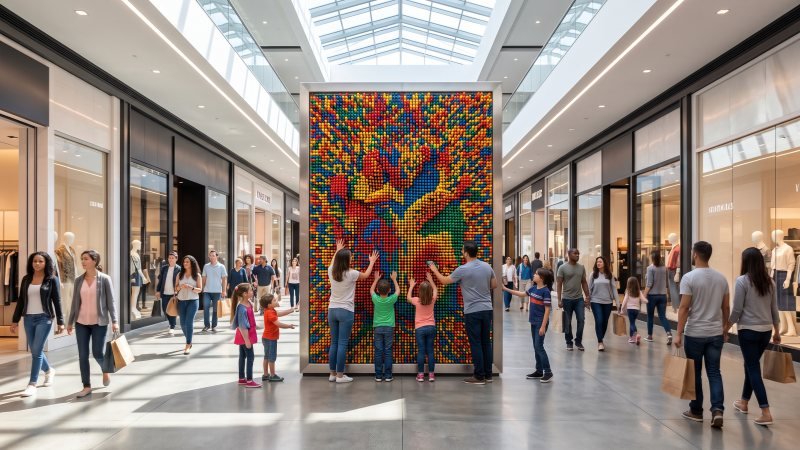
To maximize engagement, facility planners must position commercial pin art walls in high-traffic, frictionless transition zones. Strategic placement in retail anchor spaces, corporate lobbies, and trade show booths intercepts natural foot traffic patterns. By placing these tactile installations in highly visible areas, venues instantly transform passive walkways into active interactive destinations.
Retail Anchor Spaces and Mall Walkways
Retail anchor spaces draw massive crowds by default. The trick is capturing that existing foot traffic efficiently. A commercial pin art wall acts as a massive physical magnet right in the middle of wide mall walkways.
Think of the “hook” attractions placed at the entrances of theme parks, like a grand carousel. Operators leverage these highly visual assets to immediately capture fast-moving crowds near the main gates. By the same token, placing a tactile wall near a major concourse entrance or retail corridor forces walking visitors to hit the brakes. It activates otherwise dead floor space. The result? A lively central hub where families naturally congregate.
Because commercial spaces operate under strict fire safety codes, hallway clearance is non-negotiable. Facility planners must guarantee the installation footprint never blocks mandatory emergency exit routes.
Since we aren’t tethered to power drops, you can drop these directly in the center of a wide corridor, provided the floor allows for proper mechanical anchoring. You don’t have to shove the unit against a perimeter wall just to hide an extension cord.
Corporate Lobbies and Experiential Showrooms
Let’s face it: corporate lobbies often feel cold, formal, and sterile. Historically, commercial architects default to expensive static sculptures to eat up that volume, or they deal with the plumbing nightmares of complex indoor water features. Swap those out for an interactive physical wall, and the visitor arrival experience shifts entirely.
Bolting this installation into a waiting area instantly turns a static room into an experiential showroom. When visiting executives or new clients walk through the doors, they can engage immediately. This physical activity naturally breaks the ice before the real B2B meetings kick off.
Look at typical architectural lobby investments:
| Lobby Feature | Visitor Interaction Level | Ongoing Maintenance Requirement |
|---|---|---|
| Static Metal Sculpture | None (Visual only) | Low (Occasional dusting) |
| Indoor Water Feature | Low (Ambient noise) | High (Chemicals, plumbing, pumps) |
| Pin Art Wall | High (Full physical touch) | Low (Basic surface cleaning) |
A tactile wall delivers the highest level of visitor engagement while demanding the absolute lowest maintenance burden. You get the visual gravity of a custom sculpture combined with actual physical interaction.
Pop-Up Events and Trade Show Booths
Event marketers are constantly fighting strict budgets on the trade show floor. We’ve all seen the invoices—ordering electrical power drops from a convention center is highway robbery. You can easily burn hundreds of dollars just to plug in a single television monitor.
Because tactile walls use zero electricity, you bypass those extortionate event fees completely. You don’t have to restrict your layout to areas near wall outlets or floor boxes. The unit functions as a primary focal point that can be safely secured to your booth’s structural truss system or engineered heavy-duty base plates. It pulls curious attendees straight into your sales footprint without demanding expensive electrical rigging.
“In event planning, a zero-power interactive asset allows you to dominate a trade show aisle without bleeding your technical budget dry.”
For temporary pop-up retail shops, severing the electrical cord is a massive operational advantage. You are never restricted by the location of wall outlets, guaranteeing your investment always sits exactly where the crowd flow is heaviest.
Conclusion
Let’s wrap this up: commercial pin art walls present an ironclad financial and operational case for modern facility planners. By completely severing the reliance on the electrical grid, these tactile installations instantly wipe out the burden of ongoing IT maintenance, software troubleshooting, and monthly utility expenses. Add in the fact that industrial-grade materials and professional structural anchoring guarantee a safe, long product lifespan, and you drive down the amortized cost while locking in an exceptional return on investment.
Whether you’re anchoring it in a bustling retail walkway, a high-end corporate lobby, or safely integrating it into a dynamic trade show booth, screen-free engagement actively captures foot traffic and drives high-value user-generated content. If you are ready to explore durable, zero-power interactive configurations for your commercial space, please contact us.