-
Whatsapp: +86 15516933785
-
Email: hanlin@hanlinplayground.com
-
Address: Shangjie District, Zhengzhou City, Henan Province, China
-
Whatsapp: +86 15516933785
-
Email: hanlin@hanlinplayground.com
-
Address: Shangjie District, Zhengzhou City, Henan Province, China

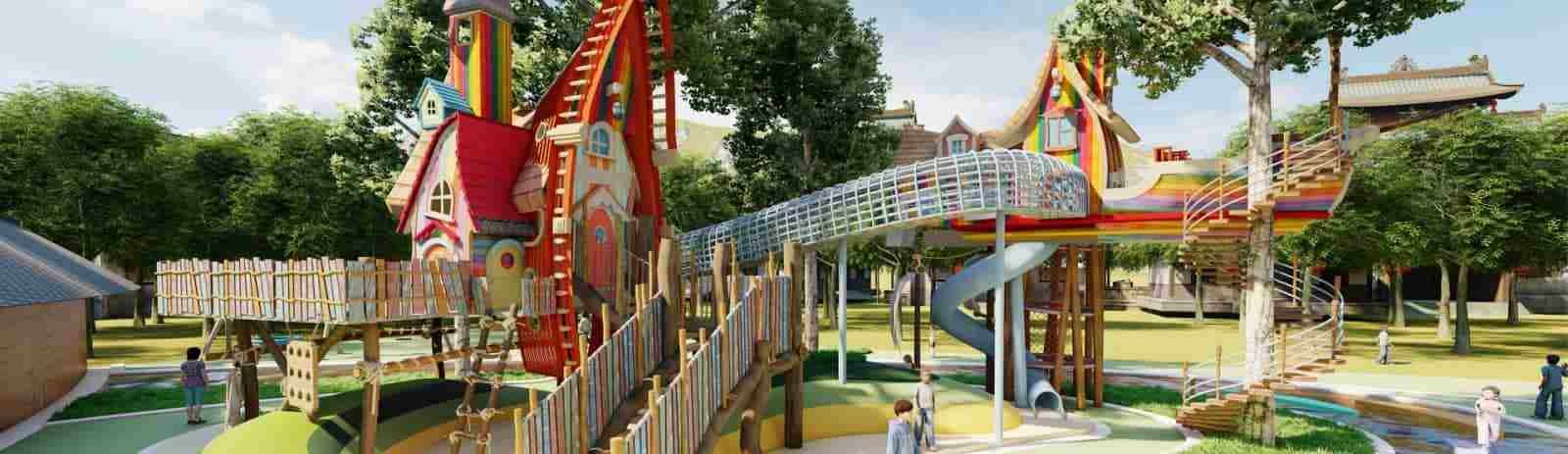
How to Make Your Playground More Interactive
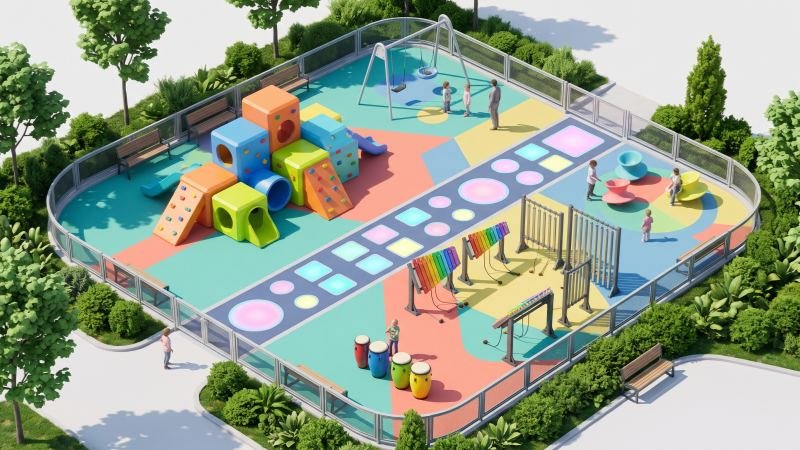
How can you transform a standard, static playground into a highly engaging and interactive environment for children?
You can make a playground more interactive by integrating sensory play elements, installing modular loose parts, introducing gamified technology, and upgrading existing structures with strategic add-ons. Implementing these specific enhancements transforms passive play areas into dynamic, adaptable environments that actively stimulate a child’s physical, cognitive, and social development.
Integrate Sensory Play Elements
How exactly do sensory features make a play space more interactive?
Integrating sensory elements engages multiple senses simultaneously, turning a basic playground into an immersive environment. Specifically, features like outdoor musical instruments, textured surfaces, and vibrant plants actively stimulate a child’s hearing, touch, and sight. The result? These additions encourage self-directed exploration, improve cognitive development, and increase overall playtime.
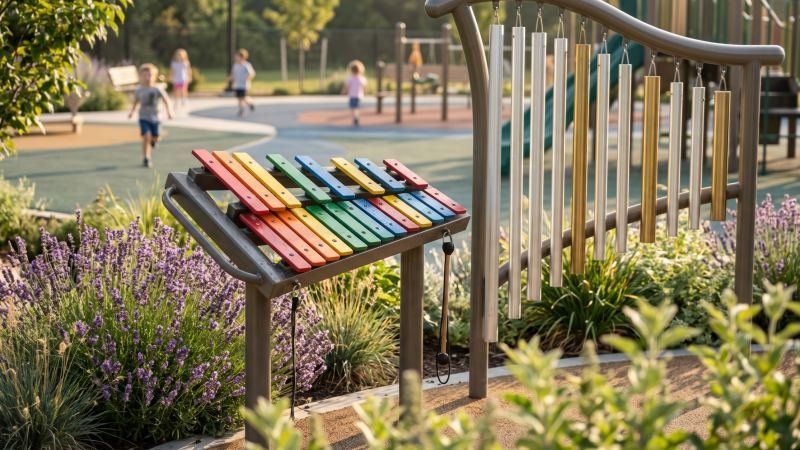
Add Auditory Features Like Musical Instruments
Have you ever noticed how children naturally love making noise? That’s exactly why building in auditory features instantly boosts interaction. Outdoor musical instruments invite kids to create their own soundscapes.
For example, you can install heavy-duty chimes, xylophones, and bongo drums directly into the play area. These instruments require no electricity. Instead, they rely on physical strikes to produce sound. This gives children immediate auditory feedback for their actions.
When selecting instruments, consider the construction materials. Anodized aluminum is a popular choice for chimes. It resists rust and withstands heavy impact. Just as a heavy-duty steel bearing ensures smooth rotation in a merry-go-round, high-grade aluminum ensures clear, lasting resonance in playground chimes. But here’s the catch: precise wall thickness and pipe diameter dictate the exact pitch and durability. Keep in mind that these specifications can vary by manufacturer, so always verify the exact material grades and acoustic ranges with your supplier.
Use Varied Textures for Tactile Engagement
Children explore the world through touch. Knowing this, dialing in varied textures makes a playground significantly more engaging. Tactile engagement keeps kids physically interacting with their physical environment.
You can easily introduce different textures across the playground surfaces. For instance, contrast smooth plastic slides with rough, grip-friendly climbing walls. Take it a step further and create dedicated sensory pathways. These pathways might alternate between soft rubber safety surfacing, artificial turf, and smooth pebbles.
Below is a comparison of common tactile materials used in interactive playgrounds:
| Material Type | Tactile Sensation | Best Playground Application |
|---|---|---|
| Poured-in-Place Rubber | Smooth, slightly spongy | Main pathways, fall zones |
| Rotomolded Plastic | Hard, sleek | Slide beds, activity panels |
| Textured Sandstone | Rough, high-friction | Climbing boulders, stepping stones |
| Synthetic Turf | Grassy, soft bristles | Chill-out zones, sensory paths |
By mixing these materials, you force children to constantly adjust their grip and balance. As a result, this physical interaction actively builds their motor skills while they play.
Incorporate Fragrant and Visually Stimulating Plants
Why limit interactive elements to manufactured equipment? Nature itself provides some of the best interactive experiences. In fact, integrating carefully chosen plants actively engages both sight and smell. Want to know a low-cost trick that pays massive dividends in user experience? Focus on the landscaping.
You can plant fragrant herbs like lavender, mint, or rosemary near seating areas. When children brush against these plants, they release distinct scents. This creates a natural, calming, and interactive olfactory experience.
On the visual side, you should include ornamental grasses and brightly colored flowers. Ornamental grasses rustle in the wind, providing both visual movement and a gentle sound. Meanwhile, vibrant flowers attract safe local wildlife, such as butterflies. This naturally transforms the play space into an interactive learning environment.
According to industry data on naturalized play spaces, adding natural elements can increase children’s active engagement time by up to 20%. Always ensure all selected plants are non-toxic and free of thorns. At the end of the day, these living additions breathe dynamic, interactive life into any standard playground.
Install Modular and Loose Parts Play
Adding movable pieces offers a dynamic shift from traditional, static playground setups.
Installing modular and loose parts allows children to actively reshape their environment, turning them from passive users into active creators. Specifically, providing movable blocks and reconfigurable components fosters open-ended play and critical problem-solving. The payoff is huge: this flexibility dramatically increases the interactive value of the playground, because the layout can change entirely from one day to the next.

Provide Movable Building Blocks and Tunnels
Traditional playgrounds are entirely static. Because of this, children end up playing the exact same way every visit. Ever watched a kid get bored of a million-dollar installation after ten minutes? You can flip that dynamic instantly by providing movable building blocks and lightweight tunnels. These items are commonly known in the industry as “loose parts.” They empower kids to build their own structures.
For example, children can stack large, geometric blocks to create a custom fort. Then, they can connect a flexible tunnel to the entrance. This building process requires intense teamwork and planning. Think of how a child uses classic indoor building bricks to constantly invent new shapes; loose parts bring this same boundless creativity to the outdoor playground scale.
In the field, you’ll see commercial loose play building blocks manufactured from highly shock-absorbing materials like Cross-Linked Polyethylene (XLPE) foam or Expanded Polypropylene (EPP). Using these ultra-lightweight foam materials is critical; it ensures that if a tall, custom-built fort collapses, the falling blocks will not cause blunt-force injuries. Meanwhile, durable hard plastics like High-Density Polyethylene (HDPE) are strictly reserved for non-stackable loose components, such as heavy ground-level tunnels.
| Material Type | Weight | Durability | Best Playground Application |
|---|---|---|---|
| XLPE / EPP Foam | Very Light | Moderate | Stackable building blocks and tall forts |
| HDPE Plastic | Moderate | Very High | Ground-level non-stackable parts (e.g., rigid tunnels) |
| Corrugated PVC | Light | High | Connecting pipes, movable tubes |
When purchasing these items, you must carefully consider the density of the foam or the thickness of the plastic walls. These factors determine exactly how much weight the blocks can safely hold before crushing. Always check the precise load-bearing capacities and UV-resistance ratings before making a final equipment selection.
Create Adjustable Obstacle Courses
Fixed monkey bars and stationary stepping stones are classic choices. But if you want real engagement, an adjustable obstacle course outperforms them every time. You can easily achieve this by installing modular equipment. This means the individual pieces lock together securely, but maintenance staff can still unlock and reposition them.
For instance, you can use balance beams equipped with pivot joints. These special joints allow staff to quickly change the angle of the beam. You can also drop in modular stepping pods featuring specialized secure-lock base plates. While safety standards dictate these pods must remain firmly anchored during use to prevent tipping, maintenance staff can safely unbolt and reposition them within the designated safety surfacing zone. By allowing professionals to adjust the spacing to meet specific age-appropriate reach limits, the playground seamlessly adapts to different skill levels without compromising strict fall-zone safety requirements.
“Playgrounds that incorporate loose parts and modular designs see a significant increase in cooperative play and physical exertion.”
Industry data strongly supports this flexible approach. According to a recent case study on modern community parks, replacing 30% of fixed equipment with modular obstacle components increased user retention time by nearly 40%. Kids simply stay longer because the physical challenges can be continually updated by facility managers.
From a budget standpoint, this modular approach is highly cost-effective. You do not need to pour expensive new concrete to change the layout. You simply detach the components and set up a fresh path. Bottom line: an adjustable obstacle course guarantees that the playground never feels outdated or boring.
Introduce Technology and Gamification
How can modern digital tools transform a traditional playground into a highly interactive experience?
Introducing technology and gamification merges physical exercise with digital goals, instantly creating a highly interactive playground. Specifically, adding electronic components like reactive sensors or augmented reality applications motivates children to run, jump, and solve puzzles. By bridging that gap, these digital upgrades increase physical activity levels and attract tech-savvy children who might otherwise stay indoors.
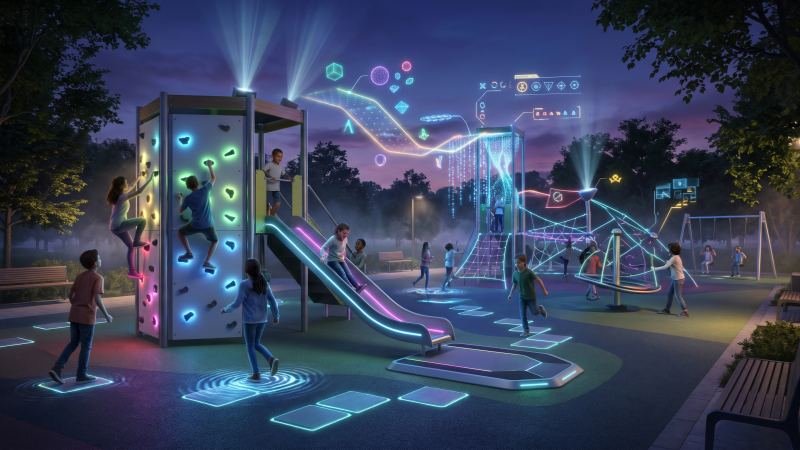
Add Reactive Light and Sound Panels
Are you looking for a way to make physical activity feel like a video game? Reactive light and sound panels achieve exactly that. These outdoor electronic hubs feature touch-sensitive nodes that rapidly light up and emit distinct sounds.
When a game starts, children must run and tap the flashing lights before time runs out. This keeps them constantly moving, reaching, and reacting. Think of this electronic system like an interactive splash pad. Just as a splash pad randomly triggers different water jets to keep kids guessing and moving, the playground’s central computer sends rapid signals to different sensory panels to guide the children’s physical movements across the play space.
You can configure these panels for various types of play. Depending on the setup, kids can race against a clock individually, or they can work together to clear a digital board.
Common Reactive Panel Modes
| Game Mode | Physical Action Required | Core Skill Developed |
|---|---|---|
| Memory Sequence | Tapping nodes in a specific recorded order | Cognitive recall and focus |
| Speed Rush | Hitting random flashing lights quickly | Agility and reaction time |
| Team Relay | Coordinating multiple active nodes at once | Teamwork and communication |
Because these panels house sensitive internal circuit boards, they require robust outer casings to survive outdoors. Industry standards typically demand high Ingress Protection (IP) ratings to effectively block rain and dust. However, exact weatherproofing capabilities, impact resistance, and battery lifespans can vary significantly depending on the manufacturer. Therefore, you should always verify the exact IP ratings and technical specifications with your supplier to ensure the equipment matches your local climate.
Utilize Augmented Reality Play Systems
Why should screen time keep kids stuck on the couch? Augmented reality (AR) play systems actively bring screens outdoors to enhance physical play. Specifically, AR technology overlays digital graphics onto your real-world playground equipment through a mobile device camera.
To set this up, you simply install specialized scanning markers across the physical play space. When families scan these markers using a dedicated app, the traditional playground instantly transforms on their screens. For example, a standard climbing net might suddenly appear as a glowing laser grid.
On top of that, these systems easily gamify the entire park visit. You can deploy digital scavenger hunts where children must physically run to different playground zones to “capture” virtual checkpoints. This setup effectively blends digital achievement rewards with intense cardiovascular exercise.
“Parks integrating AR scavenger hunts experience higher cross-generational engagement because parents and children easily play together using a shared device.”
Industry case studies highlight the immense value of AR technology. For example, a recent municipal park survey demonstrated that adding a localized AR playground app increased the average weekend visitor dwell time by 35 minutes. Here is the best part for installation crews: the technology requires zero electricity on the playground itself. By utilizing AR systems, you seamlessly bridge the gap between modern video gaming and healthy outdoor interaction.
Upgrade Existing Structures with Interactive Add-Ons
How can you maximize the play value of your current equipment without paying for a completely new installation?
Upgrading existing structures with interactive add-ons offers a highly cost-effective method to modernize an older play space. Specifically, retrofitting your current frames with mechanical activity panels or acoustic communication tubes instantly introduces new problem-solving and social dynamics. The reality? This strategic approach extends the lifespan of your original physical investment while dramatically increasing user engagement.
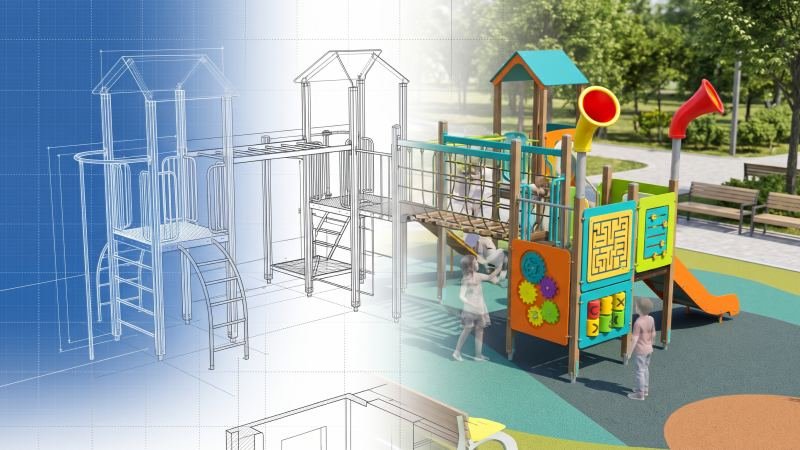
Attach Puzzle Panels to Freestanding Walls
Empty barrier walls and guardrails represent wasted space on a traditional playground. That makes attaching mechanical puzzle panels a no-brainer to transform these dead zones into hubs of cognitive activity. Children can stop to solve a maze or spin gears before moving to the next physical challenge.
Think of adding a new attachment to a classic swing set frame, like swapping a standard belt seat for an inclusive bucket seat. The core structural framework remains exactly the same, but the new attachment completely upgrades the system’s overall function and accessibility. Similarly, bolting a gear panel to an existing playground post instantly creates a brand-new interactive station.
Usually, manufacturers produce these panels from high-density polyethylene (HDPE). This material resists fading, cracking, and vandalism. Plus, they utilize tamper-proof stainless steel hardware.
Common Types of Mechanical Puzzle Panels
| Panel Type | Interactive Mechanism | Primary Skill Developed |
|---|---|---|
| Gear Spinners | Interlocking rotating wheels | Understanding cause and effect |
| Sliding Mazes | Moving a peg through a grooved track | Fine motor control and logic |
| Tic-Tac-Toe | Rotating cylinders with X and O graphics | Strategic thinking and social play |
To install these panels, you typically use specialized mounting brackets. These brackets clamp directly onto your existing vertical support posts. However, commercial playground posts come in various standard diameters, typically ranging from 3.5 inches to 5 inches. Additionally, some older structures use square posts instead of round ones. Because of these variations, always verify the exact post dimensions and hardware compatibility with your supplier before ordering any retrofitting kits.
Integrate Talk Tubes Between Play Zones
Playgrounds naturally separate kids into different physical zones. You might have some children climbing high towers while others dig in the sand below. Why let physical distance kill the collaborative vibe? You can easily bridge these gaps by integrating talk tubes. These simple acoustic devices encourage incredible social interaction across long distances.
Talk tubes consist of two flared metal or plastic cones connected by a long, hollow underground pipe. When a child speaks into one cone, the sound waves travel cleanly through the buried pipe to the receiver. Just as a traditional megaphone focuses and amplifies a child’s voice across a field, talk tubes capture and channel sound waves directly through the pipe, allowing whispers to be heard clearly on the other side of the playground.
“Play spaces that connect isolated zones with acoustic talk tubes observe a 25% increase in collaborative, cross-structure game creation among children.”
This data highlights how a simple mechanical addition vastly improves the social ecosystem of a park. Kids invent elaborate spy games or pretend to run a drive-thru restaurant. Suddenly, the entire playground feels interconnected and highly interactive.
For the best acoustic performance, installers use smooth-walled, heavy-duty PVC for the underground tubing. Ribbed piping disrupts the sound waves and ruins the effect. Keep in mind, the maximum effective distance of a talk tube system depends heavily on the pipe’s diameter and the number of underground bends. By integrating these communicative links, you breathe new interactive life into older, static play structures.
Conclusion
Creating an interactive playground doesn’t always mean ripping up the foundation and starting from scratch; it requires strategic enhancements that challenge children physically and mentally. By carefully integrating sensory elements, flexible loose parts, digital gamification, and smart retrofits, you ensure your play space remains a dynamic, engaging destination for years to come. If you are ready to explore specific components and layout strategies tailored to your facility, feel free to contact us for expert guidance.