-
Whatsapp: +86 15516933785
-
Email: hanlin@hanlinplayground.com
-
Address: Shangjie District, Zhengzhou City, Henan Province, China
-
Whatsapp: +86 15516933785
-
Email: hanlin@hanlinplayground.com
-
Address: Shangjie District, Zhengzhou City, Henan Province, China

The Complete Buyer’s Guide to Outdoor Playground Tunnels for Commercial Projects
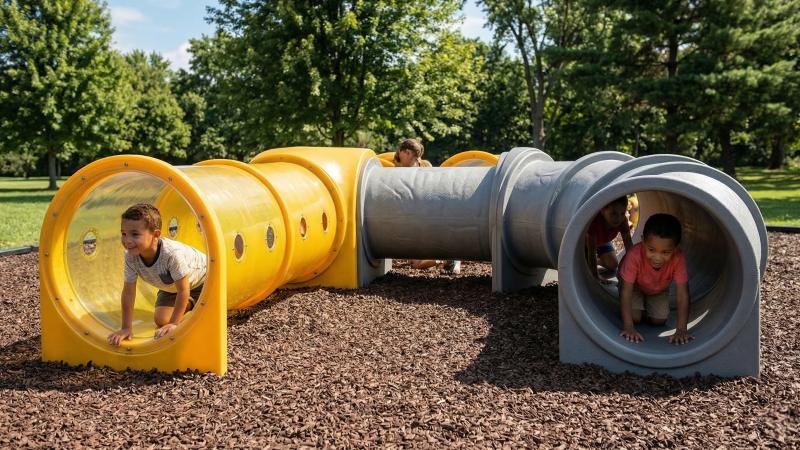
What are the essential factors to consider when selecting and installing outdoor playground tunnels for commercial projects?
Selecting the ideal commercial playground tunnel requires evaluating material durability, strict safety compliance, and overall developmental benefits. Buyers must prioritize commercial-grade materials like high-density polyethylene or galvanized steel for longevity, verify adherence to ASTM or TUV safety standards, and ensure proper fall zone surfacing. Beyond the hardware, partnering with a certified manufacturer guarantees proper installation and long-term structural integrity for public play areas.
Key Benefits of Adding Crawl Tubes to Play Areas
Why should you include crawl tubes in your next commercial playground project?
Integrating crawl tubes into commercial play areas significantly accelerates child development. These structures enhance gross motor skills, provide critical sensory relief zones, and foster inclusive social interaction. Bottom line: they maximize play value within a compact footprint, making them a strategic investment for parks and schools.

Promoting Physical Development and Motor Skills
Outdoor play is crucial for physical health, but how exactly do these tubes build motor skills? Crawling is a foundational movement. It requires children to use both sides of their bodies simultaneously. This action develops bilateral coordination. At the same time, it builds serious core, arm, and leg strength.
Think about how a child navigates a complex rope climbing net. They must plan their hand and foot placements carefully. Similarly, moving through a confined tube forces a child to build spatial awareness. They learn to judge distances and control their body movements efficiently.
Are all tunnels the same size? Standard commercial tubes often range from 24 to 30 inches in diameter. Smaller diameters are strictly engineered for the safety and anthropometrics of toddlers, while larger diameters (typically 30 inches or more) are required for older children to prevent entrapment and allow for rapid adult emergency access. Always verify exact diameter options and age-group specifications with your supplier, as standard dimensions can vary by manufacturer.
| Physical Skill | How Crawl Tubes Help | Developmental Outcome |
|---|---|---|
| Bilateral Coordination | Forces alternating hand-and-knee movements. | Improves balance and overall mobility. |
| Spatial Awareness | Requires navigating a confined, curved space. | Enhances body positioning and obstacle avoidance. |
| Core Strength | Demands continuous muscle engagement to move forward. | Supports better posture and physical endurance. |
Providing Psychological Comfort and Sensory Relief
Let’s face it: playgrounds are loud and visually overwhelming. It’s no surprise some children easily experience sensory overload. This is particularly true for children on the autism spectrum. According to the CDC, approximately 1 in 36 children in the U.S. is diagnosed with Autism Spectrum Disorder (ASD). Inclusive playground design isn’t just a trend anymore; it’s an industry standard.
Crawl tubes serve as vital “quiet zones.” They block out excessive visual stimuli. Add in the fact that the enclosed space naturally dampens outside noise, and you get a micro-environment that provides real psychological comfort. It allows an overwhelmed child to pause, regulate their emotions, and feel secure.
“Enclosed playground components act as necessary decompression spaces, allowing children to manage sensory input without leaving the play area.”
Consider the function of a ground-level playhouse or a molded cozy dome. These structures provide a visual break for overstimulated children. A crawl tube performs a highly similar function, creating a predictable space where sensory input is kept in check.
Encouraging Social Interaction and Imaginative Play
Tunnels aren’t just for moving from point A to point B. Instead, they serve as focal points for unstructured group play. Children naturally gather inside and around these structures. Naturally, this tight proximity forces communication and teamwork.
Does a simple tube really spark imagination? Absolutely. A basic plastic cylinder easily transforms within a child’s mind.
- The Secret Base: Children use the tube as a hidden headquarters to plan playground games.
- The Escape Route: The tunnel becomes a crucial pathway during games of tag or hide-and-seek.
- The Space Station: The enclosed, echoing environment mimics a futuristic transport corridor.
Just as a multi-level play tower acts as a central hub for complex games, a tunnel acts as a collaborative bridge. Children must negotiate who enters first and communicate to avoid bumping into each other. As a result, these daily interactions build essential conflict-resolution skills.
Essential Material Options for Maximum Durability
What are the most reliable materials for constructing durable commercial playground tunnels?
The best materials for commercial playground tunnels are high-density polyethylene, galvanized steel, and treated wood. High-density polyethylene offers exceptional UV resistance and flexibility; that’s exactly why it serves as the industry standard. Galvanized steel provides unmatched structural strength for busy areas. On the flip side, treated wood delivers a natural aesthetic for landscape-integrated spaces. At the end of the day, your material choice dictates the lifespan of the equipment.
| Material Type | Primary Advantage | Best Use Case |
|---|---|---|
| HDPE Plastic | High UV resistance and low maintenance. | Standard municipal parks and schools. |
| Galvanized Steel | Maximum structural strength and vandal resistance. | High-traffic urban public spaces. |
| Treated Wood | Natural appearance and tactile texture. | Nature-themed or landscape-integrated playgrounds. |
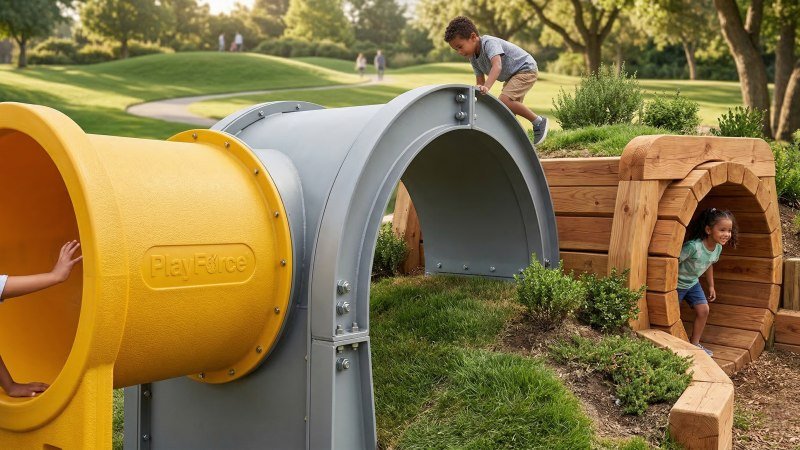
Commercial-Grade High-Density Polyethylene
HDPE is the most common plastic used in modern play structures, and for good reason. For starters, it’s incredibly resilient against harsh weather. Commercial-grade HDPE contains advanced UV stabilizers, meaning it fights off fading and chalking under intense sunlight. Add in the fact that it won’t splinter or rust, and you’re looking at near-zero upkeep over its lifespan.
Ever wonder how these plastic tubes survive years of kids jumping on top of them? Think about the heavy-duty plastic spiral slides found on most play structures. They endure constant friction and weight without cracking. Similarly, HDPE tunnels offer a highly resilient surface with wall thicknesses typically ranging from 0.25 to 0.375 inches. This material flexes slightly under pressure, preventing catastrophic structural breaks.
Powder-Coated Galvanized Steel Structures
When you’re dealing with a high-traffic urban park subject to vandalism, you need absolute structural rigidity. In these scenarios, galvanized steel is the premier choice. Initially, the steel receives a zinc coating to prevent corrosion. Once that’s done, a thick powder-coated finish seals the deal. The payoff? Metal that shrugs off heavy use and brutal weather.
Consider the thick metal support posts of a large play tower. Those main posts bear immense weight without bending. Likewise, a steel tunnel framework offers unyielding support. Typically, manufacturers construct these units using heavy-duty 11-gauge steel, ensuring they survive decades in the field.
Treated Wood for Nature-Inspired Designs
If your landscape architect is pushing for a natural aesthetic, treated wood is your go-to. These structures typically use durable timbers like cedar or pine. Because of this, you get a warm, tactile feel that plastics simply can’t replicate.
How do wooden tunnels resist early rot? Manufacturers pressure-treat the timber with specialized wood preservatives. This chemical barrier is what keeps insects and moisture decay at bay. Imagine a sturdy timber climbing wall in a forest park—it requires specific chemical treatments to survive outdoors. Similarly, wooden crawl tubes demand careful sealing and finishing. Lumber species and treatment chemicals often vary by region. Always verify the specific wood grade and treatment details with your supplier to ensure it holds up in your climate.
Safety Standards and Compliance Requirements
What are the most critical safety regulations you must follow when adding crawl tubes to a commercial playground?
Commercial playground tunnels must strictly adhere to industry safety guidelines. Planners must focus on fall zones, emergency access, and internal visibility. This means a compliant use zone with impact-absorbing surfacing is non-negotiable. On top of that, the tunnel’s diameter-to-length ratio must allow adults to perform emergency rescues. Don’t forget that built-in ventilation prevents overheating and ensures caregivers maintain a clear line of sight.
Calculating Required Fall Zones and Safe Surfacing
Kids will climb on top of anything. Falls are just a realistic part of the equation, so you have to engineer the ground underneath accordingly.
Think you can just drop a tube on the grass and call it a day? Think again. Just as a high slide requires a specific radius of impact-absorbing rubber, a freestanding crawl tube needs a strict safety perimeter. Safety guidelines require a minimum use zone of 72 inches (6 feet) extending outward in all directions from the tunnel’s edge.
You cannot use hard dirt or asphalt inside this fall zone. Instead, you must install approved safety surfacing to absorb the impact if a child rolls off the top. Because critical fall height ratings depend on the exact installation elevation, always verify the required surfacing depth and use zone dimensions with your supplier.
| Surfacing Material | Impact Absorption | Best Commercial Application |
|---|---|---|
| Poured-in-Place (PIP) Rubber | Excellent | High-budget, fully accessible urban parks. |
| Engineered Wood Fiber (EWF) | Good | Nature-themed parks needing budget-friendly options. |
| Interlocking Rubber Tiles | Very Good | Playgrounds requiring easy, localized surface repairs. |
Diameter and Length Ratios for Emergency Access
Tunnels are fun, but children can occasionally get scared or stuck. That makes emergency access a non-negotiable priority. You can’t just install an endlessly long, narrow tube and hope for the best.
Industry standards dictate a strict relationship between a tunnel’s length and its internal diameter. Think about the design of an enclosed commercial spiral slide: the width must prevent a child from becoming wedged. Similarly, a horizontal crawl tube must offer enough clearance for a grown adult to crawl inside if a rescue is necessary.
Shorter tubes can safely feature smaller diameters. However, as the tunnel gets longer, the diameter must scale up. For instance, a tube longer than 4 feet usually requires a minimum internal diameter of 30 inches. This spec allows a first responder or parent to enter and pull a child to safety without getting stuck themselves.
Ensuring Proper Ventilation and Internal Visibility
Enclosed plastic spaces trap heat quickly. Combine that with a solid, dark enclosure, and adult supervision becomes impossible. That’s exactly why smart ventilation and clear sightlines are hardwired into safety compliance.
How do manufacturers solve this? They engineer strategic openings right into the mold. Think about the perforated steel panels often used as playground bridges; they provide security while allowing air to flow freely. Similarly, peek-holes or perforated sections in a long tube allow fresh air to circulate, preventing the internal temperature from reaching dangerous levels during peak summer heat.
Beyond just airflow, these openings provide those critical sightlines. Caregivers must be able to see the children inside at a glance. Common engineering solutions include transparent bubble panels, open wire-mesh sections, or simple cut-out windows. Since punching holes into a tube can impact its overall structural integrity, be sure to verify the available window configurations with your supplier.
Evaluating Manufacturers and Sourcing Reliable Suppliers
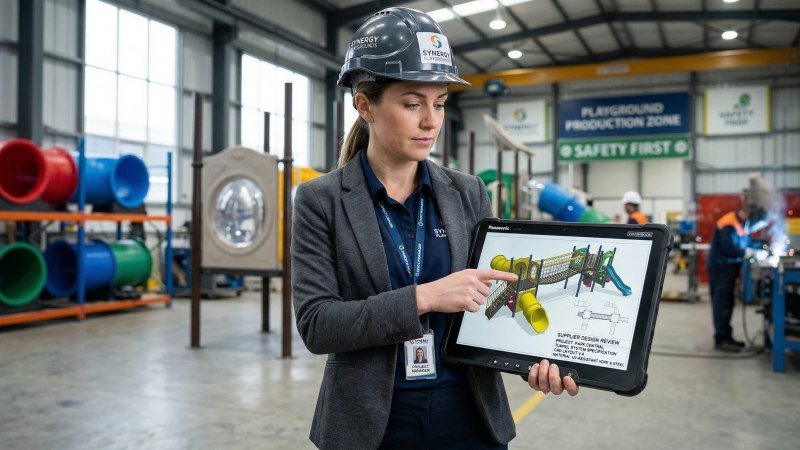
Choosing the right manufacturer for your commercial playground project involves a lot more than just comparing price tags. To source a reliable supplier, you must prioritize verified safety certifications, comprehensive site-planning support, and robust warranty coverage. Start by confirming that the manufacturer holds current ASTM or TUV credentials. Then, take a hard look at their ability to provide custom 3D layouts and localized installation guidance. To wrap it up, compare their long-term warranties on structural components so your investment doesn’t become a maintenance nightmare in three years.
Verifying Industry Certifications Like ASTM and TUV
If you want to avoid massive liability headaches, verifying industry certifications is step one. A trustworthy manufacturer won’t hide their safety credentials; they’ll put them front and center.
In the United States, you need to verify compliance with ASTM F1487 standards. Across the pond, European and international projects typically require EN 1176 certifications. Independent bodies like TUV rigorously test the equipment to ensure the products meet strict structural integrity guidelines.
Think about the central bearing of a commercial merry-go-round—it must pass brutal load-bearing tests before it ever sees a public park. Similarly, a commercial crawl tube undergoes strict stress testing to ensure the arches won’t buckle under the weight of multiple kids climbing on top.
“Certifications are not just decorative logos; they are essential legal safeguards that protect facility operators from negligence claims.”
Keep in mind that certification requirements vary significantly by region or local municipality. Always verify the exact certification standards and current compliance status directly with your supplier before cutting a purchase order.
Assessing Customization and Site-Planning Capabilities
No two commercial playgrounds have the same topography. Because of this, trying to force an off-the-shelf tube into your layout is rarely a winning strategy. You need a manufacturer with serious customization and site-planning muscle.
A reliable supplier will provide detailed CAD drawings. Better yet, they should back it up with to-scale 3D site renderings. These visual tools help you catch layout conflicts early, like needing a tube that curves at a 45-degree angle to bypass an existing tree root system.
Consider the process of installing a complex, multi-level play tower. The engineering team must carefully design the footings to avoid underground utility lines. Likewise, a custom tunnel requires precise site-planning so the entrance and exit points align perfectly with the safety surfacing and surrounding terrain.
| Supplier Capability | Why It Matters for Commercial Projects |
|---|---|
| 3D Rendering Services | Visualizes spatial flow and identifies layout conflicts early. |
| Modular Connections | Allows for custom angles and lengths to adapt to unique terrain. |
| Topography Mapping | Prevents costly installation errors on uneven ground. |
Comparing Warranty Terms and Post-Sale Support
When you’re dropping heavy capital on playground equipment, robust warranty coverage isn’t a perk—it’s mandatory. A manufacturer’s warranty tells you exactly how much confidence they have in their own steel and plastic.
You have to read the fine print. Reputable suppliers typically offer a 10-year to 15-year warranty on heavy-duty plastic and steel components. But watch out—coverage for moving parts, connection joints, or surface hardware is almost always much shorter. More importantly, you need guaranteed access to replacement parts over the next decade.
Imagine maintaining a high-traffic swing set; you will eventually need to swap out the metal hangers due to friction wear. A modular crawl tube is no different. It might eventually need a replacement connection ring or fresh stainless-steel hardware. A solid supplier ensures those specific parts remain in stock. Always verify the exact warranty terms, claim procedures, and long-term part availability with your supplier prior to purchase.
Installation Methods and Routine Maintenance
You can buy the best equipment in the world, but proper installation and consistent maintenance dictate its actual lifespan. Facility planners must make the call between surface mounting on concrete or in-ground anchoring for permanent stability. Beyond the initial build, maintenance teams must implement strict routines, using systematic structural inspections and heavy-duty cleaning protocols. The end result? You prevent hardware failure, stay compliant, and keep your long-term repair costs out of the red.
Surface Mounting Versus In-Ground Anchoring
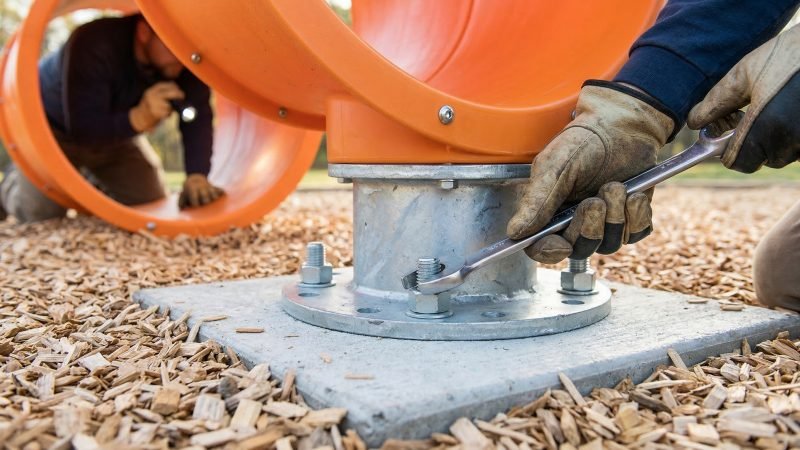
Choosing the correct installation method dictates the site’s safety. You’ve got two main plays here: surface mounting and in-ground anchoring.
Think about installing heavy-duty commercial park benches. A surface-mounted bench bolts straight into a cured concrete sidewalk. Conversely, an in-ground bench means digging deep holes and pouring wet concrete around extended metal legs. Playground tunnels operate on that exact same structural logic.
Surface mounting is perfect for urban hardscapes. If you are installing a tunnel on a concrete plaza or a rubberized rooftop, you use heavy-duty steel anchor bolts. It’s faster, and it saves you from ripping up the surrounding landscape.
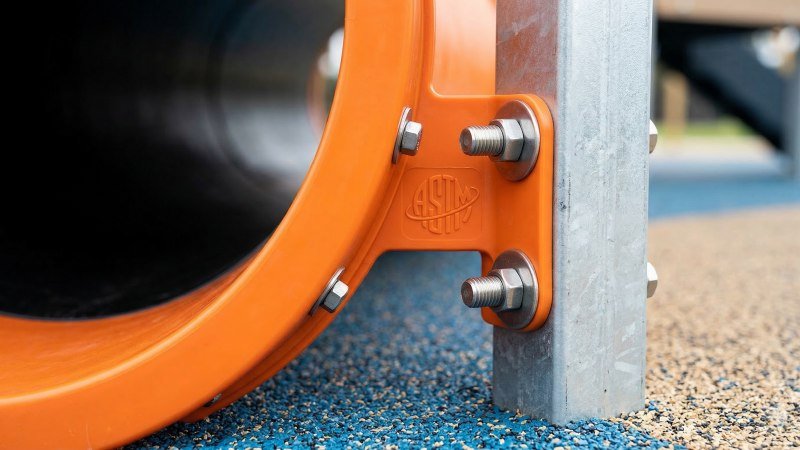
But when you’re dealing with heavy-traffic public parks, nothing beats the maximum stability of in-ground anchoring. Installers dig deep footings into the earth and set the tunnel support posts in concrete, locking it in against shifting soil and vandalism. Because foundational requirements depend heavily on local soil conditions and frost lines, always verify the specific footing depth and anchoring hardware with your supplier.
| Installation Method | Ideal Site Conditions | Key Commercial Advantage |
|---|---|---|
| Surface Mounting | Existing concrete pads or indoor/rooftop sites. | Faster installation and easier future relocation. |
| In-Ground Anchoring | Natural earth, grass, or new park developments. | Maximum permanent stability against heavy use and vandalism. |
Essential Cleaning and Structural Inspection Checklists
Commercial play equipment takes a beating from constant physical stress and weather. You can’t just bolt a tunnel to the ground and walk away. Proactive maintenance is strictly required.
Consider the routine maintenance of a commercial swing set. Inspectors have to check the chains and S-hooks for friction wear to prevent a mid-swing failure. Similarly, a modular crawl tube needs frequent hardware tension checks. Tightening a loose connection flange costs you five minutes of labor. Ignore it, and replacing a cracked plastic module will cost you thousands.
You should conduct visual inspections frequently. What should your crew look for?
- Check the interior for trash, sharp objects, or animal debris.
- Inspect the external surface for fresh vandalism or graffiti.
- Verify that the safety surfacing around the tunnel entrances remains level and impact-absorbent.
Every month, put hands on the equipment for a mechanical check:
- Physically test every bolt, nut, and connector ring.
- Look closely at the plastic or metal for hairline cracks, especially near connection joints.
- Ensure drainage holes at the bottom of the tube remain unblocked. Standing water destroys structural integrity fast.
“A documented, systematic maintenance schedule is the single most effective way to extend the lifespan of commercial play equipment and reduce liability.”
Finally, establish a quarterly deep-cleaning schedule. Use commercial-grade, non-toxic pressure washing to blast away stubborn dirt, mold, and algae. Algae buildup inside a tube is a serious slip hazard. Stay on top of the cleaning, and the equipment stays safe and visually sharp.
Conclusion
Let’s be clear: specifying a commercial playground tunnel goes way beyond picking a fun color or shape. It demands a rigorous evaluation of materials, zero compromises on safety and emergency access standards, and a real commitment to long-term maintenance. Lock in highly durable options like commercial-grade HDPE or powder-coated steel, partner with certified manufacturers, and you’ll deliver a play space that’s bulletproof and engaging. Nail the installation and stick to your inspection schedules, and that equipment will easily outlast its warranty. If you are ready to engineer your next commercial playground project or need expert advice on sourcing the best equipment, please contact us today.