-
Whatsapp: +86 15516933785
-
Email: hanlin@hanlinplayground.com
-
Address: Shangjie District, Zhengzhou City, Henan Province, China
-
Whatsapp: +86 15516933785
-
Email: hanlin@hanlinplayground.com
-
Address: Shangjie District, Zhengzhou City, Henan Province, China

Top 5 Core Considerations When Purchasing Rainbow Slide Equipment (Material & Safety Guide)
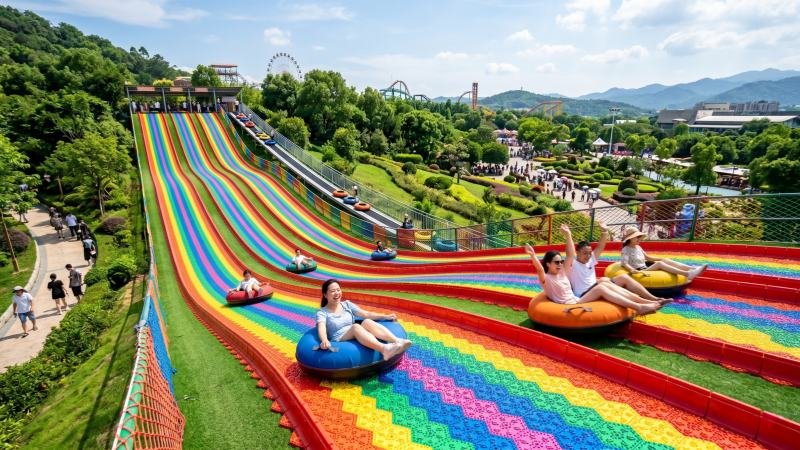
What are the most critical factors to evaluate when investing in commercial rainbow slide equipment for your amusement park or outdoor facility?
When purchasing rainbow slide equipment, operators must thoroughly evaluate material durability for weather resistance, verify strict safety compliance and certifications, assess the site layout for proper installation, analyze weight capacities for target demographics, and calculate the long-term return on investment based on expected foot traffic and maintenance costs.
Material Durability and Weather Resistance
What is the most critical factor determining the lifespan of your outdoor rainbow slide?
The core factor determining a rainbow slide’s lifespan is the precise selection of commercial-grade polymers, specifically High-Density Polyethylene (HDPE) or Polypropylene (PP), engineered with heavy-duty UV inhibitors and wear-resistant additives to withstand constant friction and harsh environmental exposure.
Identifying High-Quality HDPE and PP Plastics
When you’re outfitting a park, the base material isn’t just a detail—it’s everything. Manufacturers lean on two primary plastics: High-Density Polyethylene (HDPE) and Polypropylene (PP). Both are incredibly strong, but they behave differently under load and temperature.
Are you dealing with harsh winters, or baking in the summer sun? HDPE is extremely tough and handles freezing temperatures exceptionally well. Think of high-quality HDPE like the durable, thick plastic used to mold commercial bumper car bodies. It absorbs heavy impacts without cracking. PP, on the flip side, offers a slightly stiffer and smoother surface. This makes it excellent for maintaining high sliding speeds in warmer climates.
Understanding their differences helps you make a smart investment. Below is a quick comparison of these two materials:
| Feature | High-Density Polyethylene (HDPE) | Polypropylene (PP) |
|---|---|---|
| Impact Resistance | Very High (Excellent for cold climates) | High (Can become brittle in extreme cold) |
| Surface Friction | Low (Provides a steady glide) | Very Low (Offers a faster sliding speed) |
| Flexibility | Moderate (Bends slightly under stress) | Stiff (Holds shape rigidly) |
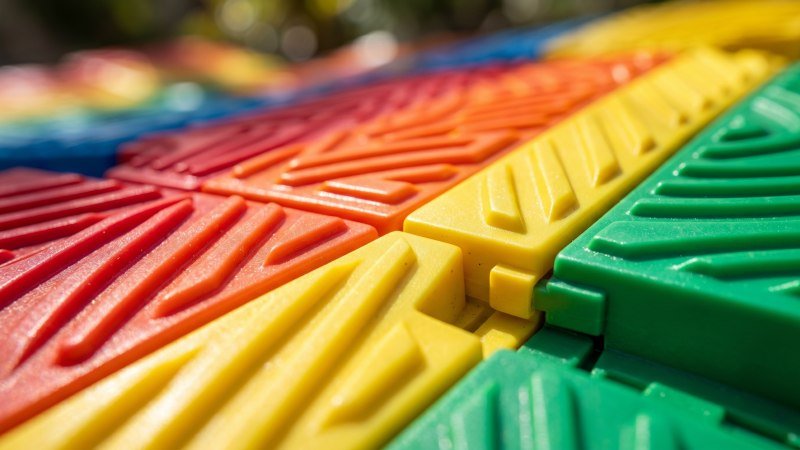
Rainbow slide interlocking tiles typically feature a thickness ranging from 15mm to 25mm. Because these specifications vary based on specific material blends and proprietary production techniques, it is essential to verify the exact thickness and density ratings with your chosen supplier. High-quality plastic tiles won’t feel hollow; they should feel solid and heavy in your hands.
Essential Anti-UV Properties for Long-Term Outdoor Use
Since these slides live outdoors, sunlight acts as the biggest enemy to plastic. Ultraviolet (UV) rays break down polymer chains over time. The result? Vibrant colors fade fast, and more critically, the plastic becomes brittle and structurally unsafe.
To prevent this, premium manufacturers mix UV inhibitors directly into the raw plastic resin before the molding process. This method is vastly superior to simply painting a clear UV coating on top. Surface coatings wear off quickly under heavy foot traffic, but molded-in inhibitors protect the tile all the way through its core.
Industry standards often require outdoor amusement plastics to meet a UV8 rating or higher. A UV8 rating means the material can withstand 8,000 hours of simulated harsh sunlight testing without losing its structural strength. If a manufacturer uses cheap, recycled plastics without proper UV stabilizers, those bright rainbow colors will turn dull within a single summer. Always demand the UV testing reports from your manufacturer.
Evaluating Wear and Tear Resistance for High Traffic Operations
Do you know how many riders your slide will handle on a busy Saturday? High-traffic commercial operations demand extreme wear and tear resistance. Every time a heavy snow tube carrying an adult slides down the track, it creates intense friction. Over time, this constant friction generates heat and grinds down the plastic surface.
To combat this, manufacturers engineer the surface texture of the slide tiles specifically for abrasion resistance. The tiles feature small, raised bumps or specialized ridges. These ridges reduce the actual surface contact area between the snow tube and the slide. As a result, this lowers friction, decreases heat buildup, and significantly extends the life of the equipment.
For instance, high-grade commercial dry ski tiles are rigorously tested to withstand over 100,000 continuous sliding cycles before showing significant wear. If the plastic is too soft, the friction will quickly flatten the surface ridges, leaving slow, dangerous flat spots on the track. In contrast, highly durable plastics maintain their textured grip season after season. Investing in wear-resistant materials upfront prevents costly tile replacements down the line.
Strict Safety Standards and Compliance Verification
To ensure absolute rider protection and avoid costly legal liabilities, strict safety compliance requires verifying heavy-duty amusement ride certifications like ASTM F2291, engineering high-banked guardrails for sharp curves, and exclusively using certified fire-retardant, non-toxic materials.
Essential Industry Certifications to Look For
High-speed rainbow slides generate massive kinetic energy and must be classified as heavy-duty amusement rides, not simple playground equipment. Don’t simply trust verbal promises regarding safety. Always request official written documentation tailored to extreme amusement devices.
Specifically, look for ASTM F2291 standards or EN 13814 certifications. For example, ASTM F2291 covers the standard practice for the design of amusement rides and devices. This strictly includes high-speed commercial dry slides. Similarly, EN 13814 provides comprehensive European safety guidelines for fairground and amusement park machinery.
What happens if you settle for playground certifications? Providing playground-level certifications (like ASTM F1487) for a high-speed adult slide will instantly fail professional engineering inspections and void commercial liability insurance policies. Certified amusement slides undergo heavy mechanical stress testing. Inspectors test both the supporting structural frames and the interlocking plastic tiles to ensure they can handle extreme dynamic loads.
| Certification Standard | Primary Focus Area | Global Recognition |
|---|---|---|
| ASTM F2291 | Standard Practice for Design of Amusement Rides | North America & Global |
| EN 13814 | Safety of Amusement Rides and Devices | Europe & Global |
| CPSIA | Restriction of harmful chemicals | United States |
“Applying low-speed playground standards to a high-speed commercial slide is a fatal engineering flaw. Proactive compliance with genuine amusement ride standards is the only way to operate legally and profitably.”
Analyzing Guardrail Heights and Anti-Collision Features
Guardrails act as the primary defense against rider ejections. High-speed rainbow slides naturally generate massive centrifugal force (G-force). Riders can easily tip over the edge on steep drops or sharp curves if the barriers aren’t engineered correctly.
While a straight, low-speed deceleration lane might utilize a standard 60-centimeter (24-inch) guardrail, high-speed curves demand a completely different approach. Because riders sit on thick snow tubes, their center of gravity (CG) is significantly raised. Therefore, high-speed sections and sharp curves require specially designed banked walls or bowl-like curves that extend 1 to 1.5 meters (40 to 60 inches) high. Because curve designs and slope angles dictate the exact physical forces at play, always consult your installation engineer to determine the mandatory safety clearances.
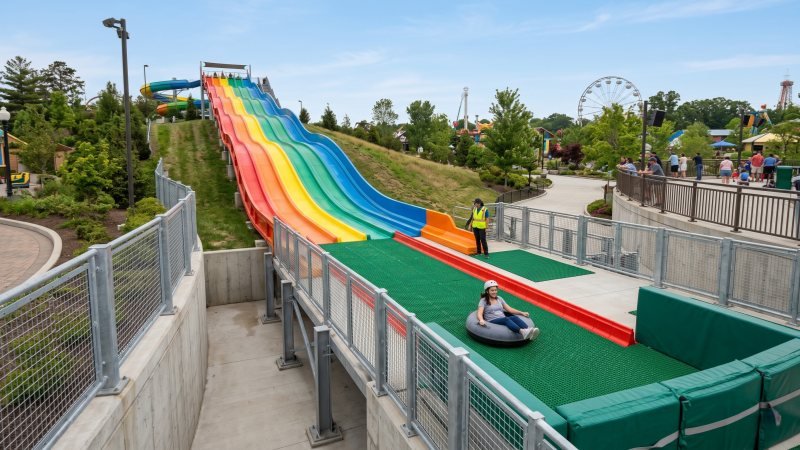
Beyond containment, how are you handling deceleration? The end of the slide must feature a long, flat run-out zone or a reverse incline (uphill slope). This zone must safely and naturally slow the rider down to a complete halt using only friction and gravity. While many modern slides install heavy-duty foam crash pads at the very end, these are strictly emergency redundancies (run-over barriers). You must never rely on physical impacts to stop riders during routine operations, as repeated collisions can cause severe cervical spine injuries (whiplash). The run-out zone must naturally absorb 100% of the kinetic energy.
Fire Retardant and Non-Toxic Material Requirements
Would you risk opening an attraction that could become a liability under extreme conditions? Fire retardant properties are strictly non-negotiable. Commercial slide tiles must resist catching fire from accidental sparks or localized heat sources.
Always look for materials that pass strict flammability tests, such as the UL 94 standard. A V-0 rating means the plastic stops burning within 10 seconds. This rating drastically reduces potential fire hazards.
Moreover, the slide materials must be 100% non-toxic. Children and adults frequently touch the slide surfaces with bare skin. The plastics must never contain dangerous levels of heavy metals, explicitly including hazardous materials like lead and phthalates. Reputable suppliers should provide testing reports showing compliance with standards like EN 71-3. These independent tests prove the chemical safety of the equipment. Safe materials protect your guests and securely safeguard your brand reputation.
Site Assessment and Layout Adaptability
How do you determine if your current landscape can successfully support a large-scale rainbow slide installation?
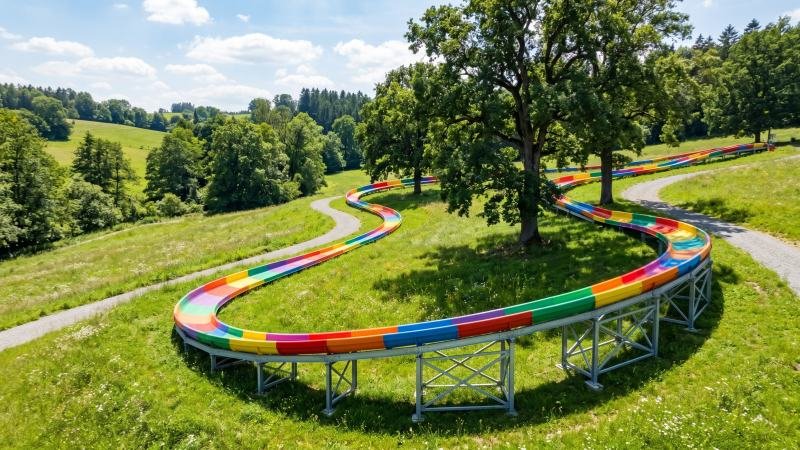
A successful rainbow slide installation requires evaluating the natural slope angle for optimal gravity-fed propulsion, preparing a highly stable foundation, and maintaining strict safety buffer zones.
Calculating Minimum Slope and Buffer Zones
Gravity serves as the engine for a rainbow slide. Getting the slope angle right is absolutely critical. If the hill is too flat, riders will get stuck halfway down. If the hill is too steep, the slide becomes dangerously fast.
Generally, an optimal natural slope ranges between 9 and 15 degrees. This angle provides a thrilling yet controllable speed. Because specific tile friction coefficients can alter the necessary angle, utilizing professional track design software or consulting an installation engineer ensures the layout meets structural and safety requirements.
You must also calculate spacious buffer zones. A buffer zone is the empty space surrounding the slide. You cannot build a slide directly against a fence or a walkway.
The Run-Out Zone
The most important buffer is the run-out zone at the bottom. Think of this like the long, straight shutdown lane required at the end of a high-speed water slide. It safely bleeds off kinetic energy. Typically, the flat run-out track should equal at least 30% of the total downhill length. You must also leave a minimum of 6 feet of clear walking space around the perimeter for safe crowd movement.
Foundation Prerequisites for Stable Installation
A rainbow slide cannot simply sit on loose dirt or mud. The foundation must be perfectly stable. Otherwise, the track will warp, sink, and break over time. Operators generally choose between two primary foundation methods: natural earth and metal scaffolding.
If you possess a natural hill, you must professionally grade and compact the soil. The ground needs to be hard and smooth. Many installers pour a thin layer of concrete to create a permanent, rigid base. This prevents heavy rains from washing the soil away underneath the slide tiles.
What if your park sits on perfectly flat ground? You will need a steel frame. Installers construct a heavy-duty galvanized steel scaffolding system to create an artificial hill. This method is highly adaptable but requires deeper concrete footings to secure the metal support beams.
| Foundation Type | Best Suited For | Key Prerequisite |
|---|---|---|
| Compacted Earth / Concrete | Existing natural hills | Professional soil grading and moisture drainage systems. |
| Galvanized Steel Scaffolding | Flat terrain or indoor parks | Deep concrete anchoring footings for structural beams. |
Customizing Modular Designs for Specific Terrains
No two amusement parks share the exact same landscape. Fortunately, modern dry ski slides use a highly modular design. The individual plastic tiles snap together like industrial building blocks. Installers can easily customize the track to fit your specific terrain.
For example, if your natural hill features an uneven drop, you don’t have to flatten the entire mountain. You can incorporate “camel hump” waves into the track design. These gentle waves naturally regulate the rider’s speed on steeper sections.
Similarly, you can add sweeping curves to avoid large trees or existing park structures. Just like assembling a modular roller coaster track, you can adjust the heights of the individual support columns. This allows the rainbow slide to glide smoothly over rocky, uneven ground. This modular adaptability saves you significant money on expensive land excavation and landscaping.
Target Age Groups and Weight Capacity Specifications
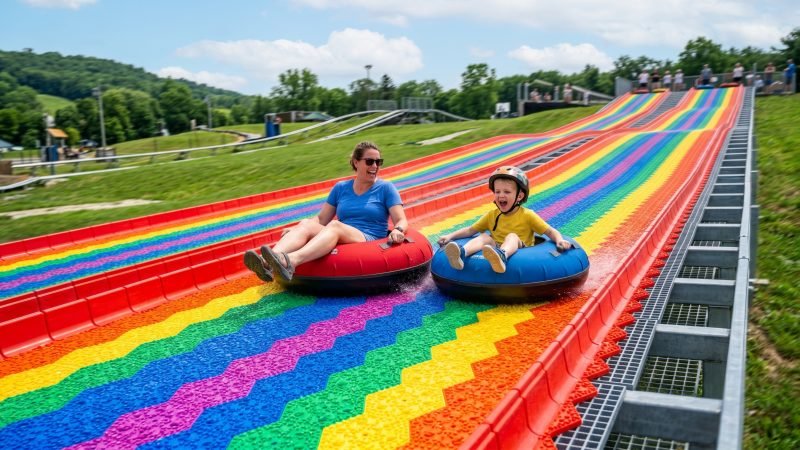
To ensure the slide safely accommodates everyone without risking structural failure, operators must rigorously evaluate the equipment’s dynamic load limits, customize lane widths for different rider profiles, and implement strict dispatch protocols to safely manage concurrent user throughput.
Structural Integrity for Maximum Load Limits
Amusement rides experience massive physical stress during operation. A moving rider generates far more force than a stationary object. Industry professionals call this dynamic loading. Think of this like the heavy-duty structural columns on a drop tower ride. The system must easily absorb sudden, heavy bursts of kinetic energy. A rainbow slide must support the sudden impact of a heavy adult bouncing rapidly down the track.
Operators must strictly check the maximum weight limit per snow tube. Standard commercial tubes and slide tiles generally hold up to 220 pounds (100 kg) per single rider. Because maximum capacity is directly influenced by internal grid structures and material density, always verify the exact load limits and testing conditions with your supplier. If you overload a weak slide track, the plastic interlocking joints will eventually warp or snap. Investing in heavy-duty base grids is absolutely essential for adult-focused attractions.
Modifying Lane Widths for Children vs Adults
One size does not fit all in safe ride design. If you strictly target toddlers, a massive adult-sized lane actually poses safety risks. Small, lightweight tubes can spin dangerously out of control inside a track that is too wide. Conversely, a heavy adult riding a large tandem tube will get completely stuck in a narrow child-sized lane.
To solve this problem, commercial slides offer highly modular lane widths. This concept works exactly like how large water park flumes dictate the specific size of family rafts you can use. You can build a multi-lane attraction with distinctly varied sections. You might install two narrow lanes exclusively for young children and two extra-wide lanes for adults. This smart design choice directly expands your target demographic, allowing entire families to ride simultaneously in safely tailored environments.
Managing Throughput and Concurrent User Safety
Throughput simply measures how many guests can comfortably ride your attraction in one hour. High throughput equals shorter lines and much happier guests. You must carefully manage this continuous traffic flow to avoid dangerous on-track collisions. You cannot simply send riders down the hill back-to-back.
Operators must use strictly timed dispatch intervals. A ride attendant must wait until the previous rider completely exits the bottom buffer zone. This safety protocol prevents dangerous rear-end crashes. To maximize your hourly capacity while maintaining safety, parks often install multiple parallel sliding lanes.
| Lane Configuration | Required Dispatch Interval | Estimated Capacity Per Hour (CPH) |
|---|---|---|
| Single Lane (Individual Tube) | 30 seconds | 120 riders |
| Triple Lane (Individual Tubes) | 30 seconds | 360 riders |
| Double Lane (Tandem Tubes) | 40 seconds | 360 riders |
“Efficient throughput management transforms a popular rainbow slide from a chaotic logistical nightmare into a highly profitable, smooth-running attraction.”
By understanding these operational numbers, you can accurately plan your daily staffing needs. You can also install automated dispatch traffic lights at the top of the hill. These visual lights work exactly like the block brake signaling systems on a modern roller coaster track. They visually tell the operator exactly when the track is clear to launch the next guest safely.
Maintenance Costs and Long-Term ROI
How can you ensure your new rainbow slide generates a massive profit rather than becoming an expensive maintenance nightmare?
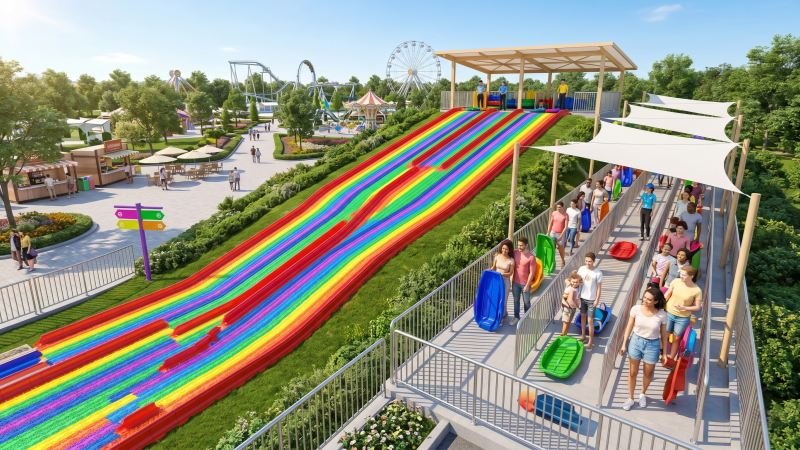
To maximize your long-term return on investment, you must strictly assess the manufacturer’s warranty coverage, implement rigorous daily component inspection protocols, and accurately calculate your financial payback period using realistic hourly foot traffic data.
Assessing Warranty Coverage and Vendor Support
A cheap upfront price often hides terrible after-sales support. Evaluating the warranty is crucial. Commercial amusement rides face heavy daily stress. Think of this like buying a massive commercial wave pool pump. The initial price means absolutely nothing if the motor fails in July and the manufacturer ignores your emergency calls.
You must check what the warranty actually covers. Does it cover the plastic tiles against extreme sun fading? Does it replace snow tubes if the heavy-duty stitching tears? Often, commercial warranties offer one to three years of coverage. Because exact warranty lengths frequently vary based on supplier policies and installation methods, always verify the exact coverage terms and exclusion clauses directly with the manufacturer.
Reliable vendor support is essential. You need a supplier that holds accessible replacement parts. If a heavy rider cracks a critical track piece during a busy holiday weekend, you cannot wait two months for international shipping. Fast parts availability directly protects your daily revenue.
Routine Inspection and Component Replacement Protocols
Preventative maintenance always costs less than emergency repairs. You must establish strict daily inspection protocols. Just like operators meticulously check the guide wheels on a roller coaster every single morning, your staff must visually inspect the slide track.
First, workers should walk the track to check the interlocking joints. Loose tiles create dangerous bumps and slow down the riders. Second, staff must inspect the heavy-duty snow tubes. The hard plastic bottoms of these tubes naturally wear down from constant friction. If the bottom becomes too thin, it will violently rip open during a fast ride.
To keep the attraction running smoothly, operators should always order extra spare parts upfront. Industry experts highly recommend keeping a 5% reserve stock of interlocking track tiles. The tiles located at the very bottom of the hill take the hardest impact and will wear out much faster than the top tiles. By keeping spare parts ready, you can simply swap out damaged sections in five minutes.
Calculating Payback Periods Based on Foot Traffic Potential
Smart operators buy equipment based strictly on numbers. The payback period tells you exactly how many months it takes to earn back your initial investment. To calculate this accurately, you need to know your expected foot traffic and your average ticket pricing.
For instance, if your park sits in a highly visible tourist zone, you will naturally generate massive foot traffic. In contrast, a remote farm might only see heavy crowds on autumn weekends. You must accurately calculate your estimated daily riders. Then, multiply that conservative number by your ticket price. After that, subtract your daily labor and maintenance costs.
| Investment Scenario | Estimated Daily Riders | Ticket Price | Estimated Daily Profit | Projected Payback Period |
|---|---|---|---|---|
| High-Traffic Theme Park | 500 | $5.00 | $2,000+ | 2 to 4 Months |
| Medium-Traffic Family Center | 200 | $4.00 | $600+ | 6 to 9 Months |
| Low-Traffic Seasonal Farm | 80 | $3.00 | $200+ | 12 to 18 Months |
“A highly visible, well-maintained rainbow slide often boasts one of the fastest payback periods in the entire outdoor amusement industry.”
Understanding these financial projections prevents you from overspending. It helps you size your track perfectly to meet your actual customer demand. By balancing your initial budget with realistic revenue goals, you guarantee a highly profitable, long-term attraction.
Conclusion
Investing in a commercial rainbow slide is an excellent way to attract new visitors and increase your overall revenue. By carefully considering the five core elements discussed above—material durability, strict safety standards (such as ASTM F2291), proper site layout for gravity braking, target capacity, and expected ROI—you can avoid costly mistakes and build a highly successful attraction. Remember to thoroughly vet your suppliers, ensure proper banked curves and run-out zones, and implement consistent maintenance schedules to protect your investment for years to come.
If you are ready to explore high-quality options or need expert guidance on designing the perfect, fully compliant layout for your unique site, contact us today.