-
Whatsapp: +86 15516933785
-
Email: hanlin@hanlinplayground.com
-
Address: Shangjie District, Zhengzhou City, Henan Province, China
-
Whatsapp: +86 15516933785
-
Email: hanlin@hanlinplayground.com
-
Address: Shangjie District, Zhengzhou City, Henan Province, China

The Secret Weapon for Mall Foot Traffic: Indoor Giant Stainless Steel Slide Strategies
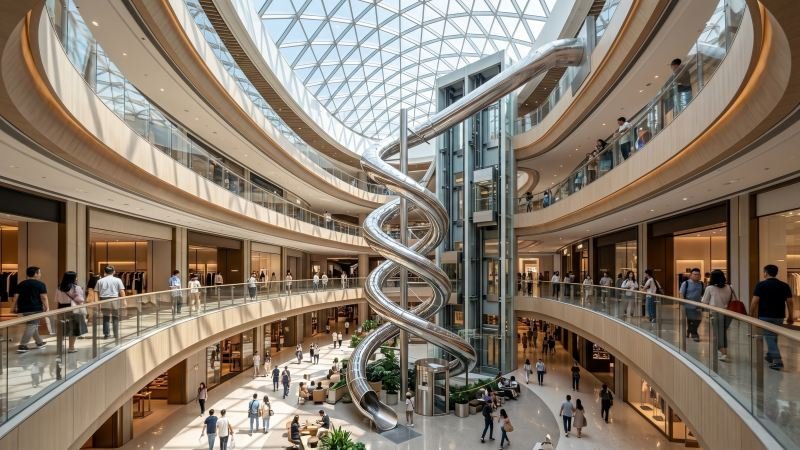
Installing indoor giant stainless steel slides is the ultimate strategy for driving mall foot traffic. These massive interactive installations transform empty atriums into high-yield entertainment anchors, directly countering e-commerce convenience by extending shopper dwell time, creating viral social media moments, and boosting cross-floor retail visibility.
Why Active Entertainment Outperforms Traditional Attractions
Active entertainment outperforms traditional attractions by shifting the retail focus from passive consumption to immersive participation. High-thrill installations like giant slides compel physical visits, effectively neutralizing e-commerce convenience while extending visitor dwell time and increasing secondary spending within the commercial space.
Breaking the E-commerce Habit with Physical Experiences
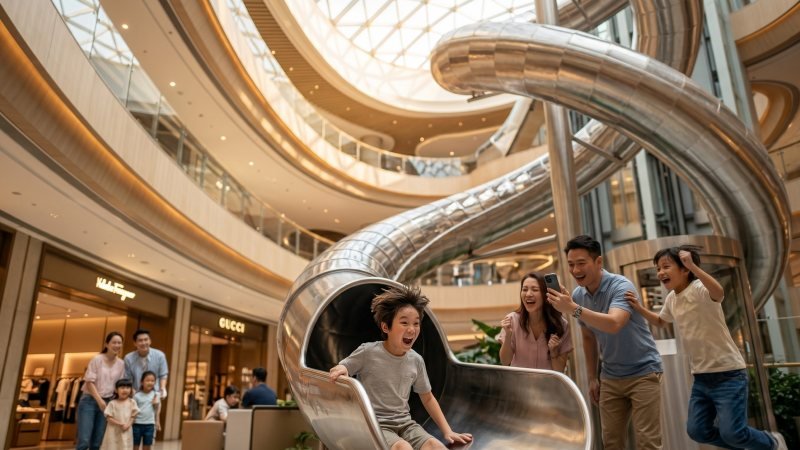
We all know online shopping is fast and highly convenient, but it completely lacks physical and sensory engagement. You simply cannot experience the rush of sliding down a multi-level steel tube through a computer screen. This is exactly where giant indoor slides change the game, giving people a compelling reason to leave their homes and successfully turning a routine shopping trip into a memorable event.
Decades ago, large department stores acted as the main anchors for malls, predictably drawing the massive crowds. Today, that retail landscape has changed dramatically. An experiential anchor, such as a custom stainless steel slide, now serves that exact same magnetic purpose by actively pulling pedestrian traffic inward.
Let’s look at the actual mechanics of this draw. When the World Trade Center (WTC) Mall in Abu Dhabi installed its giant indoor slides, it gave consumers a unique physical task. The result? Visitors came for the thrill of the ride first, and afterward, they naturally stayed to shop, dine, and explore.
“Shoppers today demand an experience that they cannot download, stream, or order for next-day delivery.”
More importantly, active installations demand actual presence. Have you ever seen a static art display hold a crowd’s attention for more than two minutes? Probably not. In contrast, an active slide requires physical participation. At the end of the day, this active physical engagement breaks the automatic habit of buying everything online.
The Impact of Novelty on Customer Dwell Time
Dwell time measures exactly how long a customer remains inside a shopping center. Generally, longer stays directly translate into more money spent at retail tenants. A giant stainless steel slide introduces an extreme level of novelty, and this novelty drastically alters standard shopper behavior.
Visitors rarely just walk past a giant slide. Instead, they stop to watch other people ride. Families happily wait in line for their turn, while friends gather on different floor levels to record videos. The net effect? All of this viewing, queuing, and filming naturally extends their total time inside the building.
Think of this dynamic like a grand indoor carousel or a massive digital interactive play zone. It acts as a visual and experiential focal point that effectively slows down rushing shoppers and encourages them to linger in the surrounding retail zones, rather than just walking past.
Traditional vs. Active Attraction Impact
| Feature | Static Displays (e.g., Fountains, Art) | Active Entertainment (e.g., Giant Slides) |
|---|---|---|
| Dwell Time Addition | 5 to 10 minutes | 30 to 60+ minutes (viewing and riding) |
| Social Media Sharing | Low to Moderate | Very High (Video-centric sharing) |
| Repeat Visit Drive | Low | High (Especially for family groups) |
From an operational standpoint, these slides offer consistent entertainment value that keeps traffic flowing. A typical multi-story slide can handle around 100 to 150 riders per hour. Since exact throughput rates rely heavily on the specific tube diameter and entry gate mechanisms, always verify these operational parameters with your equipment supplier during the planning stage. The bottom line? By keeping people entertained and engaged longer, malls significantly increase their chances of capturing secondary retail and food sales.
Maximizing ROI Through Vertical Space Utilization
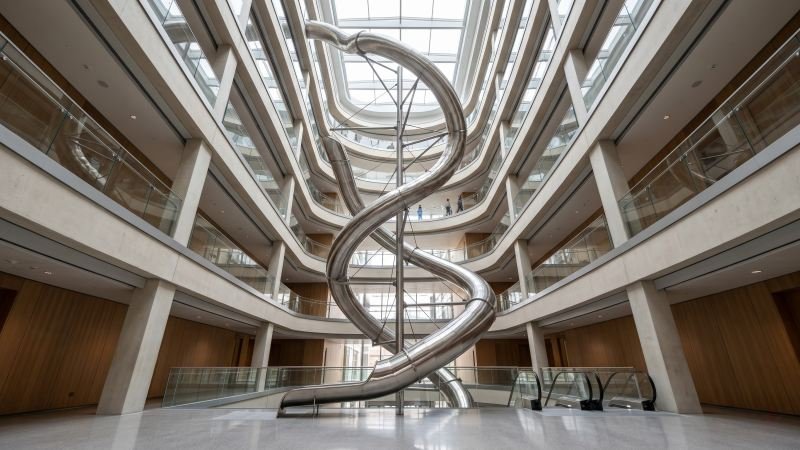
Maximizing ROI through vertical space utilization involves installing giant stainless steel slides in open atriums to connect different floor levels. This strategy transforms non-leasable void spaces into high-yield entertainment anchors, ultimately increasing property value without sacrificing prime ground-floor retail square footage.
Repurposing Low-Value Atriums and Dead Zones
Commercial buildings often feature massive open atriums. These soaring spaces certainly look beautiful, but they generate zero direct revenue. In fact, they cost money to heat, cool, and light. Installing a giant slide fixes this dead-space dilemma head-on.
Think of an empty atrium like a vacant display window in a flagship store. It looks spacious, but it brings in no money until you put a magnetic product inside. A massive stainless steel slide is that magnetic product. It actively fills the empty void and gives shoppers a reason to stop and look.
Let’s talk footprint. These structures require surprisingly little actual floor space. The entrance usually sits on an upper balcony, while the exit requires a very small footprint on the ground floor. Because the exact footprint dimensions depend heavily on the spiral radius and tube diameter, consulting with your manufacturer regarding exact spatial requirements is highly recommended to optimize your floor plan.
The payoff is clear: you preserve your highly profitable ground-floor Gross Leasable Area (GLA). You are essentially monetizing thin air, taking a “dead zone” and turning it into the busiest spot in the building.
“Transforming dead zones into active entertainment hubs is the most cost-effective way to boost commercial property ROI.”
Creating Natural Pathways Across Multiple Retail Levels
Upper floors in shopping malls traditionally struggle to attract visitors because shoppers naturally prefer ground-level convenience. Because of this, upper-level tenants often face lower sales and higher turnover rates. A giant slide instantly solves this vertical circulation problem.
When you place the slide entrance on the highest floor, you create a powerful upward magnet. Visitors must travel all the way up to experience the ride, and along this journey, they walk past dozens of upper-level storefronts. This increased visibility directly boosts retail sales for those specific tenants.
Look at how theme park engineers strategically place signature roller coasters at the far ends of a park. They intentionally use these major attractions to force guests to walk past numerous other rides, merchandise shops, and food stands. A giant slide performs a very similar function in a retail setting, acting as an express route down while maximizing exposure on the way up.
Circulation Impact Comparison
| Pathway Method | Upward Draw | Upper-Tenant Exposure | Floor Space Required |
|---|---|---|---|
| Traditional Escalators | Moderate | Gradual | Large |
| Standard Elevators | Low | Minimal | Small |
| Giant Stainless Slide | Very High | Maximum (forces top-floor visits) | Minimal (uses vertical void) |
What does this mean for your floor plan? It creates a highly efficient circulation loop. Customers ride the elevators or escalators up, shop around the upper floors, and finally slide down to the ground level. This engineered pathway ensures steady foot traffic across every single retail level.
Core Technical and Safety Requirements for Installation
The core technical requirements for installation focus on maintaining absolute structural integrity, utilizing commercial-grade stainless steel, and engineering regulated landing zones. Meeting these strict standards prevents structural failures and ensures continuous operational safety. Furthermore, strict compliance protects the property owner from severe liability risks.
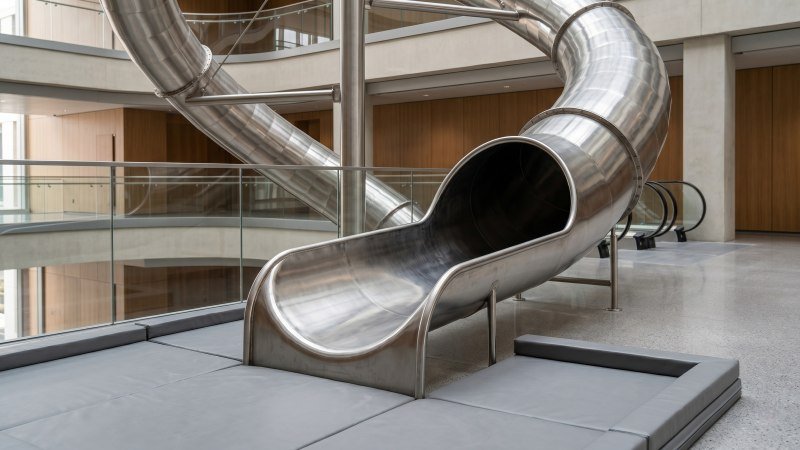
Structural Integrity and Stainless Steel Grade Selection
When building a massive indoor structure, material quality is absolutely critical. Engineers cannot cut corners on metal fabrication. Your first major technical decision? Choosing the correct stainless steel grade.
Most indoor commercial slides use Grade 304 stainless steel, providing excellent long-term durability while strongly resisting general indoor air corrosion. But what happens if your facility features large indoor water fountains or complex climate control systems? In these high-humidity environments, Grade 316 stainless steel is often necessary because it offers superior resistance to ambient moisture.
Let’s move to structural loads. The metal’s thickness directly dictates the overall integrity of the ride. A standard commercial tube slide typically uses steel sheets between 2.5mm and 3.0mm thick. Because exact material thickness and structural load capacities vary based on the total drop height, it is critical to confirm precise engineering specifications with your fabrication partner.
Think about the main support columns of an indoor roller coaster or a high-capacity drop tower. Those structures must smoothly support constant dynamic weight shifts. Similarly, a giant steel tube must safely absorb the continuous kinetic energy of heavy sliding passengers. Because of these extreme dynamic loads, proper argon arc welding techniques and perfectly seamless internal joints are mandatory to prevent dangerous clothing snags and mechanical cuts.
But let’s be brutally honest: seamless welding alone cannot stop physical friction. To eliminate severe skin friction burns, operators must strictly mandate the use of custom sliding mats or friction-control sacks. These carriers standardize the friction coefficient across all riders. Without them, a rider wearing high-friction clothing might stall inside the tube, while a faster rider behind them causes a deadly rear-end collision. On top of that, these mats keep rubber shoe soles away from the metal, preventing sudden stops that easily cause bone fractures.
Designing Safe Exit Buffers and Landing Zones
The fast journey down a slide is only safe if the ending is carefully controlled, which makes designing a proper exit buffer highly critical. You must safely bring high-speed riders to a gentle, complete stop.
Right out of the gate, every giant slide requires a dedicated horizontal run-out section. This completely flat section at the bottom naturally decelerates the rider using gravity and controlled friction. You cannot guess the length of this zone using a simple percentage. Instead, the exact engineered length must be calculated based on kinematic speed simulations and the total drop height. From there, property managers must establish a very clear landing zone that remains completely free of structural pillars, trash cans, and walking pedestrians.
Think about the splash-down pool of a major commercial water slide or the engineered braking zone of an indoor zip line. They require a clear, wide dispersal area to prevent dangerous bottlenecks. Similarly, a fast slide exit requires a dedicated safety buffer to prevent dangerous collisions between consecutive riders.
Typically, international playground safety standards demand specific clear zones. Facility operators generally need at least two meters of completely unobstructed space beyond the metal exit point. Beyond the clear zone, heavy-duty impact mats are usually required right at the exit floor.
Standard Exit Zone Specifications
| Safety Component | Primary Engineering Function | Typical Design Requirement |
|---|---|---|
| Horizontal Run-Out | Natural rider deceleration | Engineered length based on kinematic speed simulations and total drop height |
| Impact Matting | Sudden shock absorption | Minimum 50mm foam thickness |
| Clear Buffer Zone | Rider collision prevention | Minimum 2.0 meters of empty space |
By strictly adhering to these technical parameters, you guarantee a safe user experience so families can confidently enjoy the physical thrill without exposing themselves to unnecessary risks.
How to Evaluate and Select a Custom Fabrication Partner
To successfully evaluate a custom fabrication partner, property operators must strictly assess the manufacturer’s in-house engineering capabilities. Furthermore, you must verify their past commercial installations and conduct a detailed lifecycle cost analysis. Choosing the right vendor ensures complete structural compliance, minimizes future maintenance expenses, and guarantees seamless integration into your existing architectural framework.
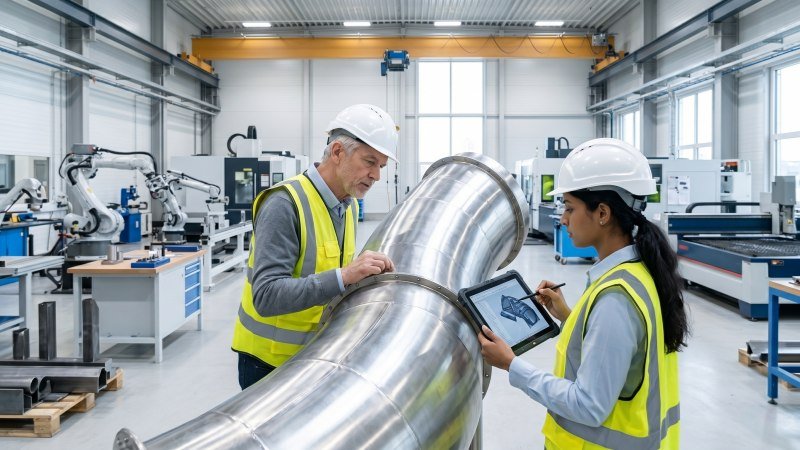
Assessing Manufacturer Engineering Capabilities
Building a multi-story slide is never a simple metalworking job—it requires advanced structural engineering. You need to thoroughly evaluate a manufacturer’s technical skills before signing any contracts.
Start by verifying their design software capabilities. A qualified partner must use advanced 3D modeling. They also must perform Finite Element Analysis (FEA), a digital testing method that simulates exactly how the metal tube will react to the physical stress of heavy, continuous riders.
Consider how an indoor amusement center hires a custom roller coaster engineer. You would never hire a company that only knows how to build basic playground swing sets for a high-speed thrill ride. In the same way, your slide fabricator must deeply understand how their giant dynamic structure interacts with your mall’s existing concrete foundation.
“A reliable fabrication partner delivers a complete turnkey solution, from initial digital stress testing to final physical installation.”
Don’t just take their word for it—always request documented case studies of past indoor installations to get concrete proof of their engineering success in real-world environments.
Key Engineering Evaluation Metrics
| Evaluation Area | What to Look For | Why It Matters for Commercial Spaces |
|---|---|---|
| Design Software | BIM and 3D CAD integration | Ensures the massive slide fits your atrium dimensions perfectly. |
| Stress Testing | Finite Element Analysis (FEA) | Prevents invisible metal fatigue and serious structural failure. |
| Past Projects | Documented retail case studies | Proves the vendor can handle large-scale, high-traffic building sites. |
Balancing Initial Costs with Long-Term Maintenance Requirements
Many mall operators make a critical financial mistake during vendor selection by focusing entirely on the initial purchase quote. But as any veteran engineer will tell you, the cheapest upfront price usually creates the most expensive long-term reality. Are you really saving money if you have to shut down the attraction for repairs every month?
You have to carefully balance your initial capital expenditure against future operating expenses. High-quality manufacturing naturally costs more upfront. For example, a premium fabricator might use thicker steel sheets and apply a superior mirror-polish finish. This premium interior finish drastically reduces physical friction, which directly translates to significantly less daily wear and tear.
Think about installing a commercial-grade indoor trampoline park or a large-scale wave pool. If you buy the absolute cheapest equipment, you will bleed capital on expensive emergency repairs and downtime. A giant slide operates on that exact same financial logic. Investing in premium argon arc welding and superior metal polishing prevents costly future attraction shutdowns.
Even with the best materials, routine maintenance is absolutely mandatory for continuous operation. Facility managers must regularly inspect internal metal seams and check the exterior support anchors. To ensure longevity, always verify the exact maintenance intervals and approved cleaning procedures with your chosen supplier.
At the end of the day, selecting a fabrication partner who prioritizes upfront material quality saves your business significant money over time, keeping your vertical attraction open, perfectly safe, and highly profitable for years to come.
Conclusion
The reality of the modern retail landscape is that giant indoor stainless steel slides offer a powerful, engineering-backed solution to foot traffic challenges. By turning empty vertical space into thrilling, active attractions, commercial properties can successfully draw people away from their screens and back into physical environments. This strategy not only maximizes the utility of existing architecture but also significantly increases dwell time and tenant exposure. If you are ready to transform your mall’s empty atriums into powerful foot traffic magnets and want to discuss custom engineering requirements, please contact us today to explore your options.