-
Whatsapp: +86 15516933785
-
Email: hanlin@hanlinplayground.com
-
Address: Shangjie District, Zhengzhou City, Henan Province, China
-
Whatsapp: +86 15516933785
-
Email: hanlin@hanlinplayground.com
-
Address: Shangjie District, Zhengzhou City, Henan Province, China

The Ultimate Guide to Playground Surfacing: Balancing Safety, Budget, and Maintenance
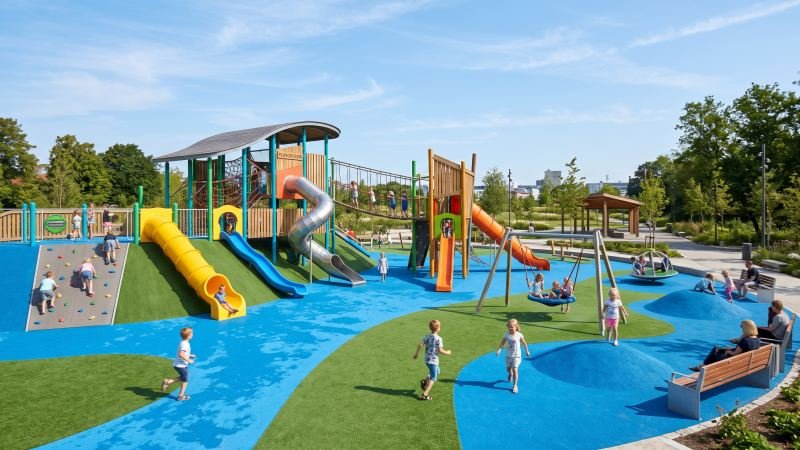
How do you navigate the complex process of selecting the perfect surface for a commercial or public playground?
Selecting the ideal playground surface requires evaluating critical safety metrics, long-term maintenance budgets, and strict accessibility standards. Facility managers must carefully choose between unitary surfaces and loose-fill materials based on specific equipment fall heights, regional climate conditions, and the capacity for ongoing labor.
Critical Safety Standards You Must Meet
What exactly makes a playground surface safe enough to protect children from severe injuries?
A playground surface is deemed safe when it successfully meets specific shock absorption requirements designed to prevent life-threatening head injuries. Therefore, facilities must strictly follow established testing protocols. These rules dictate the necessary thickness and performance of the ground cover based on the specific designated play surface of the equipment.
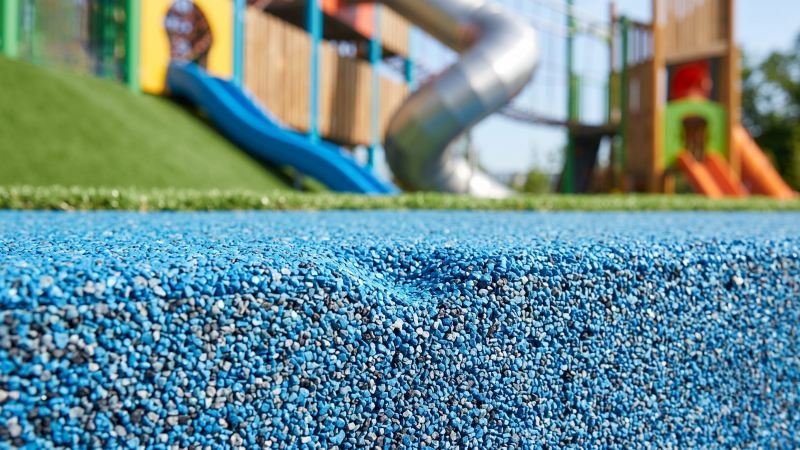
Understanding Critical Fall Height
Let’s start with the absolute baseline metric in playground safety. Critical Fall Height (CFH) represents the maximum height from which a child can fall onto a surface without experiencing a severe head injury. Get this calculation wrong, and your entire site plan is compromised from day one.
Did you know that nearly 70 percent of all playground injuries result from falls to the ground? It’s no surprise that impact absorption is heavily regulated. In the lab, technicians use an instrumented metal headform. They drop this device onto the surface from various heights. From there, they measure the impact against two hard limits:
- G-Max: This measures the peak acceleration of the impact. The maximum allowed score is 200.
- Head Injury Criterion (HIC): This measures the duration and severity of the impact. The maximum allowed score is 1000.
Cross a G-Max of 200 or a HIC of 1000, and the material fails outright. That means your chosen surface’s CFH has to equal or exceed the maximum fall height of the equipment. No exceptions. It is critical to note that fall height is evaluated based on the designated play surface. For dynamic equipment, such as swings, this calculation depends strictly on the suspension pivot point, rather than the seat where a child sits or stands.
To understand this better, think about the thick rubber bumpers at the end of a playground zip-line track. The bumper compresses to safely disperse the kinetic energy of a fast-moving rider, preventing a sudden, rigid stop. Similarly, an approved safety surface compresses to safely disperse the kinetic energy of a falling child. Ultimately, it prevents the sudden, rigid stop that causes severe trauma.
Equipment Height and Surface Depth
It goes without saying that taller equipment requires higher levels of shock absorption. However, impact ratings vary significantly based on material composition and specific manufacturing processes. For this reason, always verify the exact thickness requirements and certified CFH ratings directly with your surfacing supplier.
| Equipment Fall Height | Minimum Required CFH Rating | Safety Status |
|---|---|---|
| 4 Feet | 4 Feet | Pass |
| 6 Feet | 6 Feet | Pass |
| 8 Feet | 7 Feet | Fail |
| 10 Feet | 12 Feet | Pass |
ASTM and CPSC Guidelines
Beyond the physics, you have to navigate the alphabet soup of regulatory bodies. The Consumer Product Safety Commission (CPSC) and ASTM International provide the governing framework for the industry. While the CPSC offers overarching safety guidelines, ASTM sets the strict scientific testing methods.
The CPSC publishes the Public Playground Safety Handbook. Industry professionals consider this document the baseline for all proper site planning. It clearly outlines hazard identification and general safety practices for public spaces.
“The surfacing under and around playground equipment is one of the most important factors in reducing the likelihood of life-threatening head injuries.” — CPSC Public Playground Safety Handbook
On the engineering side, ASTM standards are the highly technical specifications you need to hit. Compliance with these specific standards is often legally required for commercial and public play spaces. Specifically, you should be familiar with the following key industry standards:
- ASTM F1292: This is the primary standard for impact attenuation. It dictates the strict drop test methods for G-Max and HIC described earlier.
- ASTM F2223: This acts as a comprehensive guide for selecting playground surfaces. It helps buyers navigate various performance and testing requirements.
- ASTM F3351: This standard specifically addresses impact testing in laboratory settings. It ensures new materials are properly evaluated under controlled conditions before reaching the consumer market.
Bottom line? Ignoring these established guidelines exposes facilities to immense legal liability and puts kids at risk. Requesting written proof of ASTM compliance from manufacturers isn’t just a best practice—it’s a non-negotiable step in the procurement process.
Which Surfacing Material Fits Your Project
How do you choose the exact playground surface that perfectly matches your specific project requirements?
Selecting the ideal playground surface requires categorizing materials into two primary systems: unitary surfaces and loose-fill materials. Unitary options, such as Poured-in-Place rubber and artificial turf, provide a continuous, solid bound layer. Conversely, loose-fill options, including engineered wood fiber and shredded rubber, consist of small, individual pieces distributed across the designated play area. Your final choice depends entirely on the specific structural needs and use-case of your facility.
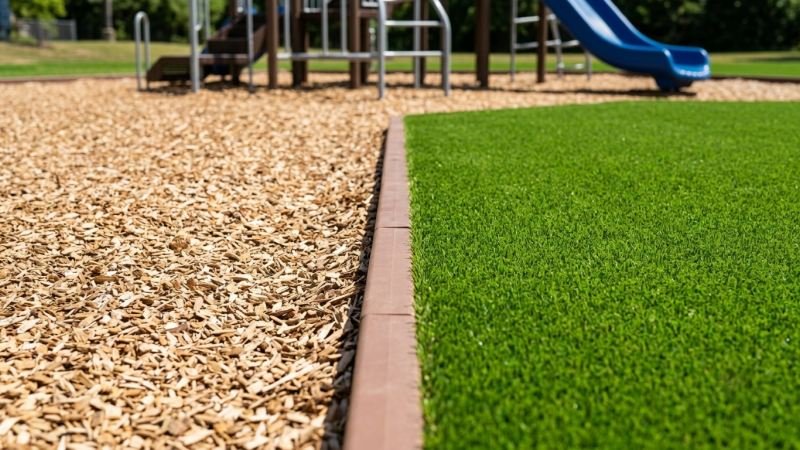
Poured-in-Place PIP Rubber
What is PIP rubber? It is a seamless, two-layer unitary surface. Installers mix and pour this material directly on the construction site. The result is a permanent, solid ground cover.
The build-up starts with a bottom layer of coarse Styrene Butadiene Rubber (SBR). This acts as the primary shock-absorbing cushion. Think of this base layer like the thick rubber shock-absorbing pads used underneath indoor playground climbing walls; it takes the brunt of any heavy impact. On top of that sits the fine Ethylene Propylene Diene Monomer (EPDM) granules. This top wear layer provides the color and resists physical friction.
In the field, the total system thickness usually ranges from 1.5 inches to over 5 inches. However, specific chemical binders and rubber ratios differ among manufacturers. Because of this potential variation, always verify the exact material specifications and thickness capabilities with your chosen supplier.
Interlocking Rubber Tiles
Are you looking for a unitary surface with a simpler installation process? Interlocking rubber tiles offer a pre-manufactured alternative to PIP rubber. Factories mold these tiles into dense, uniform squares, usually measuring 2 feet by 2 feet. They feature puzzle-like edges or hidden pin systems to lock together tightly.
The distinct advantage here over site-mixed materials is the guaranteed, uniform thickness across the entire playground. This consistency is similar to using prefabricated modular playground platforms, where every steel deck piece meets exact factory tolerances. Consequently, you never have to worry about thin spots occurring during installation.
- Standard Thickness: Usually 2 to 4 inches.
- Base Material: Highly compressed recycled tire rubber.
- Top Finish: Often features a pigmented binder or a premium EPDM wear layer.
Artificial Playground Turf
Artificial playground turf looks like natural grass, but it is engineered specifically for heavy commercial play. This system consists of three distinct components working closely together.
It starts at the foundation: a specialized shock pad sits directly underneath the turf. This foam padding provides the essential fall protection. Second, the turf itself features durable polyethylene blades stitched into a porous backing. Finally, installers add infill material, like silica sand or coated rubber granules, between the grass blades. This infill keeps the blades standing upright and adds necessary weight to the system.
“Commercial playground-grade turf requires specific antimicrobial treatments and much higher-density stitching compared to standard landscaping grass.”
Because shock pad densities and infill requirements vary widely, verify the exact specifications with your supplier to ensure the final system meets your strict performance needs.
Engineered Wood Fiber EWF
Engineered Wood Fiber (EWF) is the most common loose-fill material used in commercial playgrounds today. But let’s clear up a dangerous misconception right now: EWF is not standard landscaping mulch. Think any standard wood chips will do the job? Think again.
Standard mulch contains twigs, leaves, and potentially toxic wood. Instead, manufacturers produce EWF exclusively from virgin hardwood. They mechanically shred the wood to specific, highly regulated sizes. These fibers typically do not exceed 2 inches in length.
When properly compacted, the jagged edges of the wood fibers knit together. This mechanical interlocking creates a surprisingly firm surface, operating much like how interlocking rubber playground tiles bind together to prevent shifting under heavy foot traffic.
| Feature | Engineered Wood Fiber (EWF) | Standard Landscaping Mulch |
|---|---|---|
| Source Material | 100% Virgin Hardwood | Mixed woods, bark, yard waste |
| Particle Shape | Uniform, fibrous, no sharp twigs | Irregular, sharp splinters |
| Safety Testing | Certified for impact attenuation | Not tested for safety |
Shredded Rubber Mulch
Shredded rubber mulch is another highly popular loose-fill option. Manufacturers create this material by shredding recycled automotive tires. Before packaging, they use powerful industrial magnets to systematically remove 99.9% of the steel belts and wires found inside the original tires.
Rubber mulch provides exceptional shock absorption because the individual rubber pieces trap air and compress upon impact. In fact, industry data shows that a 6-inch layer of uncompressed rubber mulch often absorbs higher impact forces than 9 inches of standard wood fiber.
Another massive operational advantage is that rubber mulch doesn’t decompose over time. It is highly resistant to compaction and retains its volume significantly better than organic loose-fill materials. Since different manufacturers use various shredding techniques and wire-removal processes, it is extremely important to confirm the purity standards and specific particle size with your supplier before purchasing.
ADA Compliance and Inclusive Play
How can you guarantee that your playground provides equal, barrier-free access for children of all physical abilities?
To achieve strict ADA compliance, your playground surface must provide a continuous, firm, and slip-resistant route connecting all accessible equipment. The ground must allow wheelchairs, walkers, and other mobility devices to move freely without sinking or sliding. Facilities must strictly follow federal guidelines that regulate the specific physical effort required to propel a wheelchair across the material.
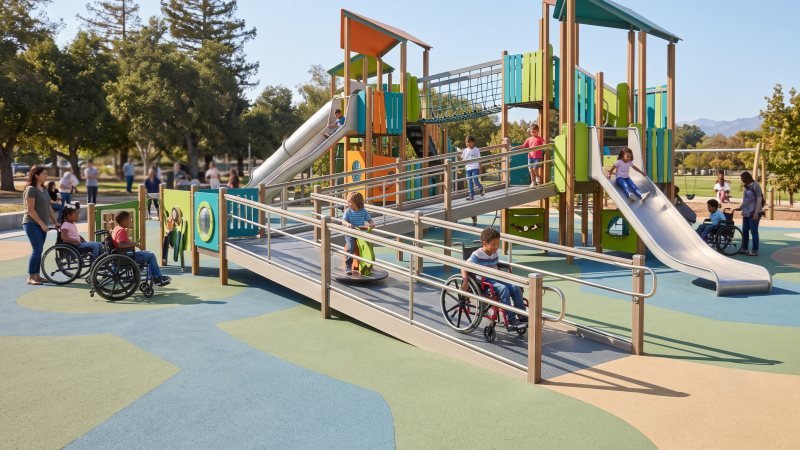
Wheelchair Accessibility Requirements
In 2010, the Department of Justice published updated standards for accessible design. These rules mandate that all newly constructed or altered public playgrounds must be accessible to individuals with disabilities. Because of this, selecting an accessible surface isn’t just a nice-to-have design feature—it’s a strict legal mandate.
To measure this accessibility, the industry relies on a specific testing standard called ASTM F1951. This laboratory test determines the precise accessibility of a surface system. Specifically, it measures the physical work required to propel a manual wheelchair across the material. Technicians test both straight-line propulsion and turning maneuvers.
If it requires more force to move across the playground surface than it does to move across a standard 7.1% grade (approximately 1:14 slope ratio) concrete ramp, the material fails the test.
Think of this concept like a child riding a tricycle across a concrete path versus trying to pedal through a deep sandbox. On concrete, the wheels roll effortlessly. In the sand, the wheels sink deeply, making movement nearly impossible. Similarly, a playground surface must remain highly rigid to support the concentrated weight of a wheelchair without causing the tires to drag.
“A surface is only truly inclusive if a child using a mobility device can independently navigate to the play structure without getting stuck.”
On top of the impact tests, the ADA requires accessible routes to be at least 60 inches wide. This specific width allows wheelchairs to safely turn around and pass each other. Because accessibility test results often vary based on installation depth and sub-base preparation, you should always verify the exact ASTM F1951 laboratory test results with your surfacing supplier.
Best Surfaces for Mobility Devices
Which materials actually provide the easiest navigation for inclusive play? Generally, surfaces fall into two distinct categories regarding mobility: highly accessible and conditionally accessible.
Unitary surfaces consistently rank as the best options for mobility devices. Materials like poured-in-place rubber, interlocking rubber tiles, and artificial turf create a smooth, solid plane. They completely eliminate the risk of wheels sinking. Furthermore, they do not displace under heavy foot traffic. That means they offer the lowest rolling resistance possible.
Flip the script to loose-fill materials, and you run into significant operational hurdles. For instance, Engineered Wood Fiber (EWF) can technically pass the ASTM F1951 test. However, it only passes when it is freshly installed, heavily compacted, and perfectly dry.
Want to guarantee a failed accessibility inspection? Just let heavy foot traffic push those loose wood fibers around. Deep ruts and uneven areas rapidly form, especially at the bottom of slides. The minute that happens, those ruts instantly become illegal barriers for wheelchairs. Industry data indicates that navigating across unmaintained loose-fill materials requires up to 30% more physical exertion compared to solid rubber surfaces.
The takeaway here? Facilities have to take a hard, honest look at their maintenance capabilities before specifying materials for an inclusive space.
| Surface Type | Rolling Resistance | ADA Maintenance Requirement | True Inclusivity Level |
|---|---|---|---|
| Poured-in-Place Rubber | Extremely Low | Minimal (Sweep and wash) | Excellent |
| Interlocking Tiles | Very Low | Minimal (Inspect seams) | Excellent |
| Artificial Turf | Low | Moderate (Brush infill) | Very Good |
| Engineered Wood Fiber | High | Intensive (Daily raking/tamping) | Conditional |
| Sand / Peagravel | Fails ADA Test | N/A (Not permitted) | Poor |
Financial Planning and Maintenance
How do initial costs and ongoing upkeep truly affect your playground surface budget?
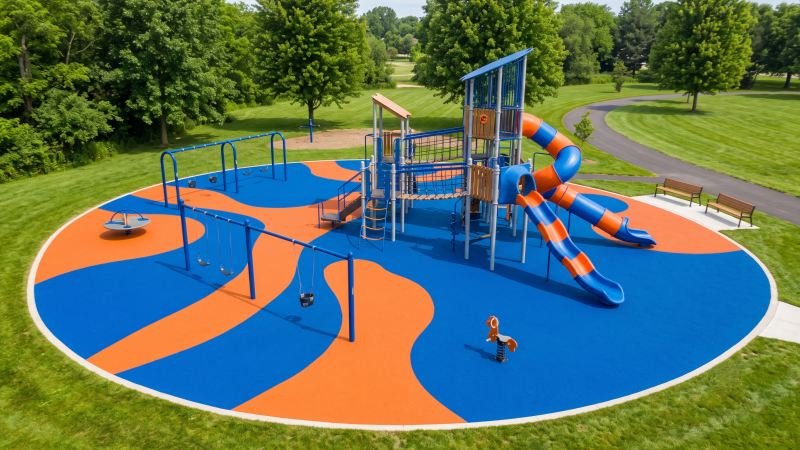
The total cost of ownership for a playground surface consists of the initial material purchase plus the ongoing, long-term upkeep. While loose-fill materials require a significantly lower upfront capital investment, they demand continuous labor for raking and replenishing. Conversely, unitary surfaces demand a high initial installation budget but offer remarkably lower maintenance costs and minimal labor requirements over their operational lifespan.
Upfront Installation Expenses
The initial price tag usually drives the purchasing decision. When you’re building out the estimate, your initial budget has to cover three primary buckets: raw materials, freight shipping, and installation labor.
Loose-fill materials represent the most budget-friendly starting point. Materials like Engineered Wood Fiber (EWF) or shredded rubber are relatively inexpensive to produce. Add to that the fact that the installation process is practically foolproof. Landscaping crews simply dump the material into the play area and spread it out. You do not need highly specialized technicians.
Look at unitary surfaces, on the other hand, and you’re staring down a massive upfront capital investment. Poured-in-place rubber, for example, is highly engineered. The raw chemical binders and premium rubber granules are expensive. More importantly, you must hire highly specialized installation crews. These technicians must manually mix and trowel the chemicals on-site before the binders cure.
Think of this upfront cost difference like installing a simple freestanding playground slide versus constructing a massive, multi-level custom play tower. The simple slide costs very little and takes hours to install. Conversely, the custom tower requires expensive materials, heavy lifting equipment, and skilled assembly crews.
Long-Term Upkeep and Labor Costs
Facility managers frequently ignore hidden labor costs. However, daily maintenance ultimately dictates your actual long-term budget.
Loose-fill systems demand intensive, ongoing labor. When children play, they kick the loose material away from high-traffic zones, like the bottom of slides. Consequently, maintenance workers must constantly rake the surface back to a level depth. If they don’t stay on top of it, the playground quickly fails safety inspections.
Worse still, organic loose-fill materials physically break down and decompose over time. Wind and rain also wash the material away. Do the math: playgrounds typically lose about 20% to 25% of their wood fiber depth annually. That means purchasing new top-off material every single year just to maintain safety compliance.
“Over a standard 10-year lifecycle, the hidden labor costs required to maintain loose-fill surfaces frequently exceed their initial purchase price.”
Unitary surfaces require a completely different maintenance strategy. They demand almost zero daily labor. The solid surface never displaces or blows away. Facility staff only need to use a leaf blower to remove basic debris. Periodically, they might use a gentle power washer to clean spills.
| Expense Category | Loose-Fill Materials | Unitary Surfaces |
|---|---|---|
| Initial Purchase | Low | Very High |
| Daily Labor Needed | High (Constant raking) | Low (Basic sweeping) |
| Annual Replenishment | Yes (Requires new material) | No |
| 10-Year Overall Cost | High (Due to constant labor) | Moderate (One-time investment) |
Maintaining loose-fill wood fiber is exactly like maintaining a high-traffic sand play area. Daily activity constantly pushes the material out of the designated zone, requiring maintenance crews to regularly rake it back into place and constantly buy new sand to replace what spills out. In contrast, maintaining a unitary rubber surface is like maintaining a solid rubber bridge on a play structure. You simply sweep the surface to keep it functional.
Site Preparation and Climate Impact
How do underlying ground conditions and local weather patterns dictate the success of your new play area?
The long-term performance of any playground surface relies entirely on proper sub-base engineering and climate-specific material selection. A correctly installed foundation with active drainage prevents subsurface water accumulation, which rapidly destroys surface stability. Additionally, selecting materials designed to withstand regional temperature extremes and extreme UV exposure prevents structural breakdown and dangerous heat absorption.
Drainage and Base Installation
You cannot simply place playground materials directly onto bare dirt. First, contractors must excavate the native soil to install a specialized foundation. Industry professionals call this the sub-base.
In standard practice, a high-quality sub-base means heavily compacted crushed stone. From there, your civil crew installs perforated drainage pipes underneath this stone layer. This hidden system actively pulls rainwater away from the play zone.
Ever seen a six-figure playground surface fail in its second year? Nine times out of ten, it’s a sub-base drainage issue. Think about a playground sandbox without drainage holes at the bottom; after a heavy rainstorm, it becomes a permanent mud puddle that rots the surrounding wood. Similarly, trapped water easily destroys expensive playground surfaces from the bottom up. Standing water rapidly breaks down the chemical binders inside synthetic rubber surfaces, while poor drainage accelerates the organic rotting process in loose-fill wood materials.
“Proper drainage is the invisible shield that protects your entire playground investment from premature structural failure.”
Because necessary aggregate depths and pipe sizes depend entirely on your local soil composition and regional frost line, you should always verify the exact base specifications with your civil engineer and surfacing supplier. Different soil types, like heavy clay versus loose sand, require drastically different drainage strategies.
Weather Durability and Heat Retention
Beyond underground water, extreme weather directly attacks the top layer of your playground. Let’s look at the thermal loads from intense heat and direct sunlight.
Dark-colored synthetic materials naturally absorb immense amounts of solar radiation. In fact, safety data shows that dark rubber surfaces can easily exceed 160 degrees Fahrenheit on a typical sunny summer day. This extreme heat creates severe contact burn hazards for bare skin.
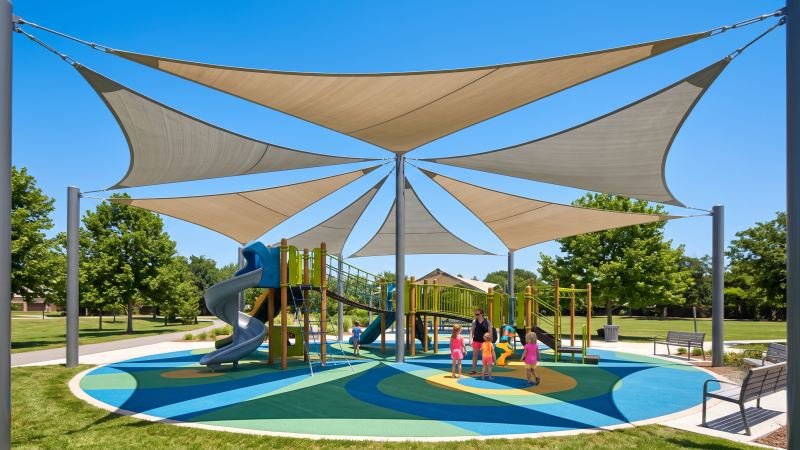
If you’re building in the Sunbelt or similar extremes, you have to engineer around this. Facilities must adapt by choosing lighter surface colors to reflect the light, or by installing permanent commercial shade structures directly over the play equipment.
Shift your focus to colder climates, and the destructive power of the freeze-thaw cycle becomes your biggest enemy. Water inevitably settles into microscopic surface pores. When ambient temperatures drop, this trapped water freezes and expands violently.
Consider commercial plastic playground tubes and slides. Without proper UV stabilizers and expansion joints in the mounting hardware, extreme temperature shifts cause the rigid plastics to warp and crack. Playground surfaces endure the exact same severe thermal stress. They require highly flexible chemical formulations to survive harsh winters without cracking.
| Climate Threat | Impact on Surface | Professional Solution |
|---|---|---|
| Direct UV Exposure | Color fading, chemical breakdown | High-grade UV stabilizers |
| Extreme Heat | Dangerous surface temperatures | Light-colored pigments, shade canopies |
| Freezing Temperatures | Ice expansion causing structural cracks | Highly porous drainage base |
| Heavy Rainfall | Material washout, binder failure | Sloped sub-base, perforated piping |
Since chemical UV stabilizers and heat-reflective pigments differ greatly across different product lines, always verify the exact thermal ratings and UV warranties with your specific supplier before making a final purchase. Ensuring your materials match your climate is vital for long-term durability.
Conclusion
At the end of the day, navigating playground surfacing is a high-stakes balancing act between upfront capital, operational maintenance capacity, and uncompromising engineering safety standards. Whether you opt for the seamless accessibility of poured-in-place rubber or the budget-friendly approach of engineered wood fiber, the right choice ultimately depends on your facility’s unique needs, climate, and maintenance capabilities. Always prioritize ASTM and ADA compliance to ensure every child can play safely and inclusively. If you need expert guidance selecting the perfect materials for your next project, please contact us.