-
Whatsapp: +86 15516933785
-
Email: hanlin@hanlinplayground.com
-
Address: Shangjie District, Zhengzhou City, Henan Province, China
-
Whatsapp: +86 15516933785
-
Email: hanlin@hanlinplayground.com
-
Address: Shangjie District, Zhengzhou City, Henan Province, China

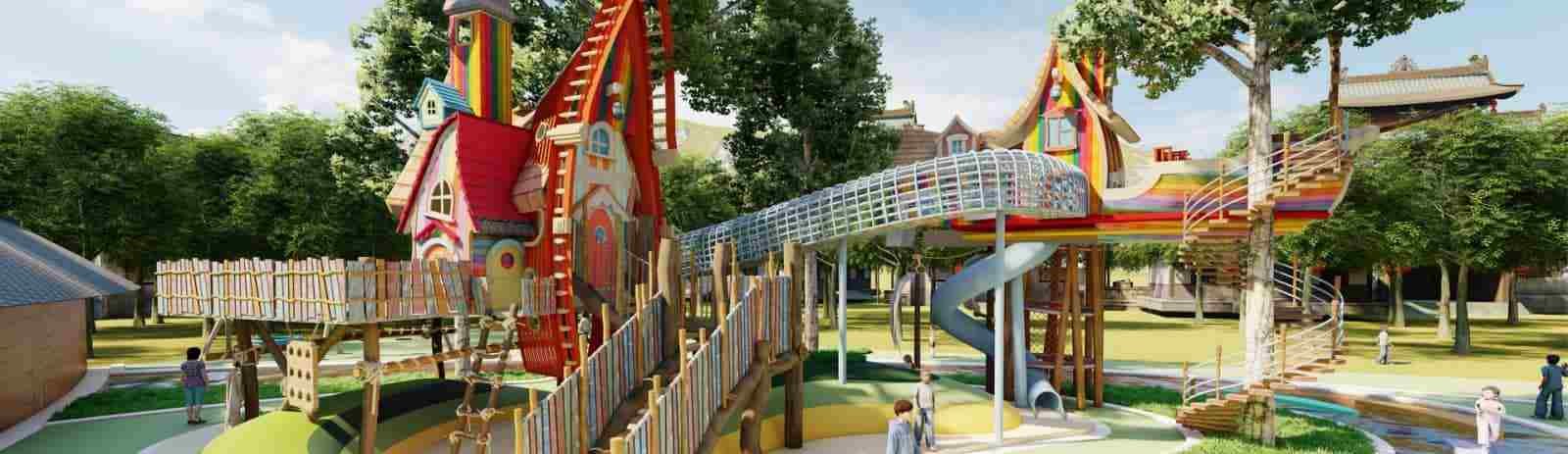
Indoor vs. Outdoor Kids Rope Courses: Material & Maintenance Differences
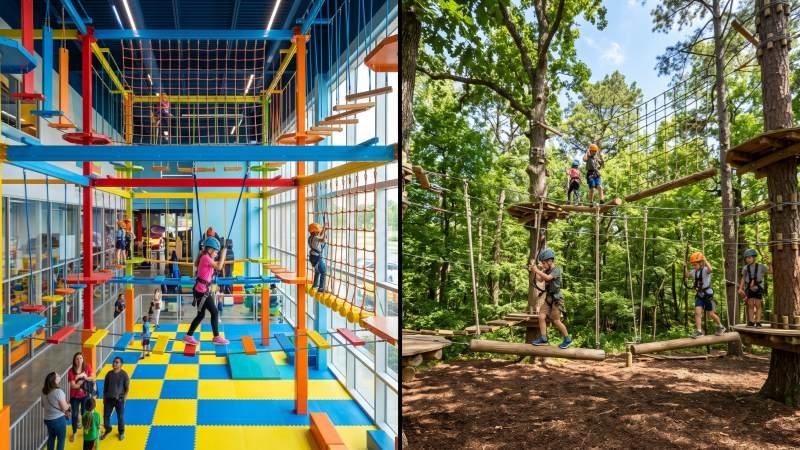
What are the primary differences in material selection and daily maintenance between indoor and outdoor kids rope courses?
The primary differences lie in weather resistance and operational environments. Outdoor rope courses require heavy-duty, UV-resistant materials and rigorous seasonal maintenance to combat natural decay, resulting in lower initial facility costs but higher long-term upkeep. On the flip side, indoor courses utilize specialized fire-retardant materials and focus on daily hygiene and friction wear, requiring high upfront real estate investments but offering highly stable, year-round revenue.
Material Specifications for Extreme Weather vs. Controlled Environments
Let’s cut right to the chase: when mapping out a commercial project, the choice between indoor and outdoor kids rope courses boils down to one brutal reality—extreme weather survival versus a highly controlled, stable environment.
Outdoor rope courses demand UV-resistant synthetic ropes, hot-dip galvanized steel, and pressure-treated wood to withstand harsh weather and constant sun exposure. Conversely, indoor courses utilize high-tenacity polyester blends, internally primed carbon steel, and fire-retardant treated woods, safely protected within a climate-controlled facility.
Rope and Netting Selection Criteria
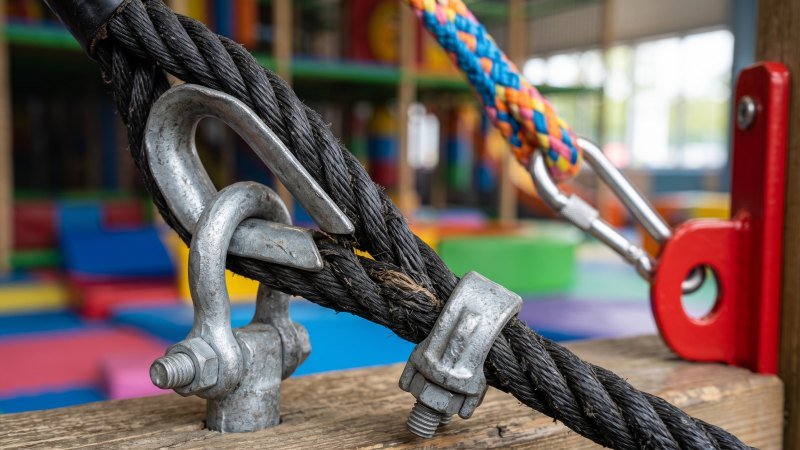
Designing a load-bearing netting system? Choosing the exact rope composite is arguably the most critical engineering decision you’ll make. Why? Because the operating environment instantly dictates your material limits.
Outdoor Rope Requirements
Outdoor nets face a daily barrage of rain, ice, and intense sunlight. That’s exactly why seasoned builders spec out steel-core combination ropes or high-density polyethylene (HDPE). These materials have special chemical blockers to fight ultraviolet (UV) light. Ever seen what a single summer of direct sunlight does to an untreated plastic net? It becomes dangerously brittle and snaps under minimal load. Just like a zipline cable needs a tough steel core to handle heavy loads outside, outdoor nets need high tensile strength to survive wind and weather.
Indoor Rope Requirements
Indoor parks stay warm and dry, but they still require immense structural integrity. Builders utilize high-tenacity nylon or specialized polyester blend ropes. Because of this protected environment, you get a lot more flexibility—while they do not need expensive UV treatments, these indoor materials must undergo rigorous Fire-Retardant (FR) treatments to comply with commercial building fire codes (such as EN 13501-1). Importantly, natural fibers like cotton must never be used for load-bearing nets. Cotton lacks tensile strength, stretches unpredictably, and quickly rots from absorbing human sweat and facility humidity.
Rope breaking strength and load limits can change depending on the specific synthetic blend. You should always verify the exact weight limits and material test reports with your supplier before making a final purchase.
| Feature | Outdoor Ropes | Indoor Ropes |
|---|---|---|
| Primary Material | Steel-core, HDPE | High-tenacity Nylon, Polyester |
| Key Protection | UV inhibitors, Waterproofing | Fire Retardancy (FR), Sweat resistance |
| Lifespan Factors | Sun damage, Fraying from wind | General physical wear, Friction |
| Hand Feel | Rough, Stiff | Smoother, Flexible |
Structural Steel and Frame Coatings
Your metal skeleton holds the entire attraction together. But let’s face the cold, hard facts—humidity and rain will aggressively eat right through the wrong structural steel.
Guarding Against Rust Outdoors
Outdoor courses require maximum rust protection. Manufacturers rely heavily on hot-dip galvanized (HDG) steel. In this process, workers dip the steel pipes into a vat of melted zinc, creating a thick metal armor against moisture. For coastal areas with salty air, parks often upgrade to 304 or 316 marine-grade stainless steel. This stops rapid corrosion completely.
Indoor Steel Solutions
Indoor metal frames do not fight rain, but they do face high humidity, facility condensation, and human sweat. Ever wonder why a seemingly perfect indoor structure suddenly fails? Here is the engineering reality: while carbon steel is the base, load-bearing structures must never rely solely on a cosmetic surface coating. Manufacturers first apply a heavy-duty zinc-rich primer or internal anti-corrosion layer before finishing with an electrostatic powder coating. This crucial internal layer prevents hidden rust at bolt connections and tube interiors, which could otherwise lead to catastrophic structural failure under dynamic stress.
Wood Treatments and Platform Durability
Kids stand, jump, and run on wooden platforms. The wood must stay solid and safe over time.
Weather-Resistant Outdoor Platforms
Outdoor wood rots quickly if left untreated. Builders must use pressure-treated lumber. This wood goes inside a large tank that forces chemical preservatives deep into the grain. Another popular option is using naturally tough wood like Robinia, which naturally stops bugs and water damage. Using untreated wood outside is exactly like building an outdoor wooden roller coaster with standard house planks; it will warp and fail in months.
Fire-Retardant Indoor Wood
Indoor platforms never get wet from rain, but they face strict commercial fire safety regulations. Instead of standard lumber, fabrication shops build these platforms out of high-grade plywood or kiln-dried pine that has been strictly treated with Fire-Retardant (FR) chemicals to meet standard building fire codes like ASTM E84. Workers sand the edges perfectly smooth and apply a clear, non-toxic varnish. Building an indoor attraction with standard, untreated wood creates a massive fire hazard that will instantly fail safety inspections.
Daily and Seasonal Maintenance Workflows
Maintenance workflows differ drastically depending on whether a park faces the elements or operates under a roof.
Outdoor maintenance requires extensive weatherproofing, daily debris clearing, and strict winterization protocols to fight natural decay. In contrast, indoor maintenance primarily focuses on routine sanitization, dust removal, and checking equipment for friction wear, as the building provides a totally stable environment year-round.
Weatherproofing and Winterization Protocols for Outdoor Setups
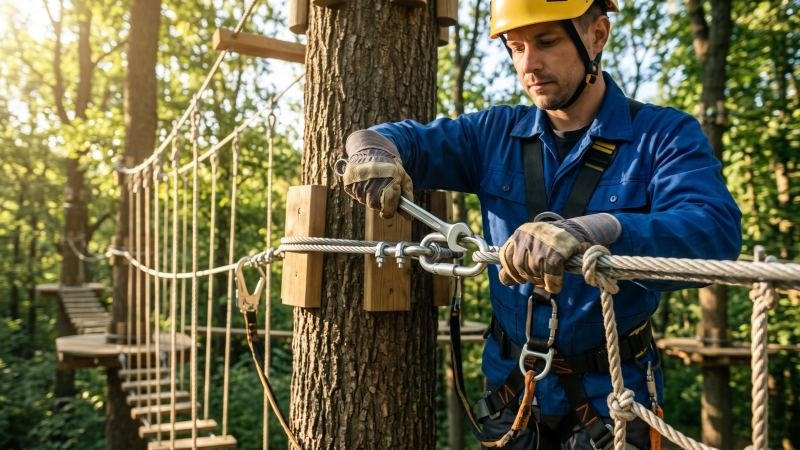
Outdoor parks face a relentless, 365-day battle against nature. Think about it: what happens when a sudden micro-burst or severe storm hits your facility? Your maintenance teams are constantly reacting to the weather. Staff must walk the entire course every morning to actively remove fallen branches, wet leaves, and bird droppings from the walking paths.
And don’t overlook the changing seasons—winterization takes serious operational muscle. When winter approaches, outdoor parks undergo strict winterization. This process is very similar to how outdoor water parks drain their slide pumps before the first freeze. Workers must cover crucial mechanical joints with heavy-duty tarps and apply thick industrial grease to exposed turnbuckles and wire ropes. This action stops ice from cracking the metal components.
Think those main support lines stay perfectly taut after a month of high winds? Not a chance. High winds naturally stretch tension cables over time. Maintenance crews must frequently recalibrate the tension on the main support lines. Because tension limits and torque specifications can change based on the specific cable brand, verify the exact torque requirements with your hardware supplier to ensure ongoing safety compliance.
Cleaning and Wear Inspection in High-Traffic Indoor Parks
Indoor parks completely avoid rain and snow. So, the maintenance playbook flips entirely. Without natural weather to wash away dirt, indoor courses gather immense amounts of dust, lint, and human sweat.
Daily cleaning is the top priority here. Maintenance staff must vacuum platforms and wipe down handholds every single night. They use specialized, non-corrosive sanitizers to clean the ropes. This daily routine is exactly like the disinfection protocols used in large indoor trampoline parks. Strict hygiene prevents the spread of germs among hundreds of daily visitors.
Beyond cleaning, indoor inspections focus heavily on friction wear. Since weather does not degrade the indoor materials, customer traffic causes all the damage. Workers closely check the synthetic ropes and harness connection points. They specifically look for tiny frays or flattened fibers caused by thousands of sliding hands.
| Maintenance Focus | Outdoor Workflows | Indoor Workflows |
|---|---|---|
| Daily Clearing | Removing leaves, rainwater, and animal droppings | Vacuuming dust and wiping sweat from touchpoints |
| Seasonal Chores | Applying grease, winterizing lines, rust prevention | Deep sanitization, HVAC checks, cosmetic touch-ups |
| Inspection Priority | Weather decay, wind damage, cable tension limits | Friction fraying, hygiene control, joint wear |
Safety Standards and Impact Attenuation Surfaces
Fall protection is a strict requirement for any aerial attraction, but the ideal impact attenuation surface depends entirely on the venue.
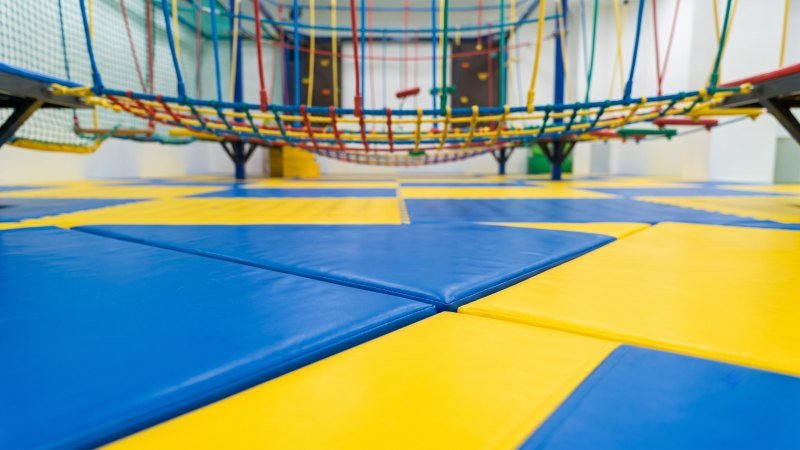
Outdoor rope courses require impact-absorbing materials that provide excellent water drainage and resist biological decay, such as engineered wood fiber or porous rubber. Conversely, indoor courses rely on highly engineered, HIC-tested polyurethane foam mats that prioritize strict hygiene control and advanced shock absorption for high-altitude drops.
Drainage and Decay Prevention for Outdoor Flooring
Outdoor safety flooring must absorb heavy impacts while surviving harsh weather. In fact, engineering the right drainage is just as critical as the cushioning itself.
If water pools under a climbing net, the flooring quickly becomes a safety hazard. To prevent this, builders often install Engineered Wood Fiber (EWF). EWF is a popular choice for outdoor parks because it knits together to form a soft, springy surface, and more importantly, water flows right through it. This is very similar to how a commercial splash pad uses specialized porous concrete to prevent standing water.
Poured-in-place (PIP) rubber is another highly effective outdoor option. Workers mix rubber granules with a chemical binder, then spread it over a crushed stone base. The stone base acts as an invisible drain. This system completely prevents mold and decay from destroying the rubber from below.
Because maximum fall height ratings and required material depths can change based on the specific rubber blend, you should verify the exact thickness requirements with your flooring supplier to ensure compliance with local safety codes. Generally, outdoor surfaces must meet strict ASTM F1292 standards for impact attenuation.
Hygiene and Cushioning Requirements for Indoor Mats
Indoor safety surfaces face a completely different set of challenges. Because rope courses involve significant Free Fall Heights (FFH), standard EVA foam tiles (commonly used for toddler ground-play) are extremely dangerous and strictly prohibited for impact zones.
To map out the safest flooring material, indoor facilities rely on highly engineered, high-density Polyurethane (PU) foam blocks wrapped in heavy-duty PVC vinyl. This setup ensures maximum shock absorption for high-altitude drops. The PU safety padding must be rigorously tested for the Head Injury Criterion (HIC) to meet critical safety standards like ASTM F1292 or EN 1177.
Better yet, that smooth PVC vinyl cover is completely waterproof. This means your ground crew can quickly wipe away sweat, spilled drinks, and bacteria using standard sanitizing sprays. Operators must ensure the chosen indoor PU mats perfectly match the specific critical fall height of their tallest rope structures.
| Feature | Outdoor Flooring (EWF / PIP Rubber) | Indoor Flooring (PU Foam Mats) |
|---|---|---|
| Primary Safety Focus | Drainage, slip resistance, and decay prevention | HIC testing, FFH compliance, and hygiene |
| Material Types | Engineered wood fiber, poured-in-place rubber | High-density PU foam blocks in PVC vinyl |
| Water Management | Requires crushed stone sub-base for fast drainage | Non-porous surfaces for easy liquid spill cleanup |
| Maintenance Needs | Raking, topping off materials, power washing | Daily sweeping, mopping, and surface sanitization |
How Material and Upkeep Impact Your Total ROI
Beyond construction, the choice of materials and the ongoing maintenance load directly dictate the long-term profitability of the attraction.
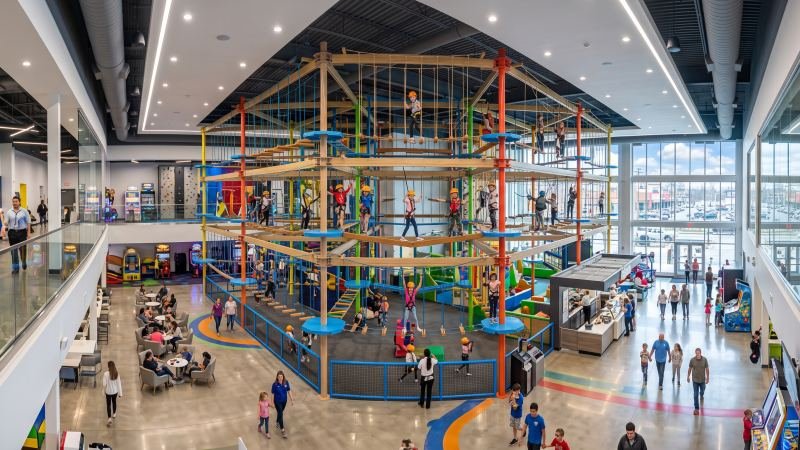
Outdoor courses generally require a lower initial structural investment but incur higher long-term replacement costs and significant weather-related revenue losses. Conversely, indoor courses demand high upfront capital for commercial real estate. However, they deliver a faster, stable ROI through year-round operation and reduced equipment decay.
Calculating Initial Investment vs. Long-Term Replacement Costs
When mapping out a Family Entertainment Center (FEC), whether you are evaluating high ropes vs. low ropes courses, you have to look far beyond the upfront equipment costs. Where you build completely changes your financial timeline.
Building an outdoor course is usually cheaper per square foot. Operators do not have to pay for an expensive building shell or massive air conditioning systems. The catch? Those long-term replacement costs will sneak up on you. The sun, rain, and snow constantly attack the equipment. Before you know it, you’re swapping out UV-resistant ropes and re-staining wood platforms much more frequently than planned. This is exactly like operating an outdoor amusement park train. The initial track layout is cheap, but you must constantly replace rusted wheels.
Switching gears, an indoor rope course demands a huge initial investment to lease prime commercial space. But here’s where you win out: the materials last significantly longer. Because the ropes and steel frames sit in a dry, stable room, operators rarely buy replacement parts. The equipment simply does not rot. Therefore, the long-term savings often outweigh the high initial building costs.
When calculating your budget, it is advisable to verify the guaranteed material lifespan with your supplier, as warranty lengths and exact replacement cycles vary significantly among manufacturers.
Downtime Risks and Revenue Loss Differences
Sure, maintenance overhead is a huge piece of the puzzle, but what about the money you aren’t making? Let’s be brutally honest—what good is low initial overhead if you have to padlock the gates every time the sky turns gray? Simply put, downtime destroys profitability.
Outdoor rope courses are entirely at the mercy of the weather. When a thunderstorm hits, you must close the park. When winter brings ice, you must shut down for months. Every closed day represents thousands of dollars in lost ticket sales. Furthermore, after a major storm, your staff must spend hours inspecting the course for safety before reopening. This means you are paying staff wages while zero money comes in.
Indoor parks completely eliminate weather downtime. They offer a perfect 72-degree environment every single day of the year. This allows operators to confidently book birthday parties and corporate events months in advance. They never have to issue rain checks or refund tickets, which creates a highly predictable cash flow. Ultimately, predictable cash flow makes it much easier to pay back initial business loans.
| Financial Factor | Outdoor Rope Course | Indoor Rope Course |
|---|---|---|
| Initial Facility Cost | Lower (No building required) | Higher (Lease and HVAC costs) |
| Equipment Replacement | Frequent (Weather damage) | Rare (Friction wear only) |
| Operational Days | Seasonal / Weather-dependent | 365 Days a year |
| Revenue Predictability | Unstable (Affected by storms) | Highly Stable |
| Long-Term ROI Speed | Slower (Due to closures) | Faster (Continuous operation) |
Conclusion
At the end of the day, making the call between an indoor and outdoor kids rope course comes down to balancing your initial capital with your long-term operational capabilities. Outdoor courses offer a lower barrier to entry regarding facility costs but demand relentless defense against the elements through specialized materials and heavy maintenance. Indoor courses require significant upfront investments in real estate and HVAC but provide the unmatched stability of year-round operation and minimal material decay. By fully understanding these critical differences in material selection, structural engineering standards, and safety compliances, operators can make the best decision to protect their customers and maximize their return on investment.
Ready to design a safe, compliant, and highly profitable adventure park? Contact us today for a professional consultation and tailored design solutions.