-
Whatsapp: +86 15516933785
-
Email: hanlin@hanlinplayground.com
-
Address: Shangjie District, Zhengzhou City, Henan Province, China
-
Whatsapp: +86 15516933785
-
Email: hanlin@hanlinplayground.com
-
Address: Shangjie District, Zhengzhou City, Henan Province, China

What Is a Play Cafe? A Complete Guide to the Modern Family Phenomenon
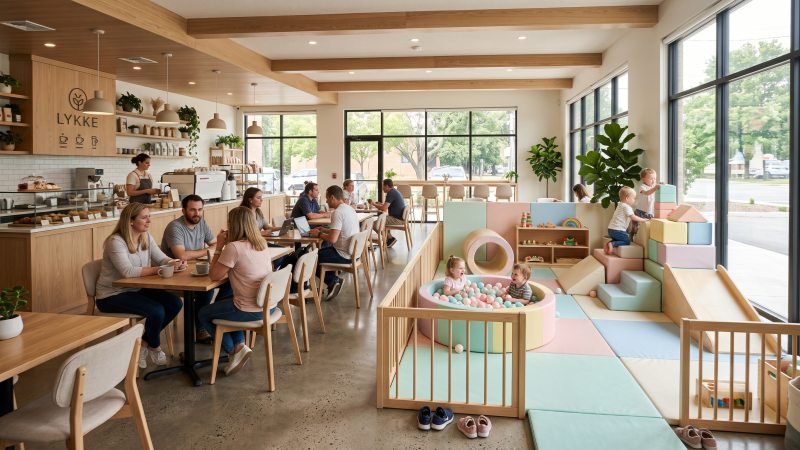
What exactly is a play cafe, and why is it quickly becoming a staple in communities everywhere?
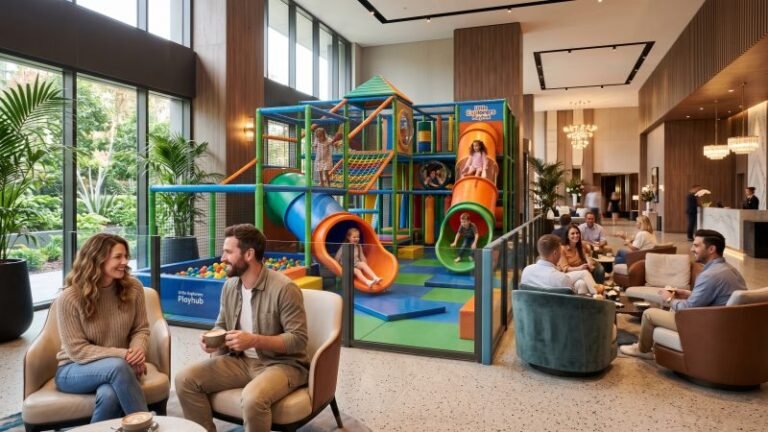
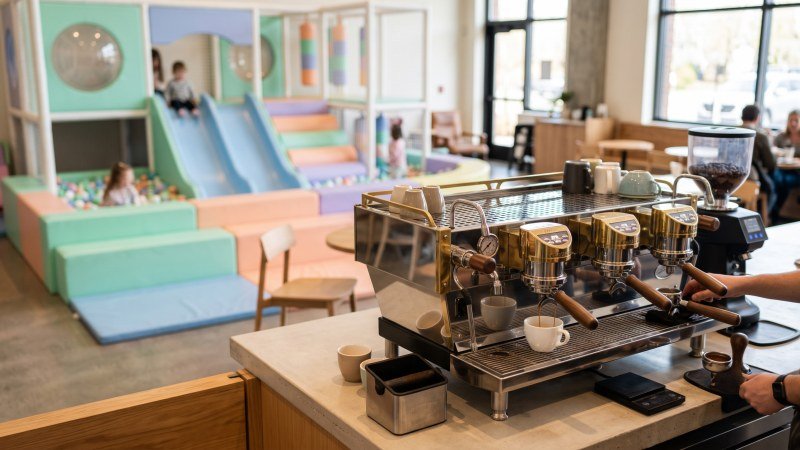
A play cafe is a hybrid family entertainment venue that intentionally combines a specialized indoor play area for toddlers with a premium coffee shop environment for adults. Unlike traditional indoor playgrounds, play cafes focus on boutique aesthetics, rigorous hygiene, and open layouts, allowing parents to relax, work, or socialize while safely supervising their children from a close distance.
How They Differ From Traditional Indoor Playgrounds
What exactly sets a modern play cafe apart from a standard indoor playground?
A play cafe balances premium cafe amenities for adults with a contained play area for toddlers. Unlike traditional playgrounds that prioritize massive structures, play cafes focus on smaller, open-concept spaces. This design allows parents to relax while keeping children within a direct line of sight.
Boutique Aesthetics Over Overstimulating Environments
Have you ever walked into a massive family entertainment center and felt instantly overwhelmed? Traditional indoor playgrounds often rely on bright primary colors like neon red, yellow, and blue. They use loud arcade noises and flashing lights to excite older children. But a play cafe flips that script entirely.
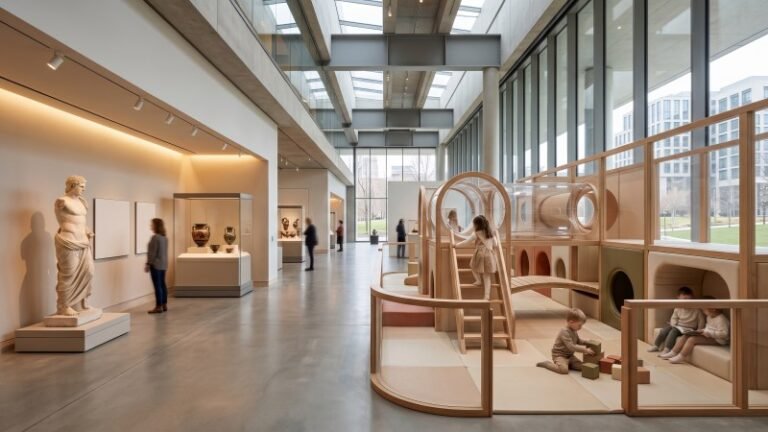
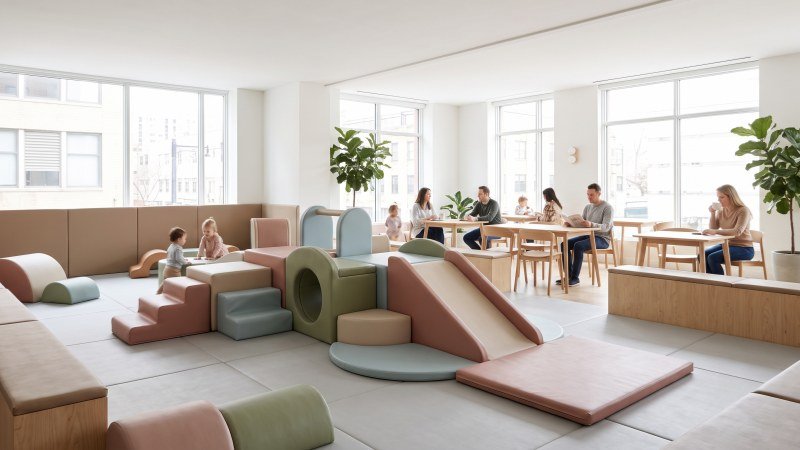
Rather than bombarding the senses, these modern venues lean into a boutique aesthetic. You will see muted color palettes, soft pastels, and natural wood finishes. This shift is similar to how the amusement industry upgraded from noisy, dark arcades to modern, brightly lit family entertainment centers. The operational goal is to prevent sensory overload for both toddlers and their parents.
For example, instead of shiny, hard plastics, play cafes use matte-finished, commercial-grade soft play equipment. This careful design choice engineers a genuinely calming atmosphere.
| Feature | Traditional Indoor Playground | Modern Play Cafe |
|---|---|---|
| Color Palette | Bright primary colors, neon | Muted tones, pastels, earth tones |
| Lighting | Flashing lights, dim play areas | Natural daylight, warm ambient lighting |
| Materials | Hard plastics, metal netting | Wood finishes, soft vinyl, high-density foam |
| Noise Level | High, echoing, chaotic | Low, soft background music, conversational |
Premium Coffee and Adult-Centric Amenities
Why should parents settle for stale vending machine coffee while their kids play? Traditional play centers often treat adults as an afterthought, usually offering basic snack bars with fast food, sticky tables, and uncomfortable plastic chairs.
Play cafes, on the other hand, treat the adult caregiver as the primary customer. The food and beverage setup mirrors an upscale, independent coffee shop. You will find professional espresso machines, barista-crafted drinks, and healthy, locally sourced snacks.
Beyond the menu, the seating area is built for real comfort and productivity. Owners install ergonomic seating, fast Wi-Fi, and easily accessible power outlets. That means parents can safely send an email or chat with a friend without feeling rushed or uncomfortable in a chaotic environment.
Open Layouts for Uninterrupted Lines of Sight
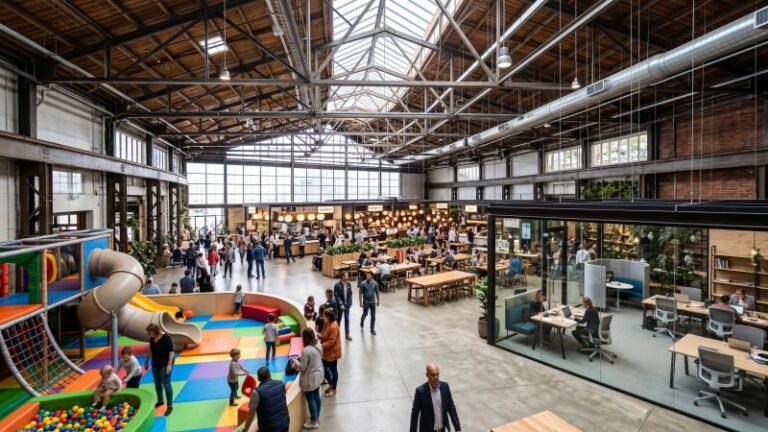
Traditional indoor playgrounds often span 10,000 square feet or more, featuring massive, multi-level tubular mazes. The inevitable result? Children frequently disappear from view, forcing parents to constantly follow them into the giant play structure.
A well-designed play cafe engineers this problem right out of the building through smart spatial planning. Most play cafes operate in tighter footprints, typically ranging from 2,000 to 4,000 square feet. The play structures are intentionally kept low to the ground. There are absolutely no high, enclosed tubes or hidden dark corners.
Think of this layout like a modern, open-concept retail floor rather than a multi-room warehouse. Parents can sit at a comfortable cafe table and scan the entire play area instantly. This unbroken line of sight provides genuine operational peace of mind—allowing young children to explore independently while parents easily supervise them from a short distance.
Solving the Ultimate Parenting Pain Points
Why are parents consistently choosing these specialized venues over free community parks?
Play cafes intentionally solve the most common frustrations faced by caregivers of young children. They provide a climate-controlled environment that guarantees safe play during harsh weather conditions. On top of that, they tackle parental isolation head-on by encouraging adult social interaction, all while maintaining rigorous, hospital-grade hygiene protocols that traditional public playgrounds simply cannot offer.

A Safe Haven for Toddlers During Extreme Weather
Toddlers possess boundless energy and absolutely need physical activity every single day. However, extreme weather often makes outdoor play completely impossible. Heavy rain, freezing snow, and intense summer heat waves frequently force public parks to empty out.
Just as outdoor amusement parks experience massive attendance drops during winter—forcing the industry to develop indoor family entertainment centers—families desperately need reliable indoor spaces year-round. A play cafe guarantees a comfortable, climate-controlled environment. The indoor temperature remains perfectly balanced regardless of the forecast outside.
With the climate controlled, children can run, climb, and slide safely. Parents never have to worry about sunburn, frostbite, or muddy clothes ruining the day. This reliability makes the venue an absolute necessity for families during long winters or scorching summers.
Facilitating Social Connection for Isolated Caregivers
Parenting a toddler is often a very lonely job. Many stay-at-home parents and remote workers spend long hours without any adult conversation. Traditional parks lack comfortable seating arrangements, so caregivers usually find themselves standing around awkwardly while watching their kids.
Play cafes actively engineer a solution to this isolation problem by creating a built-in community hub for the neighborhood. Because the open layout keeps children visible, parents actually have the time and mental energy to talk to each other.
“A successful play cafe is less about entertaining the child and more about preserving the sanity of the parent.”
They sit at communal tables, drink premium coffee, and share their daily struggles. This specific environment fosters genuine friendships.
| Feature | Free Public Park | Modern Play Cafe |
|---|---|---|
| Seating Options | Scattered wooden benches | Group tables, comfortable lounge chairs |
| Environment | Distracting, spread out | Contained, conversation-friendly |
| Community Building | Random, infrequent visitors | Regular members, scheduled meetups |
Strict Hygiene Protocols and Non-Toxic Cleaning
How do you keep a facility sanitary when your primary users put literally everything in their mouths? The biggest fear parents have about public indoor play spaces is illness. Giant family entertainment centers are notoriously difficult to clean thoroughly. Germs spread rapidly in massive ball pits and dark, enclosed climbing tunnels.
Play cafes tackle cleanliness with absolute operational transparency. They use strictly scheduled cleaning routines. Many facilities utilize advanced sanitization technology, such as electrostatic sprayers paired with EPA-registered botanical disinfectants, to ensure a deep clean without harsh chemicals.
To prove this to cautious parents, play cafes implement highly visible daily procedures.
Key hygiene practices typically include:
- Mandatory grip socks for all guests to prevent outside dirt.
- Scheduled mid-day closures for comprehensive deep sanitization.
- Designated “yuck bins” for the immediate removal of toys placed in mouths.
- Commercial ball washing machines used frequently for small ball pits.
At the end of the day, these strict protocols build deep trust. Parents feel confident bringing their infants and toddlers into a space that clearly prioritizes their health.
The Revenue Model Behind Successful Locations
How do these boutique indoor play spaces actually make a consistent profit?
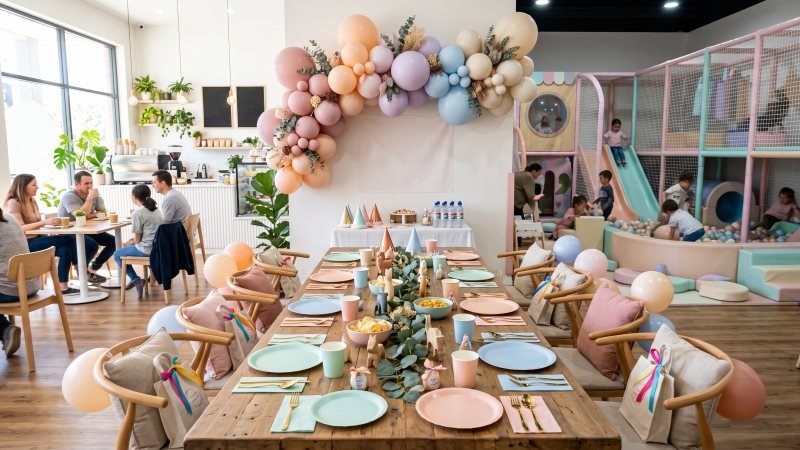
Successful play cafes utilize a diversified revenue strategy to ensure steady cash flow. They combine daily admission fees and recurring monthly memberships with high-margin weekend birthday parties. To drive profits further, they squeeze value out of their floor space by hosting specialized enrichment classes and community workshops during off-peak weekday hours.
Daily Admission Passes and Recurring Memberships
The foundation of a play cafe’s income comes from door traffic. Operators typically charge a flat admission fee per child, granting access to the play area for a set time limit, while adults usually enter for free.
But if you want real financial stability, you need to look at monthly memberships. This model mirrors the boutique fitness gym industry. Gyms rely on monthly subscriptions to guarantee income regardless of daily attendance, and play cafes use the exact same strategy to survive seasonal slowdowns.
Memberships provide predictable monthly recurring revenue (MRR). Parents pay a flat monthly rate for unlimited visits. The payoff here is immense customer loyalty: families visit more often and consistently spend more money on high-margin coffee and snacks.
| Revenue Type | Target Customer | Business Benefit |
|---|---|---|
| Daily Pass | First-time visitors, tourists | Higher profit per visit, introduces the brand |
| Membership | Local families, frequent visitors | Predictable MRR, increases daily cafe food sales |
Highly Profitable Private Birthday Parties
Weekday traffic pays the rent, but weekends generate the real profit. Private birthday parties are by far the most lucrative aspect of this business model.
Come Saturday morning, smart operators close the venue to the general public. They rent the entire space to one family for a private event, and parents gladly pay a premium price for this exclusivity. They get a pristine space, dedicated staff, and absolutely zero cleanup duties.
Think of this like booking an exclusive facility buyout at an indoor trampoline park. The operator bundles the venue, food, and entertainment into one high-margin package. Industry data shows that weekend party rentals can account for up to 50% of a play cafe’s total annual revenue.
Since large party groups put intense sudden stress on play structures, equipment durability is non-negotiable. Because maximum weight capacities for commercial vinyl platforms can vary, always verify the exact load specifications with your equipment supplier. This baseline check prevents costly damage during major events.
Enrichment Classes and Community Workshops
Why pay rent on commercial square footage if it’s sitting totally empty every Tuesday morning? Every indoor playground faces the same operational challenge: weekday mornings can be painfully slow when older children are at school. Smart operators solve this by plugging in enrichment classes.
Instead of leaving the floor idle, they host structured activities like baby sign language courses, toddler music classes, and sensory art workshops. These classes attract parents specifically seeking structured educational time for their babies.
“Empty floor space during weekday mornings is a missed revenue opportunity that enrichment classes easily fix.”
Operators typically partner with independent local instructors, taking a percentage of the ticket sales. Better yet, these classes bring in a captive audience. After the 45-minute music class ends, parents inevitably stay longer—buying lunch, purchasing lattes, and paying for extra open play time.
This strategy maximizes revenue per square foot, transforming the venue from a simple playground into a comprehensive community center. When executed correctly, this multi-layered approach locks in long-term financial success.
Essential Steps to Open a Profitable Location
What are the most critical steps to successfully launch and operate a profitable play cafe?
Opening a profitable location requires securing a commercially zoned property approved for both food service and indoor assembly. Next, operators must install certified, commercial-grade soft play equipment that meets strict safety standards. Finally, owners must carefully balance a streamlined, high-margin cafe menu with the daily operational demands of managing an active indoor play area.
Choosing the Right Commercial Space and Zoning
Ask any veteran operator: finding the perfect building is the biggest hurdle you’ll face. You cannot simply rent a standard retail store and open your doors; play cafes require very specific municipal zoning approvals.
In most local building codes, an indoor playground is classified under “Assembly” zoning, rather than standard “Mercantile” or retail zoning. Think of this like opening an indoor trampoline park or an arcade. The city requires specific fire exits, occupancy limits, and parking space ratios that a standard clothing store simply does not need.
“Securing the correct zoning classification before signing a commercial lease will save you from devastating delays and costly legal battles.”
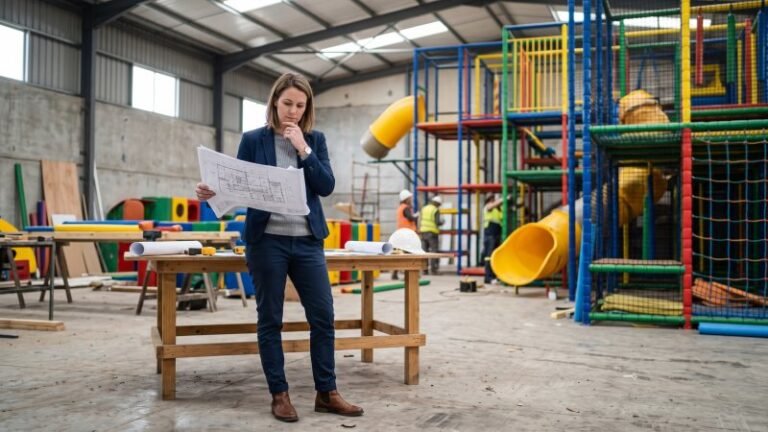
You should target open-concept spaces between 2,500 and 4,000 square feet. You will need dedicated plumbing for professional espresso machines and adequate square footage for ADA-compliant, family-friendly restrooms. Always consult with a commercial architect who understands family entertainment center regulations before signing any paperwork.
Sourcing Commercial-Grade Soft Play Equipment
Think you can cut corners by ordering cheap, residential-grade foam blocks online? Don’t even try it. Residential toys will tear within weeks under heavy commercial use. You must invest exclusively in commercial-grade soft play structures.
These professional structures use high-density foam covered in heavy-duty, marine-grade PVC vinyl. They are engineered to withstand thousands of toddler jumps every single week. Just as critically, the equipment must meet strict ASTM (American Society for Testing and Materials) safety standards for indoor playgrounds.
Because vinyl thickness—typically measured in ounces per square yard—and foam density ratings can vary significantly between manufacturers, always verify the exact material specifications and safety certifications directly with your equipment supplier. This baseline due diligence ensures your investment will perform for years.
| Feature | Residential Grade Toys | Commercial Grade Equipment |
|---|---|---|
| Material | Thin plastic, low-density foam | Marine-grade PVC vinyl, high-density foam |
| Lifespan | Months | 5 to 10+ years |
| Safety Certification | Basic consumer standards | Strict commercial ASTM standards |
| Cleaning | Hard to sanitize properly | Smooth, non-porous, easy to disinfect |
Balancing the Cafe Menu with the Play Area Operations
Running a play cafe means you are operating two distinct businesses under one roof: an active playground and a food service counter. If you want to survive, you need to drastically simplify your food menu.
Treat your food service operations like a premium cinema concession stand, not a full-service, sit-down restaurant.
Do not install commercial fryers, flat-top grills, or heavy-duty ovens. These appliances require expensive exhaust hoods and complex health department permits. Let’s be honest: hot grease and active toddlers are a massive liability waiting to happen.
Your smartest move is to focus entirely on low-prep, high-margin items. Offer high-quality espresso drinks, premium teas, and pre-packaged healthy toddler snacks. You can easily source fresh baked goods, sandwiches, and salads from local wholesale bakeries. This streamlined strategy practically eliminates food waste and drastically reduces your kitchen staffing requirements, freeing your team to focus strictly on customer service and facility cleanliness.
Conclusion
Let’s look at the operational reality: play cafes have fundamentally revolutionized the family entertainment landscape by recognizing a simple truth. Caregivers need comfort just as much as toddlers need physical play. By engineering intentionally curated, boutique environments that prioritize open lines of sight, premium amenities, and rigorous cleanliness, these spaces successfully eliminate the most common frustrations of modern parenting. For ambitious entrepreneurs, they offer a highly profitable and deeply rewarding business model driven by reliable income streams like recurring memberships and exclusive private events.
If you are ready to bring this proven business model to your local market, contact us today to learn how our industry expertise can help engineer your vision into a highly profitable reality!