-
Whatsapp: +86 15516933785
-
Email: hanlin@hanlinplayground.com
-
Address: Shangjie District, Zhengzhou City, Henan Province, China
-
Whatsapp: +86 15516933785
-
Email: hanlin@hanlinplayground.com
-
Address: Shangjie District, Zhengzhou City, Henan Province, China

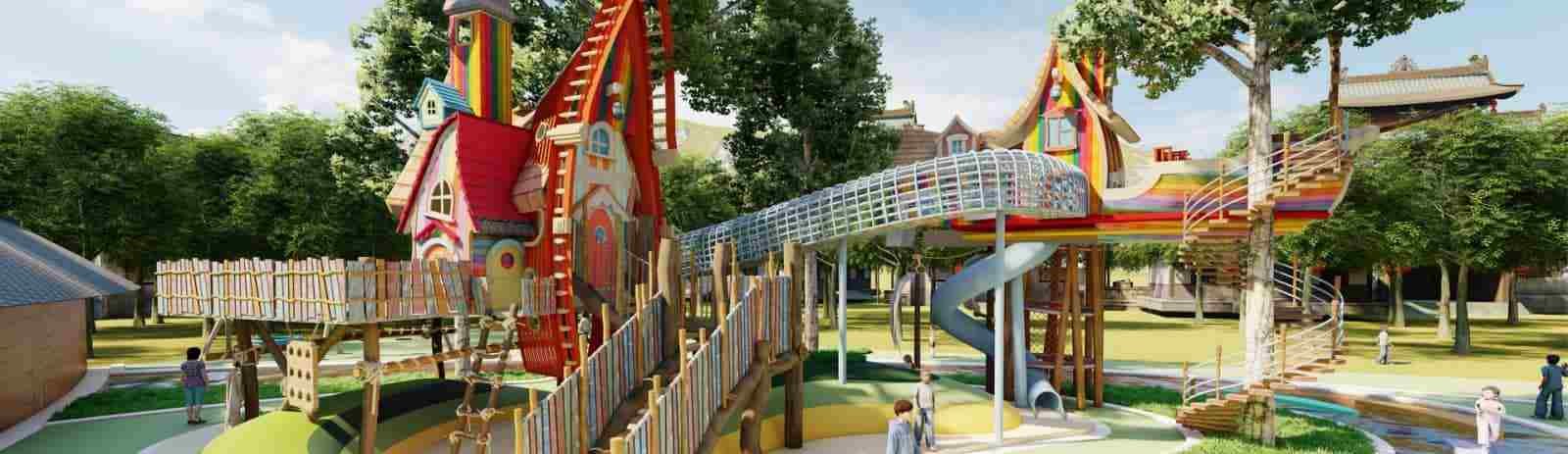
High Ropes vs. Low Ropes Courses for Kids: Which is Better for Your FEC?
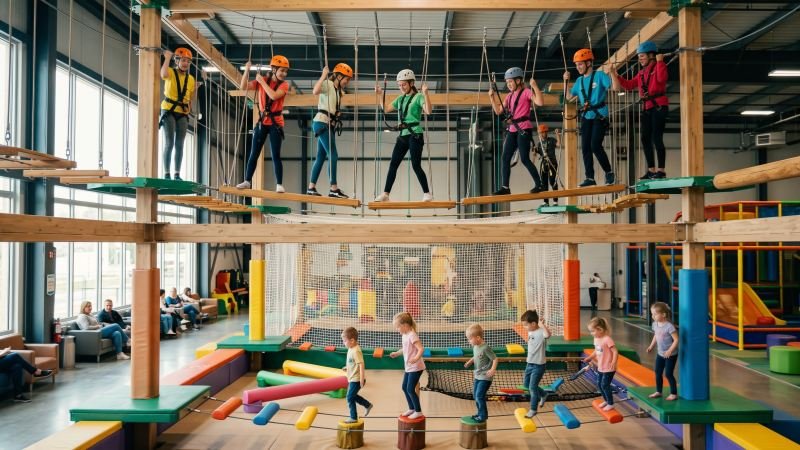
When deciding between high ropes and low ropes courses for your Family Entertainment Center (FEC), which option truly provides the best experience and return on investment?
The best choice depends on your target demographic, budget, and facility dimensions. Low ropes courses are ideal for younger children and families, requiring minimal staff, zero harnessing, and maximizing high hourly throughput on the ground level. High ropes courses attract teenagers and thrill-seekers as premium anchor attractions, utilizing unused vertical airspace but demanding rigorous structural engineering, heavy safety gear, and specialized staff. For maximum profitability and demographic appeal, integrating both into a multi-level layered structure is often the optimal strategy.
Core Structural and Psychological Differences
What fundamentally separates a high ropes course from a low ropes course in a family entertainment center?
The primary distinction lies in their physical elevation and intended user experience. High ropes courses operate significantly above ground level, requiring engineered fall protection systems and focusing on individual psychological challenges. Conversely, low ropes courses are situated close to the ground, utilizing minimal safety gear while emphasizing group collaboration and team-building exercises.
Height and Fall Protection Equipment
The most obvious difference between these two attractions is their distance from the floor. As you’d expect, this height difference completely rewrites your safety equipment requirements.
Low ropes courses typically sit just a few inches to a maximum of three feet off the ground. Because the fall risk is minimal, participants do not need complex safety gear. Facilities usually rely on soft landing surfaces, such as foam mats or engineered wood fiber. That means kids can simply hop on and off the elements without wearing a harness.
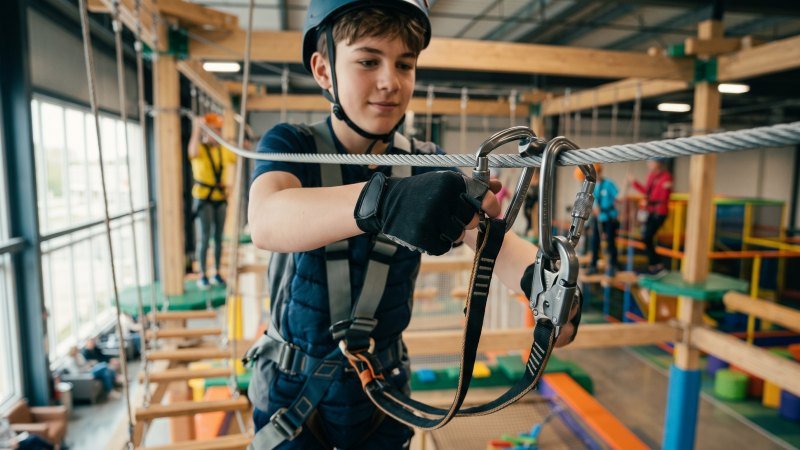
High ropes courses, on the other hand, take the experience—and the risk profile—up into the rafters. These structures generally start around 10 to 15 feet high. Many indoor FEC setups reach up to 30 feet, depending on the building’s clearance. This elevation introduces serious safety protocols. Participants must wear full-body harnesses connected to heavy-duty lanyards.
On top of that, high courses require a continuous belay system or smart belay hooks to prevent accidental unclipping. Think of this setup much like an indoor climbing wall in your facility; just as the climbing wall relies on an auto-belay system to safely lower climbers, a high ropes course uses continuous tracks to keep guests secured from start to finish.
Since weight limits, track capacities, and belay specifications can vary significantly based on the materials used, always verify the exact equipment parameters and safety ratings with your chosen manufacturer.
To easily visualize these structural differences, review the comparison below:
| Feature | Low Ropes Course | High Ropes Course |
|---|---|---|
| Typical Height | 1 to 3 feet | 10 to 30+ feet |
| Safety Gear | None (Comfortable clothing) | Full-body harnesses, lanyards, helmets |
| Fall Protection | Impact-absorbing flooring, spotters | Continuous belay tracks, smart belay systems |
| Ease of Entry | Immediate step-on access | Requires gear fitting and safety briefing |
Team Building vs Personal Challenge
Beyond the cables and steel structures, the psychological impact of each course is vastly different. What’s the actual emotional payoff you want to deliver to the kids walking through your doors?
Low ropes courses are designed for group success. These courses feature obstacles like “spider webs,” balance logs, and tension traverses. A single child cannot easily complete these tasks alone. Instead, elements require communication, physical support, and shared strategy. The result? Kids are forced to solve problems together. This makes low-level courses highly attractive to school groups, scout troops, and sports teams looking for educational field trips.
High ropes courses offer a completely different mental test. When a child stands on a swaying wooden bridge 20 feet in the air, the challenge is entirely internal. They are not talking to their friends; they are managing their own adrenaline. This environment forces participants to overcome their fear of heights and step outside their comfort zone.
As professionals in the challenge course industry often state:
“Low courses build the team; high courses build the individual.”
At the end of the day, high ropes deliver a high-thrill, personal victory. Kids feel a massive sense of self-confidence after finishing the course. This individual thrill factor is precisely what makes elevated courses popular for weekend birthday parties and casual family visits.
Matching the Course to Your Target Audience
It’s the classic operator’s dilemma: how do you know which type of attraction will actually pull the right demographics into your facility?
To choose the correct attraction, you must clearly define your primary demographic. Low-level setups capture the early childhood market by allowing parents to actively participate alongside their kids. In contrast, elevated structures act as a primary draw for teenagers and young adults seeking an adrenaline-driven, independent challenge.
Engaging Younger Children and Families
Who is spending money at your center on a Tuesday morning? Usually, it is parents with younger children. Let’s be real: capturing that early-week demographic is what keeps the lights on.
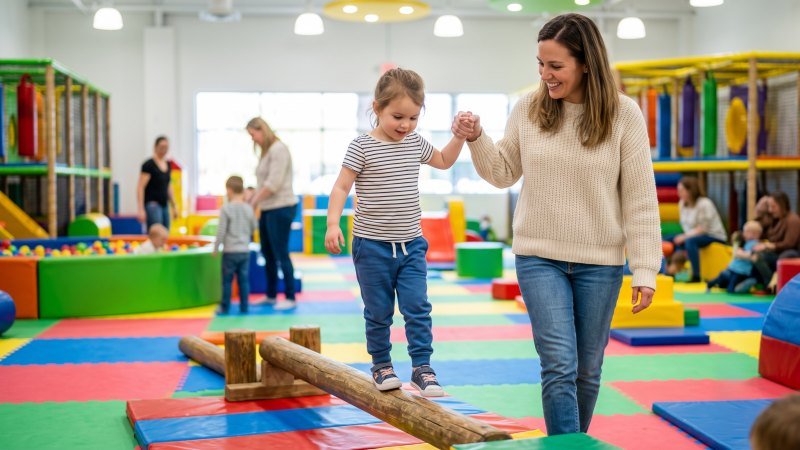
Low ropes courses excel in this specific market. These structures are built very close to the ground. By staying low, they eliminate the intense fear of heights that often overwhelms young kids. Instead, children can focus entirely on balance and movement.
Even better, these ground-level designs naturally invite parents into the mix. Parents can walk right next to the obstacles. They can hold a child’s hand across a wobbly bridge or offer verbal encouragement. This shared experience is incredibly valuable. Industry data from family entertainment surveys shows a clear trend: attractions that promote parent-child interaction significantly increase how long families stay at your facility.
Think of a low course much like a multi-level soft play playground. A soft play area allows young kids to explore safely while parents monitor from nearby. Similarly, a low-level course provides an accessible adventure without the intimidation of heavy gear. It makes young guests feel brave in a completely secure setting.
Attracting Teens and Thrill-Seekers
What happens when your core visitors age out of standard play areas? You need an attraction that keeps them coming back.
Elevated courses provide the exact adrenaline rush that older kids crave. Teenagers want independence. They want to test their limits. High courses deliver this by placing them high above the arcade floor. Navigating suspended platforms and zip lines requires focus and physical effort. Because of that built-in friction, completing the course actually feels like a major personal achievement.
This demographic is also highly driven by social sharing. A 20-foot high rope bridge looks impressive on camera. Naturally, that translates directly to social media shares. This user-generated content acts as free marketing for your business.
You can compare an elevated course to a ninja warrior obstacle setup. Both attractions target older demographics by offering a physical, high-stakes challenge. They serve as anchor attractions that easily sell premium birthday party packages for adolescents. However, accommodating older, larger participants requires strict equipment standards. Minimum height limits and maximum weight capacities for harnesses will vary based on specific materials and engineering.
Audience Appeal Breakdown
| Target Audience | Primary Course Fit | Key Driving Factor |
|---|---|---|
| Ages 3-8 | Low Ropes | Parental involvement, safety, building basic confidence |
| Ages 9-12 | Mixed | Transitioning from guided play to independent challenges |
| Ages 13+ | High Ropes | Adrenaline, independence, social media appeal |
| Parents | Both | Assisting younger kids (Low); watching or joining older kids (High) |
Space, Safety, and Infrastructure Requirements
How do your building’s physical dimensions and structural limits determine which ropes course you can safely install?
Your facility’s clear ceiling height and load-bearing capacity ultimately dictate your options. Ground-level systems consume significant floor space but require minimal overhead clearance. Conversely, elevated structures maximize unused vertical airspace but demand rigorous structural engineering and heavy-duty steel support.
Indoor Ceiling Height and Floor Footprint
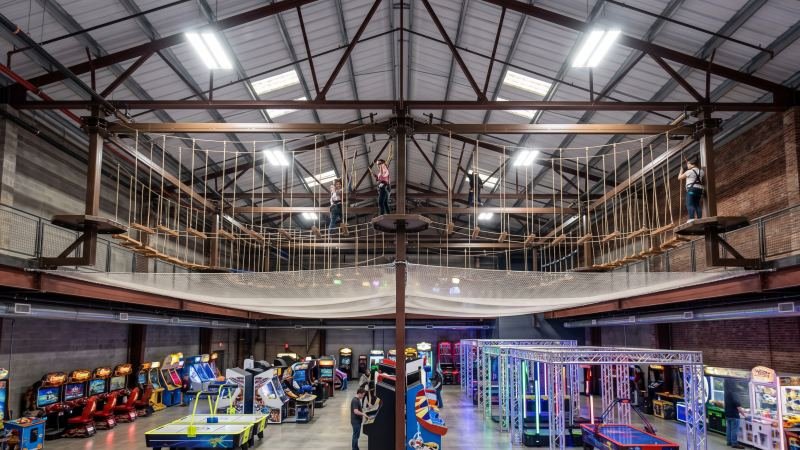
Let us look at the actual dimensions required for each option. Ground-level installations expand horizontally across your facility. They eat up valuable floor real estate. You might need anywhere from 1,000 to 3,000 square feet of open ground space. However, you do not need tall ceilings. A standard 12-foot commercial ceiling is perfectly fine for these low attractions.
Elevated attractions operate vertically. They are fantastic for saving ground space. In fact, you can easily build them directly over your arcade cabinets, seating areas, or mini-golf courses. But keep in mind, they require significant overhead clearance. Most manufacturers require an absolute minimum ceiling height of 18 feet. Ideally, your facility should have 22 to 25 feet of clear vertical space to accommodate the participants comfortably.
Think of this spatial difference like a standard trampoline court versus a multi-level soft play tower. The trampoline court requires massive square footage on the floor. Meanwhile, the play tower builds up into empty air, saving your ground space for other profitable games.
Since minimum clearance heights can shift based on specific track designs, platform depths, and hardware materials, always verify the exact vertical requirements with your equipment supplier before signing a building lease.
Structural Support and Installation Needs
Once you know your dimensions, you must consider the building’s physical strength. Think bolting a few support poles to a concrete slab is the same as suspending a multi-ton steel track from your roof trusses? Not even close.
Ground-level systems are relatively simple to install. They are usually freestanding units. Installers just bolt the support poles directly into your existing concrete slab. Because of this, they put almost zero stress on your building’s framework.
Elevated structures are a completely different beast. These heavy installations hang high in the air and require serious structural support. Installers often attach the main cables and platforms directly to your building’s steel columns or roof trusses.
This connection creates dynamic loads. When participants walk, jump, or swing, they send physical shockwaves through the cables into your building. That’s exactly why bringing in a licensed structural engineer isn’t just a good idea—it’s a mandatory first step. The engineer must prove your roof can handle this extra moving weight safely.
This process is very similar to installing an indoor zip line coaster. You cannot simply hang a motorized coaster from standard roof beams. You must reinforce the entire steel skeleton of the building first. Because dynamic load ratings and steel reinforcement needs vary greatly depending on the specific attraction size and building materials, you must consult a structural engineer to verify the exact load specifications required for your chosen system.
“Maximizing vertical airspace is the fastest way to increase revenue per square foot, but only if your building’s bones can support the weight.”
Infrastructure Comparison
| Infrastructure Need | Low Ropes Course | High Ropes Course |
|---|---|---|
| Minimum Ceiling Height | ~12 Feet | 18 to 25+ Feet |
| Floor Footprint | Very Large (Horizontal spread) | Very Small (Vertical spread) |
| Structural Impact | Minimal (Anchored to floor slab) | High (Anchored to roof/columns) |
| Engineering Approval | Standard permitting | Rigorous structural engineering required |
Operational Costs and Staffing Demands
How do labor requirements and daily operational expenses differ between these two types of attractions?
Elevated structures incur significantly higher operational costs because they demand specialized staff to manage strict safety protocols and gear inspections. Conversely, ground-level setups operate with lower labor expenses because they rely on general supervision rather than intensive, one-on-one safety management.
Harnessing and Safety Briefing Times
Time is money in a family entertainment center. Ever watched your weekend profit margins evaporate while a group of twelve-year-olds struggles to figure out their leg loops?
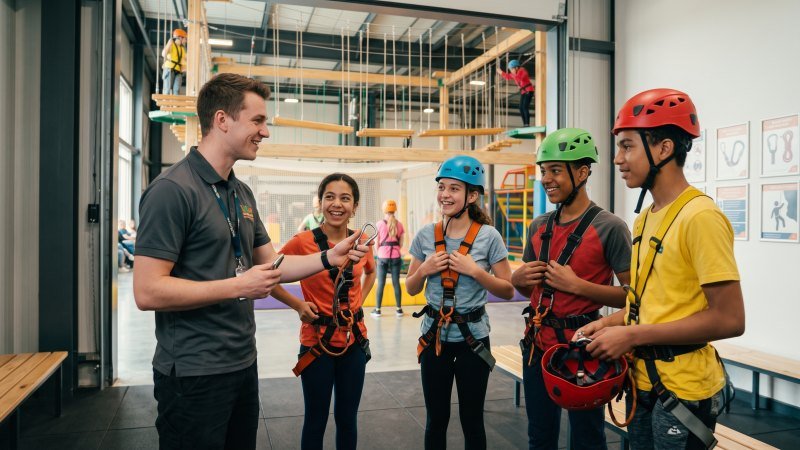
For ground-level systems, the entry process is nearly instant. Guests simply walk onto the floor. Staff members enforce basic rules through general area supervision, similar to how monitors manage an open trampoline court. Kids do not need to put on complex gear. The payoff here is obvious: you completely bypass long waiting lines. This keeps your customers happy and moving.
Elevated attractions require a completely different workflow. You must process every single participant through a preparation zone. Staff must physically fit each child with a full-body harness. Next, they must adjust the helmets. Finally, the group must listen to a mandatory safety briefing. Industry data shows this entire process typically takes 10 to 15 minutes per group.
Think of this process like a laser tag briefing room. Guests cannot just run into the arena. They must learn how the equipment works first. Harness adjustment mechanisms and smart belay briefing requirements can vary based on specific brands, which will directly impact your daily scheduling operations.
Guide-to-Participant Ratios
Your largest ongoing expense is payroll. Make no mistake, you have to understand how many employees you need to run each attraction safely.
Low-level setups require minimal staffing. One trained employee can easily supervise a large area. The industry average ratio is often 1 staff member for every 20 to 30 participants. The staff’s primary job is crowd control and general safety. They do not need advanced technical rescue certifications.
Elevated structures demand a heavy staff presence. Safety is the ultimate priority in the air. Organizations like the Association for Challenge Course Technology (ACCT) set strict industry guidelines. Typically, you need a ratio of 1 guide to every 10 or 15 participants on the course.
Beyond the sheer headcount, you’re also paying for specialized skills. Your guides must know how to perform mid-air rescues. They must understand load transfers and belay mechanics. It goes without saying that these experts command significantly higher hourly wages than standard arcade attendants.
To clarify the daily staffing differences, review this operational breakdown:
| Staffing Factor | Low Ropes Course | High Ropes Course |
|---|---|---|
| Typical Ratio | 1 Staff : 25 Guests | 1 Staff : 10 to 15 Guests |
| Staff Training Level | Basic customer service and rule enforcement | Advanced technical rescue and gear inspection |
| Guest Prep Time | 1 to 2 minutes | 10 to 15 minutes |
| Labor Cost Impact | Low (General floor staff wages) | High (Specialized guide wages) |
Maximizing ROI and Customer Experience
How can you strategically leverage these adventure attractions to guarantee the highest financial return for your business?
To maximize your return on investment, you must balance high throughput capacity with broad demographic appeal. The most profitable facilities use a layered approach, combining high-capacity ground elements for rapid ticket turnover with premium elevated structures to drive higher-priced sales and increase overall guest dwell time.
Throughput Rates and Hourly Capacity
Throughput is the number of paying guests you can process per hour. This metric directly controls your daily revenue ceiling.
Low courses offer incredible throughput. Kids can freely enter and exit the play area. Because of this open flow, you can churn through dozens of guests in no time. Think of this setup like an indoor inflatable bounce park. When one child leaves, another child immediately enters the area. As a result, you can easily cycle 60 to 100 participants through a large ground-level course every hour. This makes it perfect for high-volume, general admission tickets.
Elevated courses have naturally restricted throughput. The continuous safety track acts as a physical bottleneck. It operates very much like an indoor go-kart track. You can only dispatch a specific number of guests at one time. Once the track hits its limit, everyone else must wait in line. Because of this hard ceiling on capacity, a standard indoor elevated setup might max out at 20 to 40 guests per hour. Maximum participant loads and dispatch intervals can change based on the specific belay hardware, so you must factor these hardware limits into your revenue projections.
To clearly understand how these numbers affect your business model, review the comparison below:
| Metric | Low Ropes Course | High Ropes Course |
|---|---|---|
| Hourly Capacity | High (60-100+ guests) | Moderate (20-40 guests) |
| Turnover Speed | Rapid | Paced (controlled by track limits) |
| Ticket Strategy | Included in general admission | Premium add-on or high-ticket item |
| Revenue Style | Volume-driven | Margin-driven |
The Layered Approach for Maximum Appeal
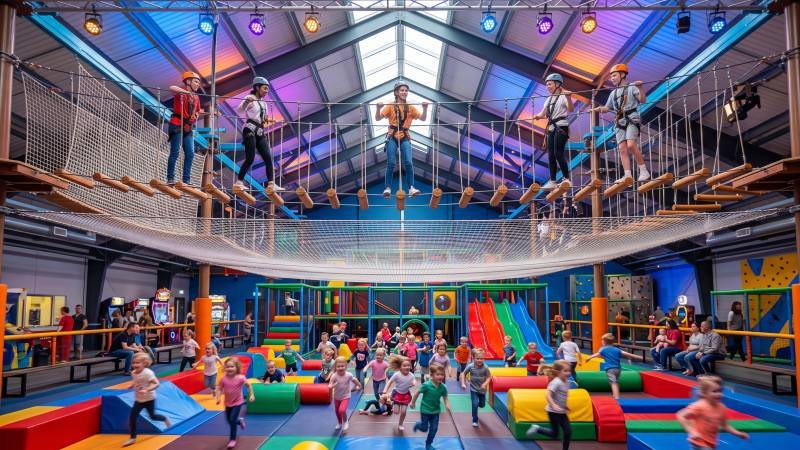
You don’t necessarily have to choose just one option. The most successful family entertainment centers utilize a layered strategy. This means installing an elevated course directly above a ground-level course.
Crucially, this layout requires engineered catch-netting or solid architectural barriers installed between the levels to completely eliminate dropped-object hazards. This setup solves a massive problem for parents: families almost always visit with children of different ages. A layered design keeps the entire family in one designated zone. With proper overhead protection, the teenager tackles the high elements safely overhead. Meanwhile, the five-year-old plays securely on the ground directly below them.
When you solve that logistical headache for parents, families stay at your facility much longer. Industry data proves that increased dwell time consistently leads to higher food, beverage, and arcade token sales.
More importantly, this strategy drastically spikes your revenue per square foot. You are selling two completely different experiences within the exact same building footprint. It functions perfectly, much like a dual-level laser tag arena where different physical zones engage different player types simultaneously. Offering both options ensures nobody sits on the sidelines, allowing you to capture every possible ticket sale.
Conclusion
At the end of the day, choosing between a high ropes and low ropes course depends entirely on your specific business goals, available building space, and target demographic. Low ropes courses are unparalleled for processing high volumes of younger children with minimal staffing, while high ropes courses create a premium, buzz-worthy attraction for teens and adults seeking an exciting challenge.
If your facility’s height and structural integrity permit, combining both systems into a layered attraction ensures you engage the widest possible audience and maximize your overall return on investment. If you are ready to design a highly profitable, multi-level attraction that perfectly fits your facility’s unique dimensions, please feel free to contact us for expert guidance and layout planning.