-
Whatsapp: +86 15516933785
-
Email: hanlin@hanlinplayground.com
-
Address: Shangjie District, Zhengzhou City, Henan Province, China
-
Whatsapp: +86 15516933785
-
Email: hanlin@hanlinplayground.com
-
Address: Shangjie District, Zhengzhou City, Henan Province, China
The Complete Guide to Sponsorship Marketing for Family Entertainment Centers
How can family entertainment centers effectively utilize sponsorship marketing to fund new attractions and increase overall profitability?
Family entertainment centers can effectively utilize sponsorship marketing by shifting the focus from charitable donations to mutual business value. By analyzing visitor demographics to secure perfect brand alignment, designing high-impact on-site experiential activations, and rigorously measuring return on investment, venues can secure vital capital for new equipment while providing corporate partners with a highly engaged local audience.
Why Amusement Venues Are Perfect for Brand Partnerships
Why exactly are family entertainment centers the ideal environment for corporate brands looking to establish strong, long-lasting partnerships?
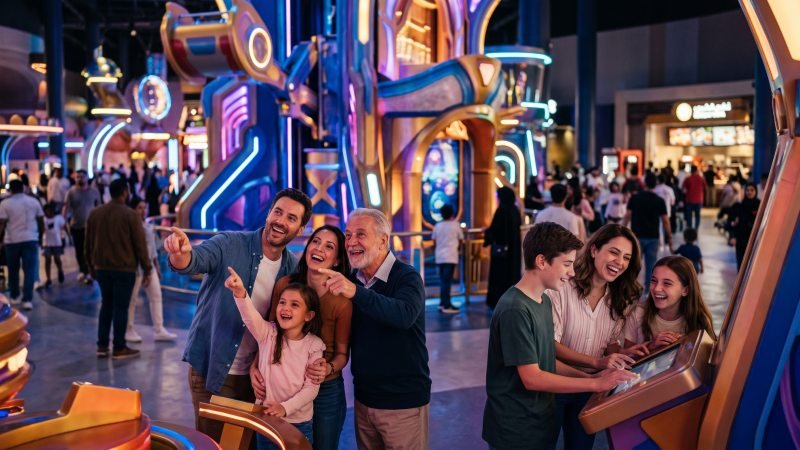
Family entertainment centers offer a highly controlled, captive environment where brands can directly reach specific family demographics. Even better, these locations provide prolonged brand exposure through extended customer dwell times. That means venues can leverage this unique attention to secure vital funding for capital improvements, while sponsors gain unparalleled access to a highly engaged local audience.
Funding Capital Expenditures for New Playground Equipment
Purchasing new attractions requires a massive amount of capital. For instance, commercial indoor playground structures can easily cost anywhere from $50,000 to well over $250,000. Let’s face it, covering these capital expenditures (CapEx) is a major hurdle for any Family Entertainment Center (FEC). But here’s the reality: sponsorship marketing solves this financial problem directly.
How does this funding mechanism work in practice? At its core, a corporate partner pays a set fee to sponsor a specific attraction. In return, the venue uses that exact money to buy the equipment. Think of a redemption arcade cabinet. Just as a player inserting a token powers up the game cycle, a venue uses sponsor funding to activate new facility upgrades without depleting its own cash reserves. The brand gets prime visibility, and you get a brand-new asset.
To clearly understand the financial impact, look at a typical equipment acquisition model:
| Funding Method | Upfront Venue Cost | Brand Visibility | Asset Ownership |
|---|---|---|---|
| Traditional Purchase | 100% Out of pocket | None | Venue owns 100% |
| Bank Loan Financing | 100% + Interest | None | Venue owns 100% |
| Corporate Sponsorship | 0% to 50% | Very High | Venue owns 100% |
By using corporate sponsorships, you drastically lower your upfront costs. The best part? You don’t have to take on high-interest debt. Because playground equipment costs, load-bearing limits, and technical specifications vary significantly based on custom designs, always verify exact pricing with your equipment manufacturer before finalizing your sponsor funding requests.
The bottom line? This strategy allows an FEC to expand rapidly. Instead of waiting years to save profits for a new interactive climbing wall, you can build it today.
Leveraging High Foot Traffic and Positive Emotional Engagement
Brands are constantly searching for ways to get in front of large crowds. Amusement parks and FECs naturally provide this massive audience. More importantly, they provide an audience that stays in one location for a very long time.
According to industry data from the International Association of Amusement Parks and Attractions (IAAPA), the average family stays at an FEC for 2 to 3 hours. This extended dwell time is incredibly valuable to advertisers. However, foot traffic alone is not the only advantage.
The real power of an amusement venue lies in positive emotional engagement. When families visit your park, they are actively having fun. Their brains release dopamine and endorphins. Because of this hardwired reaction, when a brand places its logo near a thrilling drop tower or a colorful soft play area, it permanently links its name to that happiness.
The Mechanics of Venue Engagement
Think about the mechanics of a continuous belay system on a high ropes course. Once guests are clipped in, they are fully committed to the entire circuit. Similarly, the highly engaging atmosphere of your venue captures guest attention for hours, guaranteeing that every sponsor placed within that environment receives continuous, uninterrupted exposure.
Here are the primary reasons brands pay a premium to enter this environment:
- Captive Audience: Guests cannot easily skip or scroll past a physical attraction.
- Positive Association: Brands connect directly with family bonding and joyful memories.
- Targeted Demographics: Sponsors know exactly who is in the building.
Think about standard media buys. Traditional advertising interrupts a person’s day. For example, a television commercial stops a movie. Conversely, a sponsored interactive sandbox actively adds value to a guest’s day. Because of this dynamic, sponsors see much better reception from potential customers. They are not just buying billboard space. Instead, they are buying a permanent place within a happy family memory.
Strategic Identification of the Most Profitable Corporate Sponsors
Identifying the most profitable corporate sponsors requires venue operators to strictly match their visitor demographics with a brand’s target customer base. From there, you’ve got to systematically evaluate whether local businesses seeking community trust or national brands seeking high-volume exposure offer the best financial return for specific attraction investments.
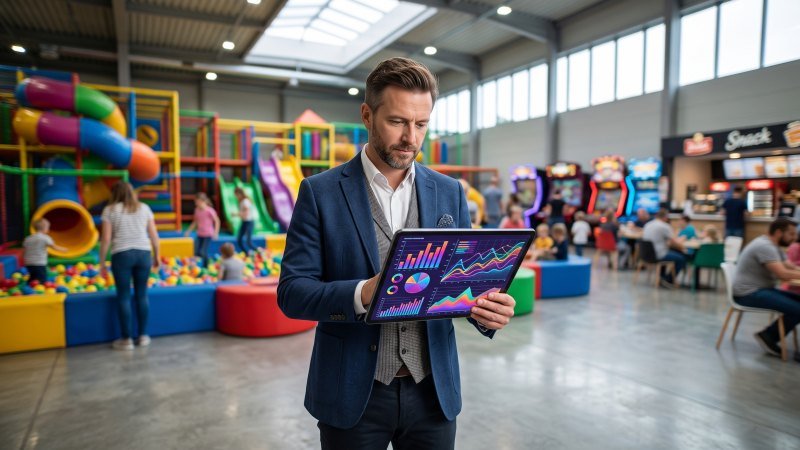
Analyzing Visitor Demographics for Perfect Brand Alignment
Why would a luxury sports car dealership sponsor a toddler soft play area? They simply wouldn’t. That’s exactly why you need to understand exactly who visits your facility. Analyzing visitor data is the foundation of any successful sponsorship pitch. It guarantees perfect brand alignment.
Industry data from the International Association of Amusement Parks and Attractions (IAAPA) reveals a very clear trend. Mothers aged 25 to 44 make the vast majority of purchasing decisions for family entertainment centers. As a result, brands targeting young mothers often find incredible value in these venues.
The alignment between a corporate sponsor and a venue is similar to the compatibility between an RFID wristband and a turnstile card reader. If the frequencies do not match perfectly, the connection fails completely. You need your audience to match the sponsor’s ideal customer exactly.
Essential Data Collection Methods
You must gather hard data before contacting any company. Sponsors want proof, not guesses. You can use your Point of Sale (POS) system and digital waiver software to pull this exact information:
- Average visitor age and typical household size.
- Specific zip codes of your primary customer base.
- Peak visiting hours and average facility dwell time.
Evaluating Local Businesses Versus National Consumer Brands
Once you know your audience perfectly, who do you actually pitch? You generally have two choices. You can target local businesses, or you can approach national consumer brands. Both options offer unique financial advantages for an amusement venue.
The Local Business Advantage
Local businesses often make decisions much faster. They usually want to build deep trust within the immediate community.
For example, a local pediatric dentist might sponsor the hand sanitizer stations near the trampoline courts. They benefit from direct, repetitive exposure to local parents. Plus, you’re usually dealing directly with the business owner. This skips the long corporate approval processes completely.
The National Brand Advantage
National brands bring much larger budgets. They usually seek high-volume exposure and long-term partnerships.
The trade-off is that national brands require extensive data and take months to approve a single deal. A national beverage company might want to sponsor your entire arcade area. They have the funds to pay for massive capital expenditures.
Here is a simple breakdown of how these two groups compare for venue owners:
| Feature | Local Businesses | National Consumer Brands |
|---|---|---|
| Average Budget | Small to Medium | Very Large |
| Sales Cycle | Fast (1 to 3 weeks) | Slow (3 to 6 months) |
| Primary Goal | Community Trust | Mass Market Exposure |
| Ideal Assets | Specific Rides, Seating Areas | Entire Zones, Venue Naming Rights |
At the end of the day, your choice depends heavily on your timeline and the size of the equipment you need to fund. Do you need smaller, quick investments? Focus on local companies. Do you need massive funding for an entire indoor playground? Pitch directly to national brands.
Structuring a Winning Sponsorship Proposal
How can family entertainment center operators craft a sponsorship pitch that actually gets approved by corporate decision-makers?
To structure a winning sponsorship proposal, operators must fundamentally shift the conversation from charitable donations to mutual business value. Beyond that, they need to present highly customized integration options, such as branded ride theming, while clearly defining precise investment tiers and asset ownership rights to secure corporate funding.
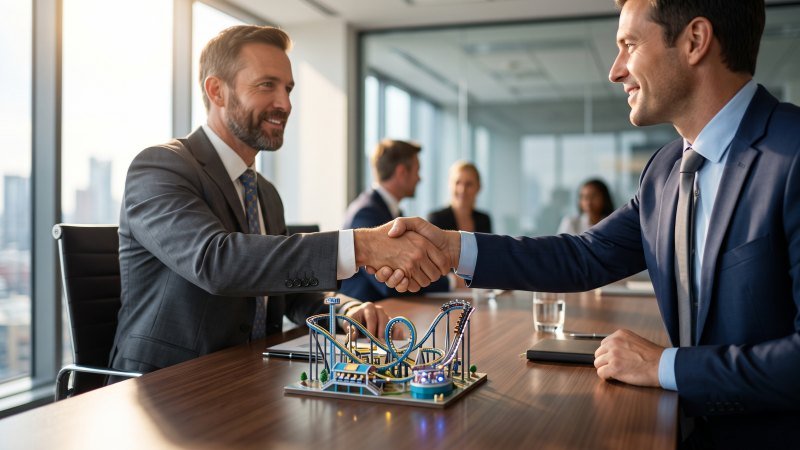
Shifting the Focus from Donations to Mutual Business Value
Many operators mistakenly treat sponsorships like local charity drives. Let’s be real: corporate marketing budgets don’t work this way. Businesses do not sponsor family entertainment centers out of goodwill. Instead, they expect a clear return on their investment.
Think of a standard ticket redemption counter. A guest trades their earned tickets for a prize of equal value. Similarly, a corporate sponsor trades their capital for measurable business value. Ask yourself: why would a marketing executive cut a check just because you have a nice facility? They won’t. That’s why your proposal must highlight what the sponsor gains.
When you write your proposal, remove the word “donation” entirely. Instead, use terms like “partnership,” “brand visibility,” and “customer acquisition.” You must clearly outline how your venue solves a specific problem for the sponsor. Do they need more foot traffic? Do they want to launch a new family product?
“Successful sponsorship proposals do not ask for money. Rather, they offer a highly targeted marketing channel.”
Because of this, your pitch deck should focus heavily on the sponsor’s objectives. You must prove that placing their brand inside your venue is a smart financial decision.
Offering Custom Ride Theming and Product Integration
A standard logo on a flat vinyl banner is no longer enough to secure large investments. Today, sponsors want deep integration into the physical space. Knowing this, offering custom ride theming is a highly effective strategy.
When a brand sponsors a major attraction, the equipment itself becomes the advertisement. For example, a local car dealership could sponsor your indoor bumper car arena. You can apply custom fiberglass wraps to the cars featuring the dealership’s logo.
Since fiberglass wrapping specifications, paint adherence, and weight tolerances vary by manufacturer, always verify exact customization limits with your equipment supplier before promising specific physical assets to a sponsor.
Another smart move is integrating the sponsor’s physical products directly into your venue operations. This creates a seamless experience for the guest.
| Integration Type | Amusement Asset | Primary Brand Benefit |
|---|---|---|
| Physical Wrapping | Go-Kart Track Barriers | Massive visual impact and photography reach. |
| Color Customization | Indoor Soft Play Structures | Seamless brand immersion for young demographics. |
| Product Placement | Redemption Prize Counters | Direct product sampling and trial generation. |
The real win here is that custom theming embeds the sponsor into the fun. Guests interact directly with the brand, making the sponsorship significantly more valuable.
Defining Clear Tiers of Investment and Asset Ownership
Corporate sponsors have varying budgets. To make it work, you have to offer clear, structured investment tiers. Do not just present a single, massive price tag. Instead, give them options.
Typically, venues use a tiered system. This structure often includes Title Sponsors, Area Sponsors, and Supporting Partners. A Title Sponsor might fund an entire indoor playground structure. Conversely, a Supporting Partner might only sponsor the shoe storage cubbies.
You also need to strictly define asset ownership within your contract. The sponsor pays for the branding rights, but they do not own the physical equipment.
Consider a standard token-operated arcade cabinet. If a company rents the advertising space on the side of the cabinet, they do not own the internal motherboard. Similarly, a sponsor rents the naming rights to your laser tag arena for a specific term. Usually, these terms last between 1 to 3 years.
You must clearly outline the following details in every tier:
- The exact duration of the partnership agreement.
- The specific locations of all branded signage.
- The maintenance responsibilities for the physical equipment.
- The renewal process at the end of the term.
When you nail these boundaries upfront, you prevent misunderstandings. As a result, sponsors feel secure in their investment, making them much more likely to sign the agreement.
Designing High-Impact On-Site Activations
How can family entertainment centers transform passive corporate sponsorships into highly engaging, memorable experiences for their guests?
To design high-impact on-site activations, venues must actively integrate sponsor branding directly into the guest experience. This is achieved by transforming static queue lines into interactive zones, hosting dedicated co-branded seasonal events, and seamlessly blending physical amusement rides with digital brand touchpoints to maximize audience engagement.
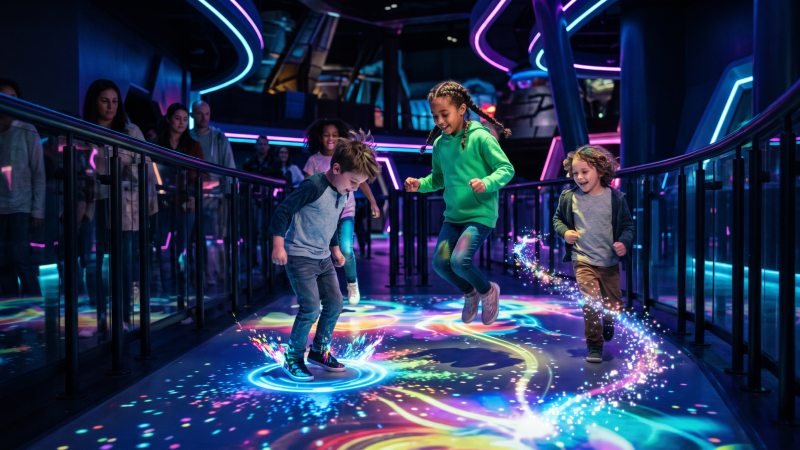
Turning Equipment Waiting Areas into Experiential Zones
Waiting in line is the least enjoyable part of any amusement park visit. But savvy operators view queue lines as prime real estate. Think about your longest queue line on a busy Saturday. What if that dead time was actually generating revenue? You can transform these idle waiting periods into engaging brand activations.
Just as a themed pre-show video builds excitement before a dark ride begins, an experiential waiting area builds brand connection before a guest boards the equipment. Sponsors love this concept. They get guaranteed, undivided attention from a captive audience.
For example, a beverage sponsor might install interactive touchscreens along the safety fencing of a bumper car track. Consequently, guests can play simple branded mini-games while they wait. This actively reduces perceived wait times. Not only that, but it creates a positive association with the sponsor’s product.
Before finalizing any digital queue activation, verify electrical load limits and screen mounting specifications with your hardware supplier to ensure compatibility with your existing queue line structures.
Consider these impactful queue line activations:
- Branded photo booths placed directly beside the entrance turnstiles.
- Product sampling stations located near the exit gates of high-thrill rides.
- Interactive floor projections that react to guests walking through the queue.
“A successful activation turns a boring wait into a memorable part of the attraction itself.”
Running Co-Branded Events and Seasonal Promotions
Standard signage fades into the background over time. To counter this, you need to inject fresh energy into your venue. Running co-branded events is a fantastic way to achieve this. Seasonal promotions create a sense of urgency. They drive immediate foot traffic for both the venue and the sponsor.
Think about how a wave pool operates. It cycles through different wave patterns to keep swimmers engaged. Similarly, seasonal promotions cycle fresh brand messaging to keep the guest experience dynamic. A static banner is quickly ignored. On the flip side, a weekend-long branded event commands immediate attention.
You can align these events with major holidays or local community milestones. This strategy offers the sponsor exclusive naming rights for a limited time.
| Event Type | Typical Venue Application | Primary Sponsor Benefit |
|---|---|---|
| Holiday Takeovers | A winter-themed indoor playground. | Massive seasonal brand awareness. |
| Summer Kick-Offs | A sponsored outdoor splash pad launch. | High-volume product sampling. |
| VIP Night Access | Exclusive laser tag tournaments. | Deep engagement with targeted demographics. |
In short, co-branded events turn a standard weekend into a major local attraction. The sponsor funds the marketing, and your venue reaps the benefits of increased attendance.
Integrating Physical Play with Digital Brand Engagements
Modern families are entirely digitally connected. Because of this, your physical amusement equipment must bridge the gap to the digital world. This is where physical and digital integration becomes highly valuable to sponsors.
Consider a modern ticket redemption counter. The traditional paper ticket is now a digital point balance stored on an RFID wristband. The physical action directly translates into a digital asset. Similarly, your physical play areas must trigger digital brand interactions.
You can easily integrate sponsor campaigns directly into your venue’s existing technology:
- Digital Leaderboards: Arcade sponsors can display their logos on digital high-score screens.
- Augmented Reality (AR): Guests can scan QR codes on a branded trampoline court to unlock special AR social media filters.
- Mobile App Rewards: Guests earn sponsor-funded prizes on their phones by checking in at specific rides.
By combining physical play with digital tools, you extend the sponsor’s reach far beyond your building. When executed well, guests carry the brand’s message home on their smartphones. This digital extension makes your sponsorship proposal significantly more appealing to modern marketing executives.
Accurately Measuring and Proving Sponsorship ROI
To accurately prove sponsorship return on investment, venue operators must track specific performance metrics connected directly to the amusement assets. This process requires operators to measure exact footfall and dwell times around branded rides, quantify direct lead generation through scannable on-site promotions, and report on overall brand awareness using post-visit customer sentiment surveys.
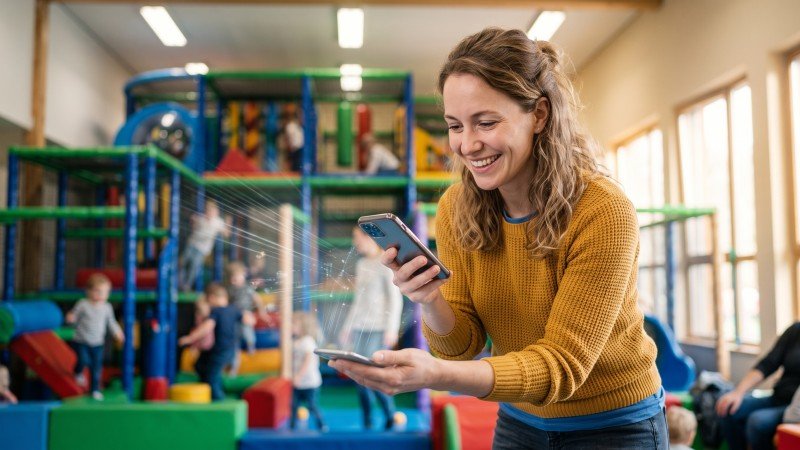
Tracking Footfall and Dwell Time Around Sponsored Assets
Sponsors want to know exactly how many guests saw their branding. You cannot just guess this number. You must track exact footfall and customer dwell time around the sponsored equipment.
Think of how a standard ticket redemption dispenser works. It uses a precise optical sensor to count every single ticket pulled, ensuring an accurate payout. Similarly, you must use technology to count every guest who interacts with a branded play area to ensure accurate reporting.
Many modern family entertainment centers achieve this using heat-mapping cameras or Wi-Fi tracking nodes. These tools show sponsors exactly where guests spend their time. By providing hard data on how long families linger near a sponsored indoor playground, you prove the physical value of the space.
Quantifying Lead Generation Through Scannable On-Site Offers
Brand exposure is great, but direct sales are much better. Corporate partners want tangible, trackable leads from their investment. You can easily quantify this lead generation using scannable on-site offers.
You can place custom QR codes directly on the sponsored amusement structures. For example, a local restaurant sponsoring a ninja warrior course can place a scannable code on the safety padding. When parents scan it while watching their children play, they receive a digital coupon for a discounted meal. This immediately turns a passive observer into a measurable business lead.
| Offer Type | Typical Placement Location | Measurable ROI Metric |
|---|---|---|
| Discount QR Code | Ride Queue Line Fencing | Total Coupon Redemptions |
| Digital Giveaway | Arcade Cabinet Screens | Total Email Sign-ups |
| Free Trial Link | Trampoline Rest Areas | App Downloads |
If a sponsor asks you what exactly their investment bought them, are you going to show them a banner or are you going to show them hard conversion data? With this method, the sponsor never has to guess if the partnership is working. They can simply count the number of redeemed coupons in their own point-of-sale system.
Reporting on Enhanced Brand Awareness and Customer Sentiment
To wrap up the data loop, you have to measure how the sponsorship actually changed guest opinions. Did the brand partnership improve customer sentiment? You can measure this qualitative data through post-visit digital surveys.
Most modern digital waiver platforms automatically email guests a receipt or a thank-you note after their visit. You can easily add one or two simple questions about the sponsor to these automated emails. For instance, you can ask if they noticed the new brand partner, or if the free product sample improved their visit.
Just as a maintenance technician reviews daily ride inspection logs to monitor equipment health, a venue operator must review survey data to monitor the health of the brand partnership.
“Sponsors eagerly renew contracts when venues provide clear data showing a positive shift in audience perception.”
You should compile this feedback and report these findings back to the sponsor on a monthly basis. The real payoff is showing them that their brand is now directly associated with family fun and positive memories, proving their investment was highly successful.
Conclusion
Sponsorship marketing is far more than just selling advertising space; it is about creating mutually beneficial partnerships that enhance the guest experience while providing essential capital for your family entertainment center. By understanding your audience, crafting targeted proposals, executing highly engaging physical and digital activations, and thoroughly proving ROI through data, you can build long-term relationships with top-tier brands. When done right, these strategic alliances will not only fund your next generation of amusement equipment but also ensure your venue remains a highly profitable community staple for years to come.
If you need further guidance on selecting the perfect, easily customizable amusement equipment for your upcoming sponsorship pitches, please feel free to contact us!