-
Whatsapp: +86 15516933785
-
Email: hanlin@hanlinplayground.com
-
Address: Shangjie District, Zhengzhou City, Henan Province, China
-
Whatsapp: +86 15516933785
-
Email: hanlin@hanlinplayground.com
-
Address: Shangjie District, Zhengzhou City, Henan Province, China

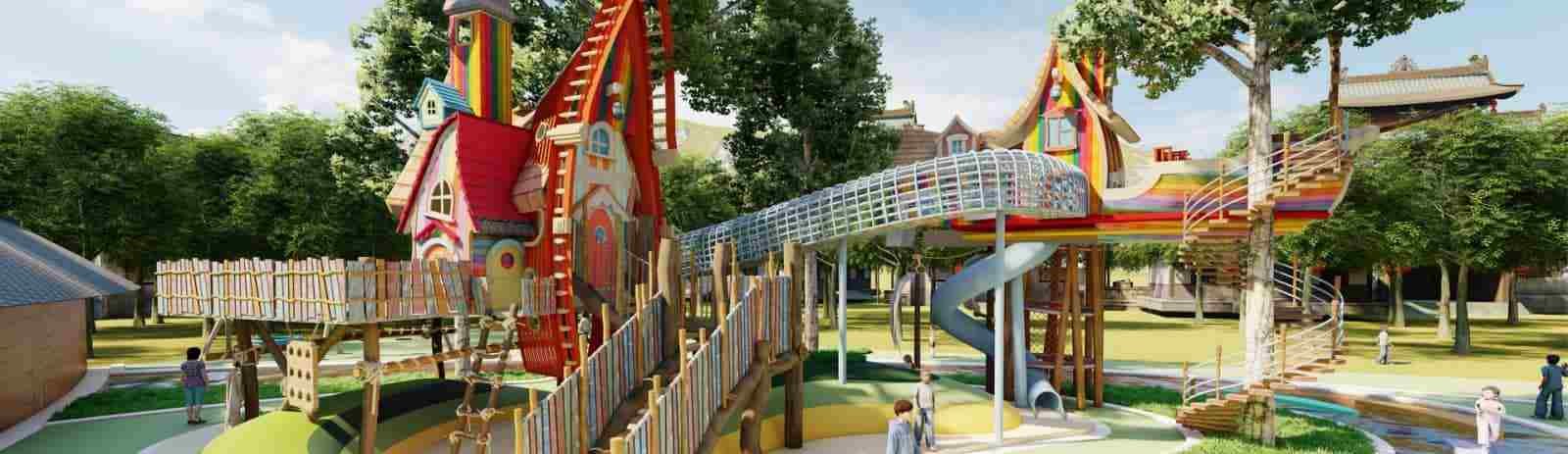
How Adventure Experiences Will Make Your Family Entertainment Center Stand Out
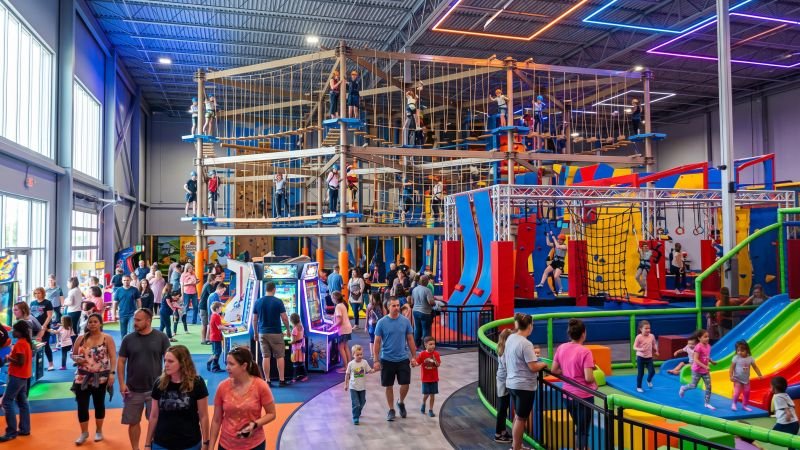
How can modernizing your venue with adventure-based attractions immediately differentiate your business from local competitors?
Integrating scalable adventure experiences such as high ropes courses, ninja obstacles, and gamified climbing walls transforms a standard Family Entertainment Center into a high-capacity, multi-generational destination. These strategic installations maximize unused vertical space, dramatically expand target demographics to include teens and adults, and drive robust repeat visitation through tiered difficulty levels and competitive digital tracking.
High-Impact Attractions That Drive Immediate Foot Traffic
What specific anchor attractions create the visual impact needed to pull first-time visitors into your Family Entertainment Center?
Family Entertainment Centers drive immediate foot traffic by installing multi-level high ropes courses, timed ninja warrior obstacle runs, and augmented climbing walls. These three anchor attractions convert unused vertical cubic space into high-capacity play zones. The payoff is a triple-threat: they provide dynamic spectator value, offer immediate physical challenges, and create memorable visual landmarks that distinguish modern venues from conventional arcades.
High Ropes Courses for Maximum Vertical Space Utilization
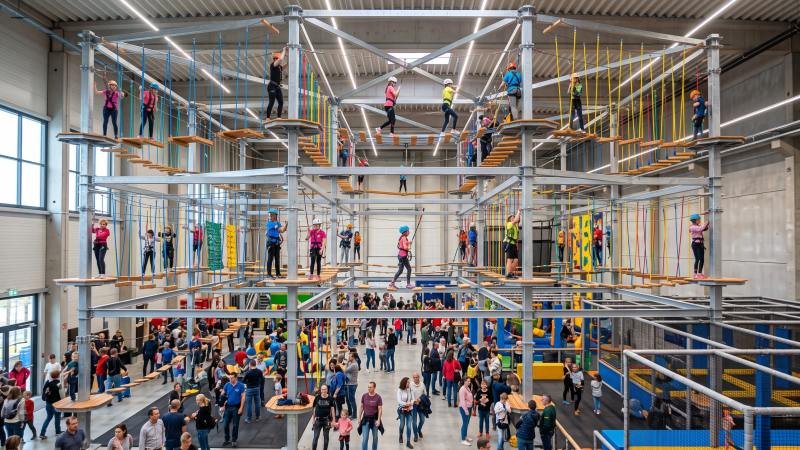
Can unused vertical air rights become your most profitable square footage? In traditional facility design, ceiling space above standard arcade games or redemption counters remains empty overhead volume. Installing a suspended ropes course utilizes this cubic space without taking away the floor footprint below.
Much like overhead monorails in theme parks move guests without disrupting ground pathways, suspended aerial courses allow participants to traverse obstacles high above other attractions.
An aerial ropes course transforms static air volume into an active, high-visibility kinetic billboard that grabs customer attention immediately upon entry.
Engineering Specifications and Footprint Efficiency
Aerial courses typically rely on a modular steel column framework. While specific engineering needs vary based on structural steel grades and local seismic building codes, standard industry benchmarks demonstrate significant spatial utility:
| Feature | Standard Technical Metric | Operational Value |
|---|---|---|
| Clearance Required | 18 to 25 feet | Activates unused upper facility height |
| Footprint Impact | Minimal floor columns | Preserves open flow for ground attractions |
| Typical Capacity | 15 to 25 participants per level | Supports steady hourly participant flow |
| Safety Belay System | Continuous-track or continuous-belay | Ensures uninterrupted guest progression |
Because exact structural load limits and ceiling clearance minimums differ among engineering designs, always verify your facility’s specific load ratings directly with your equipment manufacturer before installation.
Spectator Impact and Visual Drama
Suspended bridge crossings and beam walks generate natural spectator excitement. Guests waiting on the ground naturally look up to watch participants navigate high elements. This dynamic visibility builds curiosity and prompts walk-in customers to purchase aerial adventure passes alongside standard game cards.
Ninja Warrior Obstacles for Competitive Active Play
How do you turn casual, open-ended movement into structured, goal-driven play? Standard soft play zones offer unstructured activity for young children. Ninja warrior courses flip that script, introducing sequential, skill-based obstacle routes that challenge participants to complete timed runs from start to finish.
Mechanical Flow: Open Foam Pits vs. Continuous Runways
Early obstacle designs commonly placed balance logs and hanging grips over loose foam cube pits. The catch? Extracting fallen participants from deep foam blocks slows down course throughput significantly.
Modern commercial installations instead utilize tensioned safety netting or continuous impact-attenuating air floors beneath modular steel trusses. This transition mirrors the efficiency gains seen when commercial trampoline parks replaced loose foam blocks with integrated air bags, drastically reducing extraction delays.
- Faster Course Resets: Netting and air mats allow participants to step off immediately after a fall.
- Higher Hourly Throughput: Quick exits ensure the next challenger can attempt the obstacle run without delay.
- Reduced Maintenance Overhead: Unlike foam blocks that degrade into particulate dust, sealed air mats maintain clean surfaces and retain their impact absorption ratings longer.
When selecting these flooring systems, ensure your design complies with ASTM F2970 fall-zone safety certifications to guarantee proper impact attenuation for your specific mat thicknesses.
Modular Element Versatility
Operators can rotate individual challenge modules to keep the course fresh and demanding:
- Entry Elements: Angled quad steps or quintuple steps that test initial momentum.
- Suspension Elements: Ring swings, floating pegboards, and unstable bridges that challenge grip endurance.
- Finish Elements: Scaled 8-foot, 10-foot, and 12-foot curved warped walls that provide clear finish lines for every physical ability.
Gamified Climbing Walls to Blend Physical and Digital Worlds
Why settle for static climbing routes when interactive technology can turn physical walls into responsive gaming displays? Traditional climbing walls present fixed resin handholds on fiberglass panels. Gamified climbing surfaces combine physical climbing grips with digital projection mapping and computer vision sensors.
Technical Architecture: Projectors and Body Tracking
These systems project bright graphics directly onto the climbing panel while optical sensors track climber movement across the wall. In real time, climbers tap projected targets, dodge virtual graphics, or race against moving digital patterns.
This fusion functions exactly like an interactive laser tag arena mapped onto a vertical surface. The physical wall provides structural handholds, while the software dynamically shifts the interactive objectives.
| Technical Component | System Function |
|---|---|
| Overhead Digital Projector | Projects dynamic graphics directly onto the climbing wall |
| Optical Camera / Vision Sensor | Tracks real-time climber body position and movement |
| Integrated Software Controller | Updates digital targets and registers physical hits instantly |
Maximizing Space Utilization Through Software Updates
Traditional climbing routes require facility staff to detach, rearrange, and bolt down resin holds to create new movement challenges. Gamified systems change difficulty levels instantly with touchscreen software.
- Dynamic Content Rotation: Operators adjust games from basic hand-eye coordination drills to complex movement puzzles in seconds.
- Compact Spatial Needs: A single 10-foot by 15-foot wall section supports dozens of interactive games without requiring physical expansion.
- Versatile Skill Tuning: Beginners climb along guided light trails, while advanced climbers solve fast-moving interactive sequences on identical hold layouts.
To ensure optimal sensor tracking and visual clarity, operators must match the projector’s lux output to their facility’s ambient lighting environment during the design phase.
Expanding Your Target Demographic Beyond Young Children
To grow beyond the limitations of toddler and youth markets, Family Entertainment Centers must integrate scalable adventure experiences that appeal to teens, adults, and corporate groups. Upgrading from basic soft play to intense physical challenges transforms a venue from a child-only zone into a multi-generational destination. The financial impact? This broad appeal directly increases both the facility’s overall foot traffic and the average revenue per visitor.
Engaging Teenagers with High-Thrill Physical Challenges
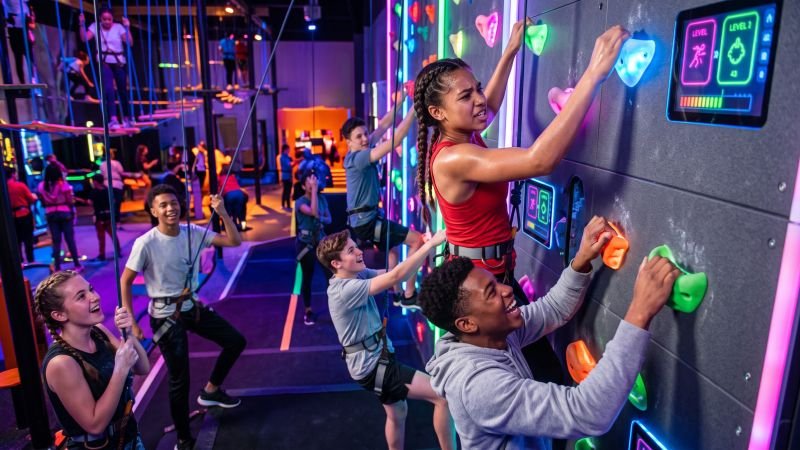
Do teenagers still visit your venue, or do they leave once they outgrow the ticket redemption counter? Teenagers demand authentic excitement and social validation. To win them back, facilities need to introduce physical challenges that provide genuine adrenaline.
Theme parks build intense steel coasters for guests who outgrow gentle carousels. Similarly, indoor facilities must install high-thrill adventure elements to capture the adolescent market. Teenagers seek out extreme vertical drops, leap-of-faith jumping platforms, and challenging traverse walls. These attractions effectively test their physical limits.
Better yet, these high-thrill elements encourage social group visits. Teens rarely visit entertainment centers alone. When one teenager attempts a challenging obstacle run, their peers follow.
| Feature | Traditional Soft Play | High-Thrill Adventure |
|---|---|---|
| Primary Appeal | Safe exploration | Physical challenge and adrenaline |
| Target Age Range | 2 to 8 years old | 12 to 18+ years old |
| Group Dynamics | Individual or parallel play | Competitive and social group play |
| Dwell Time Strategy | Hourly limits | Session-based or unlimited access |
By offering attractions with genuine difficulty, operators successfully bridge the gap between childhood play areas and adult entertainment venues. As a result, the venue remains a relevant destination for local youth.
Converting Passive Parents into Active Paying Participants
Walk into a standard family entertainment center. Why let mom and dad sit on the sidelines acting as glorified coat racks? You will likely see parents sitting on benches, browsing their phones, and waiting for their children. These passive parents represent a massive source of untapped revenue. If they are not playing, they are not paying.
To fix this, operators must design spaces for multi-generational play. Modern bowling centers replaced lightweight plastic bumper lanes with luxury seating and regulation-weight balls to encourage adults to play alongside their children. Adventure zones apply this exact same logic.
When a facility installs sturdy elevated ropes courses or full-scale obstacle runs, adults can safely join the activity. Parents transition from free spectators into paying participants. According to standard industry revenue models, converting just 30% of waiting parents into active ticket-holders significantly boosts daily profit margins.
Equipment Sizing and Capacity
To safely accommodate adults, the hardware must be industrial-grade. Belay lines, safety harnesses, and structural platforms must support fully grown adults.
- Weight Capacities: Adult attractions require higher dynamic load limits than child-only zones.
- Harness Sizing: Safety gear must smoothly adjust to fit a wide variety of adult body types.
- Clearance Height: Tunnels and overhead elements must allow adults to pass without crouching uncomfortably.
Unlocking Lucrative Corporate Team-Building Revenue
Want to see your facility packed on a random Tuesday morning? Most family entertainment centers struggle with low attendance early in the week. While weekends bring heavy family traffic, weekday mornings leave the facility empty.
Corporate team-building events provide the perfect solution. Adventure experiences naturally facilitate communication, trust, and leadership. Escape room businesses heavily rely on corporate bookings to fill weekday slots, and adventure zones can capture this exact same corporate budget.
Coworkers can navigate wobbly rope bridges together. They can cheer each other on during timed obstacle runs. These shared physical challenges break down office barriers much faster than standard arcade games.
To attract local businesses, operators should market specific corporate packages.
- Offer exclusive weekday morning facility rentals.
- Provide private meeting rooms equipped with projectors for post-activity reviews.
- Include catered lunch options alongside the adventure passes.
Bottom line: capturing the corporate market transforms dead weekday hours into highly profitable booking slots. This strategy maximizes the return on investment for the entire adventure installation.
Proven Strategies to Maximize Repeat Visitation and ROI
How can operators guarantee that guests return to their facility week after week instead of making a single, one-time visit?
Family Entertainment Centers maximize repeat visitation and return on investment (ROI) by integrating replayable adventure systems. Operators achieve this by implementing tiered difficulty levels for skill progression, utilizing digital leaderboards to spark competition, and selling premium group packages. By making these shifts, passive, one-time visitors transform into loyal, recurring customers who consistently generate reliable weekly revenue.
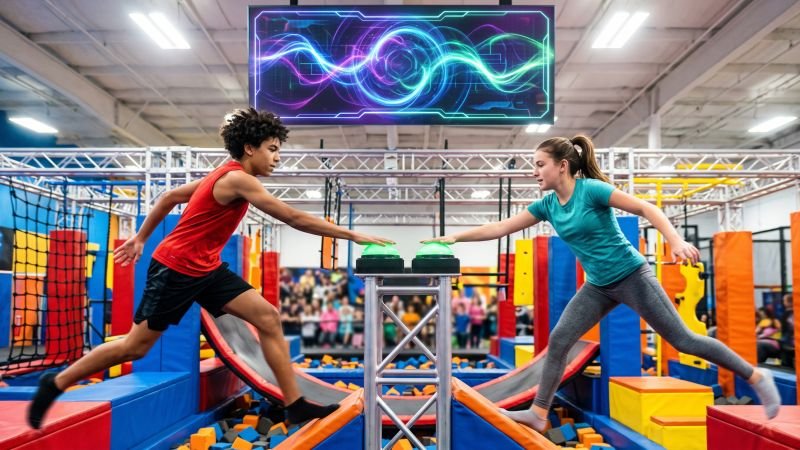
Implementing Tiered Difficulty Levels to Encourage Skill Progression
Guests quickly abandon attractions that feel too easy or too impossible. To prevent this, you have to design adventure zones with multiple difficulty paths. This concept mirrors classic arcade game design: a player fails a challenging level, learns from their mistake, and pays to try again.
By installing multiple routes, a single attraction serves guests of all abilities. A beginner might easily complete a basic route during their first visit. Once they master that, they come back the following weekend to conquer a harder route.
Structuring Progression Paths
Operators typically color-code obstacle routes to guide participants safely and manage expectations.
| Route Color | Challenge Level | Design Focus | Participant Goal |
|---|---|---|---|
| Green | Beginner | Stable footing, wide grips | Build initial confidence |
| Blue | Intermediate | Mild swinging, narrow beams | Test balance and coordination |
| Black | Advanced | Free-hanging elements, long gaps | Achieve athletic mastery |
This tiered approach guarantees that guests always have a new physical goal to accomplish. They do not just complete the attraction once. Instead, they return repeatedly to master the entire system.
Leveraging Digital Leaderboards and Timers for Friendly Competition
Friendly competition drives massive repeat business. When friends visit an entertainment center, they naturally want to beat each other’s scores. Operators easily capture this competitive drive by adding automated timers and digital leaderboards to their adventure zones.
This setup perfectly mirrors indoor go-kart tracks, where drivers obsessively check the digital monitor to see their lap times and immediately buy another race ticket to shave off a few seconds. Adventure attractions generate the exact same profitable behavior when equipped with timing hardware.
Integrating RFID and Timing Hardware
Modern facilities use wearable technology to track guest performance automatically. First, participants tap an RFID wristband at the starting line. Next, they race through the obstacle run. Finally, they tap a finish-line buzzer. High-definition screens instantly display their completion time alongside daily, weekly, and all-time facility records.
Displaying the top ten fastest times prominently on a large overhead screen incentivizes guests to keep buying tickets until they see their name on the board.
Packaging Adventure Zones for Premium Group and Party Bookings
Group events form the financial backbone of most entertainment centers. To maximize ROI, operators must package adventure attractions as premium upgrades. Standard birthday packages usually include basic arcade cards and a pizza. But you can charge significantly more by adding exclusive access to high-demand adventure zones.
This strategy closely resembles renting VIP private cabanas at a water park or booking exclusive laser tag arenas. Facilities charge a premium for dedicated spaces. Similarly, operators can reserve specific obstacle routes or climbing walls exclusively for a single party group.
Creating High-Margin Ticket Tiers
Operators should restructure their pricing models to highlight the adventure experience as a VIP offering.
- Standard Pass: Includes arcade access and basic soft play entry.
- Adventure Pass: Adds general admission to ropes courses and ninja obstacles.
- VIP Party Package: Includes private, guided access to the adventure zone, bypassing the general public queue.
By positioning the adventure zone as a premium activity, operators easily justify higher ticket prices. Parents gladly pay premium rates for unique, active party experiences. At the end of the day, this tiered pricing strategy dramatically accelerates the return on investment for the new equipment.
Space and Operational Considerations for New Installations
What exact physical building constraints and daily operational procedures must you evaluate before installing heavy adventure equipment?
Integrating new adventure attractions requires operators to carefully evaluate structural ceiling clearances, analyze ground footprint limitations, and optimize staff-to-guest ratios. By accurately mapping facility dimensions and streamlining safety harnessing procedures, entertainment centers can safely maximize hourly guest throughput without overloading their structural building limits.
Assessing Ceiling Height and Floor Space Feasibility
Do you know exactly how much usable vertical space exists beneath your building’s ductwork? Evaluating facility space means looking beyond just the square footage on the ground. You must carefully calculate the clear cubic volume of the entire room.
Consider how engineers design an indoor dark ride. They do not just measure the physical steel track on the floor. Instead, they calculate the rider’s “reach envelope” to ensure passengers cannot touch the walls or ceiling during the ride. Similarly, adventure installations require a specific safety envelope above, below, and around the structural equipment.
Operators must account for HVAC ducts, hanging lighting fixtures, and commercial fire sprinkler systems. These necessary utility elements often drop several feet below the actual roof deck. That means your truly usable ceiling height is always lower than your total building height.
| Attraction Type | Minimum Usable Height | Ground Footprint Impact |
|---|---|---|
| Traditional Soft Play | 12 to 15 feet | Heavy (Dense floor base) |
| Ninja Obstacle Runs | 15 to 18 feet | Moderate (Linear pathways) |
| High Ropes Courses | 20 to 25+ feet | Minimal (Column supported) |
Because concrete slab thickness, structural load limits, and precise clearance dimensions vary drastically based on local building codes, always verify these exact spatial requirements directly with your equipment supplier before finalizing a facility lease or beginning construction.
Balancing High Guest Throughput with Rigorous Safety Standards
How do you keep ticket lines moving fast while double-checking every single safety harness? Guest throughput directly dictates your daily revenue potential. You have to process guests quickly, but elevated adventure attractions demand strict adherence to rigorous safety standards.
Overcoming the Harnessing Bottleneck
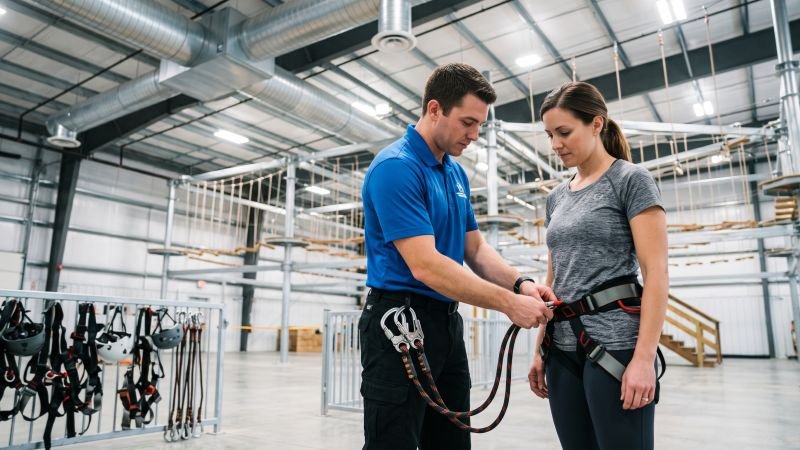
Ever watched a 45-minute queue form just because one guest couldn’t figure out their leg straps? The biggest operational delay usually happens at the gear-up station. This situation is exactly like dispatching a roller coaster. If ride attendants take too long checking lap bars, the hourly capacity drops drastically. In an adventure zone, staff must fit harnesses and connect belay lanyards efficiently.
To solve this problem, modern facilities divide their staffing zones. One team specifically fits harnesses in a dedicated prep area. Meanwhile, a second team connects the guests to the course at the stairs. This assembly-line method prevents massive traffic jams at the attraction entrance.
Utilizing Continuous Belay Systems
Older ropes courses required guests to unclip and reclip their safety carabiners at every single platform. This slow manual process created massive delays. Worse still, it introduced a major risk for human error.
Today, facilities use continuous belay tracking technology. Guests connect their harness once at the bottom of the stairs. The safety tracker slides smoothly through a continuous metal channel along the entire elevated route. As a result, participants never disconnect while they are high in the air. The net result? This technology greatly increases hourly throughput and ensures rigorous safety compliance simultaneously.
Conclusion
Slapping the word ‘adventure’ onto a basic soft play zone doesn’t cut it anymore. Upgrading your Family Entertainment Center with industrial-grade active attractions is a vital business strategy for long-term profitability. By maximizing your cubic space, engaging older demographics with challenging physical obstacles, and introducing competitive gamification, you create a premier destination that guests will visit repeatedly. If you are ready to evaluate your floor plan and design a custom attraction that fits your operational needs, contact us to discuss your next installation.