-
Whatsapp: +86 15516933785
-
Email: hanlin@hanlinplayground.com
-
Address: Shangjie District, Zhengzhou City, Henan Province, China
-
Whatsapp: +86 15516933785
-
Email: hanlin@hanlinplayground.com
-
Address: Shangjie District, Zhengzhou City, Henan Province, China

Are Play Cafes Profitable? A Complete Financial Breakdown
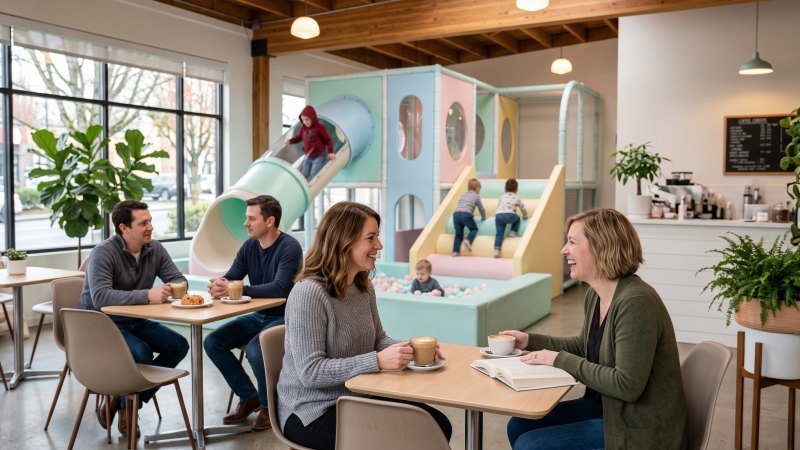
Are indoor play cafes a profitable business venture for modern entrepreneurs?
Yes, play cafes are highly profitable when properly managed, with well-run medium-sized facilities capable of generating consistent monthly net profits. Profitability is achieved by balancing initial startup investments against a highly diversified business model that combines pay-per-visit admissions, recurring memberships, high-margin food and beverage sales, and premium weekend private events.
Estimating Your Initial Startup Investment
What is the total upfront cost required to launch a successful indoor play cafe?
The initial startup investment for a commercial play cafe typically ranges from $150,000 to $350,000 for a medium-sized facility. Primarily, this capital covers securing a commercial lease, completing the interior build-out, purchasing commercial-grade play structures, and securing essential business licenses alongside liability insurance policies.
Lease Negotiations and Facility Build-Out
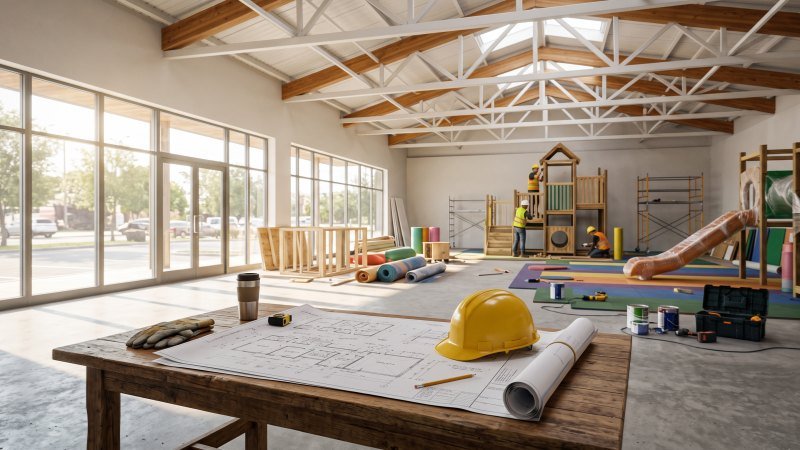
Securing a location requires significant upfront capital. Right out of the gate, commercial landlords usually demand a security deposit that often equals three to six months of rent. Beyond the paperwork, you have to transform an empty building into a safe, functional family center. This transformation is called the facility build-out.
The build-out process involves installing custom kid-friendly bathrooms, commercial cafe counters, and specialized safety flooring. That’s why build-out expenses often range from $40 to $100 per square foot. The good news? You can frequently negotiate a Tenant Improvement Allowance (TIA) during lease talks. A TIA is a financial contribution from the landlord designed to help cover your renovation costs.
To illustrate, think of an empty warehouse intended for an indoor amusement center. You cannot simply let customers inside; you must first construct the specific safety zones, spectator seating, and reinforced reception desks before anyone can safely enter.
| Commercial Space Condition | Facility Description | Average Build-Out Cost Impact |
|---|---|---|
| Vanilla Shell | A completely empty room with basic concrete floors and bare drywall. | High (Requires full electrical routing, new plumbing, and extensive aesthetic construction.) |
| Second-Generation | A space previously used as a restaurant, cafe, or daycare facility. | Low (Existing ADA-compliant bathrooms and cafe plumbing significantly reduce initial expenses.) |
Sourcing Safe and Durable Play Equipment
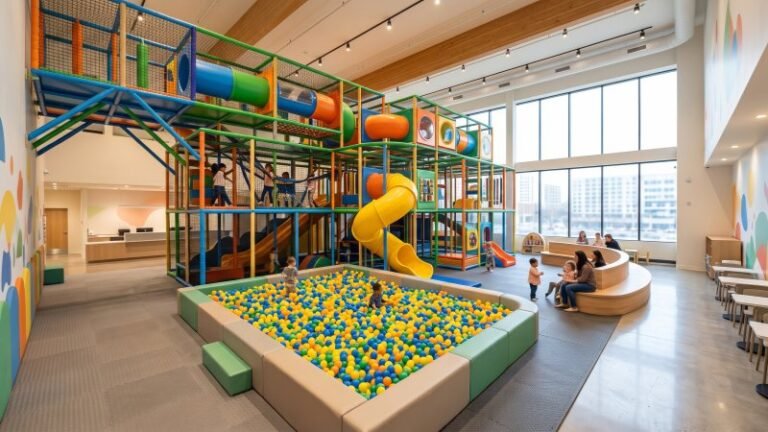
The indoor playground structures serve as the core of your business. That makes purchasing high-quality equipment your most critical startup investment. Commercial play equipment can cost anywhere from $30,000 to over $100,000. The total price depends entirely on the size, height, and complexity of the modular design.
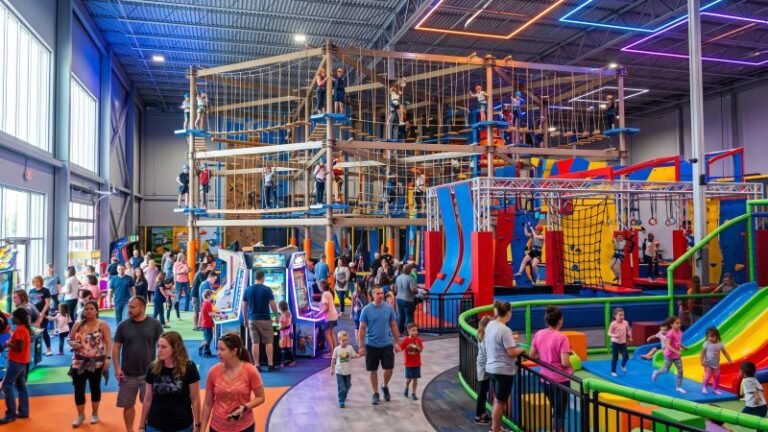
Think you can cut corners by installing a residential playground set? Think again. You must exclusively buy commercial-grade materials. For example, commercial structures utilize high-density foam padding and heavy-duty galvanized steel pipes. Just as a commercial indoor arcade uses reinforced cabinets and heavy-duty buttons to withstand constant daily use, your play cafe needs thick, tear-resistant PVC vinyl to handle hundreds of active children safely.
When selecting your play structures, pay close attention to the following essential features:
- Modular Steel Framing: Allows you to expand or reconfigure the play layout in the future.
- Commercial Safety Netting: Absolutely essential for multi-level climbing frames to prevent dangerous falls.
- Dedicated Toddler Zones: Separate areas featuring softer materials specifically designed for children under three.
- Non-Porous Surfaces: Specialized materials that resist liquid stains and can be sanitized rapidly.
One quick caveat: specific technical specifications, such as steel pipe wall thickness or PVC vinyl weight grades, often differ based on the manufacturer. Always verify the exact material specifications, weight limits, and safety certifications directly with your equipment supplier before finalizing any purchase contract.
Licensing Insurance and Administrative Fees
Before you can even unlock the front doors, you have to clear various administrative hurdles. At a bare minimum, you will need basic local business licenses and specific building permits. Because you will serve food and espresso drinks, you must also obtain expensive health department permits.
Then there’s commercial insurance—an unavoidable upfront cost. You must secure a robust Commercial General Liability Insurance policy. This policy protects your business financially if a child gets injured on the playground. Often, insurance providers require a substantial upfront premium payment before coverage officially begins. Generally, this initial insurance payment ranges from $3,000 to $6,000, depending heavily on your facility’s total square footage and maximum capacity limit.
And don’t forget to factor in external professional fees. For instance, you will likely need to hire structural architects to draft official facility blueprints for city approval. You should also hire a real estate attorney to review your commercial lease agreement. Add it all up, and these professional services easily tack on several thousand dollars to your initial startup phase.
Unlocking Multiple Revenue Streams
How do indoor play cafes actually generate sustainable income?
Play cafes generate revenue through a diversified business model combining multiple income streams. The primary sources include pay-per-visit general admission, recurring monthly memberships, and high-margin food and beverage sales. Factor in exclusive birthday parties and specialized enrichment classes, and you significantly boost overall profitability.
General Admission and Tiered Membership Models
Daily admission fees are your baseline income. Typically, family entertainment centers charge between $15 and $25 per child for a single play session. But let’s be realistic: relying solely on daily tickets causes unpredictable cash flow.
That’s exactly why implementing tiered membership models is non-negotiable. Memberships provide predictable, recurring revenue. Think of this like a large trampoline park offering single-jump tickets versus monthly all-access passes. The all-access pass guarantees steady income regardless of daily foot traffic or bad weather.
Consider offering different membership tiers. For instance, a basic tier might include unlimited weekday play, while a premium tier could offer weekend access and exclusive cafe discounts. When executed correctly, parents feel they receive great value, and your business secures reliable monthly funds.
High-Margin Cafe Sales for Parents
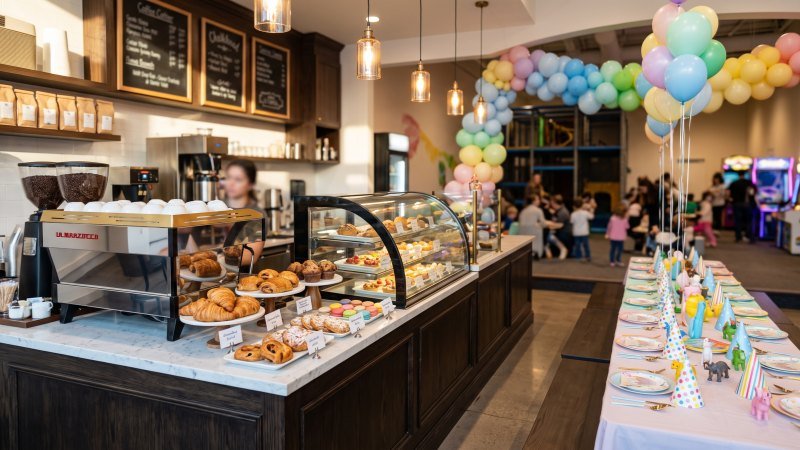
Let’s be honest: why do parents really choose a play cafe over a free afternoon at the local public park? They want a comfortable place to sit down, relax, and drink a decent cup of coffee. The cafe component is absolutely crucial for your overall profitability.
Similar to how a larger family entertainment center generates massive profits from its food court, your cafe menu drives high margins. While admission covers your overhead expenses, espresso drinks and pastries generate pure profit. Specifically, specialty coffee often boasts a profit margin of 70% to 80%.
| Revenue Category | Average Price | Estimated Profit Margin |
|---|---|---|
| Single Admission | $18.00 | 40% – 50% |
| Latte / Espresso | $5.50 | 75% – 85% |
| Pre-packaged Snacks | $3.00 | 50% – 60% |
Industry data suggests over 65% of parents purchase at least one beverage during their visit. Optimizing your cafe menu directly and immediately impacts your bottom line.
Lucrative Private Events and Birthday Parties
Weekend birthday parties often generate the highest revenue per square foot. Families gladly pay premium prices for stress-free, hosted celebrations.
“Birthday parties act as the financial anchor for indoor play businesses, often accounting for over 40% of total weekend revenue.”
Generally, basic party packages start around $300. Conversely, exclusive private facility rentals can easily exceed $800 per event. Think of this like renting out a commercial laser tag arena for a private group. The fixed operational costs remain exactly the same, but your hourly revenue jumps drastically.
If you want to maximize this revenue stream, offer premium add-ons. You can sell extra pizzas, themed decorations, or dedicated party hosts. These small upgrades significantly increase your average transaction value per party.
Retail Merchandise and Enrichment Classes
To top off your revenue, successful play cafes capture additional spending through retail. You can easily sell branded merchandise right at the front desk. For example, mandatory grip socks are a standard safety requirement across the indoor amusement industry. Selling these specific socks generates continuous, low-effort revenue.
Beyond merchandise, offering enrichment classes during slow hours boosts your income. You can host toddler music classes or basic sensory art workshops right inside your facility. By doing this, you attract a different demographic of parents who are willing to pay for structured educational entertainment.
Managing Ongoing Monthly Expenses
What are the typical recurring monthly expenses required to operate an indoor play cafe?
The ongoing monthly expenses for a standard indoor play cafe range between $20,000 and $55,000. These operating costs primarily consist of payroll for specialized staff, extensive daily cleaning protocols, commercial facility utilities, essential digital marketing efforts, and Point of Sale (POS) software subscriptions.
Payroll for Trained Staff and Baristas
Payroll is almost always your largest monthly expense. You cannot run a family entertainment center alone. You need a dedicated team to manage front desk admissions, monitor the play zones, and operate the cafe.
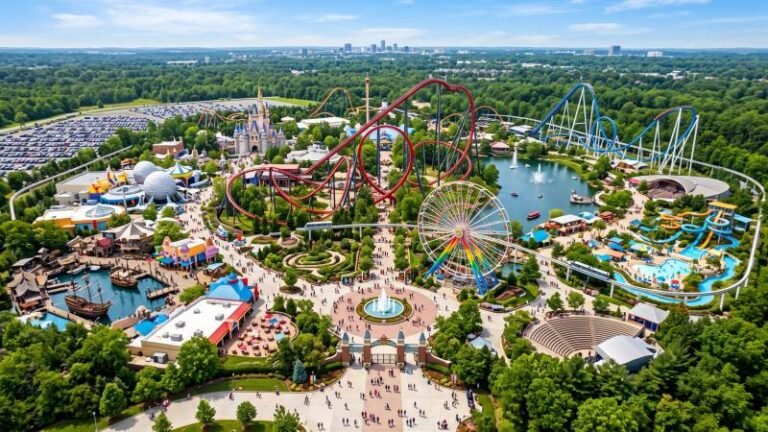
You’re looking at specific, specialized roles. You need trained baristas to produce high-quality espresso drinks and energetic party hosts to manage chaotic weekend birthday events. Think of your staffing structure like a larger indoor amusement park. You need front desk staff handling ticketing, play attendants monitoring the equipment zones for safety, and food service workers managing the cafe.
As a rule of thumb, a medium-sized facility requires 3 to 8 employees on shift during peak hours. You must budget heavily for hourly wages, payroll taxes, and worker’s compensation insurance.
- Front Desk Attendants: Handle waivers, ticketing, and retail sales.
- Play Area Monitors: Enforce safety rules and maintain order within the play structures.
- Baristas/Cafe Staff: Prepare food, manage cafe inventory, and ensure food safety compliance.
- Dedicated Party Hosts: Guide families through their private events and manage party schedules.
Strict Cleaning and Maintenance Protocols
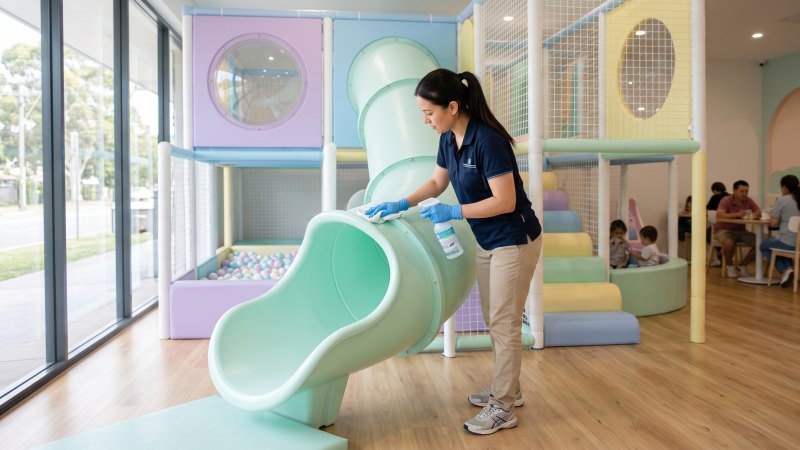
Cleanliness dictates a play cafe’s reputation. Parents simply will not return to a dirty facility. That means strict daily sanitation is a massive ongoing expense, requiring you to purchase commercial-grade, non-toxic cleaning supplies in bulk.
Beyond keeping the floors spotless, routine equipment maintenance requires consistent funding. Over time, heavy daily use wears down the soft playground materials. For example, the industrial foam padding covering the steel frames will eventually tear. Similarly, the safety netting can stretch or rip. Just as an industrial trampoline park must routinely inspect and replace stretched springs and torn jump mats, you have to constantly inspect and repair your play structures.
| Maintenance Category | Frequency | Average Monthly Cost Impact |
|---|---|---|
| Deep Sanitation (Fogging) | Weekly | $300 – $600 |
| Ball Pit Cleaning Machine | Bi-Weekly | $150 – $250 |
| Vinyl/Netting Repairs | Monthly/As Needed | $200 – $500 |
Keep in mind that the tensile strength of safety netting and the density ratings of protective foam can vary based on your specific equipment manufacturer. Always verify the exact replacement specifications and maintenance timelines directly with your supplier to accurately forecast these recurring repair costs.
Utilities Marketing and Software Subscriptions
Don’t overlook the physical and digital overhead that consumes a massive chunk of your budget. Cooling a large indoor space filled with active children requires massive HVAC power, meaning commercial electricity and water bills often run into thousands of dollars monthly.
You also have to invest heavily in localized marketing. A play cafe cannot survive on foot traffic alone; you need consistent Facebook and Google Ads targeting local parents.
“Digital marketing is not an optional expense; it is a vital operational utility for modern family entertainment centers.”
Besides marketing, modern operations require expensive digital infrastructure. You have to pay monthly subscription fees for specialized Point of Sale (POS) software. This software must handle complex tasks like digital liability waivers, online party bookings, and recurring membership billing. Specialized software like Roller or CenterEdge can easily cost several hundred dollars every single month.
Essential Strategies to Accelerate ROI
How can play cafe owners accelerate their return on investment and maximize overall profitability?
To rapidly accelerate a play cafe’s return on investment, owners must implement targeted operational strategies that maximize facility utilization. These strategies include designing a highly comfortable environment specifically for parents, launching specialized promotions to increase foot traffic during traditionally slow weekday hours, and utilizing strategic cross-selling techniques at the admissions counter.
Designing a Parent-Friendly Atmosphere
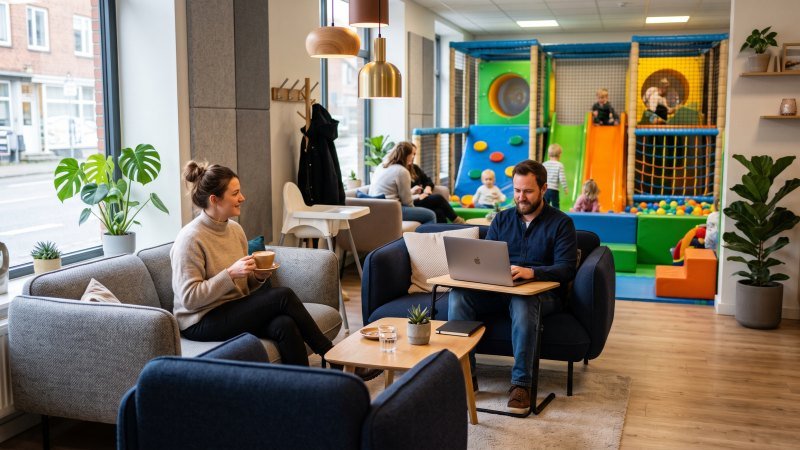
Children don’t swipe the credit cards—parents do. Because of this, optimizing the facility for adult comfort directly impacts your bottom line. When parents feel relaxed, they stay significantly longer, and longer visits lead directly to additional high-margin cafe purchases.
Think of this concept like a high-end family entertainment resort. When the lounge areas are equipped with plush seating and premium amenities, parents happily extend their stay and order more food. Similarly, your play cafe must provide comfortable, ergonomic seating with clear, unobstructed sightlines to the playground. If parents can easily watch their children from a distance, they will sit down and open their wallets.
Take it a step further and design the space for remote workers. Install ample electrical outlets near the seating areas and provide fast, reliable, and free Wi-Fi. Creating an environment where parents can work or socialize comfortably is key to extending dwell times and increasing daily revenue.
Driving Traffic During Slow Weekday Hours
Every family entertainment center faces the same challenge. Weekends are completely sold out, but Tuesday mornings are a ghost town. How do you keep the cash flowing when the weekend birthday rush is over?
You can’t bank on school-aged children during the week. Instead, you have to aggressively target the toddler demographic and stay-at-home parents. Just as a large trampoline park hosts exclusive “toddler jump” hours to fill empty arenas during school hours, you must create dedicated weekday programming.
Consider implementing these specific weekday strategies:
- Toddler Tuesdays: Offer discounted admission rates strictly for children under four years old.
- Mommy and Me Meetups: Partner with local parenting groups to host weekly coffee mornings at your facility.
- Preschool Field Trips: Offer heavily discounted, bulk-rate entry for local daycares during your slowest morning hours.
By filling the facility during off-peak times, you cover your fixed daily overhead costs. As a result, your massive weekend revenue transforms directly into pure profit.
Implementing Strategic Cross-Selling Tactics
At the end of the day, driving up your Average Transaction Value (ATV) is what moves the needle. You achieve this through consistent cross-selling at the Point of Sale (POS). Cross-selling simply means offering a complementary product right as the customer pays.
“Strategic cross-selling at the admissions desk can easily increase the average transaction value by 15%, directly impacting bottom-line profit without requiring any additional marketing spend.”
Train your front desk staff to always ask one additional question. When a parent buys admission, the staff should immediately offer mandatory grip socks at a bundled discount. When a customer orders a latte, the barista must suggest a fresh pastry.
| Primary Purchase | Strategic Cross-Sell Offer | ROI Impact |
|---|---|---|
| Basic Birthday Package | Premium character mascot visit | High (Labor cost is low, perceived value is high) |
| General Admission Ticket | $5 Kids Snack Box (Juice & Crackers) | Medium (Captures immediate food sales) |
| Large Espresso Beverage | $3 Fresh Chocolate Chip Cookie | Medium (Leverages impulse buying behavior) |
These small, incremental upgrades add up fast. Over the course of a busy month, a tightly run cross-selling strategy can easily inject thousands of dollars into your gross revenue.
Conclusion
Building a successful indoor play cafe requires a clear, practical understanding of your initial startup investments, ongoing monthly expenses, and potential revenue streams. While the upfront costs for commercial leases and premium indoor play equipment are substantial, a well-managed facility can generate an excellent return on investment. By unlocking high-margin cafe sales, hosting lucrative private birthday parties, and optimizing the space for parent comfort, you can build a highly profitable family entertainment center that serves your local community for years to come.
If you are ready to turn your indoor play cafe vision into a reality and need expert guidance on sourcing durable, commercial-grade play structures, please contact us today to discuss your project!