-
Whatsapp: +86 15516933785
-
Email: hanlin@hanlinplayground.com
-
Address: Shangjie District, Zhengzhou City, Henan Province, China
-
Whatsapp: +86 15516933785
-
Email: hanlin@hanlinplayground.com
-
Address: Shangjie District, Zhengzhou City, Henan Province, China

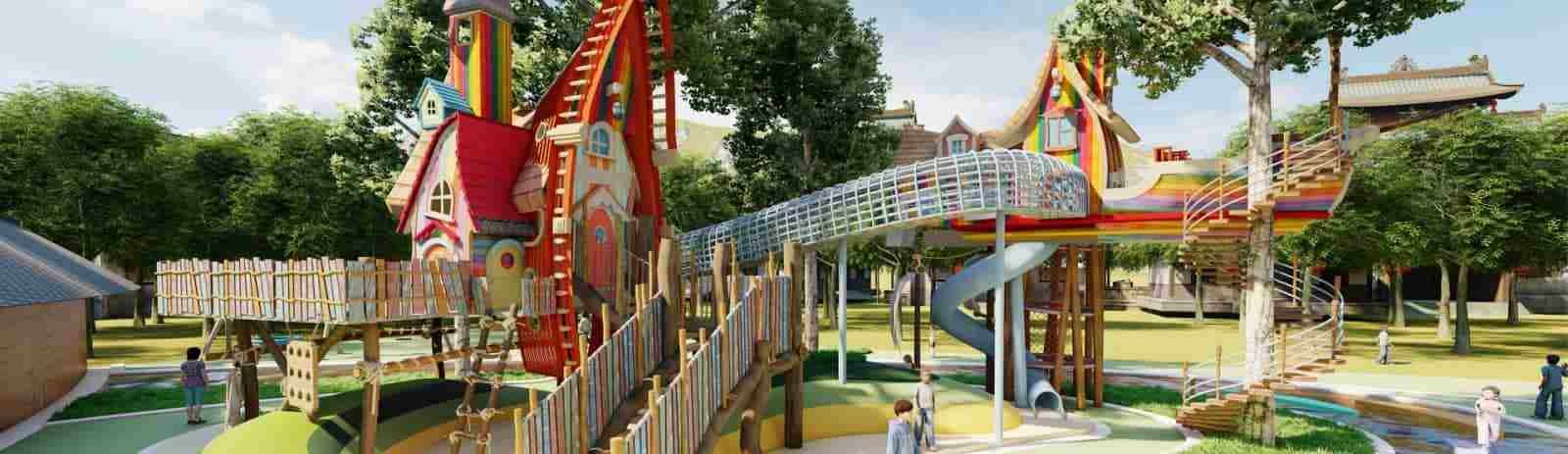
How to Start an Indoor Playground Business With No Money
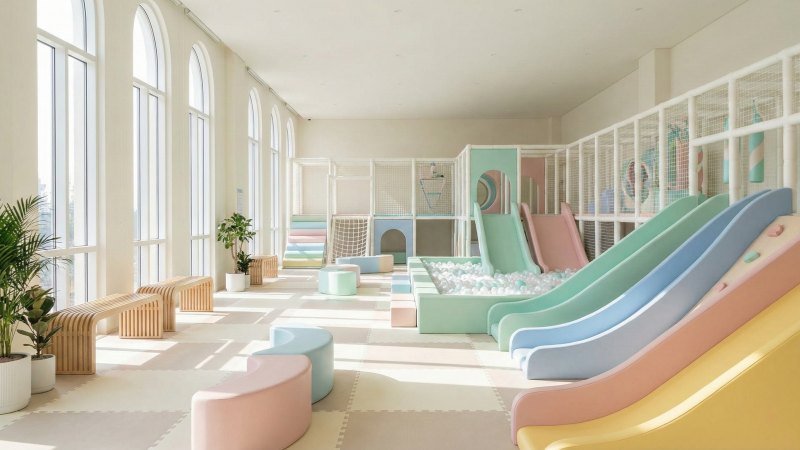
Starting an indoor playground with absolute zero capital is a myth, but launching one with minimal personal savings is entirely possible if you know how to structure your business. The commercial playground industry is capital-intensive, heavily regulated, and reliant on physical real estate. However, by bypassing traditional retail leases initially and leveraging outside financing, you can build a profitable operation from the ground up.
Viable Low-Cost Business Models to Start Small
You do not have to sign a five-year commercial lease to enter the play industry. Testing the market with low-overhead models allows you to generate immediate cash flow and build a customer base before taking on massive debt.
Launching a Mobile Soft Play Rental Service
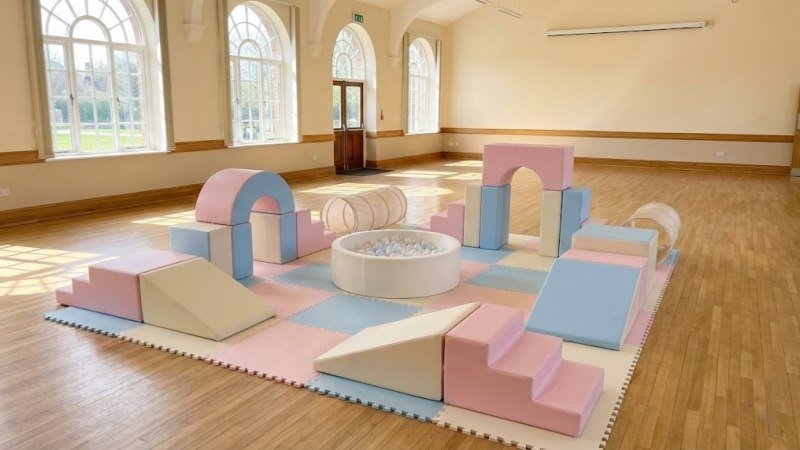
The most accessible entry point is the mobile soft play model. Instead of paying premium retail rent, you bring modular equipment—foam ball pits, soft climbers, and safety mats—directly to backyard birthday parties, weddings, and corporate events.
While you still have to pay for a storage unit and transportation, these costs are a fraction of a commercial lease. The margins are high because you are primarily exchanging your physical labor (delivery, setup, breakdown, and cleaning) for rental fees. If a standard weekend rental runs $300, booking four parties a weekend generates quick capital that you can reinvest into larger, permanent equipment.
Organizing Pop-Up Playground Events in Community Centers
Renting a community center hall, school gymnasium, or church basement for a single weekend allows you to simulate a fixed location without the long-term liability. You set up portable equipment and charge a pay-to-play admission fee.
This model limits your downside risk to a single weekend’s rental fee. More importantly, it serves as a live market test. You can capture parent emails, test different equipment layouts, and prove local demand—data that will be crucial when you eventually pitch investors for a permanent facility.
Partnering with Malls or Restaurants for Revenue Sharing
Many commercial venues, like large family restaurants, shopping malls, or trampoline parks, have dead space that generates zero income. You can negotiate a revenue-share agreement where you provide and maintain the play equipment, and the venue provides the space, utilities, and foot traffic.
Instead of fixed monthly rent, you split the entry sales (e.g., a 70/30 split in your favor). The venue benefits from increased dwell time and secondary spending (like food and beverage), while you secure a semi-permanent physical location with no lease liability.
Creating a Micro-Location within Existing Gyms
Fitness centers consistently lose members because parents struggle to find reliable childcare. Subleasing a 300-square-foot corner of a popular gym to operate an active play zone solves their retention problem while giving you a captive audience. You can structure this by charging parents a drop-in rate, or by charging the gym owner a flat monthly management fee to offer the service as a member perk.
Strategies to Raise Capital Without Personal Savings
If you are building a full-scale Family Entertainment Center (FEC), you will eventually need hundreds of thousands of dollars. When your own bank account is not an option, you have to look outward.
Pitching to Local Investors and Community Partners
Venture capital firms do not fund local, single-location indoor playgrounds; they look for tech-scale returns. Instead, target local private investors—successful business owners, real estate developers, or community leaders—who understand cash-flowing brick-and-mortar businesses.
Local investors want to see a clear path to profitability and a reasonable payback period. You will have to trade a percentage of your equity for their capital. Your pitch must rely on solid operational margins, particularly the profitability of pre-booked weekend birthday parties, to show them exactly how and when they will earn their money back.
Applying for Small Business Administration Loans and Microloans
The Small Business Administration (SBA) guarantees loans issued by partner banks, mitigating the bank’s risk. A critical reality check: SBA 7(a) loans for a full facility build-out almost always require a 10% to 20% equity injection. You cannot walk in with zero dollars. However, this injection can sometimes come from a local investor, a seller-carry note, or valuable personal collateral.
If you are starting smaller with a mobile or pop-up model, an SBA Microloan (up to $50,000) is much more accessible, has less stringent equity requirements, and can comfortably cover a commercial van and premium portable equipment.
Leveraging Equipment Financing and Leasing Programs
Playground manufacturers frequently partner with commercial lenders to offer asset-backed equipment financing. Because the loan is secured by the physical playground structure itself, approval rates are generally higher than unsecured cash loans. The revenue generated by daily entry fees covers the monthly equipment lease payment, allowing the asset to effectively pay for itself over a 3-to-5-year term.
Seeking Government Grants and Community Development Funds
Business grants are notoriously competitive and rarely awarded just to “start a business.” To qualify, your playground must solve a community problem. Position your facility as a children’s fitness center combating childhood obesity, or focus on opening in an underserved commercial corridor to qualify for Community Development Block Grants (CDBG). Local Small Business Development Center (SBDC) are the best resource to identify these localized funds.
Generating Cash Flow Before the Grand Opening
You can fund a portion of your initial deposits and working capital by monetizing your local audience before the doors officially open.
Running a Rewards-Based Crowdfunding Campaign
Platforms like Kickstarter or Indiegogo allow you to pre-sell your inventory. By offering heavily discounted birthday party packages or admission punch cards months in advance, you incentivize parents to fund your construction. If a standard private party will cost $400, offering it early for $250 gives families a tangible reason to part with their cash today.
Pre-Selling Lifetime or Founder Memberships
Create a high-ticket “Founder Membership” limited to the first 50 or 100 families. For a one-time premium fee (e.g., $350), these families might receive annual access, VIP early entry hours, and a plaque on the wall. Selling 50 of these injects a quick $17,500 into your operating account, providing critical working capital for pre-opening expenses.
Hosting Paid Focus Groups to Validate Market Demand
Before finalizing your equipment orders, rent a small hall, set up a few sample play stations, and host a paid preview event. Charging a nominal $10 entry fee for 100 kids gives you a fast $1,000, but more importantly, it provides you with irrefutable, documented proof that local parents will pay for your product—data that lenders love to see.
Securing Corporate Sponsorships for Play Zones
Lower your equipment costs by selling naming rights for specific areas of your facility. A local pediatric dentist might pay $3,000 annually to brand the toddler soft play zone, or a tutoring center might sponsor an interactive STEM wall. This essentially crowdsources your equipment costs to local businesses eager to advertise to young families.

Developing a Business Plan That Secures Funding
Banks lend based on risk mitigation and data, not passion. Your business plan must ruthlessly prove that your local market can sustain the debt service.
Conducting Deep Market Research to Prove Unmet Demand
Your catchment area is strictly a 15-to-20-minute drive time. Parents will not routinely travel further for standard afternoon play. Use census data to map the exact population of children aged 0 to 10 in this radius, compare it against the median household income to ensure they can afford a $15-$20 ticket, and map every direct competitor. Lenders need to see a high density of target-age children and a clear gap in the current market offerings.
Creating Realistic Financial Projections and ROI Estimates
Avoid overly optimistic numbers. If you project 1,100 visitors a week, do not assume 100% of them will buy food. A realistic conversion rate for a playground café is between 30% and 45%.
Your projections must factor in debt service (loan interest), local taxes, commercial insurance, and realistic payroll. Lenders want to see your Break-Even Point (when EBITDA covers your debt service and operating costs) and require assurance that the business will not run out of cash during the traditionally slow summer months.
Defining a Competitive Advantage Over Existing Centers
If there is already a trampoline park or an older FEC in town, your plan must articulate why families will switch to you. Focus on operational gaps: perhaps the existing facilities have poor cleanliness records, lack a dedicated and safe 0-4 toddler zone, or offer zero amenities for parents. Promising hospital-grade sanitization protocols and a sound-dampened parent lounge with high-speed WiFi are strong, bankable competitive advantages.

Tactics to Minimize Initial Overhead and Expenses
Reducing your required startup capital is just as effective as raising it. Smart lease negotiations and operational planning can shave tens of thousands off your initial loan request.
Negotiating Tenant Improvement Allowances with Landlords
In commercial real estate, spaces are often leased out bare. If you sign a long-term lease (5 to 10 years), you can negotiate a Tenant Improvement Allowance (TIA). This is a negotiated sum where the landlord agrees to pay for permanent upgrades to the building, such as HVAC improvements, ADA-compliant restrooms, or upgraded electrical panels. Getting $15 per square foot in TIA on a 4,000-square-foot space means $60,000 of construction costs are covered by the property owner, not your loan.
Sourcing High-Quality Second-Hand Play Structures
Commercial play equipment is built from heavy-duty steel, industrial vinyl, and foam, meaning it depreciates in price long before it depreciates in structural integrity. You can frequently purchase equipment from closing FECs for 20 to 30 cents on the dollar. However, you must hire an independent inspector to ensure the used frames and netting still comply with current ASTM safety standards before reopening.
Designing a Phased Build-Out to Reduce Upfront Costs
Do not feel pressured to fill a 10,000-square-foot facility on day one. A phased build-out allows you to open with core attractions—a toddler area, the café, and a main climbing frame. After 12 to 18 months of profitable operation, you can use retained earnings to add a ninja course or interactive projection games. This keeps your initial loan request small and gives customers a reason to return to see “what’s new” next year.
Utilizing Sweat Equity for Non-Structural Renovations
While it is tempting to assemble the main playground structure yourself to save on labor, do not do it. Commercial liability insurance policies almost universally require that play structures be installed by manufacturer-certified professionals; a DIY installation will render you uninsurable. Instead, apply your sweat equity to non-structural tasks: painting walls, assembling party room furniture, installing cosmetic flooring, and handling the administrative setup.
Conclusion
Starting an indoor playground business with minimal upfront capital is not about finding loopholes; it is an exercise in strategic leverage and financial discipline. By utilizing low-overhead entry models, negotiating smart commercial leases, and grounding your vision in realistic, data-backed financial projections, you can systematically break down traditional barriers to entry. Success in this industry ultimately belongs to those who validate their market first and build their facility one profitable step at a time.