-
Whatsapp: +86 15516933785
-
Email: hanlin@hanlinplayground.com
-
Address: Shangjie District, Zhengzhou City, Henan Province, China
-
Whatsapp: +86 15516933785
-
Email: hanlin@hanlinplayground.com
-
Address: Shangjie District, Zhengzhou City, Henan Province, China

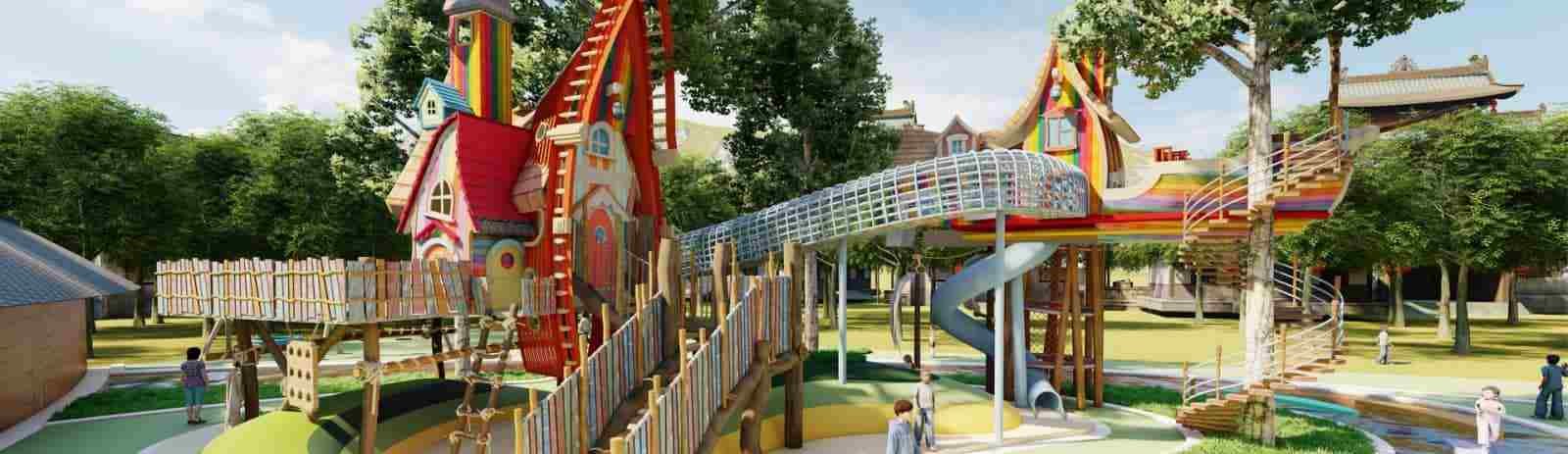
Portable Playgrounds vs. Fixed Indoor Playgrounds: Which is the Best Investment?
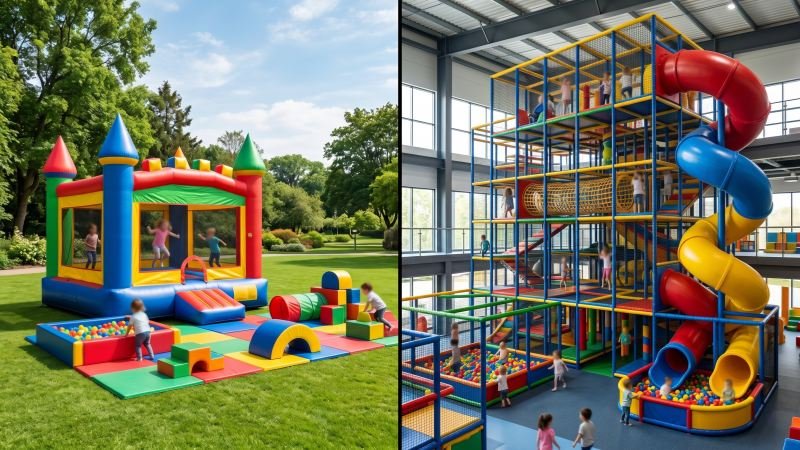
When deciding between a portable playground and a fixed indoor playground, your choice will dictate your entire operational lifestyle and financial future. Are you building a quick cash-flow engine, or laying the foundation for a permanent community empire?
The best investment depends entirely on your available capital, risk tolerance, and long-term business strategy. Portable playgrounds offer a low-cost, high-flexibility entry point with rapid return on investment, making them ideal for part-time entrepreneurs. On the flip side, fixed indoor playgrounds require significant upfront capital and long-term lease commitments but provide highly scalable, sustainable daily revenue and robust community brand authority.
Analyzing the Initial Capital Requirements
Getting a grip on the primary difference in initial capital requirements is the first step in choosing the right playground business model.
The initial capital for a fixed indoor playground is significantly higher, often ranging from $100,000 to over $500,000, because it requires long-term commercial leases, extensive facility renovations, and large-scale customized play structures. In contrast, a portable playground business requires a much lower upfront investment, typically between $10,000 and $50,000, as it eliminates real estate costs and focuses solely on purchasing mobile equipment like commercial inflatables or modular soft play sets.
Equipment Procurement and Setup Costs
When you start a playground business, your biggest physical assets are the play structures. But let’s look at the hardware—the costs differ wildly between the two models.
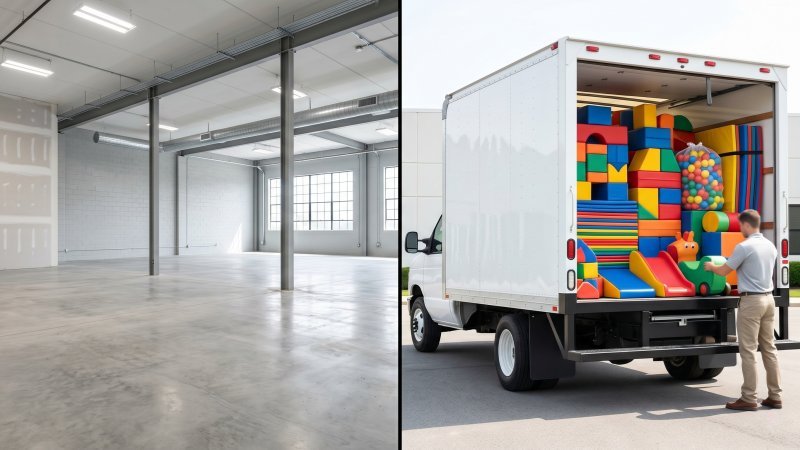
Portable setups focus entirely on standalone items. These include commercial-grade inflatables, modular soft play sets, and portable fencing. You can easily purchase a high-quality commercial bounce house for $2,000 to $5,000. Even better, the setup costs are minimal. You simply unroll the unit, connect a blower, and inflate it. You don’t need specialized construction teams. You can see why a complete startup package for a mobile business might only cost $15,000.
Switching gears, fixed indoor playgrounds require custom-engineered systems. These are multi-level play frames, ninja warrior courses, or integrated trampoline zones. Think of it like comparing a single commercial bounce house to a massive, custom-built multi-level indoor playground structure. The fixed equipment must be perfectly measured to fit your specific building. Consequently, this permanent equipment often costs between $150 and $250 per square meter.
Beyond the purchase price, setting up fixed equipment is a massive engineering undertaking. You must hire professional installation crews to install heavy steel frames, secure safety netting, and anchor the structures directly to the concrete floor. Factor this in, and this permanent installation process alone can add 15% to 20% to your total equipment bill. When evaluating fixed equipment costs, specifications like steel pipe thickness or structural load limits can vary significantly. Take it from experience: always verify exact parameters and pricing directly with your playground equipment supplier to avoid unexpected budget blowouts.
Commercial Lease and Facility Renovation Expenses
Real estate is the second major factor in your initial capital. In fact, this is exactly where fixed indoor playgrounds face their highest financial hurdles.
Right out of the gate, a fixed indoor playground requires a massive commercial space—typically at least 3,000 to 10,000 square feet. Landlords often demand a hefty security deposit upfront, usually equal to three to six months of rent. Before you even turn the lights on, you might spend $20,000 just to secure an empty building.
And let’s be real: commercial buildings rarely come ready for a playground. You must invest heavily in facility renovations, known in the industry as leasehold improvements. An empty warehouse might need massive HVAC upgrades because active kids generate a lot of body heat, making powerful air conditioning mandatory. Throw in mandatory wheelchair-accessible restrooms, a fire-rated reception desk, and a cafe area. You also need specialized flooring, such as interlocking EVA foam mats, across the entire play area. Before you know it, these structural renovations will consume 30% to 40% of your total startup budget.
Startup Real Estate Cost Comparison
| Expense Category | Portable Playground | Fixed Indoor Playground |
|---|---|---|
| Security Deposit | $0 to $300 (small storage unit) | $15,000 to $50,000+ (commercial lease) |
| Facility Renovation | $0 (no facility needed) | $30,000 to $100,000+ (HVAC, bathrooms) |
| Safety Flooring | $200 (portable foam mats) | $5,000 to $15,000 (wall-to-wall surfacing) |
Compare that to a portable setup, which completely bypasses these real estate nightmares. You don’t need a commercial storefront. Instead, you only need space to store the deflated equipment when it is not actively rented out. Many operators just use their own home garage. Alternatively, renting a small, climate-controlled storage unit runs about $100 to $300 per month. By choosing a portable setup, you instantly wipe out expensive building renovations and massive commercial lease deposits from the equation.
Flexibility and Location Independence
The physical location of your equipment dictates your ability to adapt to market demands and build a lasting business brand. Why let a bad location sink your business when you can put your assets on wheels?
A portable playground offers maximum flexibility, allowing operators to relocate assets directly to high-demand areas and bypass stagnant local markets. Conversely, a fixed indoor playground sacrifices this mobility to establish a permanent physical presence, which builds stronger local brand authority, predictable foot traffic, and a reliable community destination over time.
Navigating Market Changes with Mobile Assets
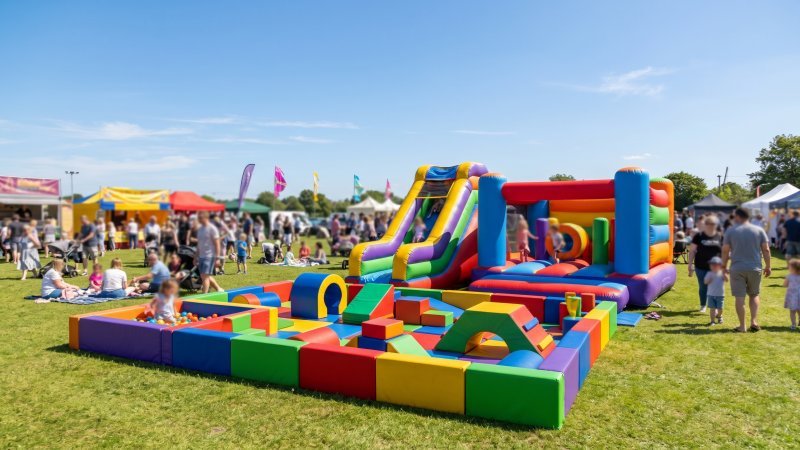
Mobile playgrounds hand you incredible freedom. The logic is simple: you move your business wherever the customers actually are. If a local neighborhood dries up, you aren’t trapped in a lease. You just pack up your equipment and drive to a busier city or a popular weekend street festival.
Think of a portable playground like a mobile rock climbing wall. If a specific town isn’t buying tickets, the operator doesn’t wait around for foot traffic. They pack up the wall and move it to a more profitable weekend event. Portable soft play equipment operates on that exact same principle.
More importantly, mobile assets let you capitalize on seasonal demand. During summer, you deploy large inflatable water obstacles at outdoor community parks. When the cold winter hits, you shift entirely to renting smaller modular soft play sets for private indoor home parties. This operational agility actively shields your revenue from local economic downturns.
But don’t underestimate the logistics. Moving commercial equipment requires precise planning. Commercial-grade PVC inflatables are extremely heavy and bulky. Since the exact weight and folded dimensions of commercial inflatables vary by manufacturer, always verify these logistical parameters with your supplier so your gear safely fits inside your specific transport vehicles without tearing.
Building Local Brand Authority at a Permanent Site
When you drop anchor with a fixed indoor playground, you are relying entirely on your geographic location. You can’t just move a permanent play center. Your primary goal shifts to becoming a permanent, recognizable community landmark.
A permanent location naturally acts as its own giant billboard. Every single day, parents drive past your large, brightly lit storefront signs. That daily visibility builds deep trust within the neighborhood. Families easily remember your exact location, and over time, your indoor park becomes the automatic, go-to destination for routine weekend playdates.
We can directly compare a fixed indoor playground to a large-scale Family Entertainment Center (FEC). An FEC never changes its address. Instead, families plan their weekly schedules around visiting that specific location. That fixed address creates a highly reliable and profitable routine for your local customers.
Beyond that, a permanent site allows you to engineer highly immersive, complex environments. You can securely install giant, multi-level steel play frames that bolt right to the structural ceiling. You can build permanent cafe seating for parents. These large-scale, heavy-duty features are completely impossible for mobile businesses to replicate.
Comparing Business Agility and Local Presence
| Strategy Focus | Mobile Playground Assets | Fixed Indoor Playground |
|---|---|---|
| Physical Agility | Extremely high. You can change operating cities daily. | Zero. You are tied entirely to a multi-year commercial building lease. |
| Brand Visibility | Requires heavy digital marketing and active social media posting. | Generates organic drive-by traffic and local digital map searches. |
| Customer Routine | Event-based. Customers book exclusively for special occasions like birthdays. | Habit-based. Customers visit regularly on normal weekends or after school. |
Ultimately, your choice depends heavily on your long-term growth strategy. You have to decide between chasing active daily events or building a permanent, local community hub.
Ongoing Operations and Maintenance Realities
Daily operational routines and maintenance demands differ drastically between a mobile playground business and a permanent indoor play center.
A portable playground business demands heavy physical labor for continuous transportation, setup, and teardown, whereas a fixed indoor play center requires constant facility upkeep, daily cleaning routines, and higher utility usage. Furthermore, permanent sites face rigid municipal safety inspections, while mobile operators must navigate complex logistical schedules and secure specialized transit liability insurance.
Transportation Logistics vs Facility Upkeep
Managing operations for these two models requires completely different skill sets.
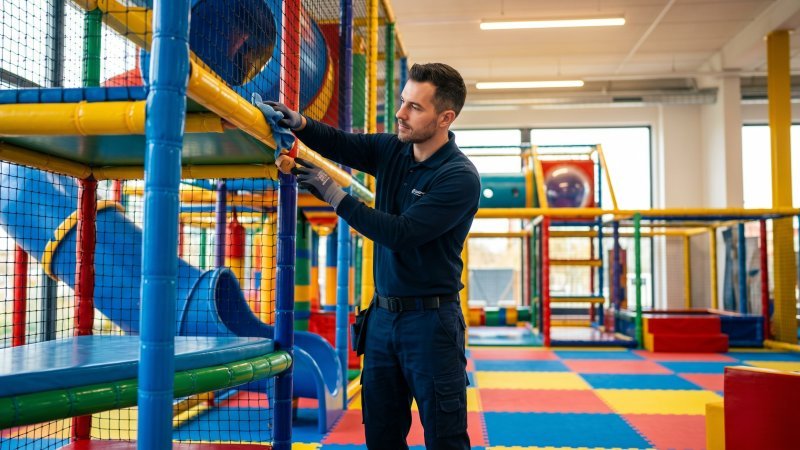
If you go mobile, you’re essentially running a logistics company. You load heavy equipment into box trucks, drive to different venues, unload, and set up the gear. The bulk of your operational wear and tear comes directly from constant folding, dragging, and transporting. For example, dragging a commercial bounce house across rough concrete can easily damage the bottom material over time.
Meanwhile, fixed playgrounds trade transit issues for intensive facility upkeep. You don’t move the equipment daily, but you are constantly cleaning and repairing the surrounding building. You manage large HVAC systems, clean public restrooms, and sanitize massive areas of safety foam flooring. Think of it like maintaining a massive indoor trampoline park versus delivering a mobile soft play package. The permanent park demands daily, systematic janitorial work to keep the entire facility safe and compliant for the public.
Staffing Needs for Mobile Events vs Daily Center Operations
Your daily staffing strategy completely flips based on your chosen business model.
For a mobile business, your labor needs are sporadic. You mostly need physically strong workers for intense weekend shifts to load trucks, deliver equipment, and occasionally supervise the play area during events. Because of this, mobile operators generally lean on part-time contractors. You might only need two workers to deliver and assemble a standard modular soft play package.
Switching gears to a fixed indoor facility, you need a permanent, structured team to operate the facility seven days a week. This means building a diverse and reliable staff roster—cashiers for the front desk, floor monitors to enforce safety rules, and dedicated janitors. Add in the complexities of managing scheduling software, payroll, and a clear management hierarchy. A standard 5,000-square-foot indoor center easily demands five to ten employees per daily shift just to keep the doors open.
Insurance Premiums and Safety Compliance Differences
Safety compliance and insurance are massive, non-negotiable responsibilities in the commercial amusement industry.
Portable operators face unique environmental risks. Your equipment is set up outdoors, which means you must constantly monitor local weather conditions like wind speed to prevent inflatable blow-aways. You also need specialized inland marine insurance to cover your expensive equipment while it is actively moving inside your transport vehicles.
On the permanent side, fixed indoor playgrounds face strict local building codes. Fire marshals will regularly audit your permanent facility. You have to maintain clear emergency exits, install fire-retardant materials, and strictly enforce proper occupancy limits. On top of that, fixed centers require heavy premise liability insurance to protect the business from slip-and-fall accidents anywhere inside the building footprint.
Comparison of Daily Operational Burdens
| Operational Focus | Portable Playgrounds | Fixed Indoor Playgrounds |
|---|---|---|
| Daily Labor Activity | Driving, lifting, rolling, and securing heavy equipment. | Floor monitoring, ticketing, customer service, and deep cleaning. |
| Maintenance Priority | Patching vinyl tears and servicing delivery vehicles. | Repairing worn safety netting and servicing building HVAC units. |
| Regulatory Focus | Wind speed monitoring and proper outdoor ground anchoring. | Fire marshal inspections and strict building occupancy limits. |
Evaluating Revenue Streams and Target Audiences
To project your earnings accurately, you must understand exactly how mobile play businesses and permanent indoor centers generate income and who is signing the checks.
Fixed indoor playgrounds generate revenue primarily through high-volume daily ticket sales and recurring monthly memberships targeting local families. Conversely, portable playgrounds rely on high-ticket, low-volume bookings. They generate income through premium private party packages and large corporate event rentals, specifically targeting event planners and parents hosting private celebrations.
Ticket Sales and Memberships for Fixed Sites
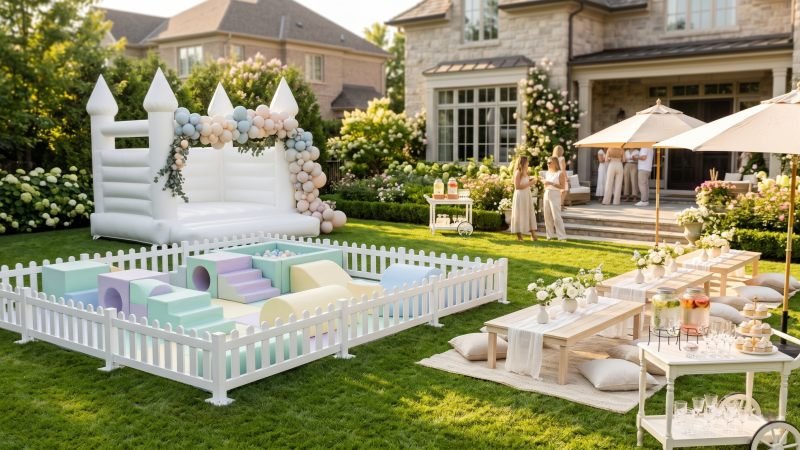
A fixed indoor playground runs on a high-volume, business-to-consumer model. You are relying on a steady, daily stream of individual walk-ins, targeting local families who need safe, everyday entertainment for their children.
Think of a fixed indoor playground exactly like a large-scale children’s museum. You rely on hundreds of small, daily transactions to generate a substantial profit by selling access to a shared space.
Your bread and butter here is general admission ticket sales. Parents typically pay a flat entry fee ranging between $15 and $25 per child. This “open play” model pulls in stay-at-home parents during quiet weekday mornings and captures massive crowds during rainy weekends.
To really scale, successful fixed locations push hard on monthly memberships. Memberships act as a critical financial lifeline for physical commercial spaces, transforming unpredictable daily ticket sales into guaranteed, recurring revenue. If a local family pays $45 per month for unlimited weekday access, locking in that recurring revenue builds a deeply loyal customer base and ensures your cash flow stays consistent.
Fixed Playground Revenue Breakdown
| Revenue Source | Target Audience | Transaction Type |
|---|---|---|
| Open Play Tickets | Local families, tourists, weekend visitors | Low-cost, one-time payment ($15 – $25) |
| Monthly Memberships | Frequent visitors, stay-at-home parents | Mid-cost, recurring subscription ($35 – $60) |
| On-Site Concessions | All walk-in guests | Micro-transactions (snacks, grip socks) |
Corporate Rentals and Private Party Packages for Portable Setups
Portable playground operators target a completely different financial market. You aren’t grinding out individual $15 tickets to walk-in customers. Instead, you are renting out an entire equipment package for exclusive, private use.
This specific business model functions exactly like a premium event entertainment service. You drop off a temporary, high-value asset for a scheduled event. You need far fewer customers to hit your revenue targets.
Your primary income stems from private party packages. Parents rent upscale modular soft play sets or commercial bounce houses for backyard birthdays, where a standard four-hour weekend rental easily commands $300 to $800. You are targeting affluent parents who want a highly customized, aesthetic play experience right at their own home.
You can also tap into highly lucrative B2B (business-to-business) rentals. Schools, local churches, and corporate HR managers frequently rent massive inflatable obstacle courses for school fairs, fundraising carnivals, or company team-building picnics. Land a few of these, and those large-scale corporate events can easily generate $1,000 to $2,500 in a single afternoon.
A word of warning, though: you must strictly manage crowd sizes at these larger events. Because the maximum user capacity and structural weight limits of commercial inflatables vary widely by design, always verify the exact load parameters with your equipment supplier so you can safely accommodate massive corporate crowds while pricing your packages based on real user throughput.
Time to Profitability and Long-Term ROI
The timeline to recover your initial capital and start generating pure profit is drastically different between the two models. Do you want to see your money back by the end of the summer, or are you playing a multi-year financial game?
A portable playground business typically reaches its break-even point in as little as three to six months due to its low startup costs and minimal overhead. In contrast, a large-scale fixed indoor playground usually requires two to three years to achieve full profitability. This longer timeline occurs because operators must first recover massive structural construction costs while simultaneously paying higher monthly operating expenses.
Break-Even Timeline for Mobile Rental Businesses
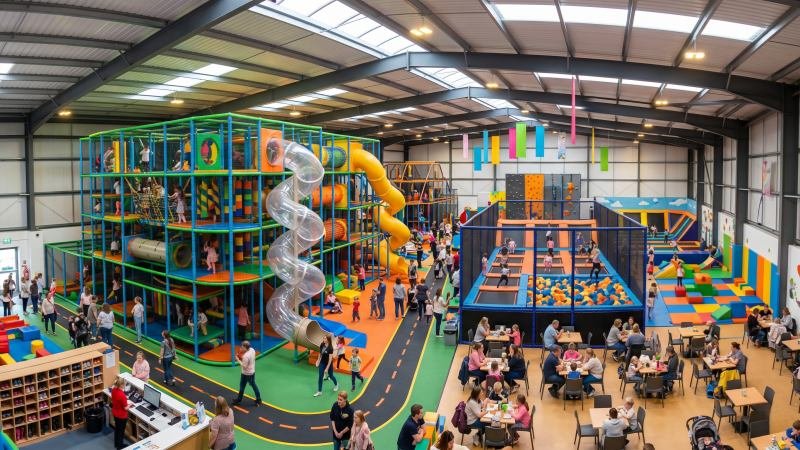
Mobile playgrounds offer an incredibly fast path to the black. The financial barrier to entry is rock bottom. Because of this, your financial risk remains exceptionally manageable, and you can track your return on investment (ROI) on a per-unit basis.
Look at a standard industry scenario: you purchase a commercial-grade inflatable slide for $3,000 and rent it out for $300 per day. Do the math: you only need to rent that specific unit 10 times to completely recover your initial hardware cost. Book just two rentals a weekend, and the equipment pays for itself in merely five weeks. After that, every rental generates pure profit, minus basic fuel and labor costs.
Think of a portable playground business like an individual commercial water slide rental. The unit costs relatively little upfront, so the operator is back in the green after just a few busy weekends.
But let’s look at the whole picture. Calculating long-term ROI requires factoring in asset depreciation. Portable equipment takes heavy physical abuse from constant transit. Factor in that a standard commercial inflatable might only last three to five years before requiring replacement, and build that into your long-term business plan.
Calculating Sustainable Returns for Large-Scale Indoor Parks
Fixed indoor playgrounds are a completely different animal. You aren’t chasing quick, weekly cash returns; you are engineering a long-term, high-yield physical asset.
Achieving profitability takes real patience. Building a 5,000-square-foot indoor play center might cost $250,000, and you are on the hook for rent, insurance, and payroll every single month, whether anyone walks through the door or not. Naturally, your break-even timeline extends out to 24 or 36 months.
But here’s the payoff: the long-term ROI ceiling is massively higher than a mobile business. A fixed location can safely process hundreds of children simultaneously. Compare this to a permanent indoor ninja warrior course. The permanent course is incredibly capital-intensive to build, yet it continuously processes thousands of paying customers every month for years. A fixed indoor playground leverages this exact same high-capacity financial engine to achieve full profitability.
Once a fixed playground covers its monthly overhead, the profit margins expand exponentially. If your monthly operating expense is $20,000 and you generate $40,000 in sales, you’re netting a $20,000 profit. Run that over a ten-year lease, and you are creating substantial, sustainable wealth.
Comparing Profitability Metrics
| Financial Metric | Portable Playground | Fixed Indoor Playground |
|---|---|---|
| Average Break-Even Point | 3 to 6 months | 24 to 36 months |
| Asset Depreciation Rate | High (3 to 5 years lifespan) | Low (7 to 10+ years lifespan) |
| Long-Term Profit Ceiling | Limited by weekend delivery capacity | High, driven by large daily facility capacity |
At the end of the day, your choice dictates your financial timeline. Mobile units offer fast cash recovery, while fixed parks demand patience for a much larger, sustainable financial reward.
Matching the Business Model to Your Strategy
Determining which playground business model aligns with your investment goals requires a hard, honest assessment of your capital and your lifestyle.
You must choose a portable playground if you want a low-risk, part-time business that you can manage during weekends with minimal overhead. Conversely, you should invest in a fixed indoor playground if you have substantial capital, desire a full-time enterprise, and intend to hire a dedicated management team to run daily operations.
Ideal Scenarios for Choosing Portable Equipment
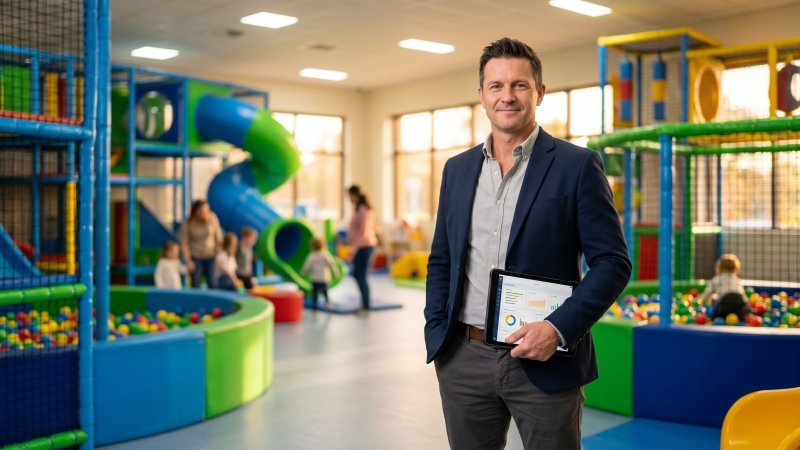
Starting a portable playground is the perfect strategy for a solo entrepreneur. It makes perfect sense if you want to keep your regular full-time job, as you can easily run this business as a highly profitable weekend side hustle.
Think of this strategy like operating a fleet of rentable bounce houses. You don’t need a massive commercial lease; you simply take the fun directly to the consumer’s backyard. Bottom line: this model perfectly suits investors who want to test the commercial amusement waters without risking their life savings.
It’s also a no-brainer for existing event planners. If you already rent out commercial party tents, adding modular soft play equipment is a natural up-sell. You already have the delivery vehicles and the client roster.
Here are the perfect profiles for mobile operators:
- The Weekend Warrior: You only want to work on Saturdays and Sundays.
- The Bootstrapper: You are funding the business out of pocket with small, personal savings.
- The Cautious Tester: You want to prove local market demand before you ever sign a commercial lease.
When a Fixed Playground is the Smarter Choice
Stepping up to a fixed indoor playground requires a serious, full-time CEO mindset. This strategy is for operators looking to transition completely out of their current career. You aren’t just buying playground equipment; you are building a permanent company.
This scenario is comparable to building a large indoor active entertainment center. It requires a massive footprint, permanent staff, and serious capital. But if executed correctly, it becomes a famous local landmark. It is the smarter choice for investors aiming to build a sellable, scalable enterprise.
This model is also a massive value-add for commercial real estate owners. If you own an empty retail plaza, dropping an indoor playground in as an anchor tenant is brilliant. It actively drives massive foot traffic to your other neighboring tenants.
You should lock in the fixed model if you match these criteria:
- The Team Builder: You want to hire general managers and step away from daily floor labor.
- The Legacy Creator: You want to build a recognized, permanent community brand.
- The High-Volume Investor: You want the infrastructure to serve hundreds of customers every single day.
Conclusion
Choosing between a portable playground and a fixed indoor playground is the single most critical decision you’ll make in the commercial amusement industry. If you’re looking to minimize risk, maintain absolute flexibility, and lock in a rapid return on investment, a portable playground business is the clear winner. But if you have the capital and the vision to build a permanent local landmark with high daily capacity and deep, sustainable profits, a fixed indoor playground is where you should plant your flag.
If you are ready to evaluate your market and select the perfect commercial play equipment for your business model, please contact us today for expert guidance and customized industry solutions.