-
Whatsapp: +86 15516933785
-
Email: hanlin@hanlinplayground.com
-
Address: Shangjie District, Zhengzhou City, Henan Province, China
-
Whatsapp: +86 15516933785
-
Email: hanlin@hanlinplayground.com
-
Address: Shangjie District, Zhengzhou City, Henan Province, China

Bouncy Castles vs. Portable Soft Play: Which is Better for Party Rentals?
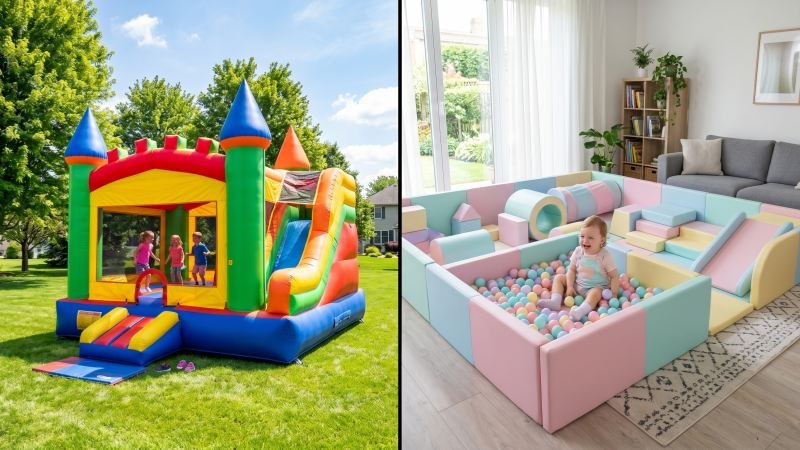
Are you trying to decide whether to invest in bouncy castles or portable soft play equipment for your party rental business?
The best choice depends entirely on your target market and operational capacity. Portable soft play is the optimal investment for startups seeking low overhead, year-round indoor bookings, and safe toddler entertainment, whereas commercial bouncy castles are better suited for established fleets targeting high-volume outdoor events, older children, and mixed-age parties.
Analyzing the Target Demographic for Each Option
Which age groups are best suited for bouncy castles versus portable soft play equipment in the party rental industry?
Portable soft play is engineered specifically for infants and toddlers aged 6 months to 4 years, offering a ground-level zone for early motor development. In contrast, bouncy castles are built for high-energy activity, primarily serving children aged 5 to 12 years who need dynamic jumping environments.
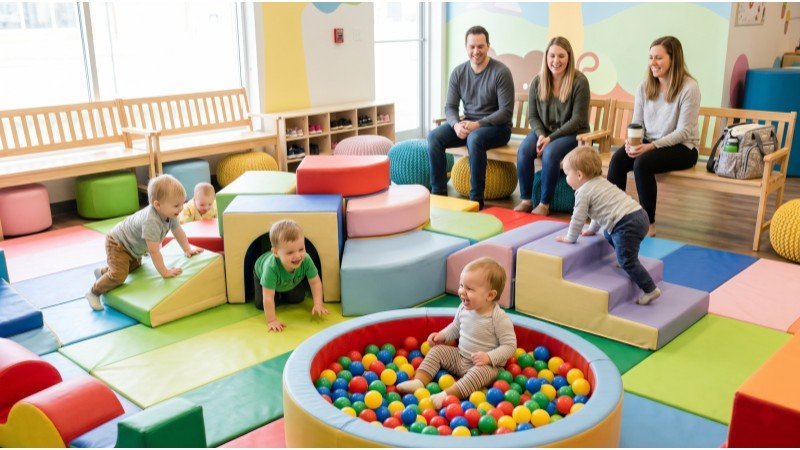
Toddler and Pre-schooler Events
Understanding your customer’s guest list is crucial for renting out the right equipment. Toddlers interact with the world very differently than older children. They are just learning to walk, balance, and climb. That means they require an environment that supports sensory exploration without the risk of high-impact falls.
Portable soft play answers this exact need. These setups typically include foam blocks, ball pits, low climbers, and soft rocking toys. The equipment sits directly on foam floor mats. The result is a contained, zero-bounce zone.
Think of this concept like the separate toddler zones found in large commercial indoor trampoline parks. You cannot put a two-year-old on a massive drop slide. Similarly, you cannot put them in a commercial bounce house with ten-year-olds. Soft play provides a dedicated, safe haven for the youngest guests.
On top of that, toddler parties usually have smaller guest counts. Parents often invite 5 to 10 children. A standard 10×10 foot soft play package easily accommodates this group size.
Here are the primary reasons parents rent soft play for this demographic:
- Encourages independent crawling and walking.
- Provides tactile and visual stimulation through bright colors and shapes.
- Allows parents to sit nearby and converse rather than actively intercepting falls.
“Matching the equipment to the right age group is the foundation of a successful rental booking.”
Older Kids and Mixed-Age Parties
As children grow past age five, their play style shifts dramatically. They have endless energy. They want to jump, race, and compete. Portable soft play quickly becomes boring for this age group. This is where bouncy castles, obstacle courses, and inflatable slides become the main attraction.
Bouncy castles deliver the physical exertion older kids crave. A standard 15×15 foot commercial bounce house can handle much more aggressive play. Even better, these inflatables support a higher throughput. During a busy birthday party or a school event, dozens of kids will cycle through the inflatable.
Mixed-age events present a unique challenge. Events like family reunions, block parties, or weddings often host children ranging from 3 to 12 years old. In these scenarios, a bouncy castle acts as the primary anchor attraction.
To clearly understand the demographic split, review the comparison below:
| Feature | Toddler Events (0-4 Years) | Older Kids (5-12 Years) | Mixed-Age Events |
|---|---|---|---|
| Ideal Equipment | Portable Soft Play | Bouncy Castles | Bouncy Castles (or both) |
| Play Style | Crawling, stacking, balancing | Jumping, running, racing | High-energy bouncing |
| Guest Count | Low (5-10 children) | Medium to High (10-30+ children) | High (Varies widely) |
| Physical Intensity | Low-impact, sensory | High-impact, aerobic | High-impact, aerobic |
At the end of the day, knowing exactly who will use the equipment helps you guide your clients to the right rental choice. This ensures a successful event and a satisfied customer.
Setup and Logistical Challenges
What are the primary logistical differences between managing a bouncy castle rental compared to a portable soft play setup?
Bouncy castles demand heavy-duty transport, significant physical labor for installation, and strict adherence to outdoor weather conditions. On the flip side, portable soft play equipment consists of lightweight, modular components that allow for single-person transport, rapid assembly, and high flexibility across both indoor and outdoor venues.
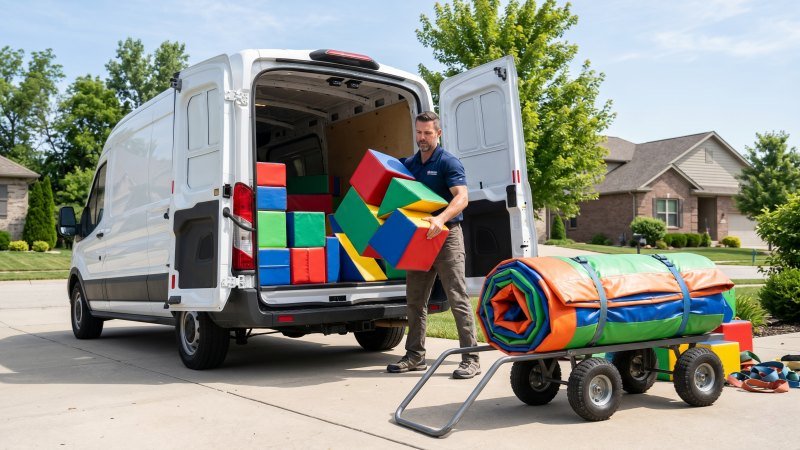
Vehicle and Transportation Needs
Moving rental inventory from your warehouse to a customer’s location is your first logistical hurdle. Bouncy castles and soft play equipment require entirely different transportation strategies.
When you transport a commercial 15×15 foot bounce house, you are moving a massive, dense cylinder. This roll often weighs between 150 and 250 pounds. That means you’re wrestling with a heavy-duty dolly. You also need a specialized vehicle. Most operators use a pickup truck, a cargo van, or a utility trailer. Add to that the need for a ramp or a lift gate to safely load the heavy inflatable. Because rolled dimensions and weights vary based on PVC vinyl thickness (such as 15oz versus 18oz material), always verify the exact storage and transport footprint with your equipment supplier when purchasing.
Portable soft play operates on a different scale entirely. This equipment is modular. You move dozens of small, lightweight pieces instead of one massive unit. The heaviest single item might be the ball pit frame, which usually weighs less than 20 pounds.
Think of this difference like managing different amusement attractions. A bouncy castle is like transporting a massive commercial inflatable water slide—it is a heavy, single-unit bulk that requires specialized equipment to move. Soft play is like transporting a modular ball pit and soft barricade system. You move dozens of light pieces, giving you the logistical upside of fitting a standard soft play package into a minivan or a mid-sized SUV. This drastically lowers your initial vehicle requirements.
Labor Costs and Installation Time
Labor is a major overhead expense in the party rental industry. The physical effort required to deploy your equipment directly impacts your daily route schedule.
Bouncy castles are highly labor-intensive. Moving a 200-pound roll across a grassy yard requires physical strength. More often than not, a rental company must send two employees to safely deliver and maneuver a large inflatable. Once positioned, unrolling it takes only a few minutes. But securing it requires driving heavy steel stakes deep into the ground. Then, the team must connect and secure the heavy electrical blowers.
Switching gears, soft play requires a high volume of low-stress movements. One single employee can manage the entire delivery. The worker will make multiple light trips from the vehicle to the setup zone. First, they lay down the interlocking foam floor mats. Next, they arrange the foam blocks, climbers, and fencing. Finally, they pour the plastic balls into the ball pit.
“Minimizing labor requirements is the fastest way to increase the daily profit margin of your rental route.”
Here is a breakdown of typical installation metrics:
| Logistic Factor | Bouncy Castle (15×15) | Portable Soft Play (10×10) |
|---|---|---|
| Minimum Crew Size | 1 to 2 strong adults | 1 adult |
| Physical Exertion | High (Heavy lifting, staking) | Low (Light carrying, sorting) |
| Average Setup Time | 20 minutes | 30 – 45 minutes |
| Average Teardown Time | 30 minutes (Rolling is difficult) | 30 minutes |
Weather Dependence and Venue Flexibility
Are you prepared to lose a whole weekend of revenue to a sudden rainstorm? Venue access and weather conditions completely dictate where you can operate. Inflatables face strict limitations, while soft play offers immense flexibility.
Bouncy castles are primarily outdoor attractions. They require significant overhead clearance. Most standard inflatables are at least 13 feet tall. Because of this, they rarely fit inside standard homes or community halls. You must place them in large backyards or public parks.
This operational reality makes bouncy castles highly vulnerable to the weather. Wind is the biggest threat. Industry safety standards state that inflatables must be deflated when wind gusts exceed 15 to 20 miles per hour. Let’s not forget the safety risk of rain, which makes the vinyl dangerously slippery. If it rains, the outdoor party is usually canceled.
Soft play solves these venue and weather problems. Because the tallest piece is usually under three feet high, it fits perfectly inside living rooms, garages, or small indoor venues. If a customer plans an outdoor patio party and the sky opens up, you simply move the soft play equipment indoors. This incredible venue flexibility protects your rental income from unexpected weather cancellations.
Maintenance, Safety, and Liability
Operating bouncy castles and portable soft play involves entirely different safety profiles and maintenance protocols. Bouncy castles carry higher liability due to fall risks and require intensive structural inspections, whereas portable soft play minimizes fall injuries through floor-level design but demands strict active supervision for toddlers and meticulous surface sanitization to meet parent expectations.
Cleaning Procedures and Hygiene Standards
Parents expect spotless equipment. But let’s be realistic, the cleaning processes for these two rental types are worlds apart.
Cleaning a bouncy castle focuses heavily on outdoor debris. Renters track in grass, mud, and sand from the yard. Worse still, if an inflatable gets wet, you must inflate it and dry it completely. Failing to do this causes severe mildew. Think of this process like cleaning a massive inflatable obstacle course after a muddy outdoor festival. It requires open space, time, and heavy-duty shop vacuums.
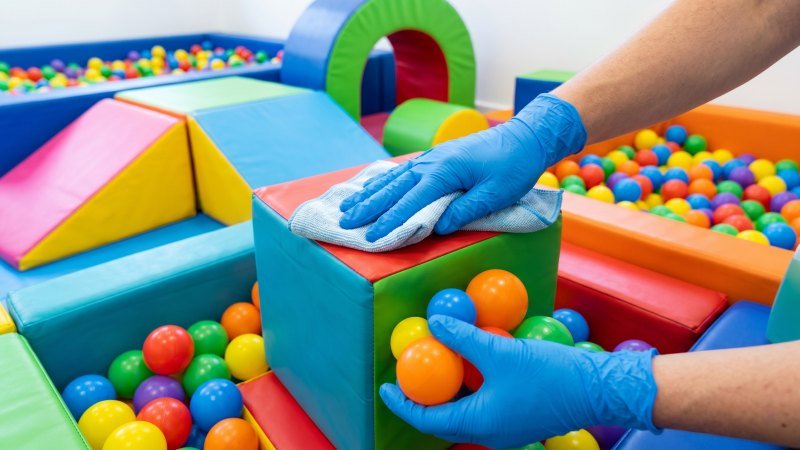
On the flip side, portable soft play cleaning focuses on biological hygiene. Toddlers drool, spill drinks, and touch everything with unwashed hands. That means every single block, mat, and climber must be carefully sanitized. Cleaning a soft play set is like sanitizing the interactive toddler zones in an indoor family entertainment center.
The biggest maintenance challenge for soft play is the ball pit. Washing thousands of plastic balls by hand is highly impractical. Many successful operators eventually purchase commercial ball-washing machines to save time.
Because chemical tolerances for PVC and polyurethane vinyl vary significantly, always verify the exact approved cleaning solutions with your equipment supplier to prevent material degradation. Using the wrong chemical can strip the protective coating off the vinyl.
Risk of Injury and Supervision Requirements
Safety directly impacts your business liability insurance. In the party rental industry, reducing risk is essential.
Bouncy castles inherently carry a higher risk of injury. According to the Consumer Product Safety Commission (CPSC), thousands of children visit emergency rooms annually for inflatable-related injuries. Most of these injuries involve bone fractures or head collisions.
The operational reality is that bouncy castles demand strict, active supervision. An attendant or designated parent must actively monitor capacity limits. They must also stop older kids from doing dangerous flips.
Portable soft play offers a dramatically lower risk profile regarding high falls, as the equipment rests entirely on the ground. But here’s the catch: because the target demographic consists of 0-4-year-olds who lack self-protection skills, constant, active, and close supervision is strictly mandatory. Toddlers face unique and severe hazards in these environments, such as the risk of entrapment or physical asphyxiation if they become buried and unnoticed inside a ball pit. As a result, parents or attendants must actively engage and monitor the children at all times, rather than simply relaxing on the sidelines.
Here is a breakdown of the specific risk factors:
| Risk Factor | Bouncy Castles | Portable Soft Play |
|---|---|---|
| Primary Hazard | Falls, collisions, wind gusts | Slipping, tripping, ball pit entrapment |
| Supervision Level | Active (Constant monitoring) | Active (Close, continuous monitoring) |
| Injury Severity | Moderate to High | Low to Severe (if unsupervised in ball pits) |
Equipment Lifespan and Repair Frequency
Every rental item eventually wears out. But the repair methods and overall lifespans differ significantly between the two options.
Bouncy castles experience immense structural stress. Constant jumping strains the internal air baffles and external seams. Sooner or later, the vinyl will puncture, or a high-stress seam will split. Commercial bouncy castles are constant-air inflatables that operate on a “low-pressure, high-volume” aerodynamic principle. That means repairing an inflatable is fundamentally about managing high-intensity physical tearing and constant structural tension, not high internal air pressure. Because the bounce house relies on continuous air flow from the blower and natural air leakage through the seams to provide elasticity, if a high-stress seam splits, the repair must be structurally sound enough to withstand the constant outward tension and dynamic physical impact. This requires professional industrial stitching rather than simple tape. Generally, a commercial bounce house lasts roughly three to five years under heavy use.
Portable soft play suffers from different wear and tear. The internal high-density foam eventually compresses and loses its shape. On top of that, the outer vinyl covers can puncture from sharp toys or shoes.
But here is the engineering advantage of soft play: repairs are highly modular. If one foam block tears, you do not lose the whole rental. You simply remove that single block from your active inventory. You can then order a replacement cover quickly and cheaply. This modular design helps operators maintain a consistent, professional appearance over time without replacing the entire setup.
Return on Investment and Profit Margins
How fast do you actually need to see black ink on your balance sheet? When evaluating financial returns, the profit margins and break-even timelines for bouncy castles and portable soft play differ significantly. Soft play generally offers a faster ROI due to lower upfront costs and consistent year-round bookings, while bouncy castles command strong single-day rates but suffer from seasonal revenue drop-offs in colder climates.
Initial Purchasing Costs vs Rental Rates
Every rental business owner must calculate how fast an asset pays for itself. The math looks quite different for these two categories.
Purchasing a commercial-grade 15×15 foot bouncy castle typically requires an initial investment of $1,500 to $3,000. This price includes the blower and heavy-duty stakes. Once purchased, operators usually rent these units for $150 to $250 per day.
Look at the other side of the ledger: you can purchase a professional portable soft play package for $800 to $1,500. Here’s the kicker—the daily rental rates for soft play are very similar to inflatables. A modern, aesthetically pleasing soft play setup often rents for $150 to $300 per day.
Think of this in terms of your amusement inventory mix. A bouncy castle acts as your standard anchor attraction. It costs a significant amount upfront but serves as the universal draw for standard outdoor parties. Soft play is a premium niche package. The individual foam blocks and ball pits cost less to manufacture, but when arranged into an aesthetically pleasing toddler zone, they command premium rental rates equivalent to large inflatables.
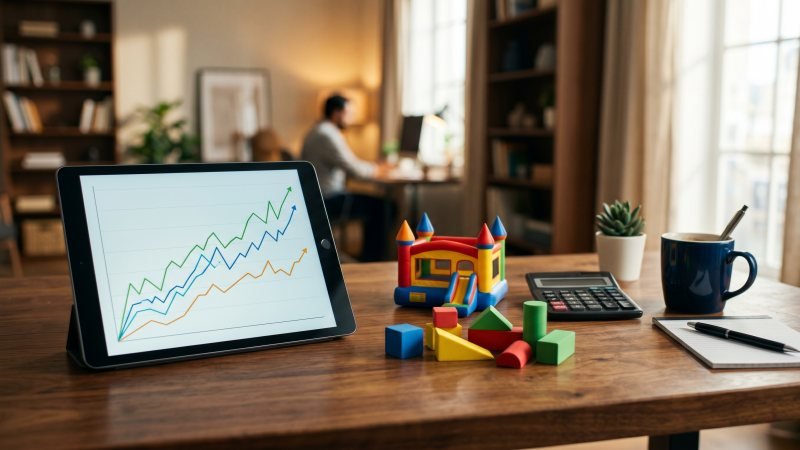
The math speaks for itself: the break-even point arrives much faster with soft play.
| Financial Metric | Commercial Bouncy Castle | Portable Soft Play Package |
|---|---|---|
| Average Purchase Price | $1,500 – $3,000 | $800 – $1,500 |
| Average Daily Rental Rate | $150 – $250 | $150 – $300 |
| Rentals Needed to Break Even | 10 to 15 rentals | 4 to 8 rentals |
| Overall ROI Speed | Moderate | Fast |
“Your break-even timeline is the most critical metric for scaling a party rental fleet.”
Maximizing Year-Round Booking Potential
Revenue consistency is vital for business survival. Seasonal fluctuations can easily crush a poorly planned rental business.
Bouncy castles are heavily tied to the seasons. In many regions, outdoor party season only lasts from late spring to early autumn. The financial hit? Inflatable rental businesses often see a 60% to 80% drop in revenue during the winter months. The equipment simply sits in the warehouse, generating zero income.
Portable soft play protects your cash flow from these seasonal dips. Because these setups easily fit inside living rooms and small community halls, parents rent them all year long. A toddler born in December still needs a birthday party. Because of this, soft play operators maintain a steady stream of bookings right through the freezing winter months.
Don’t ignore the off-season, either. Holiday events boost soft play profits. Companies frequently rent indoor toddler zones for corporate Christmas parties or community winter festivals. This year-round booking potential drastically increases your annual profit margin.
Cross-Selling Opportunities and Package Deals
Increasing your Average Order Value (AOV) is the easiest way to grow profits. Both equipment types offer excellent upselling opportunities.
With bouncy castles, cross-selling usually involves adding supplementary party equipment. Operators frequently upsell concession machines. For example, adding a cotton candy machine or a snow cone maker easily adds $50 to $75 to the invoice. And let’s be real, renting out folding tables and chairs alongside the inflatable is a classic, high-profit strategy.
Soft play offers highly customizable upselling. Because it is modular, you can offer tiered packages.
- Basic Package: Floor mats, blocks, and a small ball pit.
- Premium Package: Adds an animal hopper, a toddler roller coaster, and luxury fencing.
- Custom Upgrades: Charging extra for custom vinyl decals with the birthday child’s name on the ball pit.
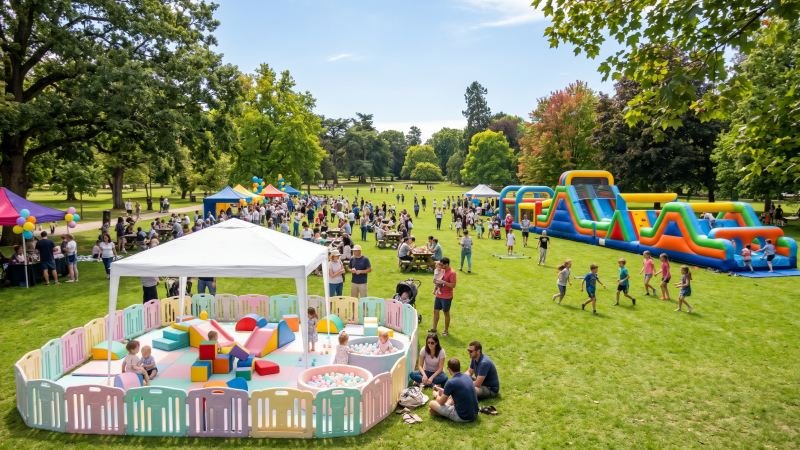
The ultimate strategy is packaging both items together. Many operators create a “Mega Party Package.” They rent a bouncy castle for the older kids in the backyard, and a soft play zone for the toddlers on the patio. This strategy completely solves the host’s problem of entertaining mixed age groups, allowing you to easily double your total invoice.
Strategic Advice for Rental Business Owners
Why leave money on the table when a corporate client needs a full-service setup? Structuring your equipment purchasing strategy requires aligning your initial capital with long-term growth goals. Startups with limited capital should initially invest in portable soft play to minimize vehicle overhead, while established rental fleets must strategically integrate both equipment types to capture lucrative mixed-age event contracts.
Best Choice for Startups with Limited Capital
Entering the party rental industry can feel overwhelming. Many new business owners struggle with cash flow. They often worry about taking on debt to buy equipment. That means making smart initial buys is critical for long-term survival.
Portable soft play is the absolute best entry point for a bootstrapped startup. This strategy eliminates the biggest financial hurdles of the rental industry. For starters, you don’t need to buy a large box truck or a heavy-duty trailer. You can launch your business using your personal minivan or SUV. And you certainly don’t need to sign a lease for a commercial warehouse. You can easily store a complete soft play package in a spare bedroom or a standard garage.
Think of building your rental fleet like designing an indoor family entertainment center. You establish the low-overhead, high-margin toddler soft play zones first to generate steady cash flow, before taking on the massive physical and financial overhead of giant mechanical rides or complex obstacle courses.
Consider a typical industry growth path. A new operator purchases a basic soft play kit. They operate purely on weekends. By keeping overhead near zero, the operator keeps almost 100% of the rental fee as gross profit. The payoff? They can reinvest that cash into a second set within months.
“Minimizing your initial fixed overhead is the secret to surviving your first year in the rental industry.”
Scaling Strategy for Established Rental Fleets
Once a rental company matures, the business strategy must shift. You cannot rely on a single equipment type forever. To dominate your local market, you must diversify your inventory.
Established bouncy castle operators often ignore the toddler market. This is a massive strategic mistake. When a corporate client plans a large company picnic, they need entertainment for all ages. If you only offer massive obstacle courses, the client will hire a second vendor for the toddlers. You never want a competitor on your job site.
Operating a mature rental fleet is exactly like running a large-scale amusement park. If an amusement park only offers extreme roller coasters, it alienates families with small children who have the budget to spend. You must offer attractions for every age group.
Industry data shows that large community festivals typically allocate up to 30% of their amusement budget specifically for toddler-safe zones. By adding soft play to an inflatable fleet, you capture that entire budget. Better yet, soft play requires very little extra cargo space in a large box truck. Your delivery crew can drop off the bouncy castle in the field and set up the soft play in a nearby pavilion simultaneously.
Here is a clear breakdown of how to adapt your strategy based on your current business phase:
| Business Phase | Primary Goal | Recommended Equipment Strategy |
|---|---|---|
| New Startup | Minimize overhead and debt | 100% Portable Soft Play |
| Growing Business | Increase average order value | Add small, toddler-friendly inflatables |
| Established Fleet | Dominate corporate events | Mix 70% Inflatables and 30% Soft Play |
When it comes down to it, successful scaling requires offering comprehensive solutions. By strategically mixing both bouncy castles and portable soft play, you block out competitors and secure the most profitable event contracts in your region.
Conclusion
When the dust settles, both bouncy castles and portable soft play offer highly profitable avenues within the party rental industry. The correct choice relies heavily on your immediate capital, logistical constraints, and the specific age groups you intend to serve. By carefully evaluating your initial budget and target market, you can confidently build an equipment fleet that maximizes rental revenue and ensures long-term business growth.