-
Whatsapp: +86 15516933785
-
Email: hanlin@hanlinplayground.com
-
Address: Shangjie District, Zhengzhou City, Henan Province, China
-
Whatsapp: +86 15516933785
-
Email: hanlin@hanlinplayground.com
-
Address: Shangjie District, Zhengzhou City, Henan Province, China
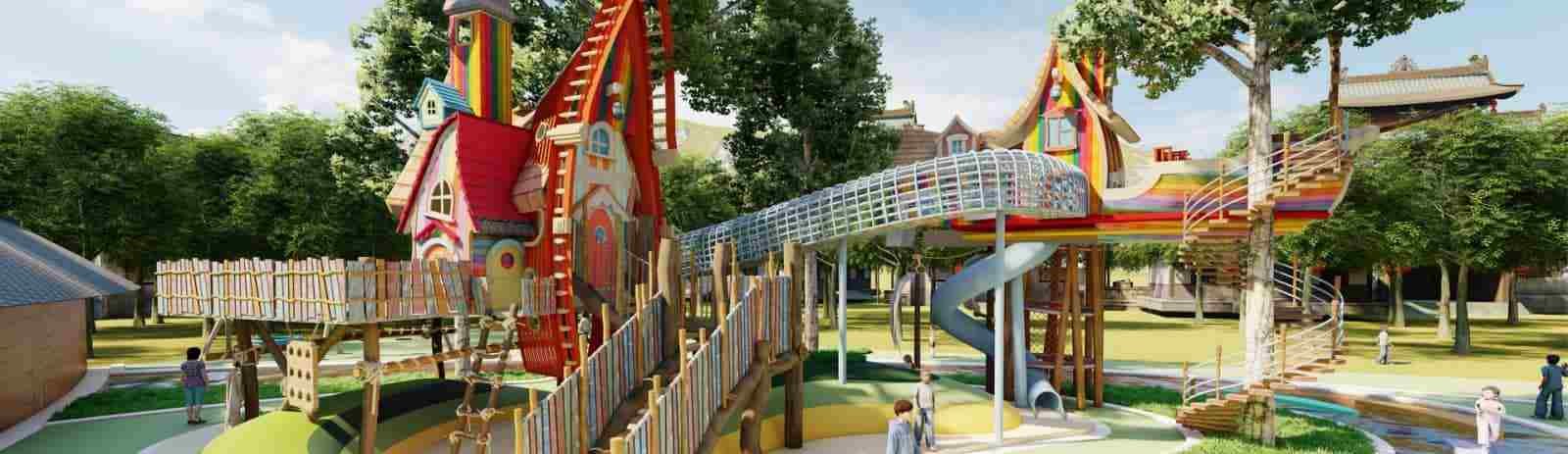
How to Find Reliable Kids Rope Course Suppliers in China (Wholesale Guide)
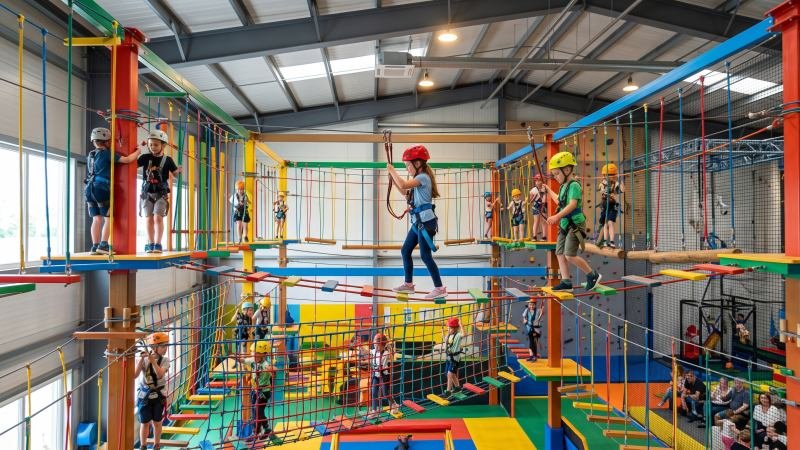
How can business owners and park investors find reliable, direct manufacturers of kids rope courses in China to ensure safety and secure wholesale pricing?
To find reliable kids rope courses suppliers in China, buyers should source directly from comprehensive manufacturing hubs like Zhengzhou, rigorously verify international safety certifications such as ASTM or CE, and evaluate the factory’s physical production capacity alongside past global case studies. More importantly, partnering directly with the actual factory unlocks genuine wholesale pricing, comprehensive 3D park design services, and professional post-sales installation support.
Where to Source Authentic Manufacturers Instead of Trading Companies
Are you struggling to tell the difference between a real Chinese factory and a middleman when looking for rope course equipment?
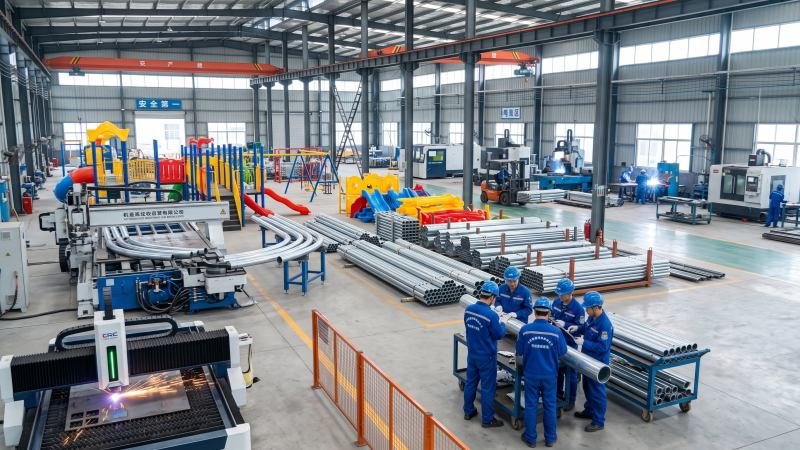
To source authentic kids rope course manufacturers in China, buyers should target verified suppliers in major industrial hubs like Zhengzhou, which excels in both heavy structural engineering and comprehensive amusement equipment production. You must cross-reference factory audit reports on B2B platforms. Also, examine their independent websites for real production videos. Finally, check their business licenses to confirm they are registered strictly as manufacturing enterprises.
Navigating Major B2B Marketplaces Effectively
Platforms like Alibaba and Made-in-China are great starting points. However, they are crowded with trading companies posing as factories. Ever wonder why two identical-looking B2B listings have a $10,000 price difference? You are likely looking at a factory’s direct price next to a trader’s hefty markup.
To find the real source, you need to use the right filters. Always check the “Business Type” listed on a company’s profile. It must clearly state “Manufacturer” rather than “Trading Company.” Look for badges like “Verified Supplier” or “Diamond Member.” These badges mean a third-party inspection company has physically visited the factory.
Think of this verification process like checking the safety carabiners on a zipline. You would never let a child climb without confirming the locks are secure. By the same token, you’d be crazy to wire money without verifying a supplier’s third-party audit report.
You should also review their product catalog closely. Real factories specialize in specific niches. If a supplier sells heavy-duty steel rope courses alongside random cheap plastic toys, they are almost certainly a trader.
Here is a quick way to spot the difference on B2B platforms:
| Feature | Authentic Manufacturer | Trading Company |
|---|---|---|
| Business License | States “Manufacturing” or “Production” | States “Trading” or “Sales” |
| Product Range | Highly specialized (e.g., complete adventure parks & soft play) | Very broad (sells unrelated lightweight toys) |
| Audit Reports | Shows actual factory floor area and heavy machinery | Shows only office spaces |
| Customization | Offers deep 3D structural modifications | Only offers basic color changes |
Identifying High-Quality Independent Supplier Websites
A strong B2B profile gets your foot in the door, but a dedicated independent website tells the real story. Serious Chinese manufacturers invest heavily in their own platforms to showcase their engineering muscle.
When you visit a supplier’s website, go straight to the “About Us” or “Factory Tour” page. Do they show real videos of heavy-duty CNC pipe bending machines? Can you see automated welding robots working on thick steel beams? If you only see polished office photos or generic stock images, proceed with caution.
A trading company’s website often looks like a basic ball pit—simple and full of generic items. A true manufacturer’s website looks more like a multi-level ninja course. It showcases complex structural designs, raw steel materials, and detailed engineering blueprints.
Look for global case studies. Reliable factories will proudly display photos of completed rope courses in Europe or America. They will also list specific technical parameters, like the exact wall thickness of the galvanized steel pipes they use.
Key Manufacturing Hubs in China to Target
Geography dictates everything in Chinese manufacturing. If you want to find the best rope course builders, you need to look at the right map. Many international buyers mistakenly limit their search and miss out on comprehensive manufacturing hubs that offer true end-to-end production.
For highly engineered, structural steel amusement projects—as well as premium indoor soft play centers and comprehensive unpowered attractions—the true powerhouse is Zhengzhou in central China.
Industry Fact: Zhengzhou and its surrounding areas serve as China’s premier hub for comprehensive amusement equipment manufacturing. The supply chain here is incredibly robust, offering direct access to premium high-tensile steel mills, veteran structural welders, and top-tier soft play accessory production lines all in one region.
Because high ropes courses require massive steel columns, rigorous load-bearing calculations, and specialized welding to ensure life safety, factories located in Zhengzhou have a distinct engineering advantage. Furthermore, these comprehensive manufacturers can seamlessly integrate heavy structural engineering with high-quality soft play elements (like safety paddings, trampolines, and indoor playground accessories) all under one roof. Focusing your search on Zhengzhou connects you directly with full-service factories capable of outfitting your entire amusement park.
Essential Metrics for Verifying Factory Capability and Safety
Confirming a factory’s true capabilities requires looking far beyond a polished online profile.
To verify a factory’s capability and safety, buyers must validate their international testing certifications, such as CE or TUV. Furthermore, you should carefully evaluate their total facility size, production equipment, and portfolio of past global projects to confirm they possess genuine manufacturing expertise.
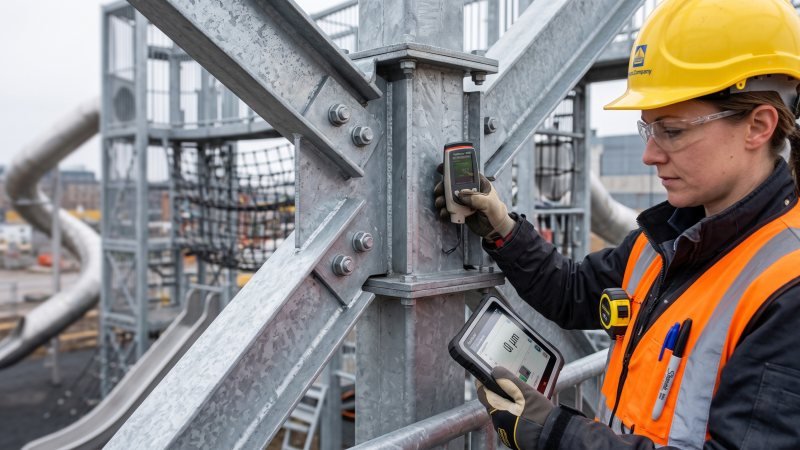
Crucial International Safety Certifications (CE, TUV)
Safety isn’t just a talking point; it is the absolute most important factor in the amusement industry. You cannot compromise on quality when children are suspended above the ground. Just as structural steel pillars form the foundation of a safe rope course, international testing certifications form the foundation of a reliable manufacturer.
Different regions require completely different safety standards. For instance, European buyers sourcing high-altitude courses that require Personal Protective Equipment (PPE) like safety harnesses must look for the CE mark ensuring compliance with the EN 15567 standard for sports and recreational ropes courses. (Note: If you are purchasing lower, fully enclosed netted courses that do not require harnesses, the EN 1176 playground standard applies). North American buyers must typically demand compliance with local standards governing the design, manufacture, and operation of aerial adventure courses.
On top of that, if you see a TUV Rheinland certificate, pay attention. TUV is an incredibly strict German testing agency, and a Chinese factory holding their certificate generally produces top-tier equipment.
When reviewing these documents, never just glance at a JPEG. Verify the certificate number on the issuing agency’s official website to ensure it is valid, up-to-date, and applies to the exact product category.
Assessing Production Capacity and Facility Size
Would you trust a multi-ton, load-bearing steel structure built in a cramped backyard garage? A factory’s physical footprint tells you everything about its real capabilities.
A legitimate kids rope course manufacturer usually operates a facility larger than 5,000 square meters. They need distinct, dedicated zones for steel cutting, automated welding, powder coating, and trial assembly.
Trial assembly is non-negotiable. Good factories will completely erect the steel structure in their yard before packing it into containers. This prevents misaligned bolting holes or missing brackets during your final installation on-site. If a factory is too small, they physically cannot perform this crucial step.
| Metric | Small Workshop (High Risk) | Capable Manufacturer (Low Risk) |
|---|---|---|
| Facility Size | Under 2,000 square meters | Over 5,000 square meters |
| Production Lines | Manual, mixed processing | Automated CNC, separated zones |
| Trial Assembly | Rarely performed due to space | Mandatory for every custom order |
| Employee Count | Fewer than 30 workers | 80+ skilled workers and engineers |
Evaluating Past Global Projects and Case Studies
In this industry, experience is the absolute best proof of capability. Evaluating past projects is like load-testing a safety harness—it proves the manufacturer’s claims actually hold up under real-world pressure.
Always ask the supplier for a portfolio of international case studies, focusing specifically on projects completed in your own country or region. If they have exported to your market recently, they already understand your local safety regulations and inspector expectations.
Do not settle for glossy 3D renders. Demand real installation photos and walk-through videos. Want rock-solid proof? Ask for a redacted Bill of Lading (B/L) to prove they actually shipped the steel to that destination. By thoroughly checking their track record, you avoid becoming a factory’s expensive experimental test subject.
Navigating Pricing Models and MOQ Requirements
Understanding exactly how commercial rope courses are priced is critical for setting an accurate procurement budget.
Chinese manufacturers typically price kids rope courses between $100 and $300 per square meter, or they charge a flat rate of $15,000 to $40,000+ per custom set. For most B2B buyers, the standard Minimum Order Quantity (MOQ) is strictly one complete set. Customizing your course through OEM or ODM services will adjust the final cost based on the height, steel thickness, and specific interactive obstacles you choose.
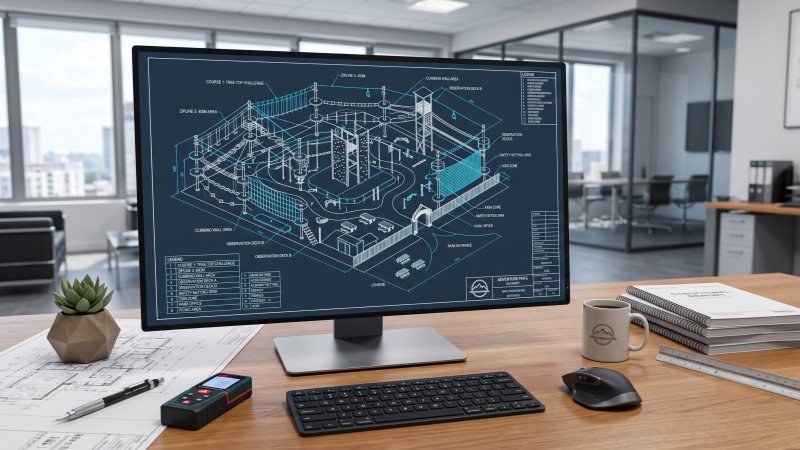
How Rope Courses are Priced (Per Square Meter vs. Per Set)
When browsing B2B platforms, you will see two main pricing models: “per square meter” and “per set.”
Pricing a rope course is a lot like quoting a custom trampoline park. If you only want a basic, single-level flat grid, the factory can easily quote it by the square meter ($100 to $300). But the minute you add multi-level towers, spiral slides, and complex tensioned ziplines, a flat area measurement completely loses its meaning.
For complex, custom-designed outdoor adventure parks, the “per set” price takes over. A complete set can range from $15,000 to well over $50,000 depending on the engineering involved.
| Pricing Model | Best Used For | Typical Price Range | Pros & Cons |
|---|---|---|---|
| Per Square Meter | Standard indoor mall playgrounds | $100 – $300 / sqm | Easy to estimate early on, but ignores vertical height costs. |
| Per Set | Multi-level outdoor adventure parks | $15,000 – $50,000+ / set | Highly accurate final cost, but requires a finished 3D design first. |
Keep in mind that global steel prices fluctuate. Always verify the current, finalized price quote with the supplier before locking in your project budget.
Typical Minimum Order Quantities for B2B Buyers
Many new buyers get confused by the Minimum Order Quantity (MOQ) listed online. You might see a supplier list their MOQ as “1 Square Meter.” Don’t be fooled; this is simply a placeholder used to rank higher in search results. No factory is going to fire up the heavy CNC machines for a single square meter of a structural rope course.
Let’s cut to the chase: the true MOQ for almost all reliable suppliers is 1 Set.
Because every amusement park has a unique layout, factories do not keep pre-built rope courses in a warehouse. They engineer every project from scratch. If a supplier insists on a massive volume commitment for standard playground gear, they might just be a trading company trying to bundle orders. Stick with actual manufacturers who accept a 1 Set MOQ for custom designs.
Managing Costs for OEM and ODM Customization
Virtually every kids rope course requires OEM (Original Equipment Manufacturing) or ODM (Original Design Manufacturing) customization. The features you choose will directly dictate your final invoice.
The most expensive upgrades are the interactive obstacles. A static wooden plank bridge is highly cost-effective. Throw in mechanical spinning logs or motorized ziplines, however, and the price jumps sharply due to the complex internal components and tighter machining tolerances required.
To keep costs in check, focus your budget where it counts: the structural frame. Invest in the thickest, safest galvanized steel available. You can save cash by choosing standard factory paint colors and limiting the number of motorized obstacles, which also drastically reduces your post-sales maintenance headaches.
What to Expect from a True One-Stop Supplier
A full-service Chinese manufacturer doesn’t just weld steel and ship boxes; they provide heavy engineering and technical support from day one.
A true one-stop supplier provides end-to-end solutions, beginning with custom 3D park design and space planning. Beyond that, they should back you up with comprehensive installation support, ranging from detailed manuals to dispatching on-site engineers. And just as crucially, they need to deliver reliable post-sales maintenance packages and clear warranty terms for critical structural components.
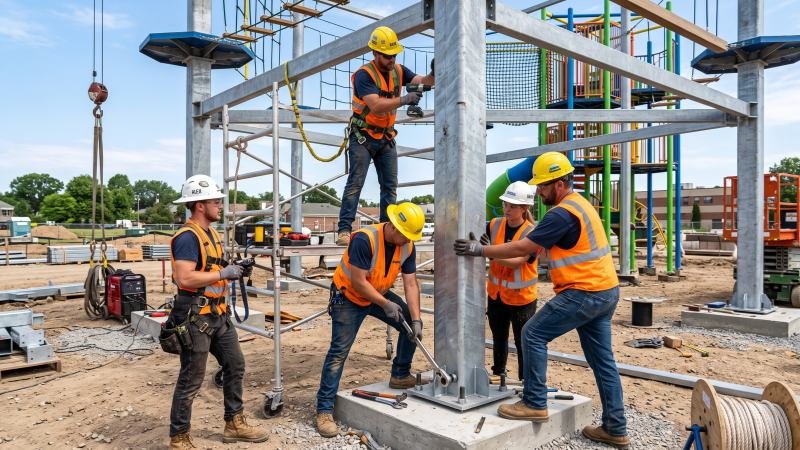
3D Park Design and Space Planning Services
You should never have to design the park layout yourself. A solid manufacturer acts as your dedicated engineering partner. After you hand over an architectural floor plan, their in-house design team will model a complete 3D render of the course.
This step maximizes your return on investment by optimizing “throughput”—calculating exactly how many kids can safely play at once. Designing a rope course is exactly like engineering a roller coaster track; every twist and turn must fit your available footprint while preventing traffic bottlenecks.
During this phase, make sure you clearly communicate your exact building clearance and ceiling height restrictions to the factory. Missing those details now leads to severe installation nightmares later.
Installation Support and On-Site Guidance Options
Top-tier suppliers offer flexible installation options to match both your budget and your crew’s technical expertise.
The industry standard is “Guided Installation.” The factory flies one or two professional engineers to your site to lead your local construction workers. They don’t turn the wrenches themselves, but they ensure the structural steel is bolted correctly and the life-safety nets are properly tensioned.
Industry Fact: For guided installation, buyers are typically responsible for the engineer’s round-trip flights, local hotel accommodations, and daily meals, plus a daily per-diem wage ranging from $100 to $150 per engineer.
Got a tight budget? Reliable suppliers won’t leave you hanging; they also offer comprehensive “DIY Installation” packages packed with detailed 3D blueprints, sequentially labeled parts, and step-by-step video tutorials.
| Installation Option | Cost Level | Who Does the Labor? | Best For |
|---|---|---|---|
| DIY / Manual Only | Lowest | Your local hired crew | Small, single-level indoor courses |
| Engineer Guidance | Medium | Local crew + 1 Factory Engineer | Large or multi-level custom parks |
| Full Turnkey Team | Highest | Full team from the factory | Mega-parks with massive budgets |
Post-Sales Maintenance and Warranty Terms
Kids will jump, swing, and hammer on those ropes every single day. You need a supplier who stands firm behind their product. Think of a strong warranty like the auto-belay system on a climbing wall: you pray you never need it, but it absolutely must catch you if something fails.
Get a written warranty document before paying your deposit. Standard industry warranties cover the main galvanized steel structures for three to five years. Softer consumable parts—like nylon ropes, foam paddings, and safety harnesses—typically carry a one-year warranty.
Here’s the real test: clarify their spare parts replacement speed. What happens when a custom mechanical part breaks on a busy Saturday? A reliable partner will use express air freight (like DHL or FedEx) to ship critical replacements immediately, rather than forcing you to wait a month for the next ocean container.
Handling International Shipping and Customs Clearance
Transporting massive steel structures across the globe requires highly specialized logistics.
To successfully handle international shipping and customs clearance, buyers must partner with a freight forwarder experienced in oversized amusement equipment. You also need to run a tight ship on container consolidation to pack bulky steel frames efficiently, and secure essential import documents like the Bill of Lading and Commercial Invoice to prevent border delays.
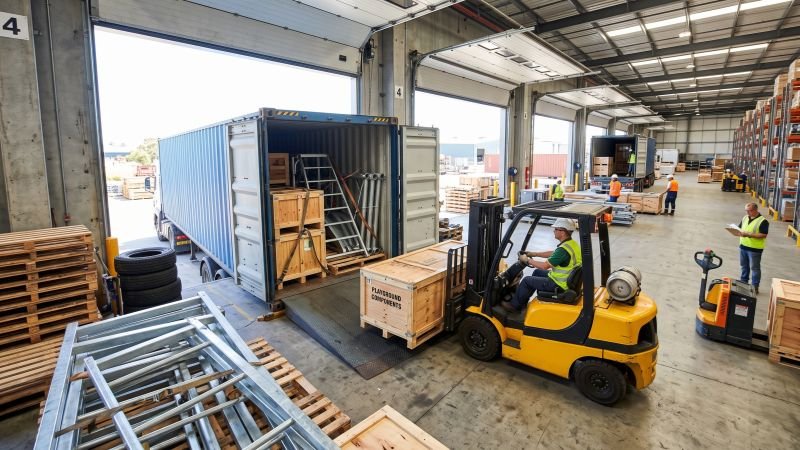
Selecting the Right Freight Forwarder for Amusement Equipment
Standard freight forwarders often struggle with heavy playground structures. Kids rope courses are made of long galvanized steel columns, wide wooden platforms, and heavy rolls of safety netting. You need a logistics partner who actually understands bulky, oddly shaped metal cargo so they don’t scratch your protective powder coating down to bare metal during rough ocean transit.
Ask potential forwarders straight up if they have previously shipped structural steel or amusement rides. A seasoned forwarder doesn’t just move boxes—they help you choose between FOB (Free on Board) and EXW (Ex Works) shipping terms to heavily optimize your overall landed costs.
Container Consolidation Strategies for Bulky Items
Shipping empty air across the ocean is a painfully expensive mistake. Because rope course components come in awkward shapes, poor packing will waste massive amounts of container space.
Strategic container consolidation is essential. The factory must load the heaviest steel pillars at the bottom and carefully layer the flat wooden platforms. Only then do you stuff the empty gaps with soft, non-essential items like foam padding.
Crucial Safety Note: Never allow a supplier to use safety ropes or harnesses as “filler.” Load-bearing ropes, auto-belays, and safety harnesses are critical Personal Protective Equipment (PPE). They must be packed separately in dry, sealed, and crush-proof hard cases to prevent invisible internal fiber degradation caused by friction against heavy steel or chemical exposure (like rust-preventative oils) during ocean transit.
Because packing efficiency depends entirely on your specific design, always verify the estimated container volume with your supplier before booking freight.
| Container Size | Internal Capacity | Best Used For |
|---|---|---|
| 20-Foot Standard | ~28 Cubic Meters | Small, single-level indoor rope courses |
| 40-Foot High Cube (HQ) | ~68 Cubic Meters | Standard multi-level adventure parks |
| LCL (Less than Container Load) | Shared Space | Replacement parts or very minor upgrades |
Essential Import Documents Needed for Smooth Customs Clearance
Customs officers don’t mess around with large commercial imports. If your paperwork is missing a single stamp, your equipment will sit in the port racking up brutal daily storage fees.
To clear customs smoothly, you need an airtight set of documents:
- Bill of Lading (B/L): The official receipt and title of the goods from the shipping line.
- Commercial Invoice: Details the exact value of the goods for tax assessment.
- Packing List: Details the exact dimensions, weight, and contents of the container.
- Certificate of Origin: May significantly lower your import tariffs depending on your country’s trade agreements.
- Safety Testing Reports: Documents like CE (EN 15567) compliance certificates to prove the equipment is legally permitted to enter the country.
Conclusion
Sourcing kids rope courses directly from China can dramatically lower your initial investment while giving you access to high-quality, fully customized attractions. By targeting authentic manufacturers in comprehensive hubs like Zhengzhou, rigorously verifying safety specs like EN 15567, and demanding proper handling of life-safety PPE during transit, you take the risk out of B2B procurement. At the end of the day, prioritize transparent communication, clear warranty terms, and professional 3D design support before you ever sign a contract.
If you are ready to bring your amusement park vision to life with world-class equipment and dedicated engineering support, please feel free to contact us.