-
Whatsapp: +86 15516933785
-
Email: hanlin@hanlinplayground.com
-
Address: Shangjie District, Zhengzhou City, Henan Province, China
-
Whatsapp: +86 15516933785
-
Email: hanlin@hanlinplayground.com
-
Address: Shangjie District, Zhengzhou City, Henan Province, China

How Adding a Playground to Your Airport Boosts Revenue and Passenger Loyalty
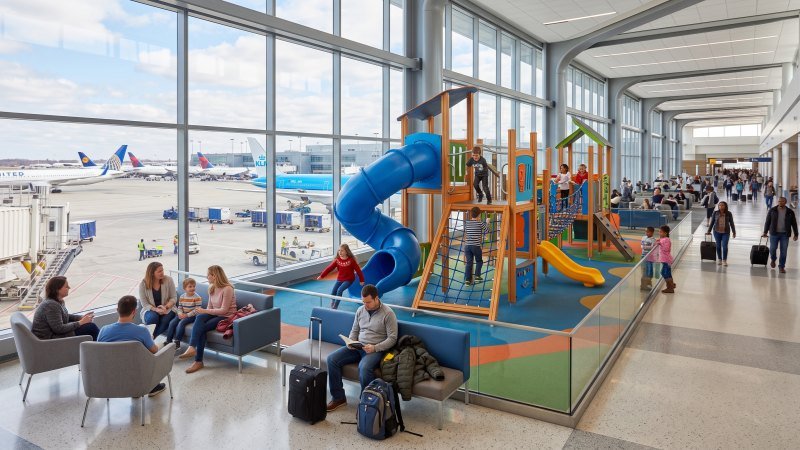
Why are major international airports investing heavily in indoor commercial playgrounds for their terminals?
Adding a playground to an airport directly boosts non-aeronautical revenue by increasing passenger dwell time in commercial zones, while simultaneously improving Airport Service Quality (ASQ) scores by reducing family travel stress and centralizing high-energy activity away from boarding gates.
Boosting Non-Aeronautical Revenue Through Increased Dwell Time
How exactly does a free children’s play space translate into higher non-aeronautical revenue for a terminal?
An airport playground directly increases passenger dwell time by keeping children occupied. This extra time allows parents to spend more money at nearby retail stores and dining outlets. Terminals with strategically placed play areas report a measurable uplift in non-aeronautical revenue, as relaxed passengers are statistically more likely to make impulse purchases.
Keeping Parents Near High-Margin Retail and Dining Zones
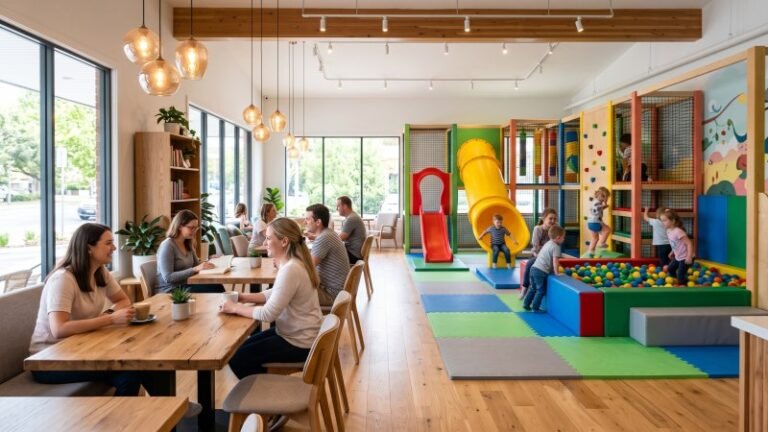
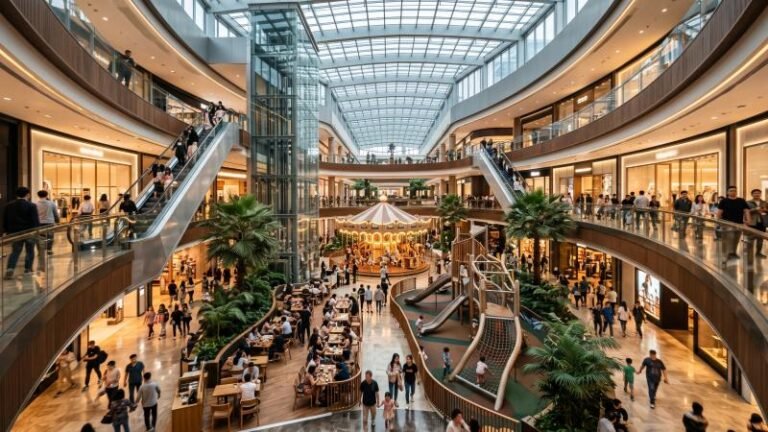
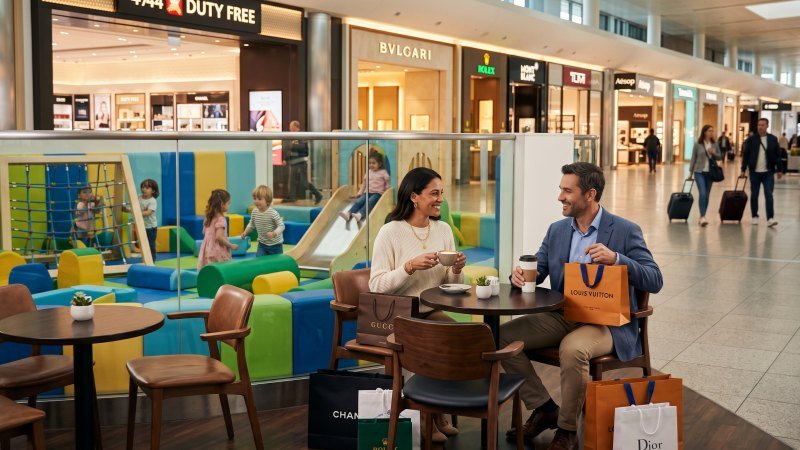
Where you place terminal amenities dictates your floor’s financial performance. Look at the layout—if you place a playground in the center of a commercial zone, you anchor families right where you want them. Just as positioning a premium business lounge near duty-free shops drives luxury sales, placing a play area near cafes drives family spending. Families will naturally gravitate toward the play equipment. The operational result? They stay within steps of high-margin vendors.
Instead of walking straight to the departure gate, parents sit and watch their kids. While they wait, have you considered how valuable that captive audience really is? For instance, Munich Airport strategically places play corners adjacent to bistros and seating areas. This physical setup directly encourages parents to purchase coffee, snacks, or meals while supervising their children.
| Scenario | Passenger Behavior | Impact on Commercial Zones |
|---|---|---|
| No Play Area | Families rush directly to the departure gate. | Bypasses retail stores entirely; zero commercial engagement. |
| Strategic Play Area | Families stop and stay in the central commercial hub. | Drives high foot traffic near shops; extends dwell time. |
According to data from Airports Council International (ACI), every additional minute a passenger spends in the post-security departure lounge can increase retail revenue by roughly $0.10 to $0.20. Do the math on your own gate traffic: if a playground extends a family’s dwell time in the commercial zone by just 30 minutes, the financial impact is substantial.
Transforming Transit Stress into Unplanned Consumer Spending
A family rushing through a terminal with restless children focuses entirely on reaching the gate. They experience “tunnel vision” and ignore storefronts, restaurants, and promotional displays.
Here is the operational reality: a playground breaks this stressful cycle. Think of it as a release valve for passenger flow. When children burn off energy on a slide, parents finally relax. This shift in mindset is crucial for driving non-aeronautical revenue. A relaxed parent quickly transitions from a stressed traveler into an active consumer.
The Shift to Impulse Buying
Once seated near a play area, parents often realize they have unmet needs. They suddenly have the time to look around. On top of that, older siblings who are not playing might ask for magazines, snacks, or toys from adjacent shops.
- Food and Beverage (F&B) Sales: Parents frequently purchase specialty coffees and pastries while watching their kids.
- Travel Retail: Relaxed travelers are much more likely to browse electronics kiosks or bookstores for last-minute items.
- Duty-Free Gifts: With children safely occupied, adults finally have the mental bandwidth to shop for luxury cosmetics or souvenirs.
Consider the retail strategy of a major hub like Chicago O’Hare International Airport. Their interactive family exhibits do not just entertain kids. They strategically halt families in their tracks before they reach the gates, directly generating unplanned spending at surrounding vendors. The takeaway here is simple: creating a designated space for play removes the primary barrier to family shopping—child supervision anxiety.
Elevating the Family Travel Experience and ASQ Scores
An airport playground significantly elevates the family travel experience by providing a dedicated space for children to release physical energy, which directly reduces pre-flight stress. As any terminal manager knows, this targeted amenity leads to higher overall passenger satisfaction ratings. Airports offering these family-friendly facilities frequently report a measurable increase in their Airport Service Quality (ASQ) scores, specifically within the terminal ambiance and waiting area comfort categories.
Reducing Pre-Flight Anxiety for Parents and Children
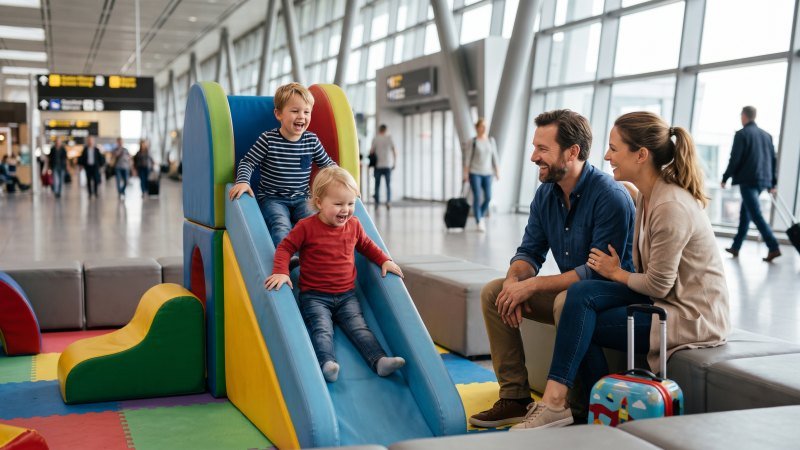
Travelers often feel anxious before a long flight, and this anxiety multiplies for parents traveling with young children. Navigating crowded security checkpoints and managing heavy luggage is inherently stressful. Add in the fact that parents know their kids will soon sit in a confined airplane cabin for several hours. That is exactly why a dedicated playground acts as a crucial psychological relief valve.
Think of a play area as the structural equivalent of a premium VIP lounge, but specifically designed for families. Just as a business lounge offers a quiet retreat for corporate travelers to decompress before boarding, a playground provides a designated sanctuary for kids to safely release pent-up energy.
When children climb and slide, they burn off adrenaline. As a result, they become much calmer when it is finally time to board the aircraft. This massive reduction in stress directly influences how families rate their overall airport experience.
“Providing targeted family amenities directly shifts a passenger’s perception of the terminal from a stressful transit bottleneck into a highly welcoming environment.”
Airports Council International (ACI) constantly measures passenger satisfaction through global ASQ surveys. These surveys specifically track categories like the comfort of waiting areas and overall terminal ambiance. By simply offering a playground, airports directly improve their performance in these exact survey metrics.
Building Long-Term Hub Loyalty for Connecting Flights
Modern parents actively plan their flight routes to avoid stressful layovers. If a terminal offers a terrible transit experience, families will actively avoid it in the future.
Flip the script, and installing a high-quality playground builds long-term hub loyalty. When families experience a positive, stress-free layover, they clearly remember that specific terminal. Because of that seamless experience, they will deliberately choose to route their future connecting flights through your airport instead of a competitor’s hub.
Consider major international transit hubs like Amsterdam Airport Schiphol or Singapore Changi Airport. These airports are globally famous for their extensive family amenities. Because they invest in the passenger experience, they dominate the market for international family layovers.
| Transit Amenities | Family Passenger Perception | Future Booking Behavior |
|---|---|---|
| No Play Areas | High stress; exhausting layover. | Actively avoids the hub for future flights. |
| Playground Available | Relaxed; manageable transit. | Actively selects the hub for connecting routes. |
To maximize this passenger loyalty, airports often zone their play areas for different age groups, separating soft toddler crawl zones from complex climbing structures for older kids. Since age-appropriate zoning and maximum capacity limits vary greatly based on structural design, it is best to verify exact specifications with your playground supplier during the planning phase.
Streamlining Terminal Operations and Improving Safety
By safely containing children in a designated zone, an airport playground prevents them from running through high-traffic concourses. This centralization reduces the risk of accidents near automated walkways and busy boarding gates. The operational payoff? Terminal flow becomes much smoother, and security teams face fewer crowd management disruptions.
Centralizing High-Energy Behavior Away from Boarding Gates
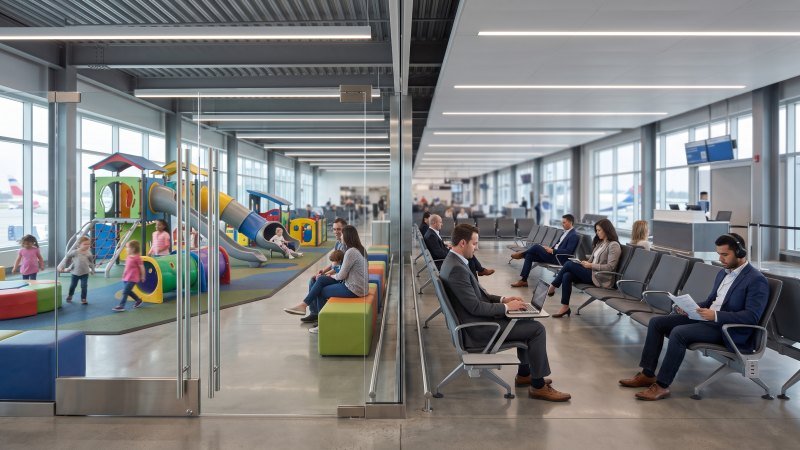
Children naturally possess a lot of energy. If you do not give them a dedicated play area, where exactly do you expect that physical energy to go? They will inevitably find other ways to entertain themselves. They often run around boarding gates, climb on waiting chairs, or play near escalators. This erratic movement creates significant challenges for daily terminal operations.
Think of a playground as the behavioral equivalent of using tensa barriers for security queue management. Just as a barrier system channels a scattered crowd into an orderly line, a playground channels high-energy behavior into a safe, controlled environment. By directing families to this specific area, you immediately clear the main passenger concourses.
Unobstructed walkways are absolutely critical for airport safety. When boarding gates are free from running children, gate agents can process passengers much faster. Beyond efficiency, it significantly reduces trip hazards for other travelers carrying heavy luggage. Look at it from a facilities perspective: a play area is not just an amenity; it is a vital crowd control tool.
Enclosure and Safety Parameters
To effectively contain this energy, most airport playgrounds utilize specific containment barriers. These low walls keep children securely inside the footprint while allowing parents to monitor them easily. Because enclosure heights and the shock-absorption ratings (HIC ratings) of safety flooring differ depending on the materials used, you should always verify these safety specifications with your equipment supplier to guarantee compliance with airport safety standards.
Minimizing Noise and Disruptions for Business Travelers
Modern airports must cater to very different types of passengers simultaneously. On one hand, you have energetic families preparing for a vacation. On the other hand, you have high-yield business travelers who require a quiet environment to work, take phone calls, or prepare for meetings.
When you mix loud play with a crowded boarding gate full of business flyers, what is the inevitable result? It directly disrupts your premium travelers. This friction easily leads to passenger complaints and a negative perception of the terminal’s atmosphere.
A dedicated play space naturally draws noisy activities away from the quiet gate areas. By concentrating the noise in one specific commercial or transit zone, the rest of the concourse remains calm and orderly.
| Terminal Zone | Primary Passenger Activity | Desired Environment | Operational Impact of a Playground |
|---|---|---|---|
| Boarding Gates | Working, reading, business calls. | Quiet and professional. | Remains peaceful; completely free from playful disruptions. |
| Playground Area | Running, climbing, socializing. | Energetic and active. | Safely isolates terminal noise away from business hubs. |
“Effective terminal design actively separates conflicting passenger needs, ensuring that energetic children and focused business travelers can efficiently share the same infrastructure.”
Many facility managers also install acoustic ceiling baffles above these play structures to further dampen ambient sound. By proactively managing exactly where noise occurs, airport operators maintain a premium, professional atmosphere at the departure gates.
Key Considerations for Designing High-ROI Airport Play Areas
Designing a high-ROI airport play area requires maximizing limited terminal square footage through vertical structures and strict hygiene protocols. Facility planners must select commercial-grade, easy-to-clean materials that easily withstand continuous passenger traffic. This strategic approach ensures the play equipment remains a cost-effective, attractive amenity throughout its entire operational lifespan.
Maximizing Limited Terminal Space with Vertical and Themed Structures
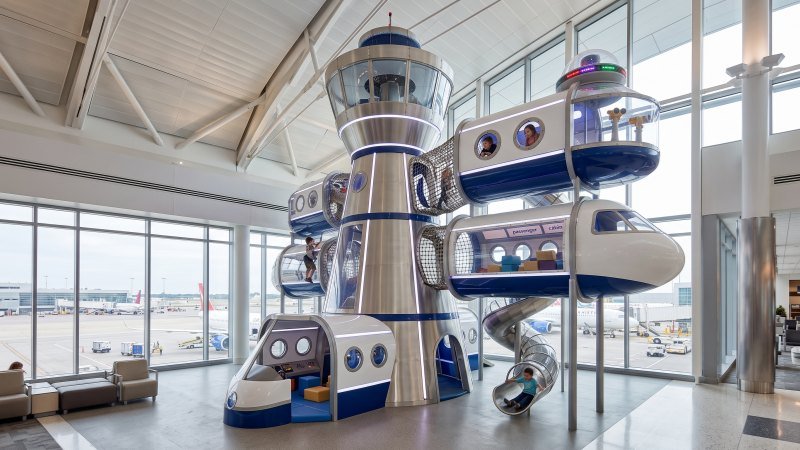
Airport terminals possess highly limited floor space. Every square meter must generate maximum value. You simply cannot waste horizontal space on sprawling play equipment. Instead, smart terminal designers look upward.
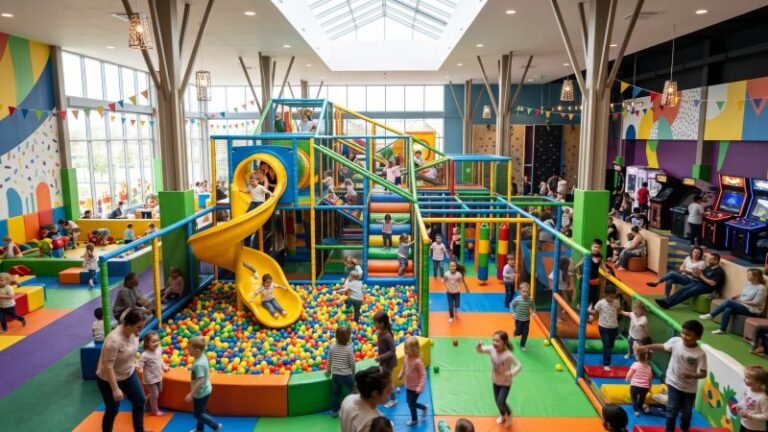
Just as modern baggage handling systems use multi-level conveyors to save floor space, play areas must utilize vertical airspace. By building upward with multi-level climbing towers, you accommodate many more children within a smaller footprint. By going vertical, the net benefit is clear: you leave more horizontal room for lucrative retail kiosks and dining seating.
Let’s talk aesthetics, because thematic integration plays a critical role in high-ROI design. A generic playground often looks entirely out of place inside a sleek, modern terminal. Instead, themed structures actively enhance the passenger environment. For example, Zurich Airport features play areas designed specifically like miniature control towers and airplanes. This aviation theme naturally blends into the terminal’s architecture. It provides an immersive experience for families without visually disrupting the concourse.
Optimizing Structural Footprints
When designing these vertical structures, engineers focus heavily on structural density. High-density designs pack multiple activities, such as slides and interactive puzzle panels, into a very tight radius. By concentrating the play value, the playground requires a much smaller physical boundary.
Ensuring Easy Maintenance and Stringent Hygiene Standards
Airports are demanding, 24-hour environments. We all know maintenance teams cannot close transit areas for extended, complex cleaning routines.
To keep lifetime costs down and ROI high, the play equipment must feature seamless, commercial-grade finishes. Smooth, non-porous plastics wipe down much faster than complex, textured fabrics. This design principle is very similar to how terminal seating uses seamless molded polyurethane to prevent daily dirt accumulation.
| Material Type | Cleaning Efficiency | Durability in 24/7 Operations | Recommended Airport Use |
|---|---|---|---|
| Seamless Molded Plastics | Very High (Wipes clean instantly) | Excellent | Main slides, outer panels, activity boards. |
| Commercial-Grade Vinyl | High (Resists liquid absorption) | High | Soft play blocks, parent seating cushions. |
| Exposed Foam (Uncoated) | Low (Traps dirt and bacteria) | Poor | Not recommended for terminal use. |
It goes without saying that strict hygiene remains absolutely non-negotiable in any international transit hub. Facility managers frequently utilize advanced antimicrobial coatings on high-touch surfaces like handrails to stop germ transmission. To ensure long-term efficacy, verify the maintenance schedules and lifespan of these protective coatings with your equipment supplier.
By standardizing these easy-to-maintain materials, janitorial teams can quickly sanitize the entire area during low-traffic night shifts. At the end of the shift, this efficient cleaning process reduces ongoing labor costs and strictly protects the playground’s long-term profitability.
Conclusion
Adding a playground to an airport is a strategic investment that goes far beyond simple entertainment. By extending passenger dwell time near retail spaces, reducing the stress of family travel, and keeping noisy activities away from business travelers, terminal operators can dramatically improve both their bottom line and their global reputation. Careful planning regarding vertical space and hygienic materials ensures these play areas remain highly profitable and easy to maintain for years to come.
If you are ready to explore how a custom indoor play space can elevate your terminal’s commercial performance, please feel free to contact us for more details and a tailored design consultation.